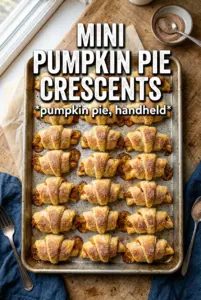
Mini pumpkin pie crescent rolls bake up with crisp, buttery edges and a soft, spiced center that tastes like a little slice of pie without the fuss of making crust. The filling stays creamy instead of running all over the pan, and the cinnamon-sugar topping gives each roll a light crackly finish that makes them disappear fast at the table.
The trick is keeping the pumpkin filling thick enough to spoon onto the dough without leaking. Cream cheese does most of the structural work here, and the pumpkin puree gets balanced with powdered sugar and spice so the filling tastes like pumpkin pie, not wet puree. A short bake at 375°F gives the crescent dough time to puff and brown before the filling dries out.
Below, I’ve included the small details that keep these neat, plus the one glaze move that makes them taste finished instead of just sweet.
The filling stayed put, the bottoms baked up flaky, and the cinnamon glaze set just enough that they weren’t messy to eat. I used an extra pinch of spice and they tasted like mini pumpkin pies in crescent form.
Save these mini pumpkin pie crescent rolls for a quick breakfast that tastes like pumpkin pie with flaky, cinnamon-sugar edges.
The Filling Has to Be Thick, Not Runny
The biggest mistake with pumpkin crescent rolls is treating the filling like pie custard. That works in a crust, but here it leaks the second the dough starts warming up. Cream cheese gives the mixture body, powdered sugar keeps it smooth, and the small amount of pumpkin puree brings the flavor without flooding the dough. If your filling looks loose, it needs another minute of mixing, not more pumpkin.
The other thing worth watching is the dough itself. Crescent triangles are thin at the edges, so the filling belongs near the wide end and stays in a small mound. If you overfill, the rolls will unspool or burst open in the oven, and the sugar topping will slide off instead of baking into that glossy finish.
What Each Ingredient Is Actually Doing in This Dish
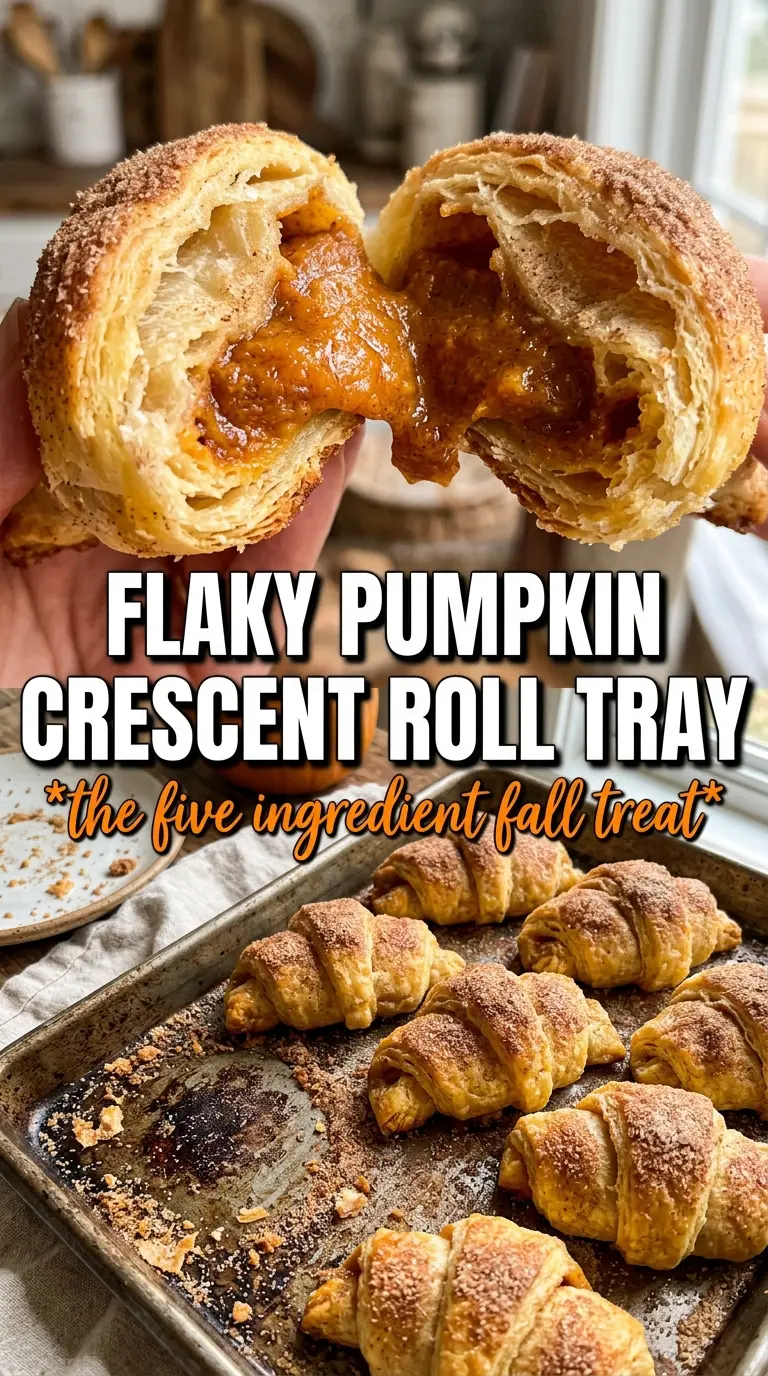
- Refrigerated crescent roll dough — This is the shortcut that makes the recipe work in 30 minutes. It bakes up flaky and tender without needing any mixing or chilling. If you swap in puff pastry, expect a crisper, more delicate shell and a little more mess with the filling.
- Cream cheese — This is what holds the pumpkin filling together and keeps it from turning watery. Use full-fat cream cheese if you can; it gives the filling the best texture and a clean, rich finish. Let it soften fully so the mixture turns smooth instead of lumpy.
- Pumpkin puree — Use plain pumpkin puree, not pumpkin pie filling. Pie filling is already sweetened and spiced, which throws off the balance here. If your puree looks extra wet, blot it lightly with a paper towel before mixing.
- Pumpkin pie spice and cinnamon — These build the warm bakery-style flavor that makes the rolls taste like pumpkin pie instead of cream cheese rolls with pumpkin in them. The cinnamon in the filling and the topping gives a stronger finish than pumpkin pie spice alone.
- Powdered sugar — Powdered sugar sweetens the filling without making it gritty. It also helps keep the texture smooth enough to scoop and roll. Granulated sugar won’t dissolve as cleanly here.
- Butter, sugar, and cinnamon for the topping — This is what gives the rolls their bakery-style finish. The butter helps the sugar cling and bake into a light crust on top of the dough. Don’t skip this step if you want the rolls to look and taste finished.
- Milk glaze — The glaze should be thin enough to drizzle, not pour. Add the milk slowly so it doesn’t turn runny, and drizzle while the rolls are still warm so it settles into the creases instead of sitting on top in a thick layer.
Rolling, Baking, and Glazing Without Losing the Filling
Mix the filling until it goes completely smooth
Beat the cream cheese first so there are no lumps left in the bowl, then add the pumpkin, powdered sugar, spice, cinnamon, and vanilla. The mixture should look thick, glossy, and spreadable, almost like a soft frosting. If you see streaks of cream cheese, keep mixing; those lumps won’t disappear once the rolls go into the oven.
Keep the filling small and centered
Separate the crescent dough into triangles and place about 1 teaspoon of filling on the wide end of each one. Roll from the wide end toward the point without stretching the dough too tightly, or the filling will squeeze out the sides. A snug roll is good; a squeezed roll is how you get leaks and bare patches.
Finish with butter and cinnamon sugar before baking
Brush the tops with melted butter, then sprinkle on the cinnamon-sugar mixture while the butter is still wet. That helps the topping stick and gives the baked rolls a lightly crisp, caramelized top. If the butter cools too much, the sugar won’t adhere evenly and you’ll get patchy browning.
Bake until the edges are deeply golden
Put the rolls on a lined baking sheet and bake at 375°F for 12 to 15 minutes. You want the tops golden and the seams set, with the bottoms just starting to color. If they look pale and doughy in the center, give them another minute or two; underbaked crescent dough turns gummy fast once it cools.
Drizzle while warm, not hot
Stir the glaze until it falls in a slow ribbon from the spoon, then drizzle it over the warm rolls. If the rolls are piping hot, the glaze melts and disappears. If they’re fully cool, the glaze sits too thickly on top instead of sinking into the surface a little.
How to Change These Rolls Without Losing the Pumpkin Pie Feel
Dairy-Free Version
Use a dairy-free cream cheese and plant-based butter. The texture stays close to the original, though the filling may soften a touch faster once baked. Let the rolls cool for a few minutes before glazing so the topping doesn’t slide off.
Extra-Spiced Breakfast Version
Add an extra 1/4 teaspoon pumpkin pie spice to the filling and a pinch of salt to the glaze. That pushes the rolls closer to a classic pumpkin pie flavor and cuts the sweetness just enough to keep them balanced.
Make-Ahead Morning Shortcut
Mix the filling up to 2 days ahead and keep it refrigerated. You can also assemble the rolls, cover the tray, and refrigerate them overnight, then bake them straight from the fridge in the morning. They may need an extra minute or two in the oven since the dough starts cold.
Storage and Reheating
- Refrigerator: Store leftovers in an airtight container for up to 3 days. The crescent dough softens a little, but the flavor stays good.
- Freezer: These freeze best without the glaze. Wrap cooled rolls tightly and freeze for up to 1 month, then thaw in the fridge before reheating.
- Reheating: Warm in a 300°F oven for about 8 minutes or until heated through. The microwave makes the dough soft and steamy, so use it only if you don’t mind losing the flaky edges.
Questions I Get Asked About This Recipe
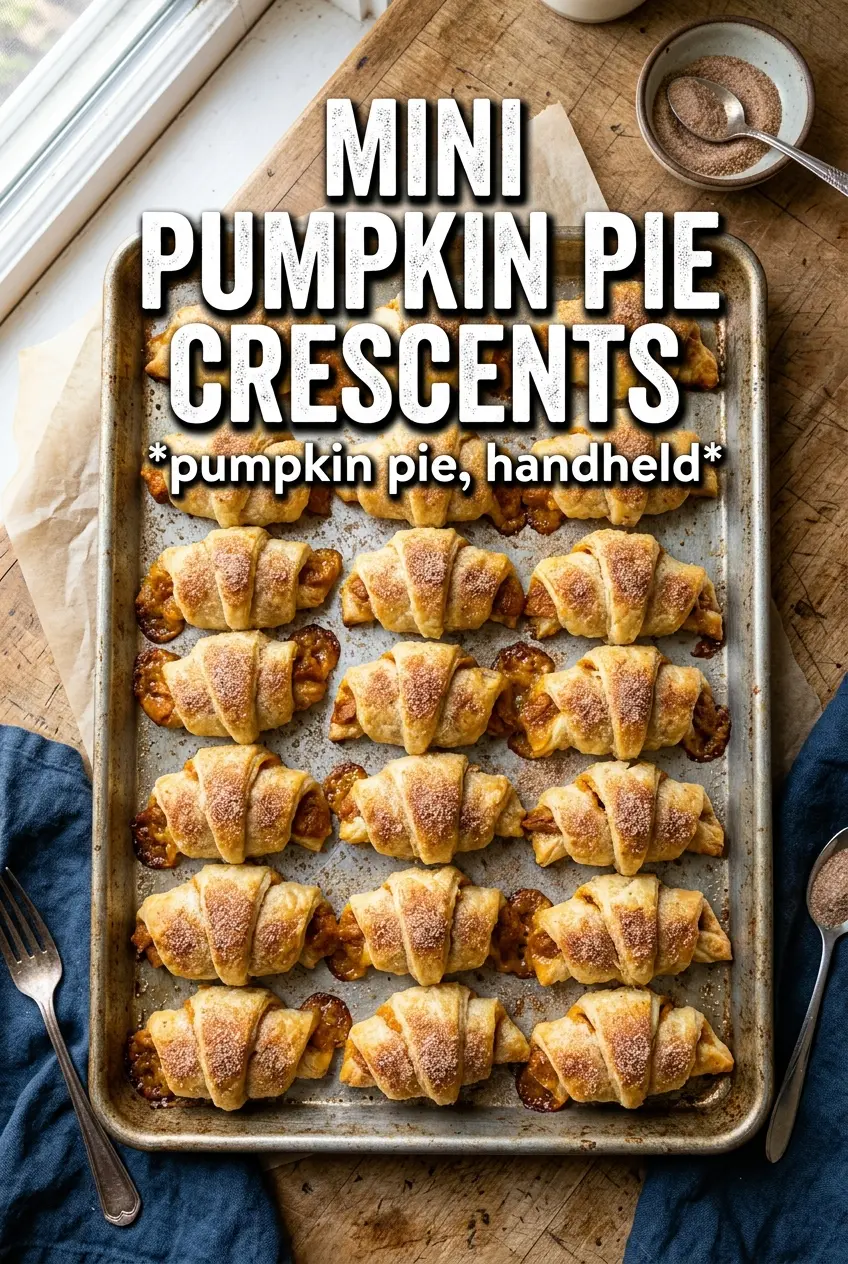
Mini Pumpkin Pie Crescent Rolls
Ingredients
Equipment
Method
- Preheat oven to 375F and line a sheet pan with parchment or a light coating of nonstick spray so the rolls bake evenly.
- In a bowl, beat cream cheese, pumpkin puree, powdered sugar, pumpkin pie spice, cinnamon, and vanilla until smooth.
- Separate the refrigerated crescent roll dough into triangles and place 1 teaspoon of pumpkin filling on the wide end of each triangle.
- Roll each triangle up from the wide end to the point and set the rolls on the prepared baking sheet, spacing them apart.
- Brush the tops with melted butter, then sprinkle with cinnamon sugar so the centers stay tender and the crust browns.
- Bake for 12-15 minutes at 375F until golden.
- Mix and drizzle the cinnamon glaze over the warm rolls right after baking so it melts into a thin coating.