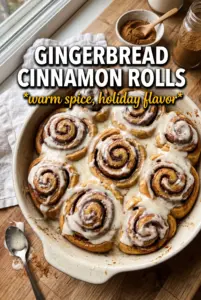
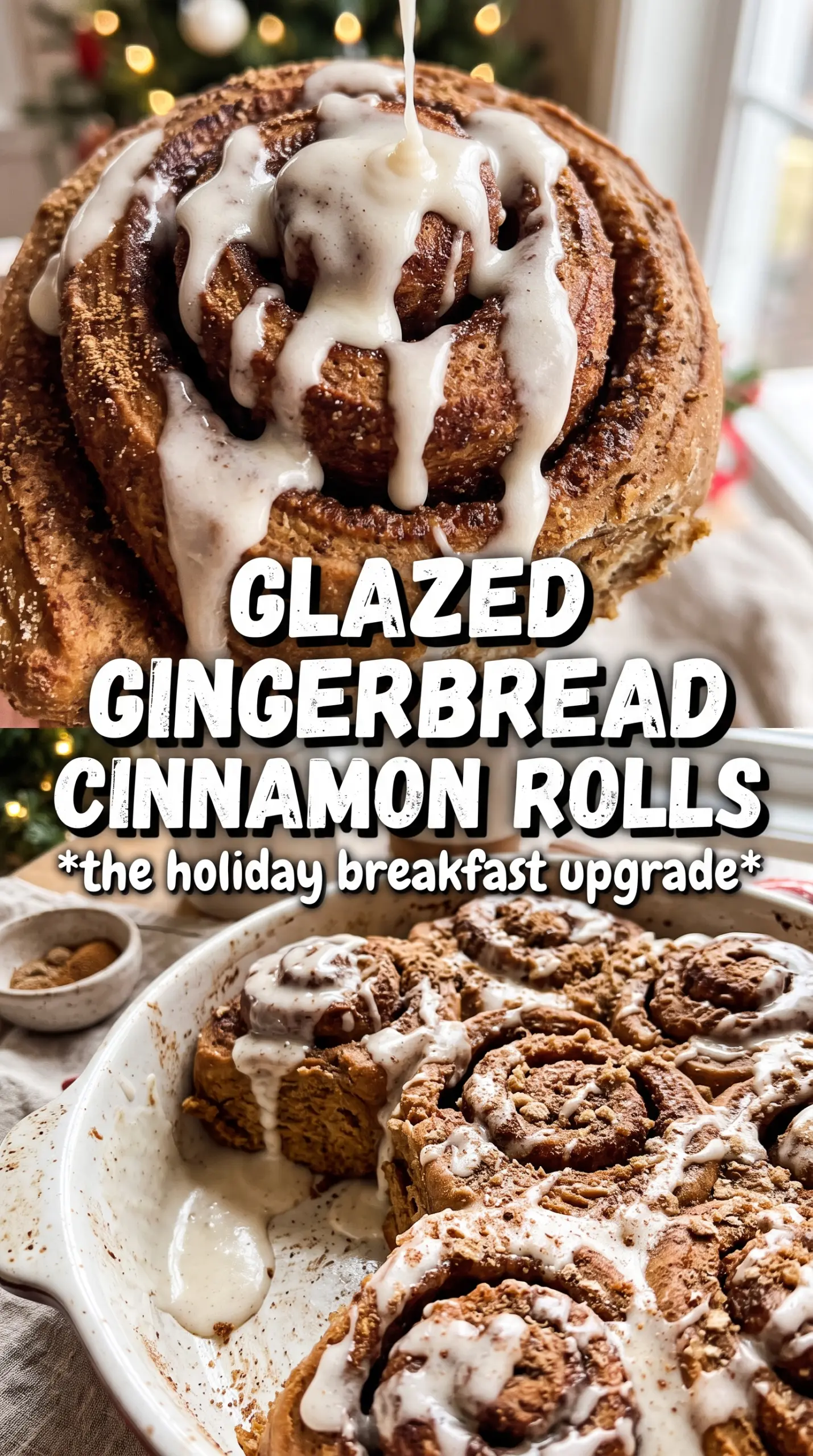
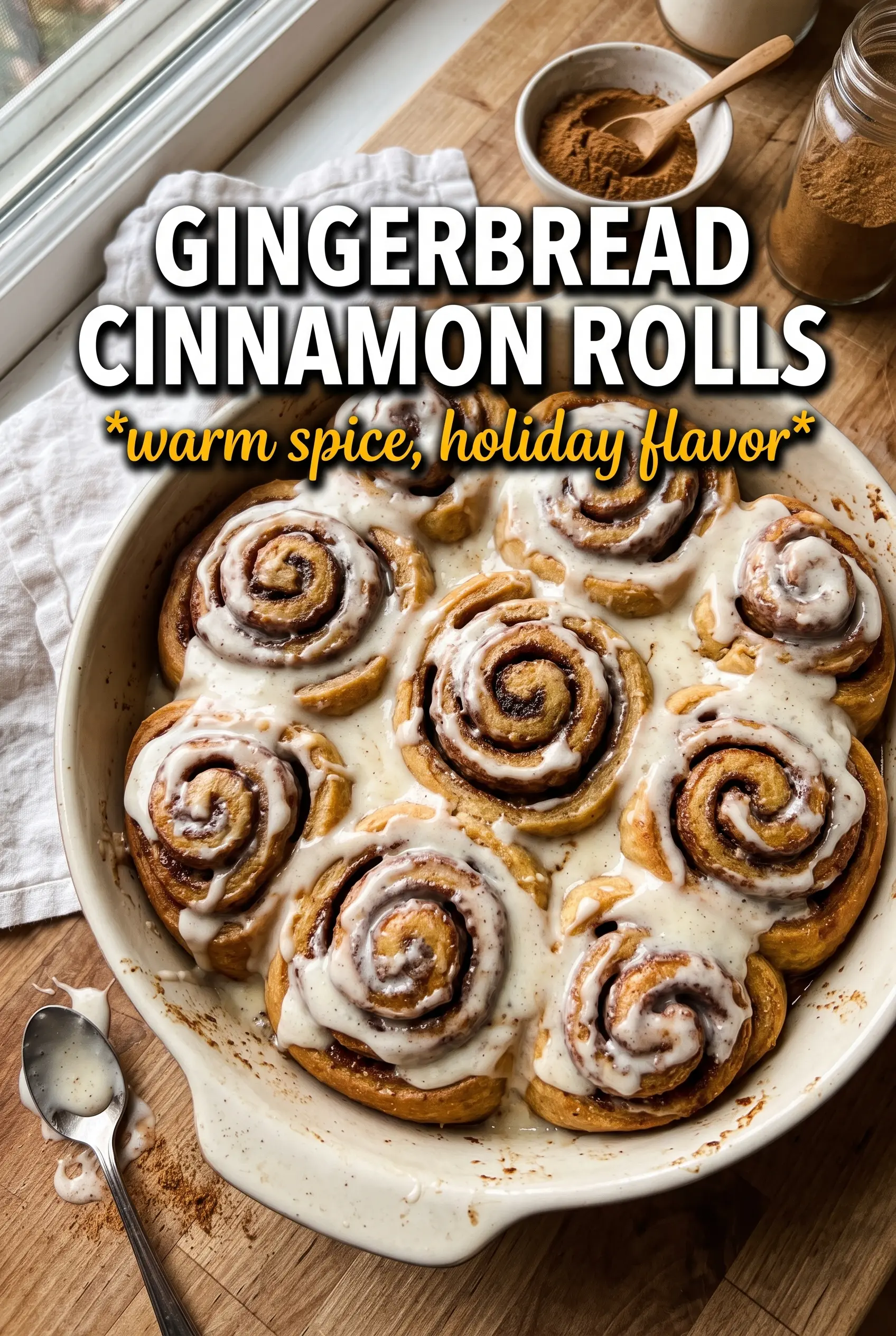
Gingerbread cinnamon rolls bake up soft, tall, and deeply spiced, with a tender dough that stays plush under a thick ribbon of cinnamon-sugar filling. The molasses gives the rolls that dark gingerbread color and a warm, caramel note that plain cinnamon rolls just can’t touch, and the cream cheese glaze melts into the swirls while they’re still warm enough to catch every drip.
What makes this version work is balance. The molasses brings flavor, but the milk and butter keep the dough soft instead of dense. The spice blend is bold without turning bitter, and the second rise in the pan gives the rolls enough space to puff into each other so the centers stay pillowy. If you’ve had spiced rolls come out dry or tight before, this method fixes both problems.
Below, I’m walking through the small details that matter most: how warm the milk should be, when the dough has been kneaded enough, and why the rolls should be glazed while they’re still warm. Those little choices are what turn a good pan of rolls into the kind people hover over in the kitchen.
The dough rose beautifully and the rolls baked up soft in the middle with those gooey spiced edges. I followed the timing exactly, and the glaze melted into every swirl without making them soggy.
Gingerbread cinnamon rolls bring together molasses, brown sugar, and cream cheese glaze in the softest holiday-style breakfast bake.
The Trick to Gingerbread Dough That Stays Soft Instead of Heavy
Molasses is what gives these rolls their gingerbread character, but it also changes the dough’s behavior. Add too much flour and the rolls bake up bready; rush the rise and they turn tight instead of fluffy. The dough should feel supple and a little tacky after kneading, not dry or stiff, because that extra moisture is what keeps the spirals tender after baking.
The other thing that matters here is the yeast bath. Warm milk wakes the yeast, but hot milk can slow or kill it, and cold milk leaves you waiting around forever. When the mixture looks foamy and the dough has doubled, you’re on the right track. That patience is what gives the finished rolls their lift.
What Each Ingredient Is Actually Doing in These Rolls
- Molasses — This is the ingredient that turns a basic cinnamon roll into a gingerbread one. Use unsulphured molasses for the best flavor; blackstrap is too bitter here and can make the rolls taste harsh.
- Brown sugar — It deepens the sweetness and keeps the dough and filling moist. In the filling, it melts into the butter and spices, creating that sticky swirl people expect from a good roll.
- Melted butter in the dough — Butter softens the crumb and gives the rolls a richer bite. Let it cool slightly before mixing so it doesn’t scramble the eggs or slow the yeast.
- Cinnamon, ginger, and cloves — The spice blend carries the gingerbread flavor, but the cloves need a light hand. Too much clove can take over fast, so measure carefully.
- Cream cheese glaze — This glaze is thick enough to sit on top and melt into the rolls without disappearing. If you use milk alone without the cream cheese, you’ll lose that tangy finish that balances the molasses.
Building the Swirl, Rising the Rolls, and Baking Them Through
Waking Up the Yeast
Stir the warm milk and molasses together first, then add the yeast and give it a few minutes to foam. That foam tells you the yeast is alive and ready to work. If the mixture stays flat and gray, stop there and start over with fresh yeast, because the dough will never rise properly without it.
Mixing and Kneading the Dough
Add the brown sugar, butter, and eggs, then work in the flour and spices until a shaggy dough forms. Knead for 8 to 10 minutes until it turns smooth and elastic; it should spring back slowly when pressed. If you add too much flour during kneading, the dough stops feeling soft and the baked rolls come out dry, so dust the counter lightly and use just enough to keep it from sticking.
Rolling, Filling, and Cutting Clean Spirals
Roll the dough into a rectangle with even thickness so the rolls bake at the same rate. Spread the softened butter all the way to the edges, then cover it with the brown sugar and spice mixture in an even layer. Roll it up tightly from the long side, or the filling will leak out and the spirals will separate, then use a sharp knife or unflavored dental floss to cut 12 neat rolls without squashing them.
The Second Rise and Bake
Set the rolls in a greased 9×13 pan and let them rise until puffy and touching. That second rise is what gives you soft sides and a light center instead of dense, uneven buns. Bake at 375°F until the tops are set and deeply golden at the edges, and don’t pull them too early just because the center looks soft — they finish setting as they cool slightly in the pan.
Glazing While Warm
Beat the cream cheese, powdered sugar, milk, and vanilla until smooth, then drizzle it over the rolls while they’re still warm. Warm rolls melt the glaze just enough to sink into the swirls, but if they’re piping hot it will disappear completely. A thick drizzle is the goal here, not a thin icing that runs straight to the bottom of the pan.
Small Changes That Still Keep the Gingerbread Character
Dairy-Free Version
Swap the milk for an unsweetened plant milk and use a good dairy-free butter in both the dough and filling. The rolls will still rise and bake well, but the glaze needs a dairy-free cream cheese substitute or it won’t have the same tang and body.
Make-Ahead Overnight Rolls
Assemble the rolls and place them in the pan, then cover tightly and refrigerate overnight before the second rise finishes. In the morning, let them sit at room temperature until puffy before baking. Cold dough needs extra time, and baking it too soon leaves the centers underproofed.
Extra-Spiced Filling
If you want a stronger gingerbread bite, add another teaspoon of ginger to the filling instead of increasing the cloves. More clove can turn medicinal fast, while extra ginger sharpens the flavor without throwing off the balance.
Storage and Reheating
- Refrigerator: Store covered for up to 4 days. The rolls stay moist, but the glaze firms up.
- Freezer: Freeze baked, unglazed rolls tightly wrapped for up to 2 months. Thaw overnight before warming and glazing for the best texture.
- Reheating: Warm individual rolls in the microwave for 20 to 30 seconds or the whole pan covered in a 300°F oven until heated through. Don’t blast them on high heat, or the dough turns tough and the glaze separates.
Answers to the Questions Worth Asking
Gingerbread Cinnamon Rolls
Ingredients
Equipment
Method
- In a mixing bowl, whisk warm milk with molasses, then sprinkle in the yeast and let stand until foamy, about 5-10 minutes. Visual cue: the mixture looks bubbly at the surface.
- Whisk in brown sugar, melted butter, and eggs until smooth and glossy.
- Add flour, cinnamon, ginger, cloves, and salt. Mix until a shaggy dough forms.
- Knead the dough for 8-10 minutes until smooth and elastic. Visual cue: it springs back when pressed.
- Place the dough in a greased bowl, cover, and let rise for 1 hour until doubled in size. Visual cue: it looks puffy and airy.
- Roll the dough into a rectangle on a lightly floured surface.
- Spread softened butter over the dough, then sprinkle evenly with brown sugar, cinnamon, ginger, and cloves.
- Roll the dough tightly from one long edge into a log, then cut into 12 even rolls.
- Arrange rolls in a greased 9x13 baking dish. Cover and let rise for 45 minutes until they look swollen and nearly fill the pan.
- Bake at 375°F for 22-25 minutes until deeply golden. Visual cue: the tops look set and browned.
- Beat cream cheese, powdered sugar, milk, and vanilla until smooth and thick. Visual cue: it ribbons off the spoon.
- Drizzle glaze over the warm rolls right after baking so it melts slightly into the layers. Visual cue: glossy streaks across the tops.