Juicy chicken breasts with a thick queso blanket earn a permanent spot in the weeknight rotation, especially when the sauce clings instead of running off the plate. The chicken gets a hard sear from the taco seasoning, then the cheese sauce comes together glossy and spoonable with just enough jalapeño and tomato to keep each bite from feeling heavy.
The trick is treating the sauce like a proper queso, not a tossed-together cheese melt. The milk goes in gradually so the base stays smooth, and the blend of Mexican cheese plus Velveeta gives you both real cheese flavor and the stability that keeps the sauce from turning grainy. Drained tomatoes matter here too; extra liquid is the fastest way to thin out all that richness.
Below, you’ll find the small details that keep the chicken juicy, the sauce silky, and the whole dish balanced enough to serve with rice, tortillas, or a pile of nachos.
The chicken stayed juicy under the sauce, and the queso thickened up perfectly without getting grainy. I served it with rice and my husband went back for seconds before I even sat down.
Keep this Mexican chicken with cheese sauce handy for nights when you want a skillet dinner with real queso pull and almost no cleanup.
The Part That Keeps the Queso From Turning Grainy
The sauce fails when the cheese goes in too fast or the heat is too high. Both make the proteins seize and the texture turn sandy instead of smooth. Start with a proper roux, whisk in the milk gradually, then drop the heat before the cheese goes in so the sauce thickens without breaking.
Velveeta earns its place here because it melts into the sauce without fighting the dairy in the skillet. The Mexican cheese blend brings flavor, but on its own it can turn oily or clumpy if the heat spikes. The drained tomatoes and diced jalapeño add brightness and a little bite, but they need to be folded in after the cheese has already melted so they don’t cool the pan too early.
- Chicken breasts — Pound them to an even thickness if one end is much thicker than the other. That keeps the sear from drying out the thinner side while the center catches up.
- Taco seasoning — This gives the chicken its crust and carries the Tex-Mex seasoning without needing a long marinade. If your blend is salt-heavy, use a lighter hand so the sauce can balance it.
- Mexican cheese blend — Use a freshly shredded blend if you can. Pre-shredded cheese works, but the anti-caking coating can make the sauce a little less silky.
- Velveeta — This is the stabilizer. There isn’t a perfect substitute if you want the same smooth, glossy sauce, though American cheese can step in for some of that meltability.
- Rotel and jalapeño — Drain the tomatoes well and seed the jalapeño for a cleaner sauce. Too much liquid or too much heat will push the queso out of balance.
What Each Ingredient Is Actually Doing in This Chicken

- Chicken breasts (the protein) — Let them sit at room temperature 15 minutes before cooking. This helps them cook evenly without drying.
- Oil or butter (the cooking medium) — This prevents the chicken from drying out and carries herb and spice flavors throughout.
- Garlic (the aromatic foundation) — Fresh minced garlic mellows and becomes sweet when cooked. Don’t brown it or it turns bitter.
- Cream or sauce (the moisture keeper) — This prevents the chicken from drying out during cooking. Balance richness with acid.
- Lemon, wine, or acid (the brightness) — This prevents heavy cream sauces from tasting flat. Add at the end to preserve freshness.
- Fresh herbs (basil, thyme, parsley) — Add some during cooking and some after so you get both cooked and fresh flavors.
- Cheese or toppings (optional richness) — These add creaminess and depth. Don’t overdo it or the dish becomes heavy.
- Proper oven temperature (375-400°F) or pan heat — This cooks chicken through without drying the edges. Use a thermometer for 165°F.
Getting the Chicken Sear and the Sauce on the Table in the Right Order
Searing the Chicken
Heat the oil until it shimmers, then lay the seasoned chicken in the skillet and leave it alone for the first few minutes. That undisturbed contact is what gives you a browned crust instead of pale, steamed chicken. If the chicken sticks when you try to move it, it isn’t ready to turn yet. Cook until the center reaches 165°F, then rest it so the juices stay in the meat instead of running onto the plate.
Building the Roux
Melt the butter over medium heat, whisk in the flour, and cook it for a full minute. The mixture should smell a little nutty and look paste-like, not blond and raw. If the roux stays too pale, the sauce can taste floury; if it darkens too much, it’ll fight the color and flavor of the queso. Whisk the milk in slowly so the base stays smooth from the start.
Melting the Cheese Without Breaking It
Drop the heat to low before adding the cheese, then stir until the sauce turns glossy and thick. If it looks grainy, the pan is too hot. Pull it off the burner for a moment and keep stirring until the temperature settles. Add the Rotel, jalapeño, and cumin after the cheese has melted so the sauce keeps its body instead of thinning out while the vegetables warm through.
Plating for the Best Bite
Slice the chicken before saucing if you want every piece coated, or leave the breasts whole and spoon the queso over top for a more dramatic presentation. Either way, serve it right away while the sauce is still pourable and the chicken is hot. A squeeze of lime wakes up the richness and keeps the whole dish from tasting flat.
Small Changes That Still Keep This Chicken Worth Making
Make It Spicier
Leave the jalapeño seeds in, add a pinch of cayenne to the taco seasoning, or stir in a spoonful of chopped chipotle peppers. The sauce keeps its creamy texture, but the heat shifts from mild background warmth to something with a real kick.
Dairy-Free Version
Use a dairy-free butter, unsweetened oat milk, and a good melting plant-based cheese. The sauce won’t have the same queso-style stretch, but it can still coat the chicken well if you keep the heat low and whisk patiently. Skip the Velveeta in this version and rely on a dairy-free shred that melts cleanly.
Turn It Into a Smothered Chicken Bake
Sear the chicken, transfer it to a baking dish, pour the sauce over the top, and bake just long enough to heat everything through. This works well when you’re serving a crowd, though the sauce will thicken a little more in the oven than it does in the skillet.
Storage and Reheating
- Refrigerator: Store leftovers in an airtight container for up to 3 days. The sauce will thicken as it chills.
- Freezer: The chicken freezes well, but the cheese sauce can separate after thawing. If you freeze it, expect a less silky texture and plan to whisk in a splash of milk while reheating.
- Reheating: Warm gently on the stove or in the microwave at medium power, adding a small splash of milk to loosen the sauce. High heat is what turns leftover queso grainy, so go slow and stir often.
Answers to the Questions Worth Asking
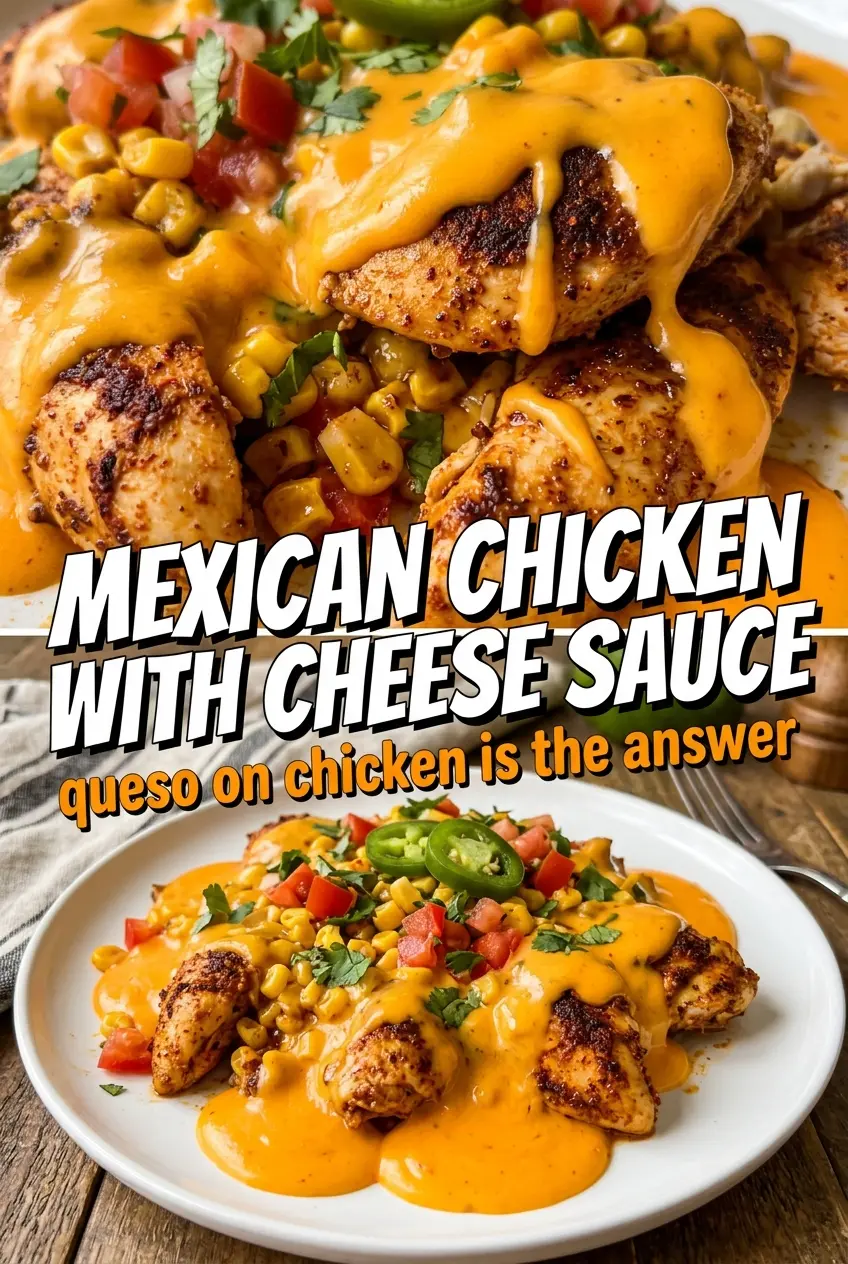
Mexican Chicken with Cheese Sauce
Ingredients
Equipment
Method
- Rub the chicken breasts with taco seasoning. Heat the olive oil in a skillet over medium-high heat until shimmering, then sear the chicken for 5-6 minutes per side until cooked through to 165°F with browned edges as a visual cue.
- Transfer the cooked chicken to a resting area and let it rest briefly, then slice for plating. Use the juices that settle inside to keep the meat juicy when you cut it.
- Melt the butter in a saucepan over medium heat. Whisk in the all-purpose flour and cook for 1 minute until it looks smooth and slightly foamy.
- Gradually add the whole milk while whisking until the mixture turns smooth and lump-free. This step should look glossy and creamy as the sauce thickens slightly.
- Stir in the Mexican cheese blend and cubed Velveeta until melted. Keep whisking until the sauce is fully smooth with a consistent, shiny melt.
- Add the Rotel, diced jalapeño, and cumin, then simmer for 3-4 minutes until the queso sauce is smooth and thick with visible bubbling that turns slow and steady.
- Plate the sliced chicken and pour the queso sauce generously over the top. The orange pool should coat the surface so every piece looks glazed.
- Garnish with fresh cilantro and lime wedges. Add the lime at the table for bright color and a fresh finishing squeeze.
- Serve the Mexican chicken with cheese sauce with rice, tortillas, or over nachos. The sauce should stay spoonable when you ladle it over toppings.