Flaky white fish, blistered cherry tomatoes, briny olives, and capers make this Mediterranean baked fish feel bright and satisfying without asking much from the cook. The fish stays tender because it bakes right on top of the hot vegetable mixture, where the olive oil and wine turn into a quick, savory pan sauce instead of drying out in a plain baking dish.
What makes this version work is the head start the vegetables get in the oven. That short roast softens the tomatoes, mellows the garlic, and lets the capers and olives season the whole dish before the fish ever goes in. By the time the fillets are added, the base is already warm and flavorful, which means the fish cooks gently and picks up flavor as it finishes.
You’ll find a few practical notes below on which fish hold up best, what to do if you want a dairy-free meal with more sauce, and how to avoid overcooking the fillets. That little bit of timing is what keeps this dish from going from delicate to dry.
The tomatoes burst into a sauce and the fish stayed flaky, not dry. I used cod and the lemon at the end pulled everything together perfectly.
Save this Mediterranean Baked Fish for the nights when you want flaky cod, juicy tomatoes, and a quick lemony pan sauce with almost no cleanup.
The Part That Keeps the Fish Tender Instead of Watery
Fish baked with tomatoes can go wrong in two opposite ways: the vegetables stay undercooked, or the fish sits in a shallow puddle and turns soft on the bottom. The fix here is to roast the tomato mixture first so it starts releasing juice and concentrating flavor before the fillets are added. That head start gives you a saucy base instead of raw vegetables under a fragile piece of fish.
The other thing that matters is the bake time after the fish goes in. White fish cooks fast, and once the flesh turns opaque and flakes at the thickest point, it’s done. If you wait for the whole dish to look aggressively cooked in the oven, the fish will be over by the time it reaches the table. Pull it when it still looks moist in the center; carryover heat finishes the job.
What Each Ingredient Is Actually Doing in This Dish
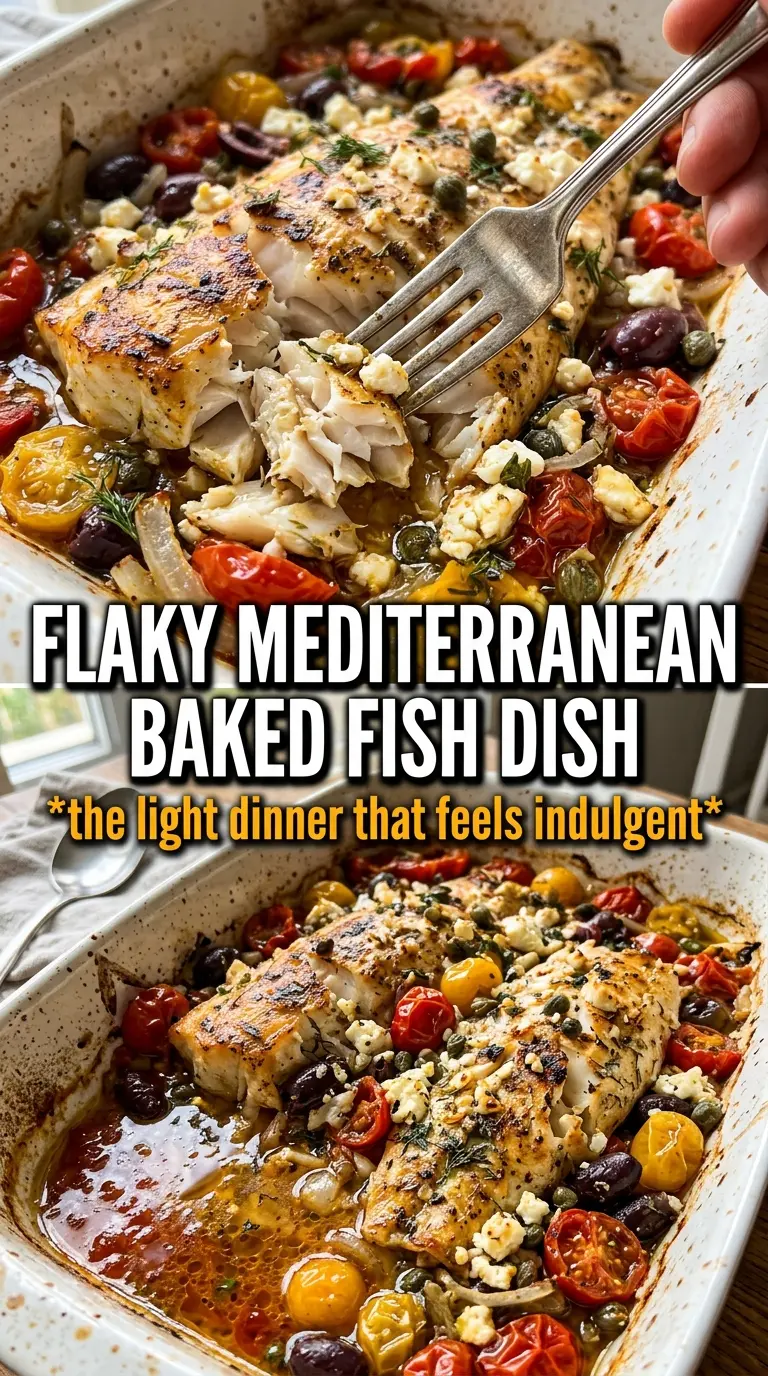
- White fish fillets — Cod gives you the most forgiving texture, halibut is a little meatier, and sea bass brings a richer finish. Any of them work as long as the fillets are similar in thickness so they finish at the same time.
- Cherry tomatoes — These break down into the sauce and give you the juiciest result. Larger tomatoes can work, but they need more time and won’t soften as evenly.
- Kalamata olives and capers — This is the salty backbone of the dish. Don’t swap in bland canned olives if you want the same briny punch; if capers are too strong for you, rinse them lightly before adding.
- Jarred roasted red peppers — They bring sweetness and a soft, silky texture without extra work. Fresh peppers won’t give the same mellow, ready-to-go result unless you roast them first.
- Dry white wine or broth — Wine adds brightness and a little acidity; broth gives you a milder sauce with the same moisture. Use broth if you want to keep it alcohol-free, but don’t skip the liquid entirely or the pan sauce will taste flat.
- Olive oil, oregano, and garlic — Olive oil carries the flavor and helps the vegetables roast instead of drying out. Thinly sliced garlic perfumes the dish without burning as fast as minced garlic, which can turn bitter in the oven.
Building the Pan Sauce in the Oven
Roasting the vegetable base first
Combine the tomatoes, olives, capers, roasted peppers, garlic, wine, olive oil, oregano, and red pepper flakes in the baking dish, then roast until the tomatoes look wrinkled and some of them have started to burst. That first 10 minutes wakes up the garlic and softens the vegetables enough that they can cradle the fish instead of fighting it. If the dish looks dry before the first roast is done, add another splash of wine or broth; the vegetables should be glossy, not swimming.
Nesting in the fillets
Season the fish lightly with salt and pepper, then settle the fillets into the hot vegetables in a single layer. Don’t bury them under the sauce; a little exposure on top helps the surface cook evenly and keeps the texture clean and flaky. If your fillets are very thin, check them early because they can go from just-cooked to dry in a minute or two.
Finishing until the fish just flakes
Bake until the fish flakes easily with a fork and still looks moist in the center, usually 12 to 15 minutes depending on thickness. The tomatoes will continue to collapse and the juices will mingle with the olive oil, giving you a spoonable sauce around the edges of the pan. Finish with parsley and lemon wedges at the table; that fresh acid sharpens the briny flavors and keeps the dish from tasting heavy.
Make it with salmon instead of white fish
Salmon works if you want a richer dish with a firmer bite. Keep the same vegetable base, but expect the fish to need a couple extra minutes depending on thickness. The result is less delicate than cod but stands up beautifully to the olives and capers.
Dairy-free and naturally gluten-free
This recipe already fits both diets as written, which is part of why I make it often. Just check that your broth is gluten-free if you use it instead of wine, and keep the pan sauce simple with olive oil and lemon rather than adding butter at the end.
Make it more saucy for serving over rice or couscous
Add another 1/4 cup of wine or broth with the vegetables so there’s more liquid in the pan after baking. The extra moisture gives you more spoonable sauce, which is helpful if you plan to serve the fish with grains or crusty bread to catch the juices.
Use less salt without losing the Mediterranean edge
Rinse the capers and olives briefly if you want a gentler briny finish. You’ll lose a little intensity, but the roasted tomatoes, garlic, and lemon still carry the dish. This is the best move if your olives are especially salty.
Storage and Reheating
- Refrigerator: Store leftovers in an airtight container for up to 2 days. The fish will lose a little moisture, but the sauce actually gets more concentrated.
- Freezer: I don’t recommend freezing the finished dish. Cooked white fish turns dry and grainy after thawing, and the tomatoes lose their texture.
- Reheating: Warm gently in a covered skillet over low heat with a spoonful of broth or water, or reheat in a 300F oven until just warmed through. High heat is the mistake that dries out the fish and makes the sauce separate.
Questions I Get Asked About This Recipe
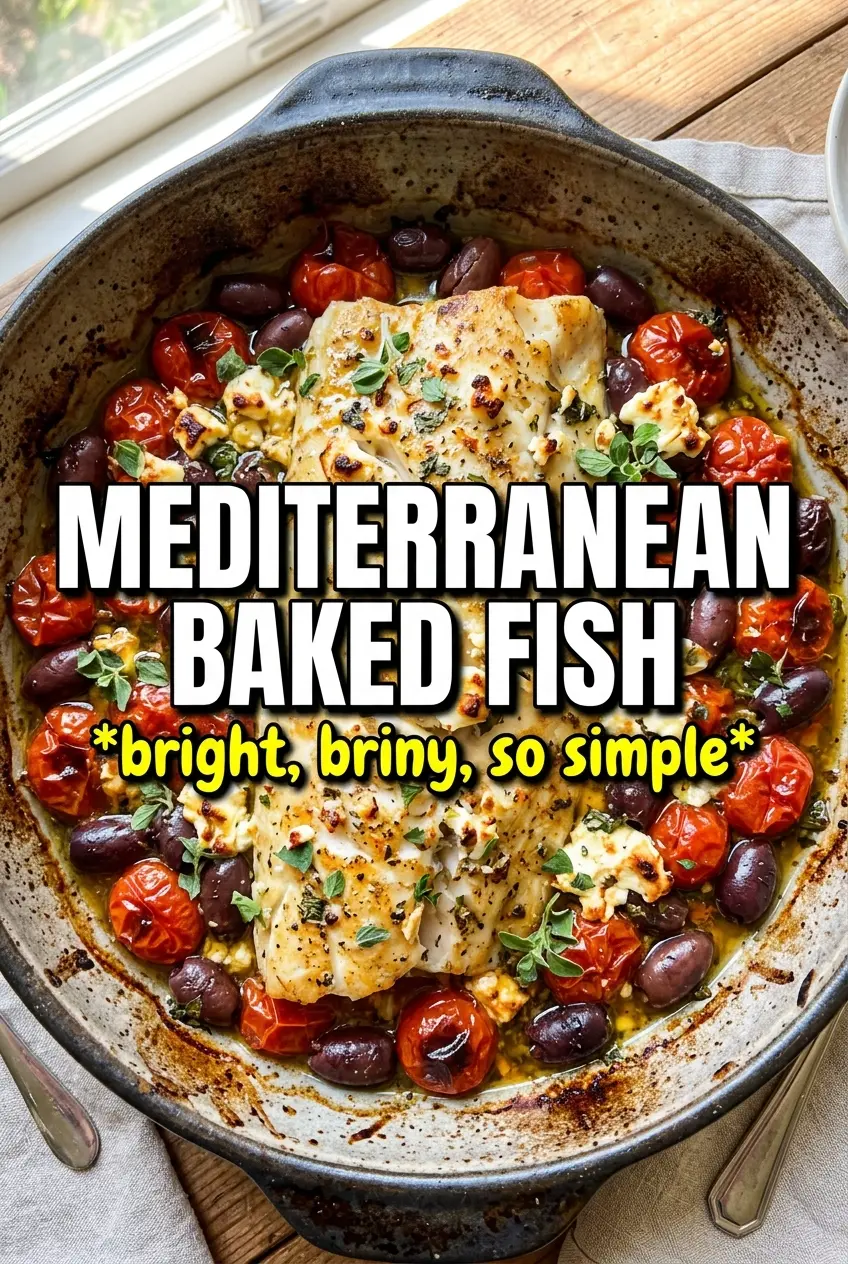
Mediterranean Baked Fish
Ingredients
Equipment
Method
- Preheat the oven to 400°F and grease a 9x13 baking dish so the fish releases easily.
- Combine cherry tomatoes, Kalamata olives, capers, roasted red peppers, garlic, dry white wine or broth, olive oil, dried oregano, and red pepper flakes in the baking dish and stir to coat.
- Roast the vegetable mixture for 10 minutes, until the tomatoes look slightly softened and the mixture is bubbling around the edges.
- Season the fish fillets with salt and pepper, then nestle them into the roasted vegetable mixture so the tops are slightly exposed.
- Bake for 12-15 more minutes at 400°F, until the fish flakes easily with a fork and turns opaque in the center.
- Garnish with fresh parsley and serve with lemon wedges for a bright, citrus finish.