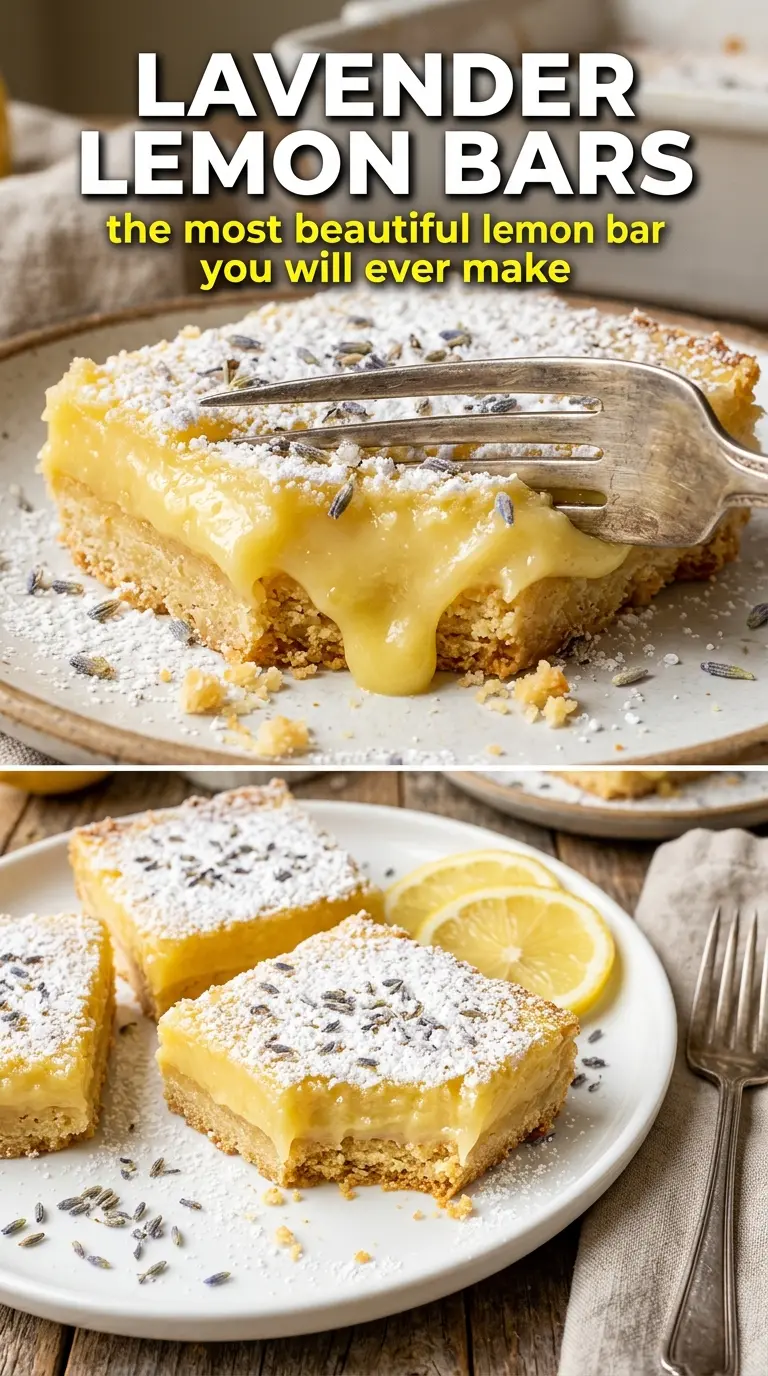
Pale yellow lemon bars over a lavender shortbread crust hit the sweet spot between bright and elegant. The filling sets into a clean slice with a soft, creamy center, while the crust stays tender and sandy instead of turning hard or greasy. That contrast is what makes these bars worth repeating.
The lavender needs to stay subtle. Ground finely and used in the crust only, it perfumes the butter without taking over the lemon. The filling is built with a little flour so it bakes into a neat square rather than a loose curd, and the bars need that full chill time so the knife cuts through cleanly instead of dragging the top layer.
Below, I’ve included the trick that keeps the crust from crumbling, the right visual cue for the filling, and a few variations if you want to adjust the floral note or make the bars ahead for a crowd.
The crust held together beautifully and the lavender stayed light and floral instead of tasting perfumey. I chilled them overnight, and the squares cut cleanly with a sharp knife.
Save these lavender shortbread lemon bars for the days when you want a citrus dessert with a delicate floral finish.
The reason the crust gets sandy, not tough
Shortbread bars go wrong when the butter gets worked too much or the crust is baked until it looks deeply browned. You want the mixture to just come together, then press it firmly into the pan so it bakes into a compact base. That gives you a crust that holds the lemon filling without becoming dense.
The lavender belongs in the crust, not the filling. It blooms in the butter and flour where the flavor spreads evenly, and it stays restrained. If you add too much or grind it too coarsely, the bars can taste soapy or leave little woody bits behind.
- Culinary lavender — Use food-grade dried lavender only. Grind it finely so the flavor disperses through the crust instead of landing in little bitter pockets.
- Cold butter — This is what keeps the crust tender. Warm butter blends too smoothly and makes the base greasy instead of sandy.
- Fresh lemon juice — Bottled juice tastes flat here. Fresh juice gives the filling its sharp clean edge, and the zest carries the aroma that makes the bars smell bright before you even take a bite.
- Flour in the filling — This is what helps the lemon layer bake into neat slices. Without it, the bars lean more like a loose curd and cut messily.
What Each Ingredient Is Actually Doing in This Dessert
- Sugar (the sweetness and structure) — Sugar tenderizes baked goods and creams with butter to create air. Don’t reduce it too much or the dessert becomes dense and dry.
- Butter or fat (the richness and texture) — This carries flavors and creates tender crumb. Proper creaming with sugar adds volume to cakes and bars.
- Eggs (the binder and lift) — These create structure and help baked goods rise. Room temperature eggs incorporate better than cold ones.
- Flour (the structure base) — This holds everything together. Don’t overmix or the texture becomes tough and dense instead of tender.
- Fruit (the flavor and moisture) — Fresh or cooked fruit adds natural sweetness and moisture. Layer it evenly so every bite has balanced flavor.
- Leavening (baking powder or soda) — This creates rise and light crumb. Too much makes the dessert taste bitter and fall flat.
- Flavoring (vanilla, spices, citrus) — These define the personality. Use good quality flavorings so they shine through the sweetness.
- Final finish (glaze, whipped cream, topping) — This adds moisture, flavor, and visual appeal. Don’t skip it or the dessert feels incomplete and one-dimensional.
Building the bars so the filling sets cleanly
Make the lavender shortbread first
Pulse the crust ingredients until the mixture looks like damp sand and starts clumping when you pinch it. Stop before it turns into a paste. If the dough is overworked, the crust bakes up tough instead of tender. Press it firmly and evenly into the parchment-lined pan so the edges don’t crumble when you slice the bars later.
Bake the base just until it turns pale gold
The crust should come out lightly golden at the edges, not deeply browned across the top. It will finish setting again once the filling bakes on top of it. If you overbake the base, the final bars taste dry and the lavender note gets muted.
Pour the lemon mixture onto the warm crust
Whisk the eggs, yolks, sugar, lemon juice, zest, and flour until the mixture looks smooth and uniform. Pour it over the crust while it’s still warm so the layers bond. A few streaks of unmixed flour will show up as pale specks in the finished bars, so whisk thoroughly before pouring.
Pull the bars when the center barely moves
Bake until the filling is set around the edges and the center has only the slightest wobble when you nudge the pan. If the center sloshes, it needs more time. If it puffs high and starts to crack, it’s gone too far. The bars finish setting as they cool, then firm up completely in the refrigerator.
How to adapt these lemon bars without losing the balance
Make them less floral
Cut the lavender to 1/2 teaspoon if you want the bars to read mostly as lemon with a whisper of perfume. The bars still taste elegant, but the citrus becomes the main event.
Gluten-free variation
Use a good 1:1 gluten-free baking flour in both the crust and filling. The bars will slice well, though the crust may be slightly more fragile, so chill them fully before cutting.
Make them ahead for cleaner slices
Bake the bars a day in advance and leave them chilled overnight before dusting with sugar. The filling firms up more evenly, and the squares cut with clean edges instead of smearing on the knife.
Storage and Reheating
- Refrigerator: Keep covered for up to 5 days. The crust stays best on day one and two, but the bars still slice cleanly after chilling.
- Freezer: These freeze well. Freeze the cut bars on a tray, then wrap tightly and store for up to 2 months. Dust with powdered sugar after thawing, not before.
- Reheating: Don’t reheat these. Serve them chilled or at cool room temperature so the filling stays set and the crust keeps its shortbread texture.
Answers to the questions worth asking

Lavender Shortbread Lemon Bars
Ingredients
Equipment
Method
- Preheat the oven to 350°F and line a 9x13 pan with parchment paper, leaving overhang for lifting later.
- Pulse the all-purpose flour, powdered sugar, salt, dried culinary lavender, and cold butter in a food processor until the mixture just comes together.
- Press the crust mixture firmly and evenly into the prepared pan, then bake for 18–20 minutes until lightly golden.
- Whisk the eggs, egg yolks, granulated sugar, fresh lemon juice, lemon zest, and all-purpose flour until smooth.
- Pour the lemon curd mixture over the warm crust.
- Bake for 18–22 minutes until the filling is just set with no jiggle in the center; remove and cool completely to room temperature.
- Refrigerate the bars for at least 2 hours until firm.
- Dust generously with powdered sugar, then scatter dried lavender buds and lemon zest curls over the top.
- Cut into 16 bars and serve after slicing.