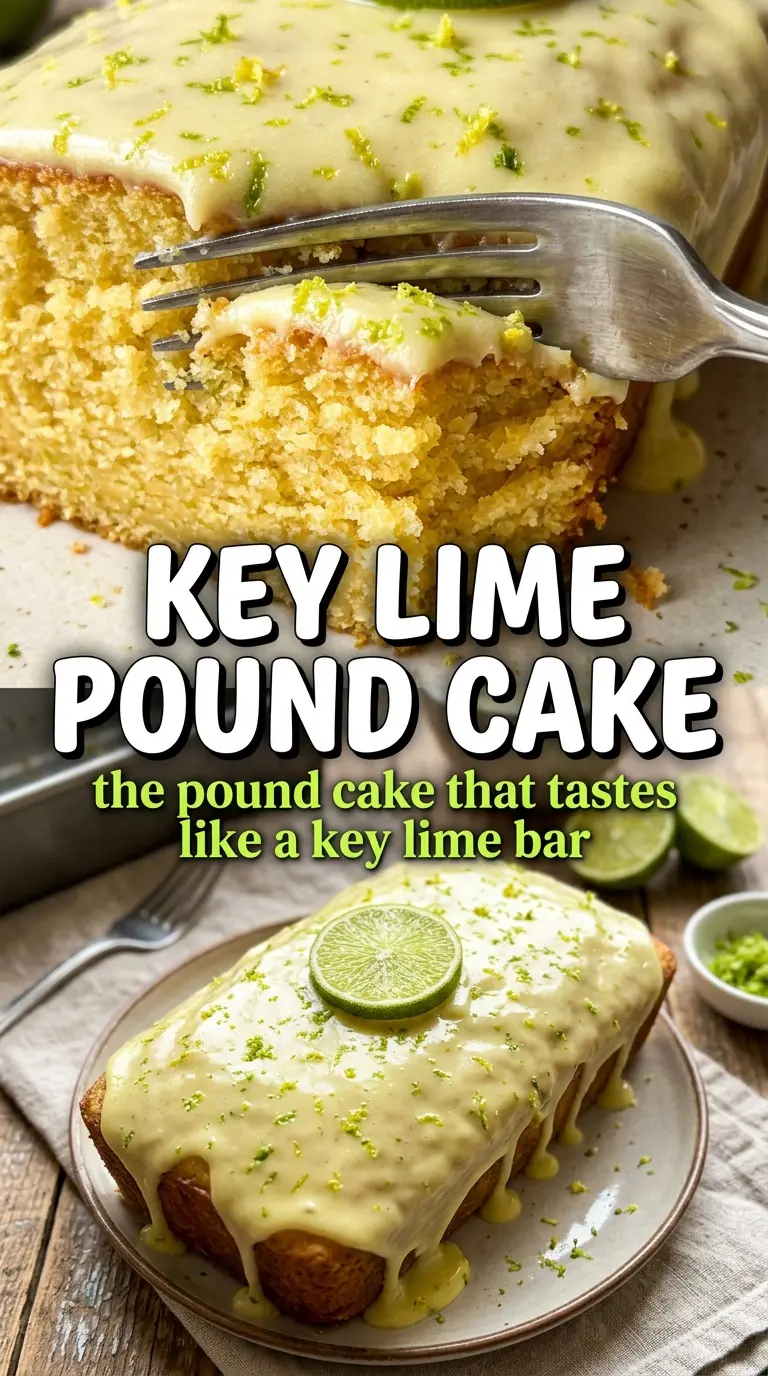
Key lime pound cake earns its place on the dessert table because the crumb stays dense and tender without turning heavy, and the lime flavor comes through clean instead of sharp or bitter. The glaze settles into the ridges of the Bundt pan, so every slice gets that bright, tangy finish along with the buttery cake underneath.
The part that makes this version work is balance. Sour cream keeps the batter moist and gives the crumb a fine, tight texture, while the key lime juice and zest are added late enough to keep the citrus fresh. That matters in a pound cake, where too much liquid or too much mixing can quickly tip the whole thing into tough or uneven.
Below, I’ve included the small details that matter most: how to keep the batter from curdling, when to glaze so it doesn’t disappear into the cake, and the best way to adapt the recipe if you only have regular limes on hand.
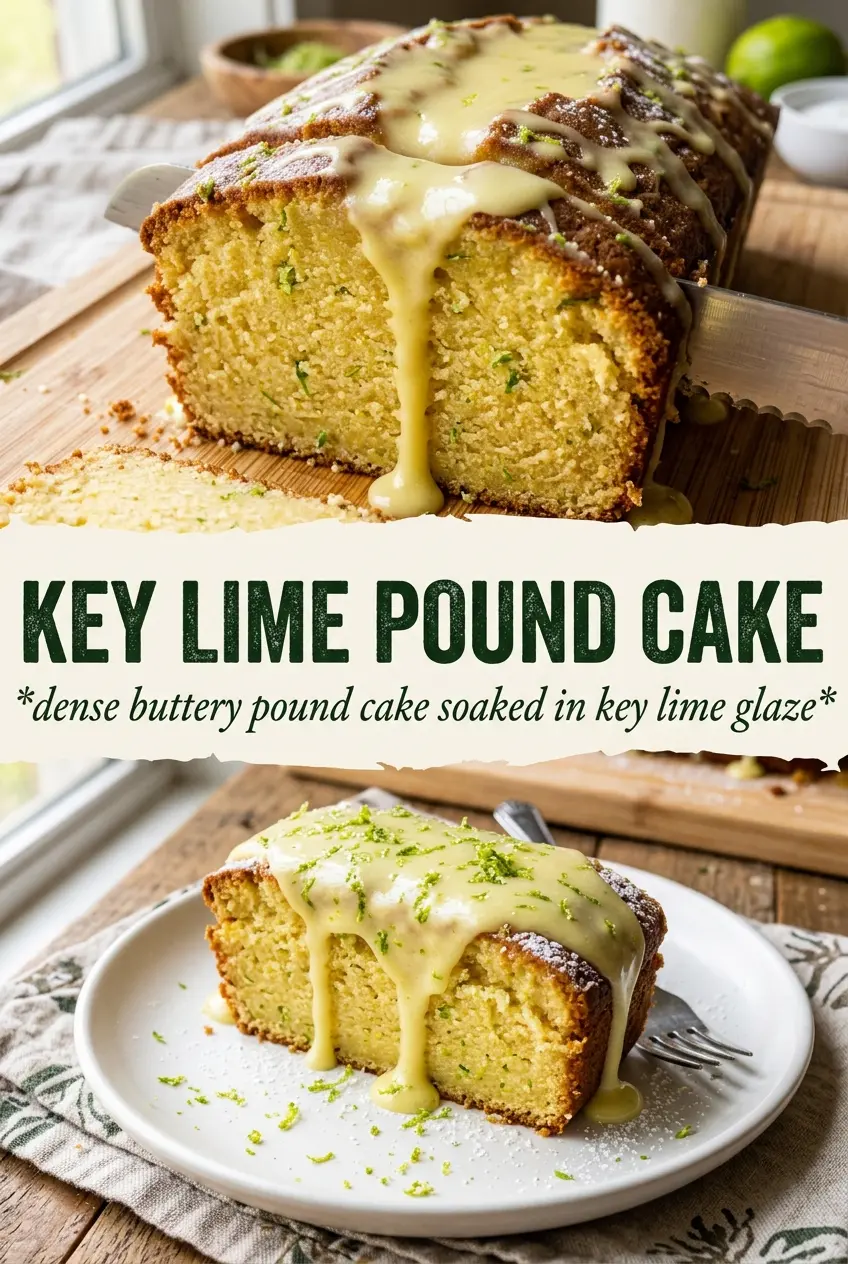
The cake baked up with that tight pound cake crumb I was hoping for, and the key lime glaze set perfectly instead of soaking in and disappearing. I got clean slices after cooling it and the lime flavor was bright without being sour.
Save this key lime pound cake for when you want a buttery Bundt cake with a tangy citrus glaze and a dense, sliceable crumb.
The Part That Keeps Pound Cake Dense Instead of Heavy
Pound cake has a narrow line between plush and leaden. The main thing to protect here is the air you beat into the butter and sugar at the start, then the structure you build when you alternate the dry ingredients with the sour cream. If you dump everything in at once, the batter tightens up fast and the cake bakes up with a coarse, uneven crumb.
Key lime juice is wonderful here, but it’s also acidic enough to matter. That’s why it goes in with the final additions instead of getting mixed early into the butter. You want the batter smooth and stable before the citrus shows up. If the mixture looks a little curdled after the sour cream and lime juice are added, keep going; once the flour goes in, it usually smooths back out.
- Butter — Use softened butter, not melted butter. Soft butter traps air when you cream it with the sugar, and that’s what gives this cake its lift.
- Sour cream — This is the moisture insurance. Full-fat sour cream gives the best texture; plain Greek yogurt works in a pinch, but the crumb will be a little less rich.
- Key lime juice and zest — Fresh is worth it here. Bottled juice can work if that’s all you have, but the zest is what keeps the flavor bright and prevents the cake from tasting flat.
- Flour — All-purpose flour is the right choice. Cake flour makes the crumb softer, but this recipe is meant to hold that classic pound-cake slice.
What Each Ingredient Is Actually Doing in This Dessert
- Sugar (the sweetness and structure) — Sugar tenderizes baked goods and creams into butter to create air. Don’t skip it or reduce it too much.
- Fat (butter, oil, or cream cheese) — This carries flavors and creates tender crumb. Proper creaming with sugar adds volume to cakes.
- Eggs (the binder and lift) — Eggs create structure and help baked goods rise. Room temperature eggs incorporate better than cold ones.
- Flour (the structure) — This is what makes baked goods hold together. Don’t overmix or the texture becomes tough and dense.
- Flavoring (vanilla, chocolate, fruit, spices) — These define the personality of the dessert. Use good quality flavorings so they shine.
- Leavening (baking powder, baking soda, whipped eggs) — This creates rise and light crumb. Too much makes the dessert taste bitter.
- Liquid (milk, water, or fruit juice) — This hydrates flour and carries flavors. Too much makes the dessert dense; too little makes it dry.
- Final finish (frosting, glaze, fruit, whipped cream) — The topping adds moisture, flavor, and visual appeal. Don’t skip it or the dessert feels incomplete.
Building the Batter So the Lime Stays Bright
Creaming the Butter and Sugar
Beat the butter and sugar until it turns pale, fluffy, and noticeably increased in volume. Five minutes is a good target, but the visual cue matters more than the clock. If the butter is too cold, the mixture stays grainy and won’t trap enough air; if it’s too warm, the cake can bake up greasy and dense. The bowl should look light and almost whipped before you add the eggs.
Adding the Eggs Without Breaking the Batter
Add the eggs one at a time and let each one disappear before the next goes in. That slow addition keeps the emulsion stable, which matters in a butter-heavy cake like this. If the batter starts looking broken or curdled, it usually means the eggs were added too quickly or the butter was too cold. It still usually comes together once the flour starts going in.
Alternating the Dry Ingredients and Sour Cream
Mix the flour, baking soda, and salt separately, then add the dry ingredients and sour cream in three additions. This keeps the batter from being overworked, which is the fastest way to lose that fine pound-cake crumb. Stir just until the flour streaks disappear. Once the key lime juice, zest, and vanilla go in, stop as soon as the batter looks even.
Baking and Glazing at the Right Time
Pour the batter into a well-greased and floured Bundt pan, then bake until a tester comes out clean and the top springs back lightly when touched. Don’t rush the cooling step; the cake needs those 15 minutes in the pan to set enough to release cleanly. Wait until the cake is completely cool before adding the glaze, or it will slide off instead of clinging to the ridges. A good glaze should pool slowly down the sides and set into a thin shell.
How to Adapt This Key Lime Pound Cake Without Losing the Texture
Regular lime instead of key lime
Regular limes work well if that’s what you have, but the flavor will be a little sharper and less floral. Use the same amount of juice and zest, then taste the glaze before adding all of the juice if your limes are extra tart.
Dairy-free version
Swap the butter for a high-quality plant-based butter stick and replace the sour cream with a thick dairy-free yogurt. The cake will still bake up tender, though the crumb may be a little less rich and the glaze may need a touch more juice to thin properly.
Extra citrus glaze
If you like a stronger finish, whisk the glaze a little thinner so it runs down the cake in visible drips. That gives you more tang on top without changing the cake itself. Let it set fully before slicing or the glaze will smear instead of holding its shape.
Storage and Reheating
- Refrigerator: Store covered for up to 5 days. The crumb stays moist, though the butter-rich texture firms up a bit when chilled.
- Freezer: Freeze slices tightly wrapped for up to 2 months. Freeze without glaze if you want the cleanest finish; add fresh glaze after thawing.
- Reheating: Let slices come to room temperature, or warm them for a few seconds in the microwave. Don’t overheat it or the cake turns greasy and the glaze melts into a sticky patch.
Questions I Get Asked About This Recipe
Key Lime Pound Cake
Ingredients
Equipment
Method
- Preheat the oven to 325°F and grease and flour a Bundt pan, so the golden crumb releases cleanly after baking.
- Beat butter and granulated sugar until very light and fluffy, about 5 minutes, for a tighter pound-cake texture.
- Add the eggs one at a time, mixing well after each addition, until the batter looks smooth and thick.
- In a separate step, stir together all-purpose flour, baking soda, and salt to make the dry mix.
- Alternately add the flour mixture and sour cream in 3 additions, starting and ending with flour, until just combined.
- Stir in fresh key lime juice, key lime zest, and vanilla extract, mixing only until the batter is evenly fragrant.
- Pour the batter into the prepared Bundt pan and smooth the top with a light even layer.
- Bake for 60–70 minutes at 325°F, until a toothpick comes out clean with no wet batter.
- Cool in the pan for 15 minutes, then invert to release the cake onto a surface for full cooling.
- Whisk powdered sugar, fresh key lime juice, and key lime zest until smooth and glossy.
- Drizzle the glaze over the completely cooled cake so it pools into every crack and crevice.
- Let the glaze set before slicing, until the drizzle looks firm rather than runny.