Juicy steak with creamy garlic sauce is one of those dinners that looks like it took a lot more work than it did. You get a hard, savory crust on the outside, a pink, tender center, and a pan sauce that clings to every slice instead of running off the plate. It feels restaurant-level, but it comes together in one skillet with ingredients you probably already keep around.
The key is starting with a properly hot cast iron pan and giving the steaks time to rest before they hit the heat. That short rest at room temperature helps the crust develop faster, which keeps the center from overcooking while the outside browns. The sauce works the same way: the garlic cooks briefly in butter, the broth gets reduced before the cream goes in, and the parmesan finishes it with just enough body to turn silky instead of thin.
Below, I’ll show you the sear I use for a deep brown crust, the exact moment to add the butter for basting, and how to keep the garlic cream sauce smooth in the same pan without breaking it.
The crust on the steak was perfect and the sauce thickened up exactly like you said. I used ribeye and the garlic cream spooned over the top made it taste like a steakhouse meal.
Save this ribeye with creamy garlic sauce for the night you want a crisp crust, a silky pan sauce, and almost no cleanup.
The Mistake That Makes Steak Lose Its Crust
The biggest problem with pan-seared steak is starting before the skillet is hot enough. If the pan isn’t smoking hot, the steak gives off moisture before it browns, and you end up steaming the surface instead of building that deep crust you want. Cast iron matters here because it holds heat when the cold steak hits the pan.
The other trap is moving the steak around too early. Leave it alone for those first few minutes and let the surface set. Once it releases with a little resistance and the color has turned deep brown, you’re in good shape. The butter goes in late, not at the start, so it bastes the steak without burning before the sear is done.
What the Ribeye, Butter, and Cream Are Each Doing Here
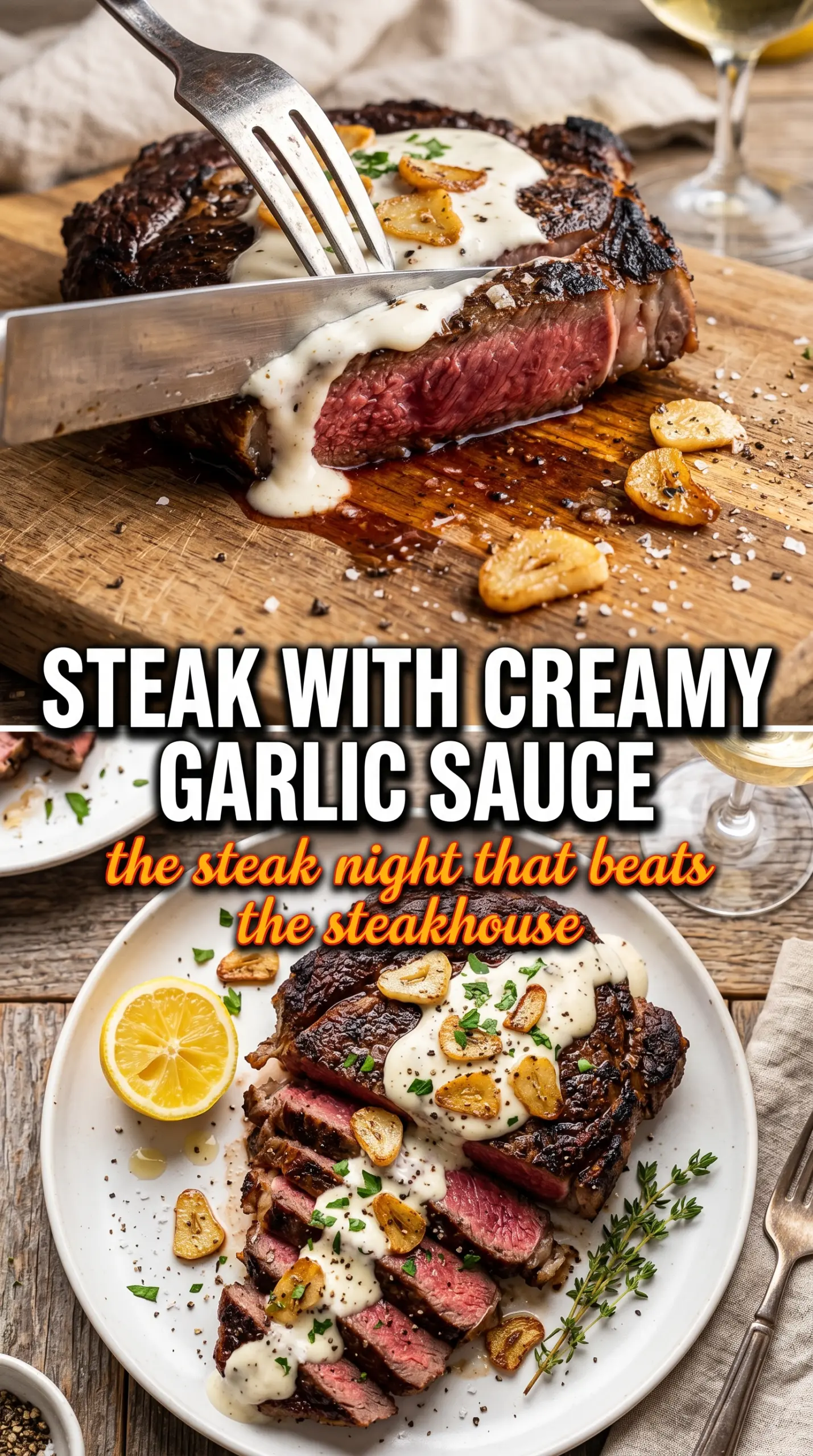
- Ribeye or NY strip steaks — Ribeye gives you more fat and a richer bite, while NY strip stays a little leaner and firmer. Either one works well at this thickness because it can build a proper crust before the center overcooks. If your steaks are thinner than 1 inch, shorten the sear or they’ll run past medium-rare fast.
- Vegetable oil — Use a neutral oil with a high smoke point so the pan can get aggressively hot without the oil turning bitter. Olive oil can work in a pinch, but it smokes sooner and makes the skillet harder to control.
- Butter — The first butter finish is for basting the steaks, and the second part builds the sauce. Butter adds the browned, savory edge you can’t get from oil alone, but it burns if you add it before the crust is set.
- Garlic, beef broth, heavy cream, parmesan, and thyme — Garlic gives the sauce its backbone, broth adds depth and helps deglaze the pan, and cream turns the reduction into something spoonable. Parmesan thickens the sauce and adds saltiness, while thyme keeps it from tasting flat. If you need a substitute, half-and-half can work, but the sauce will be looser and less luxurious.
Build the Crust First, Then Turn the Pan Into Sauce
Seasoning and Resting the Steaks
Salt and pepper should go on all sides, not just the top. Let the steaks sit at room temperature for about 30 minutes so the chill comes off the center and the sear moves faster. If you cook them straight from the fridge, the outside overcooks before the inside has time to catch up.
The Sear in a Smoking-Hot Skillet
Heat the cast iron until it’s just beginning to smoke, then add the oil and lay the steaks down away from you so the splatter doesn’t hit your hands. Don’t move them for 3 to 4 minutes per side unless your pan runs very hot; the surface should look deeply browned and release cleanly when it’s ready. Add the butter in the last minute and spoon it over the steaks until the edges look lacquered.
The Rest That Keeps the Juices Inside
Take the steaks out and rest them under foil for 5 minutes. That rest matters because the juices settle back into the meat instead of pouring onto the cutting board. If you slice too soon, the board gets the best part of the steak.
Reducing the Garlic Cream Sauce
Use the same pan and leave the browned bits in place; that’s the flavor. Cook the garlic in the melted butter for just 1 minute so it softens without taking on color, then add the broth and let it reduce by half before the cream goes in. Once the cream, parmesan, and thyme are in, keep the heat at a gentle simmer and stir until the sauce coats the back of a spoon. If it looks thin, give it another minute or two instead of cranking the heat, which can split the cream.
Make It with Strip Steak Instead of Ribeye
NY strip gives you a slightly leaner steak with a firmer chew, and it still sears beautifully in a hot cast iron pan. You’ll lose a little of the rich ribeye fat, but the creamy garlic sauce fills that gap nicely.
Dairy-Free Version
Swap the butter for a dairy-free butter substitute and use full-fat coconut cream instead of heavy cream. The sauce will be a little sweeter and less classic, so keep the parmesan out and season carefully with salt to balance it.
Low-Carb Sauce With Extra Body
This recipe is already naturally low in carbs, but if you want the sauce even thicker, let the broth reduce a little farther before adding the cream. That gives you more concentration without adding flour or cornstarch, which can dull the glossy finish.
Storage and Reheating
- Refrigerator: Store the sliced steak and sauce separately for up to 3 days. The sauce will thicken as it chills.
- Freezer: The steak freezes fine, but the cream sauce doesn’t thaw well and can turn grainy. Freeze the meat only if you want to save it.
- Reheating: Warm the steak gently in a skillet over low heat or in short bursts in the microwave. Reheat the sauce slowly over low heat with a splash of broth or cream, because high heat is the fastest way to make it split.
Questions I Get Asked About This Recipe
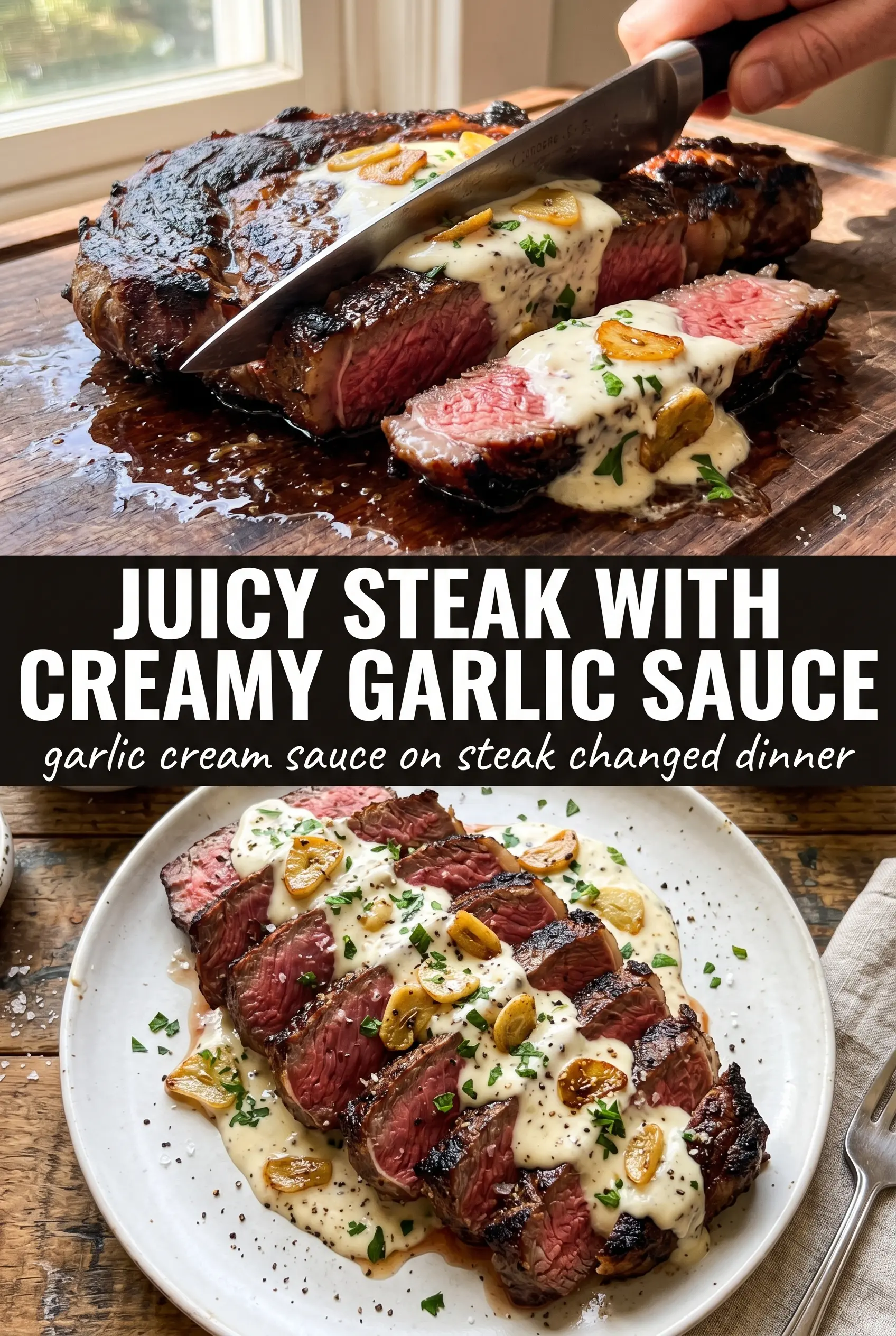
Juicy Steak with Creamy Garlic Sauce
Ingredients
Equipment
Method
- Generously season the steaks with salt and coarse black pepper on all sides, then let them rest at room temperature for 30 minutes so the seasoning absorbs. Visual cue: the surface looks evenly speckled with pepper.
- Heat a cast iron skillet over high heat until smoking, then add the vegetable oil and immediately place the steaks in the pan. Visual cue: the steaks sizzle vigorously on contact.
- Sear for 3–4 minutes per side for medium-rare, turning once, and add 2 tablespoons of butter in the last minute while basting constantly with the foaming fat. Visual cue: a golden-brown crust forms and the edges deepen in color.
- Remove the steaks to a plate, tent loosely with foil, and rest for 5 minutes to keep juices inside. Visual cue: the crust stays set while steam softens at the surface.
- In the same pan over medium heat, melt the remaining butter, then add the minced garlic and cook for 1 minute until fragrant. Visual cue: the garlic turns glossy without browning.
- Add the beef broth and reduce by half, stirring and scraping up the browned bits from the pan. Visual cue: the liquid level visibly drops and looks slightly syrupy.
- Add the heavy cream, parmesan, and thyme, then simmer until the sauce coats the back of a spoon, stirring as it thickens. Visual cue: drag a spoon through the sauce and a clear line remains.
- Slice the steaks and serve immediately, spooning the creamy garlic sauce generously over the top. Visual cue: sauce pools around the slices instead of running off.