Caramelized pineapple, sticky-glazed chicken thighs, and sweet peppers make this Hawaiian chicken sheet pan dinner one of those meals that disappears fast. The chicken comes out juicy, the pineapple edges turn glossy and browned, and the onion softens just enough to pick up the savory-sweet marinade without going limp. It’s the kind of dinner that looks like you spent more effort on it than you did.
What makes this version work is the way the marinade gets divided. Most of it goes on the chicken and pineapple before roasting, which seasons them from the start, and the reserved portion gets brushed on halfway through so the pan finishes with a fresh, sticky sheen instead of a dried-out glaze. A hot oven does the heavy lifting here, and the single sheet pan gives the chicken enough contact with the heat to pick up color while the vegetables roast right alongside it.
Below, I’ve included the little things that matter most: which ingredients are worth paying attention to, how to keep the chicken from steaming, and what to change if you want to adapt it for a different diet or whatever’s already in your fridge.
The chicken stayed juicy and the pineapple caramelized instead of turning mushy. I brushed the extra marinade on halfway through and it gave the whole pan that sticky finish I was hoping for.
Like this sticky Hawaiian chicken sheet pan dinner? Save it for nights when you want caramelized pineapple, juicy chicken, and one-pan cleanup.
The Reason the Chicken Gets Glossy Instead of Dry
The biggest mistake with sheet pan chicken is crowding. When everything is packed too tightly, the pineapple and vegetables steam, the chicken sheds moisture, and you lose the browned edges that make this dish worth making. Give the pieces room so hot air can move around them, and use a large pan if you have one.
The second thing that matters is the order of the marinade. If all of it goes on at the beginning, the honey can darken too fast while the chicken is still cooking through. By brushing on the reserved marinade halfway through, you get a lacquered finish without burning the sugars before the thighs are done.
- Chicken thighs — Boneless, skinless thighs stay tender at a high oven temperature and forgive small timing mistakes. Chicken breasts will work, but they dry out faster and need less time in the oven.
- Fresh pineapple — Fresh pineapple caramelizes better than canned because it brings less liquid to the pan. If you use canned, drain it well and pat it dry so it roasts instead of steams.
- Sesame oil — A little goes a long way here. It gives the marinade a toasted, savory edge that balances the honey and pineapple. Don’t swap in a neutral oil if you want the same depth.
- Soy sauce — This is the salt and the backbone of the glaze. Low-sodium soy sauce is the safest choice if you want control over the seasoning, especially once the marinade reduces in the oven.
What Each Ingredient Is Actually Doing in This Sheet Pan Dinner
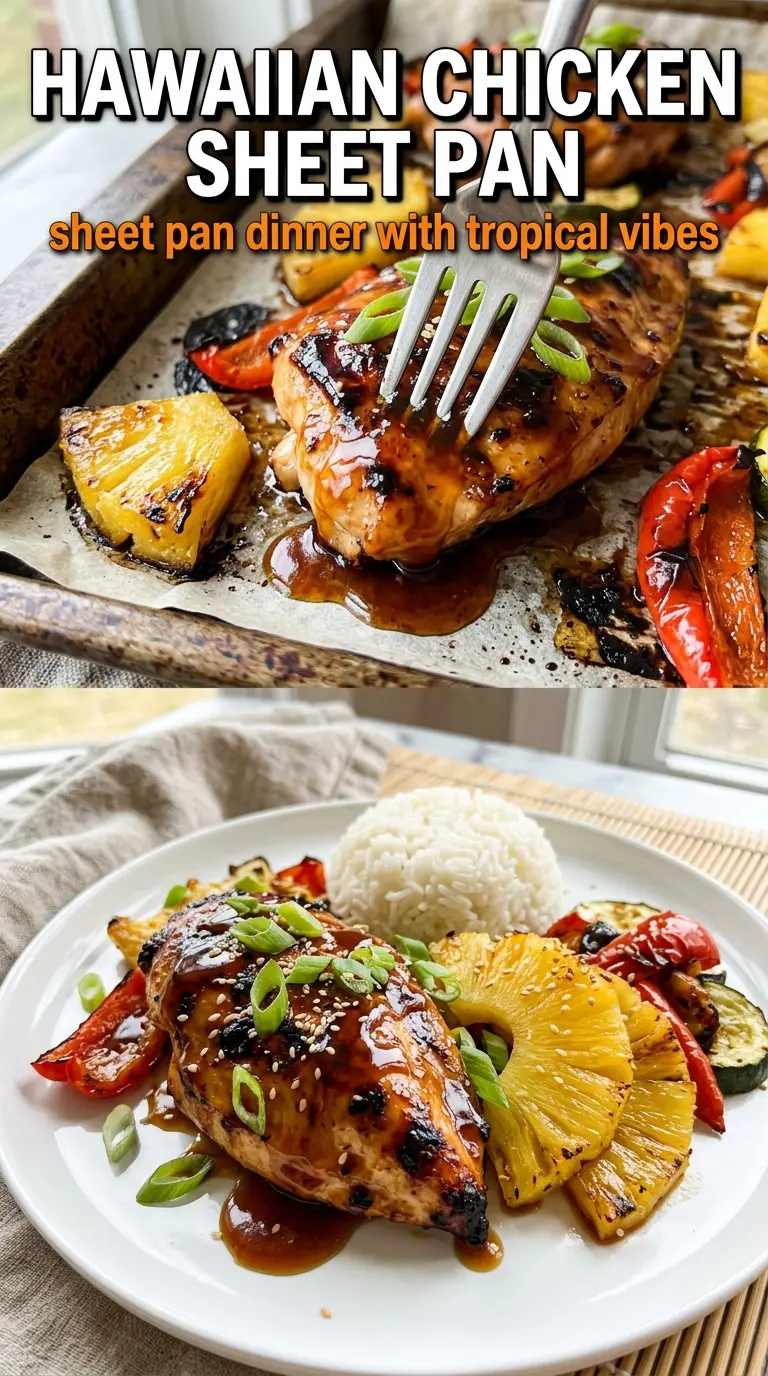
- Protein (chicken, fish, or meat) — Arrange in a single layer so it roasts evenly. Pat dry so it browns instead of steaming.
- Vegetables (the side and flavor) — Cut to similar sizes so everything finishes at the same time. Toss with oil so they caramelize.
- Olive oil (the cook and flavor carrier) — Don’t skimp. Oil helps vegetables brown and carries seasonings throughout the pan.
- Seasonings (salt, spices, herbs) — Season everything generously because the oven’s dry heat mutes flavors. Apply salt to vegetables and protein separately.
- Heat (425-450°F is ideal) — High heat helps vegetables caramelize and protein brown while staying juicy inside.
- Spacing (the pan layout matters) — Don’t crowd the pan or everything steams instead of roasting. Use two pans if needed.
- Timing (the coordination) — Add vegetables that need more time first; delicate ones near the end. Check at 15 and 20 minutes.
- Final finish (lemon or fresh herbs) — A squeeze of citrus or handful of fresh herbs right before serving brightens the whole plate.
How to Keep the Pan Hot Enough to Roast, Not Steam
Mixing the Marinade
Whisk the soy sauce, honey, pineapple juice, garlic, ginger, and sesame oil until the honey dissolves into the liquid. If you see streaks of honey left behind, they’ll cling unevenly to the chicken and can scorch in spots. The marinade should look smooth and glossy before it ever touches the pan.
Coating the Chicken and Pineapple
Toss the chicken thighs and pineapple chunks with most of the marinade, then hold back the rest for later. This gives the meat time to take on seasoning while the pan still has a fresh layer of sauce reserved for the finish. If you pour every drop on at once, the glaze can get too dark before the chicken is cooked through.
Roasting for Browning
Spread everything out on the sheet pan and tuck the bell peppers and onion around the chicken instead of piling them on top. Roast at 425°F so the edges have enough heat to caramelize before the chicken dries out. Halfway through, brush on the reserved marinade and rotate the pan if your oven has hot spots; that’s what keeps the color even and the pineapple glossy.
Finishing With Fresh Garnish
The green onions and sesame seeds go on at the end, after the chicken comes out of the oven. Fresh garnish wakes up the sweet glaze and gives each bite a little crunch. If the pan looks a little loose and juicy when it comes out, let it rest for a few minutes before serving so the juices settle back into the chicken.
How to Adapt This for the Pantry You Have
Gluten-Free Version
Use gluten-free tamari in place of soy sauce. The flavor stays savory and balanced, and the honey-pineapple glaze still caramelizes the same way. Check that your sesame oil and any garnish ingredients are also certified gluten-free if you’re cooking for someone sensitive.
Lower-Sugar Swaps
Cut the honey back slightly if you want a less sticky glaze, but don’t remove it entirely. The honey helps the sauce brown and cling to the chicken, and without it the marinade tastes thinner and more one-note.
Chicken Breast Swap
Chicken breasts work if that’s what you have, but cut them into large, even pieces and start checking early. They don’t have the fat cushion that thighs do, so once they’re opaque through the center, pull the pan from the oven instead of waiting for a deeper color.
Storage and Reheating
- Refrigerator: Store leftovers in an airtight container for up to 4 days. The pineapple softens a bit, but the flavor holds well.
- Freezer: This freezes well for up to 2 months. Freeze in portions with rice if you like, and thaw overnight in the refrigerator before reheating.
- Reheating: Warm in a 350°F oven or in a skillet over medium-low heat until hot. The biggest mistake is blasting it in the microwave too long, which turns the chicken rubbery and makes the pineapple collapse.
Answers to the Questions Worth Asking
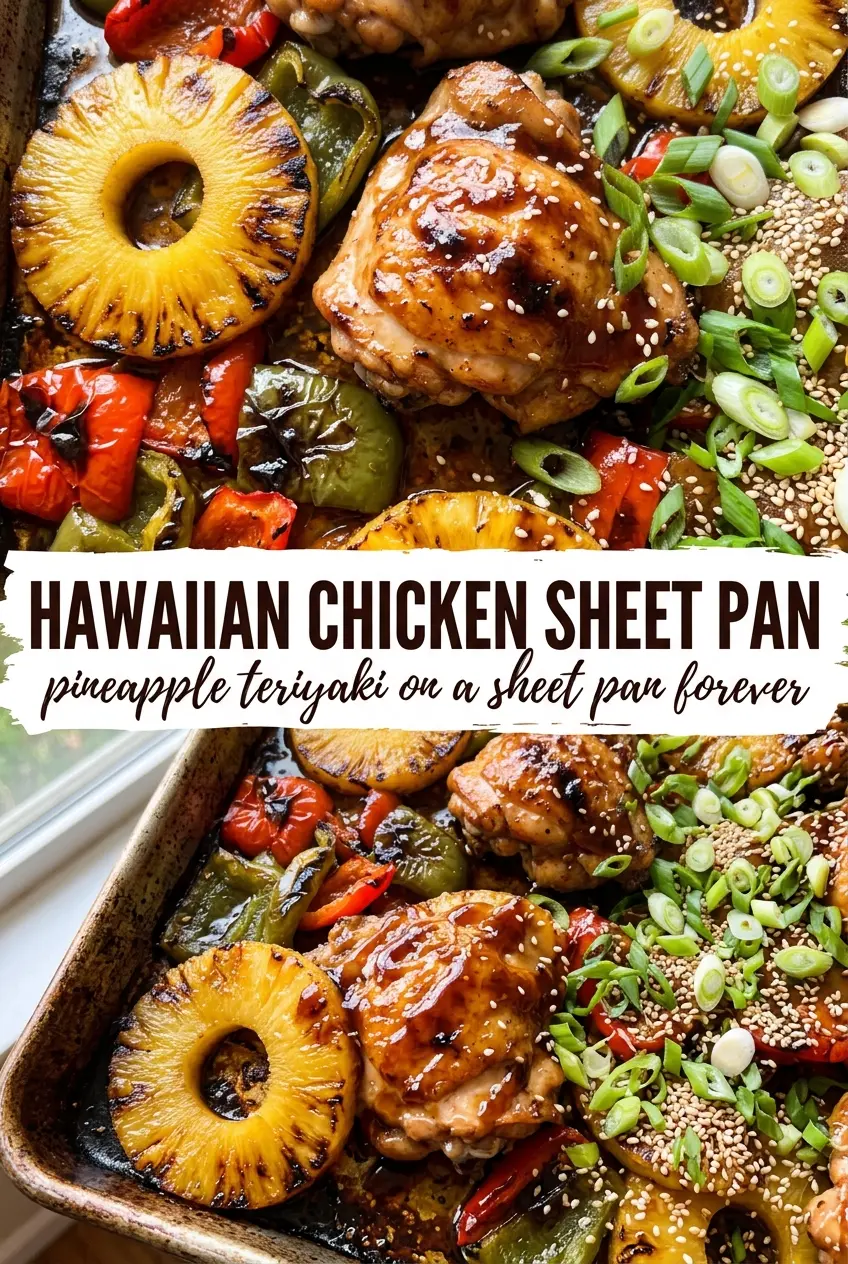
Hawaiian Chicken Sheet Pan
Ingredients
Equipment
Method
- Preheat oven to 425°F and line a large sheet pan with foil.
- Whisk soy sauce, honey, pineapple juice, garlic, ginger, and sesame oil together until smooth.
- Toss chicken thighs and pineapple chunks with 3/4 of the marinade, reserving the rest for later.
- Spread the chicken on the sheet pan and scatter bell peppers, red onion, and pineapple around it.
- Roast for 22–25 minutes at 425°F, brushing with the reserved marinade halfway through until chicken is cooked and caramelized.
- Garnish with sliced green onions and sesame seeds and serve over rice.