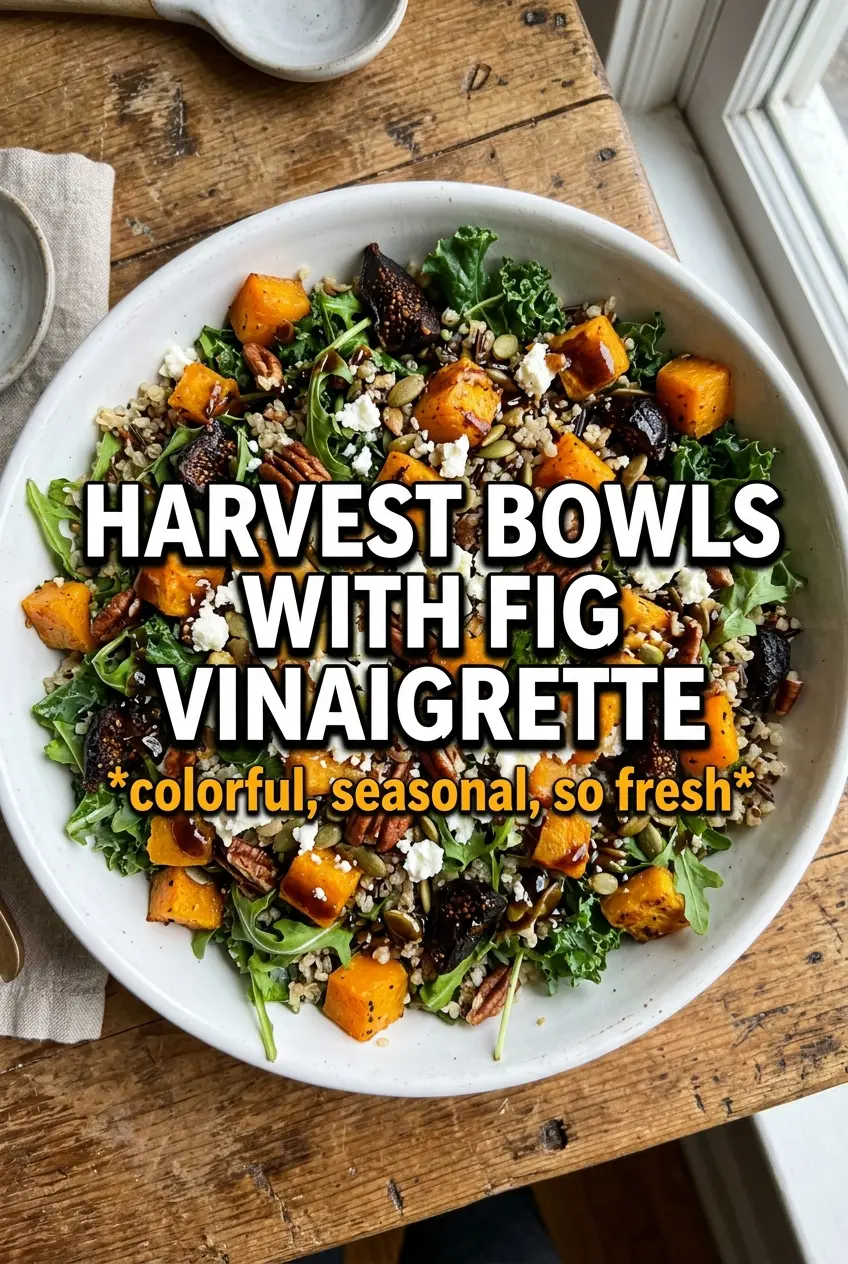
Roasted sweet potatoes, crispy chickpeas, and a glossy fig balsamic vinaigrette give these harvest bowls the kind of balance that keeps you coming back for one more forkful. You get warm and cool, soft and crunchy, tangy and sweet, all in one bowl that eats like a full meal instead of a pile of toppings. The farro or quinoa holds everything together, while the Brussels sprouts stay fresh enough to keep the whole thing from feeling heavy.
The key is treating each part separately. Sweet potatoes need enough time to turn tender at the center and caramelized at the edges, while chickpeas need their own tray so they can dry out and crisp instead of steaming. The dressing also matters more than it looks at first glance: fig jam gives it body and a rounded sweetness, and Dijon keeps it from tasting flat. Once those pieces are right, the whole bowl feels intentional instead of assembled.
Below, I’ve included the ingredient details that actually change the result, plus a few ways to adapt the bowls for different diets or whatever you’ve got in the pantry.
The chickpeas came out crisp instead of soft, and the fig balsamic tied everything together without making the bowl too sweet. I’ve already made it twice this week for lunch.
Love the mix of roasted sweet potatoes, crispy chickpeas, and fig balsamic? Save these harvest bowls for the nights when you want a colorful dinner that still feels hearty.
The Trick to Keeping the Bowls Crisp, Not Soggy
The mistake that ruins grain bowls is piling everything together before the hot ingredients have cooled down a bit. If the sweet potatoes and chickpeas go straight over the greens, the Brussels sprouts wilt and the pecans lose their crunch fast. Let the roasted pieces cool for a few minutes while you whisk the dressing and prep the bowl base.
Separate trays matter here too. Sweet potatoes release moisture as they roast, and chickpeas need a drier surface to get their edges crisp. If you crowd them together, you get soft, steamed pieces instead of the contrast that makes this bowl work.
What Each Ingredient Is Actually Doing in This Bowl
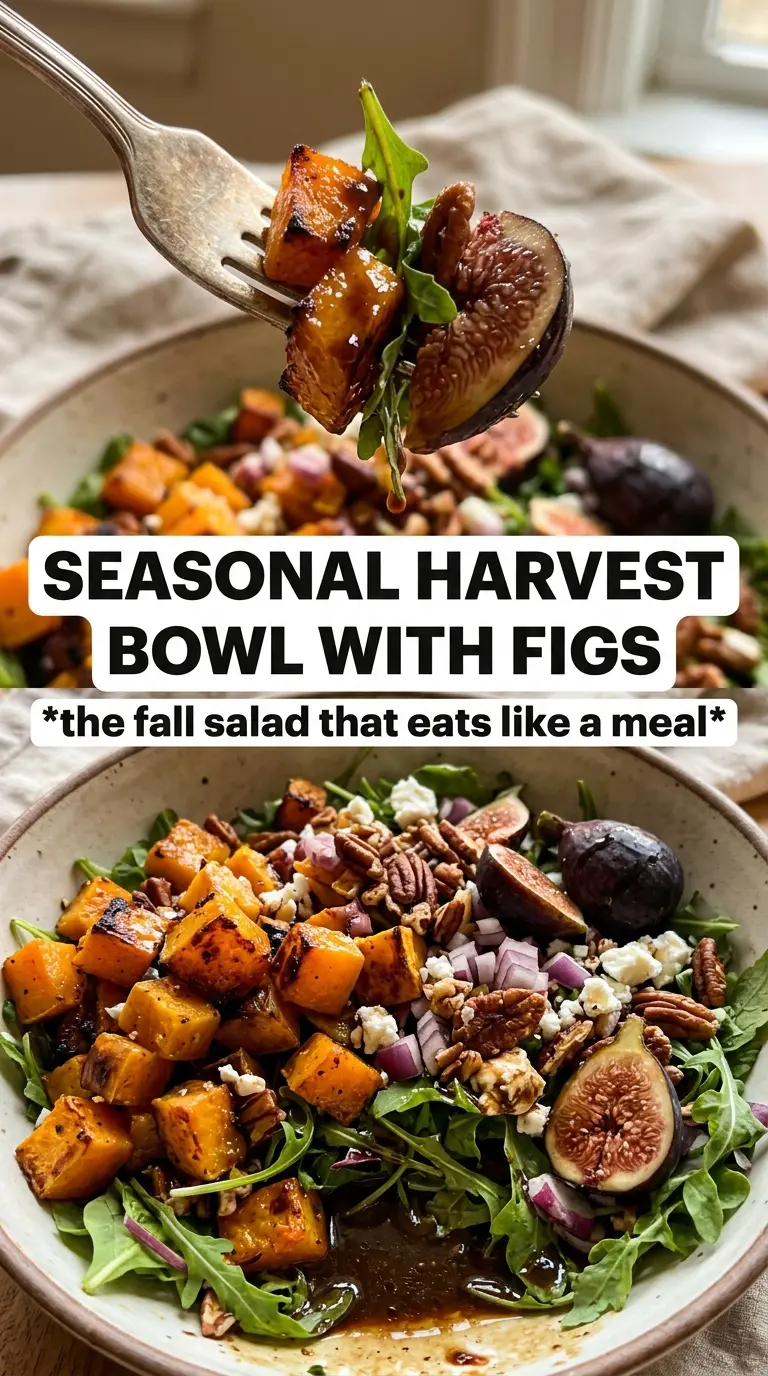
- Farro or quinoa — This is the base that soaks up the vinaigrette and makes the bowl feel substantial. Farro gives you a chewier, nuttier bite, while quinoa keeps it lighter and naturally gluten-free.
- Sweet potatoes — Their caramelized edges add sweetness and softness, which balances the sharper ingredients. Cut them into even cubes so they roast at the same pace instead of giving you a mix of burned and underdone pieces.
- Chickpeas — Roasting them separately is what gives you that crisp, snacky texture. Pat them dry first if you want the best result; extra moisture is the main thing that keeps them from crunching.
- Shaved Brussels sprouts — Raw Brussels sprouts bring freshness and a little bitterness that keeps the bowl from tasting one-note. Slice them thin enough that they soften slightly under the warm toppings, but not so thin that they collapse.
- Fig jam — This is what gives the vinaigrette its deep, round sweetness and that unmistakable fig note. A smooth jam works best because it emulsifies into the dressing more easily than a chunky preserve.
- Dijon mustard — Dijon helps the vinaigrette stay together and adds the sharp edge the dressing needs. It’s not just for flavor; it’s one of the reasons the oil and vinegar don’t separate immediately.
- Goat cheese — The tangy crumble is what bridges the sweet fruit, roasted vegetables, and balsamic. Feta can stand in if needed, but it’s saltier and a little less creamy.
Building the Roast-and-Drizzle Sequence
Roasting the Sweet Potatoes Until the Edges Brown
Spread the sweet potato cubes in a single layer on a sheet pan and roast them at 425°F until the centers are tender and the edges have browned. If they’re piled up, they steam instead of caramelize, and you lose the sweet depth that makes the bowl feel complete. A fork should slide in easily, but the pieces should still hold their shape when you lift them. Pull them once the edges show real color, not just a pale tan.
Getting the Chickpeas Crisp Enough to Matter
Dry the chickpeas before they go into the oven and give them their own tray so they can roast instead of soften in their own moisture. They’re done when they feel firm on the outside and sound a little hollow when shaken around the pan. If they seem tough at first, that’s fine; they crisp more as they cool. Don’t overdo the oil or they’ll turn greasy instead of crunchy.
Whisking the Vinaigrette Until It Stays Together
Whisk the fig jam, balsamic vinegar, olive oil, Dijon, and garlic until the dressing looks smooth and glossy. If it looks separated after a minute, keep whisking or shake it in a jar until the mustard fully emulsifies it. A finished dressing should coat the back of a spoon and taste balanced: sweet first, then tangy, with enough salt and pepper to sharpen it. If it tastes flat, it usually needs salt more than more vinegar.
Assembling in the Right Order
Build the bowl with the grain on the bottom, then layer on the warm sweet potatoes and chickpeas, followed by the raw Brussels sprouts, pomegranate seeds, and pecans. The contrast in temperature is part of what makes each bite interesting, so don’t bury the fresh ingredients under the hot ones. Finish with the goat cheese and drizzle the vinaigrette over the top right before serving. Add too much too early and the sprouts will lose their bite.
Three Ways to Make These Harvest Bowls Fit What You’ve Got
Make It Gluten-Free with Quinoa
Swap the farro for quinoa and you still get a sturdy base, just with a lighter texture and less chew. Quinoa also picks up the vinaigrette well, so the bowl stays balanced even without the wheat.
Dairy-Free Without Losing the Tang
Skip the goat cheese and use avocado slices or a spoonful of dairy-free cashew cheese for creaminess. You’ll lose the sharp, salty crumble, so add a little extra salt to the dressing to keep the bowl from tasting muted.
Turn It Into a Heavier Dinner
Add roasted chicken or sliced turkey if you want more protein without changing the flavor profile much. Keep the dressing amount the same and serve the extra meat over the grain base so the vinaigrette still reaches every bite.
Storage and Reheating
- Refrigerator: Store the components separately for up to 4 days. The greens stay crisper and the pecans stay crunchier that way.
- Freezer: Freeze only the cooked farro or quinoa and the roasted sweet potatoes if you want to get ahead. The chickpeas, sprouts, and assembled bowls don’t thaw well and lose the texture that makes them worth eating.
- Reheating: Warm the grain, sweet potatoes, and chickpeas in a skillet or low oven until just hot. Don’t microwave everything together or the chickpeas soften and the sprouts wilt before you get to the table.
Answers to the Questions Worth Asking
Harvest Bowls With Fig Balsamic Vinaigrette
Ingredients
Equipment
Method
- Heat the oven to 425F. Spread the cubed sweet potatoes on a sheet pan and roast for 25 minutes, until tender and browned at the edges, with a visible caramelized surface.
- Drain the chickpeas and arrange them on a separate sheet pan in a single layer. Roast at 425F for 20-25 minutes, until crisp and golden, shaking once if needed for even browning.
- In a bowl, whisk together fig jam, balsamic vinegar, olive oil, Dijon mustard, and minced garlic until smooth and glossy. Season with salt and pepper to taste until the flavors are balanced.
- Divide the cooked farro or quinoa among 4 bowls as the base. Top each with roasted sweet potatoes and crispy chickpeas.
- Add shaved Brussels sprouts to each bowl for a fresh, crunchy layer. Scatter over pomegranate seeds and candied pecans for bright bursts and texture.
- Crumble goat cheese over each bowl. Drizzle generously with fig balsamic vinaigrette so it pools slightly on the grains.