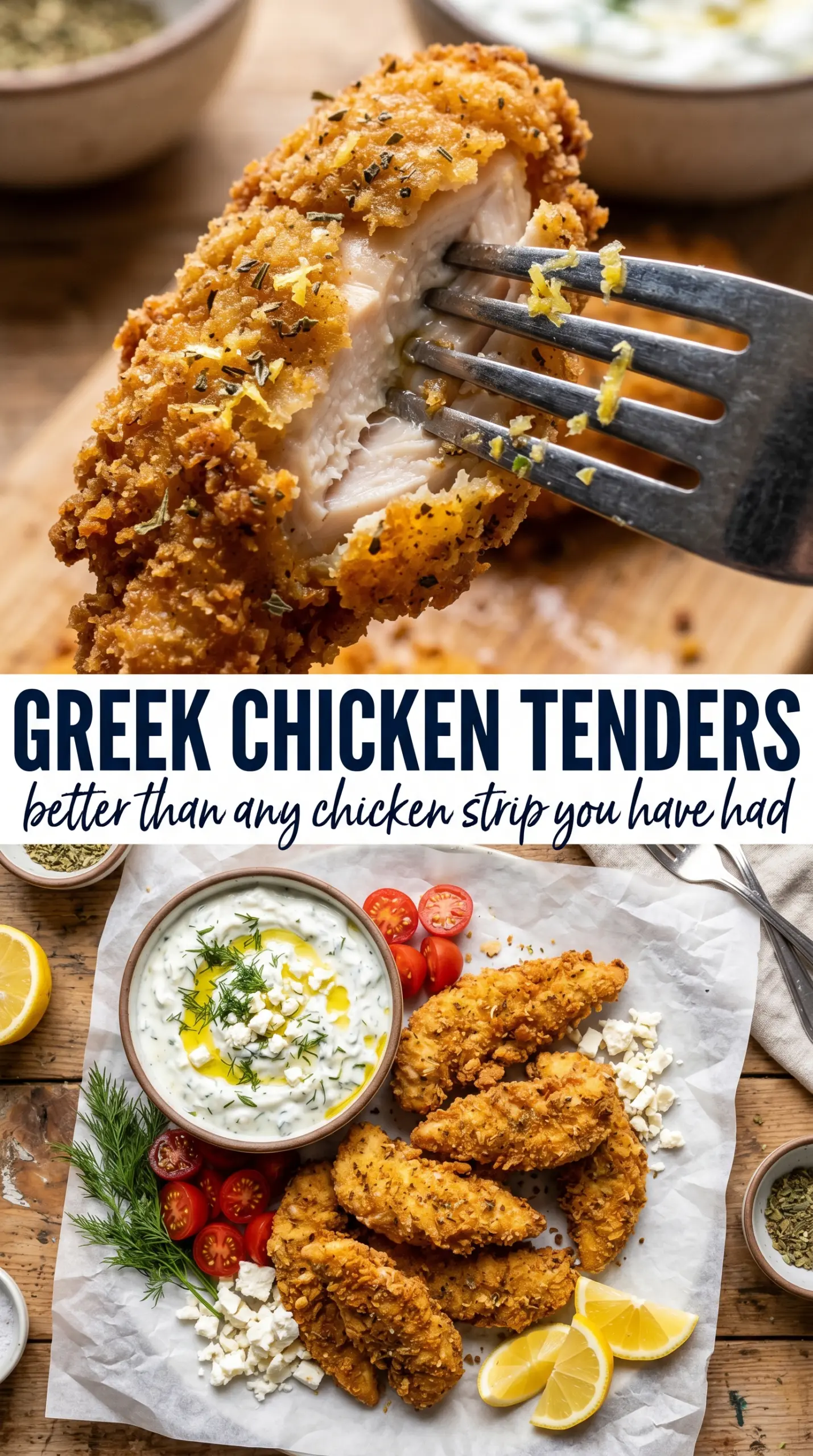
Golden-seared Greek chicken tenders hit that sweet spot between fresh and satisfying: bright lemon, oregano, garlic, and a little smoky depth wrapped around juicy chicken with crisp edges. Served over cool tzatziki, they eat like a full meal without feeling heavy, and the contrast between the warm chicken and creamy sauce is what keeps this one in rotation.
The marinade does the heavy lifting fast. Lemon juice and zest bring the sharp, clean Greek profile, while olive oil carries the garlic and herbs across the surface of the chicken so the seasoning actually sticks and browns instead of steaming off. A short 20-minute rest is enough here; go much longer and the lemon starts to tighten the texture before it cooks.
Below, you’ll find the trick to getting a good sear without drying out the tenders, plus the few ingredient swaps that still keep the dish tasting like itself. The finish matters too, especially if you’re serving these with pita and a generous spoonful of tzatziki.
The lemon zest made the chicken taste fresh instead of just sour, and the tenders browned beautifully in the skillet without drying out. I served them with tzatziki and pita, and my kids ate every last piece.
Love these lemon-oregano Greek chicken tenders? Save them to Pinterest for an easy skillet dinner with tzatziki, feta, and bright Mediterranean flavor.
The Marinade Window That Keeps Greek Chicken Tenders Juicy
The biggest mistake with lemon-marinated chicken is treating it like a long bath. Acid is useful here, but it works fast. Give the tenders about 20 minutes in the marinade and you get flavor on the surface without turning the meat soft or tight before it even hits the pan.
These cook quickly because chicken tenders are thin and unevenly shaped in spots. Medium-high heat gives you color before the inside dries out, which is the whole game with this recipe. If the pan is too cool, the chicken releases liquid and steams; if it’s too hot, the garlic and lemon bits scorch before the meat is done.
- Lemon juice and zest — The juice brings the clean tang, but the zest is where the real Greek aroma lives. Don’t skip it; that outer peel carries the citrus oils that make the chicken taste bright instead of sharp.
- Olive oil — This helps the herbs cling and protects the chicken from the harshness of the heat. A decent extra-virgin olive oil matters here because it’s part of the flavor, not just the cooking medium.
- Oregano, cumin, and smoked paprika — Oregano gives the familiar Greek backbone, cumin adds a little roundness, and smoked paprika pushes the color and browning. If you’re missing smoked paprika, use sweet paprika, but the finished chicken will taste a little less deep.
- Tzatziki for serving — This isn’t a garnish. It cools the lemon and garlic and gives the dish its creamy finish. Use a thick tzatziki so it sits under the chicken instead of turning watery on the plate.
What Each Ingredient Is Actually Doing in This Chicken
- Chicken breasts (the protein) — Let them sit at room temperature 15 minutes before cooking. This helps them cook evenly without drying.
- Oil or butter (the cooking medium) — This prevents the chicken from drying out and carries herb and spice flavors throughout.
- Garlic (the aromatic foundation) — Fresh minced garlic mellows and becomes sweet when cooked. Don’t brown it or it turns bitter.
- Cream or sauce (the moisture keeper) — This prevents the chicken from drying out during cooking. Balance richness with acid.
- Lemon, wine, or acid (the brightness) — This prevents heavy cream sauces from tasting flat. Add at the end to preserve freshness.
- Fresh herbs (basil, thyme, parsley) — Add some during cooking and some after so you get both cooked and fresh flavors.
- Cheese or toppings (optional richness) — These add creaminess and depth. Don’t overdo it or the dish becomes heavy.
- Proper oven temperature (375-400°F) or pan heat — This cooks chicken through without drying the edges. Use a thermometer for 165°F.
What Happens in the Pan Between Marinating and Serving
Whisk the Marinade Until It Looks Emulsified
Mix the olive oil, lemon juice, zest, garlic, oregano, paprika, cumin, salt, and pepper until the liquid looks slightly thickened and speckled with herbs. That brief emulsion helps the seasoning coat every piece of chicken evenly. If you toss the chicken into separated oil and lemon, the flavor ends up patchy.
Give the Chicken a Short, Even Rest
Add the tenders and turn them until every surface is coated, then let them sit for about 20 minutes. That’s long enough to season the outside and short enough to keep the texture tender. If you leave them much longer, especially with a lot of lemon juice, the surface can start to get a little chalky after cooking.
Get the Skillet Hot Before the Chicken Goes In
Heat the pan over medium-high until a drop of oil shimmers right away. Lay the tenders in a single layer and leave them alone for the first few minutes so the crust can form. If you move them too soon, they stick and tear instead of developing those browned edges that make the recipe taste finished.
Pull Them the Moment They Hit 165°F
Cook for 3 to 4 minutes per side, depending on thickness, until the outside is golden and the center reaches 165°F. Chicken tenders overcook fast, and the carryover heat is enough to finish the last inch of doneness after they come off the pan. Rest them for a minute or two before serving so the juices stay in the meat instead of running onto the plate.
How to Adapt These Greek Chicken Tenders Without Losing the Point
Dairy-Free Plate
Skip the feta and serve the chicken with extra cucumber, dill, and olives over hummus or a dairy-free tzatziki. You keep the Mediterranean feel, but the plate gets a little lighter and more herb-forward without losing contrast.
Chicken Breasts Instead of Tenders
Slice boneless chicken breasts into thin strips so they cook at the same speed as tenders. Larger pieces need a minute or two longer, and the main risk is drying them out, so use a thermometer and pull them right at 165°F.
Grill Pan or Outdoor Grill Version
This works well on a grill pan or over direct heat on the grill, as long as you oil the grates and don’t crowd the pieces. You lose a little of the skillet crust, but you gain a faint char that plays nicely with the lemon and oregano.
Meal Prep for Lunches
Cook the chicken, cool it, and store it separately from the tzatziki and fresh vegetables. The chicken reheats better on its own, and keeping the cold toppings separate protects the texture instead of turning everything damp by day two.
Storage and Reheating
- Refrigerator: Store the cooked chicken for up to 4 days in an airtight container. The crust softens a bit as it sits, but the flavor stays strong.
- Freezer: Freeze the cooked chicken for up to 2 months. Wrap it tightly and freeze it without the tzatziki or fresh vegetables, which don’t thaw well.
- Reheating: Warm the chicken in a skillet over medium-low heat with a splash of water or broth, or reheat it briefly in a 325°F oven. High heat dries out the tenders fast, so don’t blast them in the microwave unless you’re fine with tougher edges.
Questions I Get Asked About This Recipe

Greek Chicken Tenders
Ingredients
Equipment
Method
- Whisk olive oil, fresh lemon juice, lemon zest, minced garlic, dried oregano, smoked paprika, cumin, salt, and pepper until smooth. Toss the chicken tenders in the marinade and make sure every piece is coated.
- Rest the marinated chicken tenders for 20 minutes to deepen the flavor. Keep them covered in the refrigerator while they marinate.
- Heat a large skillet or grill pan over medium-high heat and add a drizzle of olive oil. Swirl to coat the surface, then arrange the tenders in a single layer.
- Cook the chicken tenders for 3-4 minutes per side until golden, flipping once when the first side develops color. Continue cooking until the internal temperature reaches 165°F.
- Spread tzatziki on a serving platter to form a creamy base. Arrange the cooked chicken tenders over the top so the golden crust is visible.
- Scatter crumbled feta, Kalamata olives, cucumber slices, and fresh dill around the chicken. Add lemon wedges alongside for squeezing right before eating.
- Serve with warm pita and lemon wedges. Offer a final squeeze of lemon over the chicken for brightness.