Garlic steak tortellini hits that sweet spot between weeknight fast and restaurant-style comfort. The tortellini stays tender and cheesy, the steak brings a deep savory bite, and the garlic butter sauce coats everything without turning heavy or gluey. When the pan is hot enough and the sauce is built in the right order, you get glossy pasta, browned steak, and parmesan that melts straight into the skillet.
The key is treating each part like it matters. The steak needs a hard sear before it ever sees the sauce, and the garlic needs just enough time to turn fragrant without browning. After that, a short simmer with beef broth and cream gives you a sauce that clings instead of pooling at the bottom of the bowl. Toss the tortellini back in at the end so it stays intact and doesn’t overcook.
Below, I’ve included the little details that make this dish work reliably: how to keep the steak tender, what the parmesan is doing in the sauce, and how to adapt it if you need a lighter or dairy-free version.
The sauce thickened up beautifully and the steak stayed tender, not chewy. I liked how the tortellini soaked up the garlic butter without falling apart.
Save this garlic steak tortellini for the nights when you want silky garlic butter, seared steak, and cheesy tortellini in one pan.
The Sear Matters More Than the Sauce Here
With a dish like this, people often rush straight to the garlic butter and skip the part that gives the whole skillet its backbone. That’s a mistake. The steak needs direct contact with a hot pan so it browns fast before the juices start running out, because once the meat steams, you lose both texture and flavor. You’re not cooking it through at this stage. You’re building that browned crust that tastes like dinner instead of just protein in sauce.
The other thing that trips people up is crowding the pan. If the steak pieces are piled on top of each other, the temperature drops and you end up with gray edges instead of a proper sear. Work in batches if you need to. The sauce will pick up all the browned bits left behind, and that’s where half the flavor lives.
What Each Ingredient Is Actually Doing in the Skillet
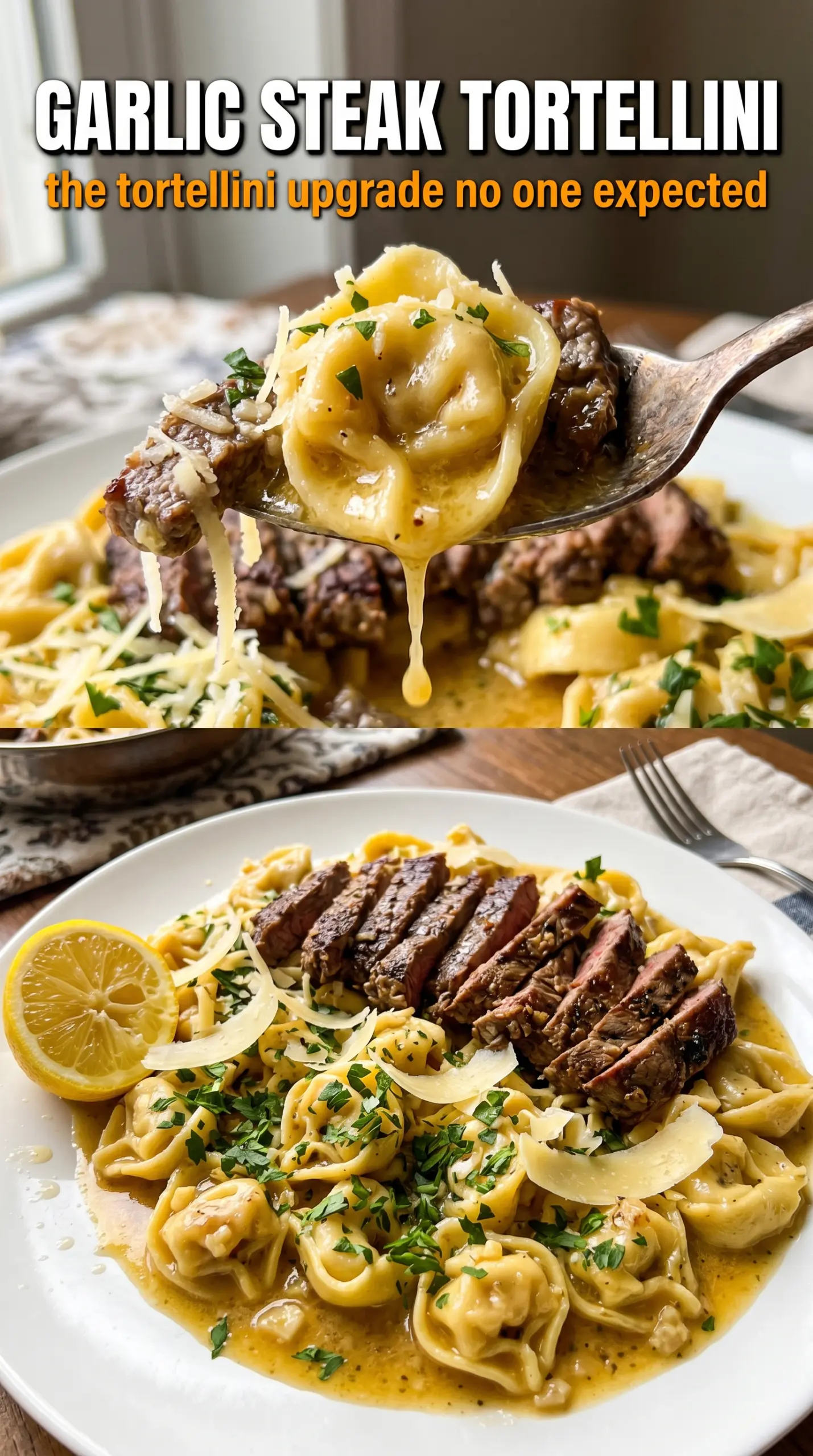
- Sirloin steak — Sirloin gives you tender slices that hold up in the skillet without turning tough. Slice it thin against the grain so every bite stays easy to chew. Ribeye works too if you want a richer finish, but sirloin is the best balance of flavor and price here.
- Refrigerated cheese tortellini — Fresh tortellini cooks fast and stays plump when it gets tossed into the sauce at the end. Frozen tortellini can work, but give it a minute or two longer in the water and drain it well so extra water doesn’t thin the sauce.
- Butter and garlic — This is the base of the sauce, and both matter. Butter carries the garlic flavor and gives the sauce body, while the garlic needs only a short cook so it tastes sweet and savory instead of bitter. If the garlic browns, start over if you can; burnt garlic will dominate the whole dish.
- Beef broth and heavy cream — The broth keeps the sauce savory and loosened up, while the cream smooths everything out and helps it cling to the tortellini. Half-and-half can work in a pinch, but the sauce will be thinner. If you use it, simmer a little longer before adding the pasta.
- Parmesan cheese — Freshly grated parmesan melts into the sauce and helps it thicken naturally. Pre-shredded parmesan usually has anti-caking agents, which can make the sauce grainy. Grate it yourself if you want that silky finish.
How to Build the Sauce So It Stays Glossy
Cooking the Tortellini First
Get the tortellini cooked and drained before you start the skillet work. It only needs to be tender, not soft, because it’s going back into the pan for a final toss. If you leave it sitting in the colander too long, it can stick together, so a quick drizzle of oil or a gentle toss helps keep the pieces separate. Don’t rinse it; you want the starch on the surface to help the sauce cling.
Searing the Steak in Batches
Heat the skillet until the butter foams and the steak hits the pan with a real sizzle. Let the pieces sit long enough to brown before stirring them around, then pull them out as soon as they’re seared. If the steak cooks too long here, it’ll finish tough after the sauce step, so err on the side of undercooked at this stage. It goes back in later and finishes in the sauce.
Building the Garlic Butter Base
Lower the heat before adding the garlic so it softens in the butter instead of scorching. One minute is enough; you’re looking for a fragrant smell and a pale golden edge, not color. Once the garlic turns dark, the bitterness carries through the whole sauce. Add the broth and cream while the pan still has some heat, then let it bubble gently until it looks slightly thicker and coats a spoon.
Bringing It All Together
Add the steak back with the tortellini and parmesan, then toss just until everything is coated. The parmesan should disappear into the sauce and leave it glossy, not clumpy. If the sauce looks tight, add a splash of broth to loosen it; if it looks thin, let it simmer for another minute before serving. Finish with parsley for freshness and a little color.
How to Adapt This for Different Pans, Diets, and Leftovers
Dairy-Free Version
Use a dairy-free butter and swap the cream for unsweetened oat cream or full-fat coconut cream. The sauce won’t taste exactly the same, but it will still coat the tortellini well if you simmer it until slightly reduced. Skip the parmesan or use a dairy-free hard cheese alternative at the end.
Make It with Chicken Instead
Thinly sliced chicken breast or thigh works if you want a milder version. Cook it through after the sear and before you build the sauce, since chicken needs a full safe internal temperature and can’t stay underdone the way steak can. The final dish will taste a little lighter, but the garlic butter sauce still carries it.
Gluten-Free Adjustment
Use a gluten-free cheese tortellini and check that your beef broth is certified gluten-free. The sauce itself doesn’t need flour, so this swap is mostly about choosing the right pasta and stock. The texture stays close to the original if you don’t overcook the tortellini.
Storage and Reheating
- Refrigerator: Store leftovers in an airtight container for up to 3 days. The sauce will thicken as it chills, and the tortellini will absorb some of it.
- Freezer: I don’t recommend freezing this dish. Cream sauces can separate, and tortellini can turn soft after thawing.
- Reheating: Warm it slowly in a skillet over low heat with a splash of broth or cream. High heat will tighten the steak and make the sauce break, so keep the heat gentle and toss often.
Answers to the Questions Worth Asking
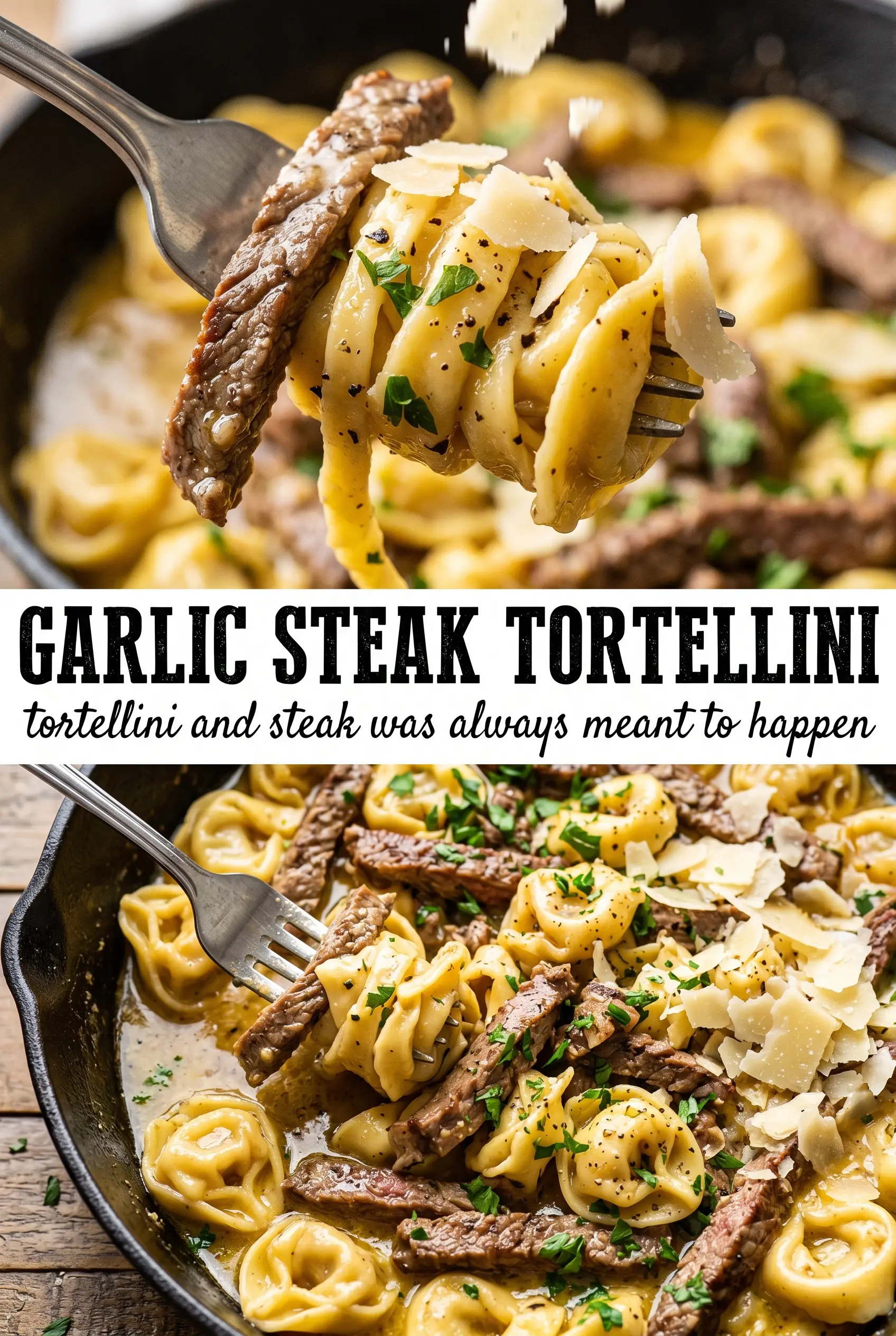
Garlic Steak Tortellini
Ingredients
Equipment
Method
- Bring a pot of salted water to a boil and cook the refrigerated cheese tortellini according to package directions. Drain and set aside.
- Season the sirloin steak strips generously with salt and cracked black pepper. Heat 2 tablespoons butter in a large skillet over high heat and sear for 2–3 minutes until browned, then set aside.
- In the same skillet, melt the remaining butter over medium heat. Add the minced garlic and cook for 1 minute until fragrant.
- Add the beef broth and heavy cream to the skillet and simmer for 2–3 minutes until slightly thickened. Keep the sauce at a gentle simmer.
- Return the seared steak strips and drained tortellini to the skillet. Add the Italian seasoning and parmesan and toss to coat until glossy and evenly combined.
- Serve immediately, topped with fresh parsley. Finish with any extra cracked black pepper if desired.