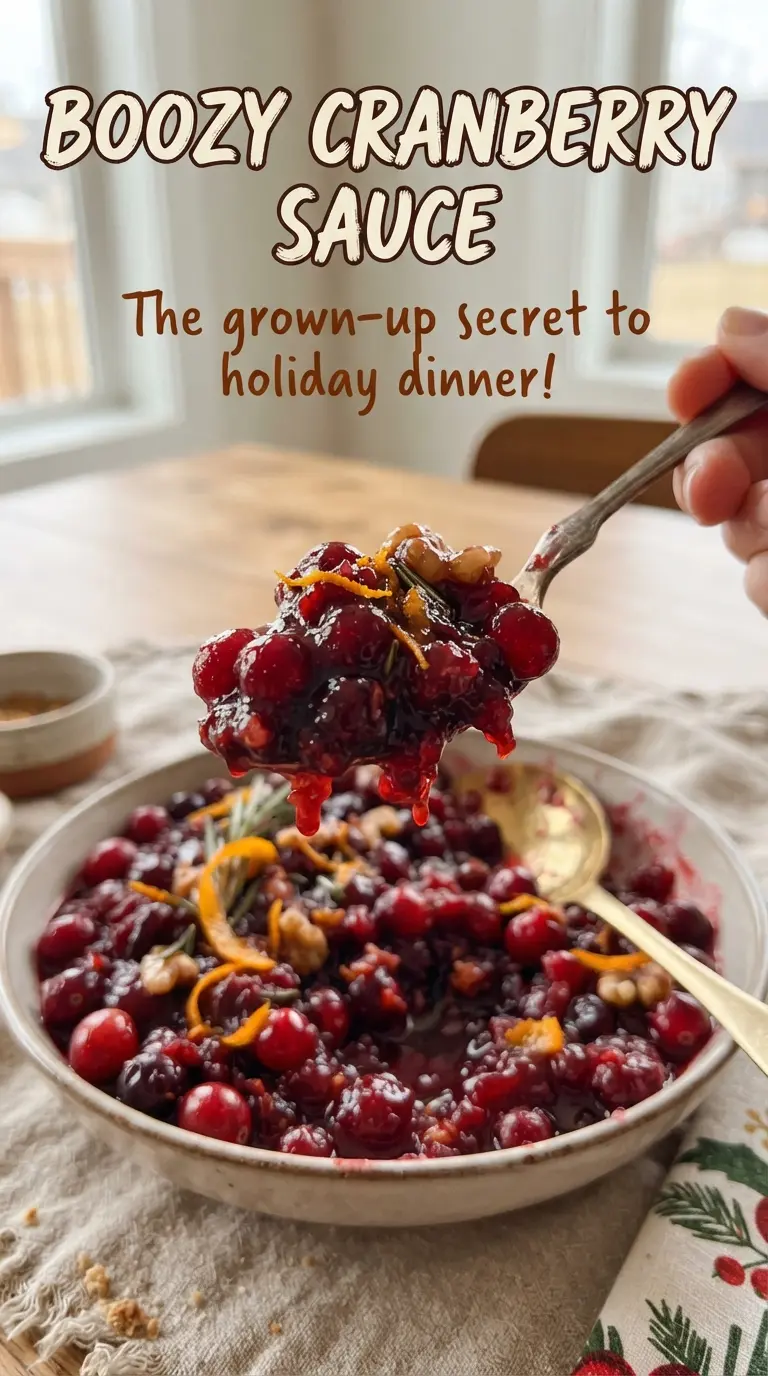
Deep ruby cranberry sauce gets a brighter, fuller finish when port and orange liqueur join the pan. The cranberries still bring that sharp pop, but the wine adds a jammy depth and the Grand Marnier rounds out the edges so the sauce tastes layered instead of one-note. It sets up glossy and spoonable, with just enough looseness to settle over turkey, biscuits, or a cheese board without running all over the plate.
The trick is starting the sugar, port, orange juice, cinnamon, and salt together before the berries go in. That gives the sugar time to dissolve and the liquid a chance to pick up the cinnamon’s warmth before the cranberries burst. I also stir in the orange zest and liqueur off the heat, which keeps the citrus aroma from boiling away and leaves the finish cleaner and fresher.
Below, I’ve included the small details that matter most: when the sauce looks thin but is actually right on track, how to adjust the sweetness if your cranberries are especially tart, and a few smart ways to use leftovers after the holiday table clears.
The port gave the sauce a deeper color and the orange liqueur kept it from tasting flat. It thickened up beautifully once it cooled, and everyone kept spooning it onto leftovers.
Like this boozy cranberry sauce? Save it for the holiday table, the cheese board, and every leftover sandwich that needs a glossy, tart-sweet lift.
The Reason the Sugar Goes in Before the Cranberries
If the berries go into the pan before the sugar has dissolved, the sauce can turn uneven: a few cranberries burst early, the bottom gets syrupy, and the rest of the batch tastes sharper than it should. Starting with the sugar, port, orange juice, cinnamon stick, and salt gives you a smooth base that cooks evenly and protects the pan from scorching as the sauce reduces.
Port brings a darker fruit note than plain juice alone, and that matters here because cranberry sauce can taste one-dimensional if the sweetness is too clean. The alcohol cooks off, but the flavor stays. If you use red wine instead, pick one you’d happily drink; a harsh wine stays harsh even after simmering, while something soft and fruity blends into the cranberries.
- Fresh cranberries — They bring the burst and natural pectin that thickens the sauce as it cools. Frozen cranberries also work; add them straight from the freezer and give the mixture a minute or two longer to come back to a simmer.
- Ruby port or red wine — Port gives the richest, roundest result. Red wine makes the sauce a little sharper and less sweet, which is nice if you want it closer to a savory condiment.
- Orange juice and orange zest — The juice helps the sugar dissolve and softens the tart edge, while the zest goes in at the end for a fresher citrus finish. Bottled juice works, but fresh juice tastes cleaner here.
- Grand Marnier or orange liqueur — Stirring it in off the heat keeps the orange aroma bright. If you skip it, the sauce still works; if you replace it, use another orange liqueur rather than plain booze, since the citrus note is part of what makes this recipe feel finished.
What Each Ingredient Is Actually Doing in This Recipe
- Primary ingredient (the star) — Quality matters most. Choose the best you can find.
- Cooking medium (oil, butter, or broth) — This carries flavors and prevents dryness.
- Seasonings (salt, pepper, spices, herbs) — Layer flavors so nothing overpowers. Build depth gradually.
- Aromatics (garlic, onion, herbs) — Cook with fat to bloom flavors. Become the foundation.
- Supporting ingredients — Complement the main ingredient without overpowering it.
- Sauce or liquid (if applicable) — Brings flavors together. Balance richness with acid.
- Acid (lemon, vinegar, wine, or other) — Brightens and prevents flat-tasting results.
- Final finish (garnish, glaze, or sauce) — Prevents one-dimensional taste and adds visual appeal.
How to Cook It Down Without Turning It into Jam
Building the Wine Base
Set the sugar, port, orange juice, cinnamon stick, and salt over medium heat and bring it to a boil just until the sugar disappears. You want the liquid bubbling steadily, not violently crashing against the sides of the pan. If you see sugar crystals clinging to the pan, keep stirring for another minute before adding the cranberries, because undissolved sugar can leave the sauce gritty.
Letting the Cranberries Burst on Their Own
Add the cranberries and simmer until most of them have popped and the liquid looks a little syrupy, usually 10 to 12 minutes. The sauce will still look thinner than the finished result in the pan, and that’s fine; cranberries set up as they cool. Stir occasionally so the bottom doesn’t catch, but don’t mash every berry or you’ll lose the mix of whole fruit and broken fruit that makes the texture nice.
Finishing Off the Heat
Pull the pan off the burner before stirring in the Grand Marnier and orange zest. That keeps the citrus scent intact and prevents the liqueur from tasting cooked out. Discard the cinnamon stick, then let the sauce cool in the pan for a few minutes before transferring it to a bowl, because a shallow dish chills faster and thickens more evenly.
How to Adapt This for Different Tables
Make It Alcohol-Free
Replace the port with extra orange juice plus a splash of cranberry juice, and skip the Grand Marnier. The sauce will be a little brighter and less deep, but it still sets up nicely because the cranberries themselves do the thickening.
Use Red Wine for a Less Sweet Finish
Swap the port for a dry-ish fruity red wine if you want a sauce that leans tart and savory. The result is a little less plush, but it pairs especially well with rich meats and sharp cheeses.
Adjust the Sweetness After Cooling
If your cranberries are extra tart, stir in a tablespoon or two of sugar while the sauce is still warm. Add it gradually; once it chills, the sweetness reads a little softer, and it’s easier to overcorrect if you taste only while it’s hot.
Storage and Reheating
- Refrigerator: Keeps for up to 1 week in a covered container. It thickens as it chills, so don’t judge the final texture while it’s hot.
- Freezer: Freezes well for about 2 months. Cool it completely first, then pack it in a freezer-safe container with a little headspace.
- Reheating: Warm it gently over low heat or use it cold from the fridge. If it seems too stiff after chilling, stir in a teaspoon or two of orange juice rather than blasting it with high heat, which can make the sugars taste harsher.
Answers to the Questions Worth Asking
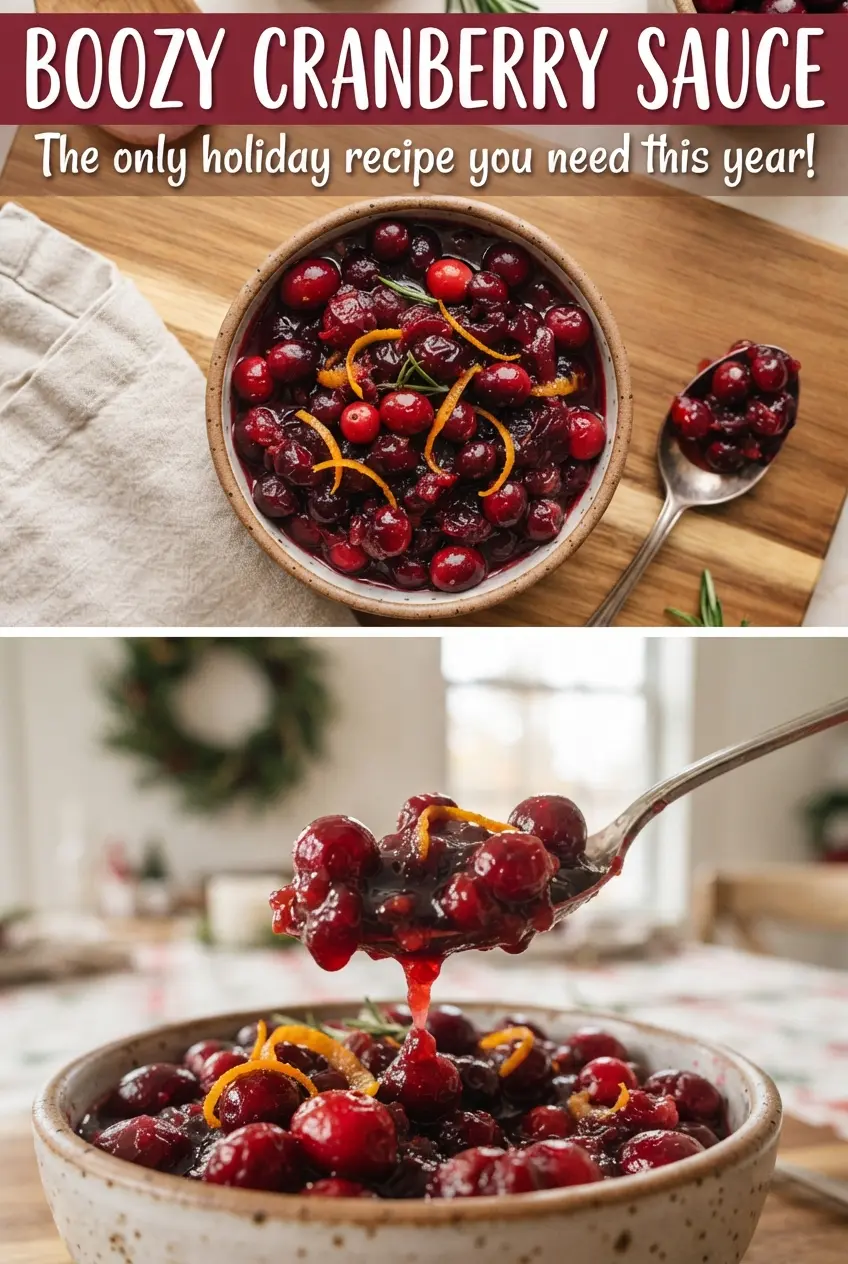
Boozy Cranberry Sauce
Ingredients
Equipment
Method
- Combine sugar, ruby port or red wine, orange juice, cinnamon stick, and salt in a saucepan, then bring to a boil over medium-high heat.
- Add fresh cranberries and simmer for 10-12 minutes, stirring occasionally, until the berries burst and the sauce thickens visibly.
- Remove from heat and stir in Grand Marnier or orange liqueur and orange zest until the sauce turns glossy and evenly colored.
- Discard the cinnamon stick.
- Cool to room temperature, then chill before serving until set and spoonable.