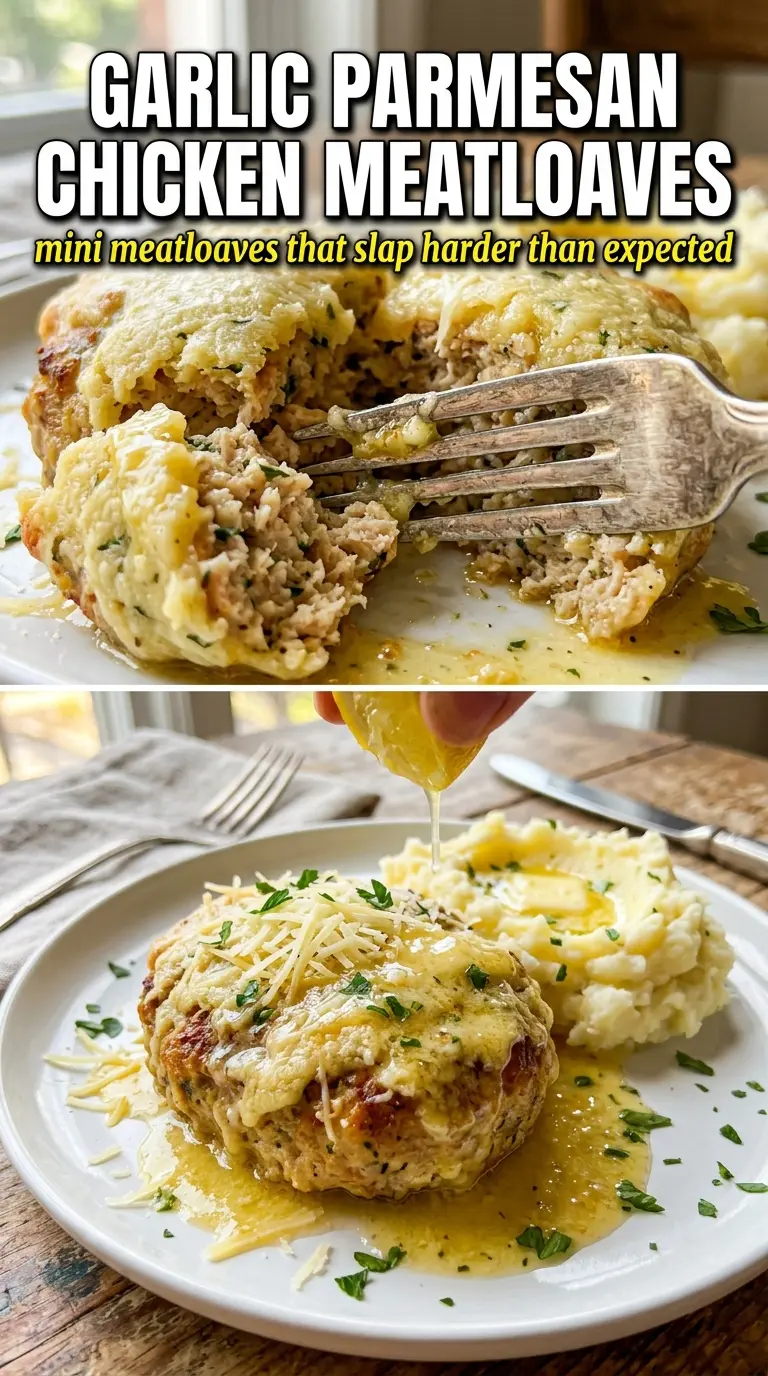
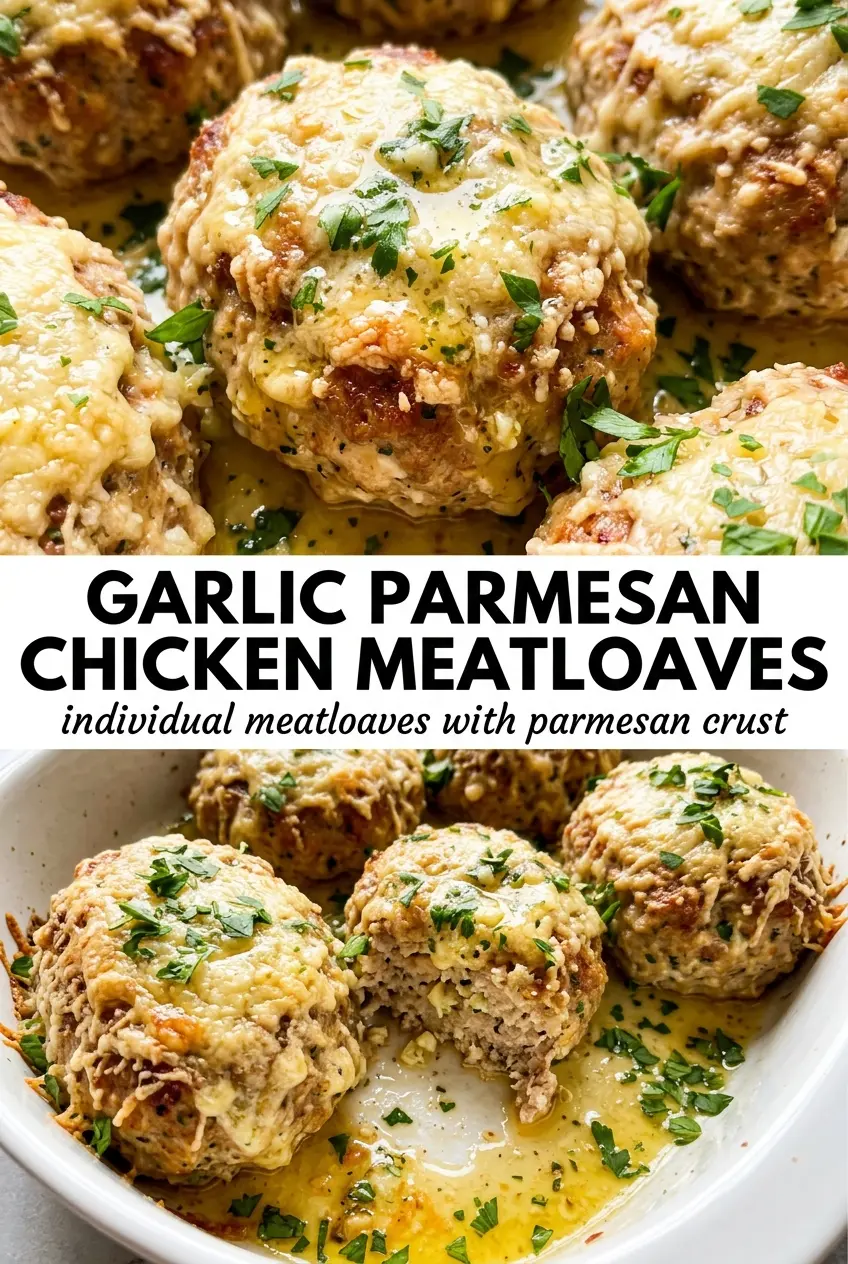
Garlic Parmesan Chicken Meatloaves bake up with a golden, nubbly crust and a tender center that stays moist instead of turning dry and chalky. The parmesan on top melts into the garlic butter and forms those crisp little edges that make each mini loaf feel a lot more finished than a plain weeknight chicken dinner.
Ground chicken needs a little help, and this recipe gives it exactly what it needs: parmesan for salty depth, panko for structure, egg to bind, and enough garlic to carry the whole pan. The trick is mixing just until combined and shaping the loaves by hand so they cook evenly without packing dense. That keeps the texture light while still giving you a meatloaf that slices cleanly and holds its shape.
Below, I’ve included the one timing cue that matters most, along with a few ways to adjust the recipe if you want to make it gluten-free or switch up the herbs. Once you’ve made these once, they’re easy to work into the rotation.
The parmesan crust got golden and crisp in the oven, and the meatloaves stayed juicy all the way through. I brushed on the extra garlic butter at the end like you said, and that finished them perfectly.
Save these Garlic Parmesan Chicken Meatloaves for a dinner that bakes into crisp, buttery edges and a juicy center.
The Reason These Meatloaves Stay Juicy Instead of Tightening Up
Ground chicken is lean, which is why it can turn rubbery fast if it’s handled like beef meatloaf. The mixture here stays tender because the panko and egg give the chicken something to hold onto without making the texture heavy, and the parmesan adds both moisture and seasoning.
The other thing that matters is shape. Four smaller loaves cook faster and more evenly than one large loaf, so the outside can brown before the center dries out. If you’ve ever cut into chicken meatloaf and found a pale, tight middle, it usually means the loaf was too thick or overmixed. Shaping these into ovals on a sheet pan fixes both problems.
- Parmesan — This does more than flavor the meat. It seasons the chicken from the inside and helps the tops brown into a crisp crust. Freshly grated parmesan melts and clings better than the shelf-stable kind.
- Panko breadcrumbs — Panko keeps the texture lighter than regular breadcrumbs. If you only have regular breadcrumbs, use them, but expect a denser loaf.
- Garlic — Fresh minced garlic gives the mixture the sharp, savory base this recipe needs. The garlic powder backs it up so the flavor still comes through after baking.
- Butter topping — The garlic butter brushed on top before and after baking is what gives these meatloaves their glossy finish and keeps the parmesan from tasting dry.
What Each Ingredient Is Actually Doing in This Recipe
- Primary ingredient (the star) — This carries the main flavor and defines the dish. Quality matters here.
- Base sauce or cooking medium (the carrier) — This brings all flavors together and keeps the dish from being dry.
- Aromatics (onion, garlic, ginger) — These add depth and complexity. They mellow and become sweet when cooked.
- Seasonings (salt, spices, herbs) — These define the personality and prevent the dish from tasting one-dimensional.
- Vegetables (nutrition and texture) — These add freshness and color. Cut to size so they cook evenly.
- Acid (lemon, vinegar, tomato, wine) — This brightens the dish and prevents it from tasting heavy or flat.
- Fat (oil, butter, cream) — This carries flavors and creates a satisfying mouthfeel. Don’t skip it.
- Proper technique (heat, time, temperature) — The right method turns good ingredients into great food. Follow the instructions carefully.
Building the Loaves So They Brown, Not Dry Out
Mixing the Chicken Base
Combine the chicken, parmesan, panko, garlic, egg, parsley, seasoning, garlic powder, salt, and pepper in one bowl, then stop as soon as everything looks evenly distributed. If you keep mixing after that, the meatloaves turn dense and bouncy. The mixture should feel soft and slightly sticky, not stiff.
Shaping for Even Cooking
Divide the mixture into four equal portions and shape each one into an oval loaf on the parchment-lined pan. Keep them similar in thickness so they finish at the same time. If one is much taller than the others, the outside will overcook before the center reaches temperature.
Brushing on the Garlic Butter
Mix the melted butter with garlic and brush it over the tops before the pan goes into the oven, then press on the extra parmesan. That topping is what creates the golden crust. If the butter pools around the loaves instead of coating them, the oven wasn’t hot enough or the butter was brushed on too heavily.
Baking Until Just Done
Bake at 400°F for 22 to 25 minutes, until the tops are deep golden and the center reaches 165°F. Don’t wait for them to look dry; by the time chicken meatloaf looks dry on the outside, it’s usually gone too far. Finish with the remaining garlic butter and parsley while they’re still hot so the topping melts into the crust.
How to Adapt These for Different Dinners and Diets
Gluten-Free Version
Swap the panko for certified gluten-free breadcrumbs or crushed gluten-free crackers. The texture stays close to the original as long as you keep the crumb amount the same, though crackers will give you a slightly saltier finish.
Dairy-Free Adaptation
Use a dairy-free parmesan-style substitute and swap the butter topping for olive oil brushed over the tops. You’ll lose a little of the rich finish, but the loaves will still brown well and hold onto the garlic flavor.
Using Ground Turkey Instead
Ground turkey works in the same amount, but it can taste a little flatter than chicken, so don’t skip the parsley and garlic. If your turkey is extra lean, add an extra teaspoon of butter to the mixture or it can bake up drier.
Make-Ahead and Reheat Later
Shape the loaves up to a day ahead and keep them covered in the refrigerator, then brush with butter just before baking. The crust stays better this way than if you glaze them too early and let the topping soak in.
Storage and Reheating
- Refrigerator: Store leftovers in an airtight container for up to 4 days. The topping softens a bit, but the meatloaves stay moist.
- Freezer: These freeze well. Wrap individually and freeze for up to 2 months, then thaw overnight in the fridge before reheating.
- Reheating: Reheat in a 325°F oven, covered loosely with foil, until warmed through. The microwave works in a pinch, but it softens the parmesan crust and can make the edges rubbery if you overdo it.
Questions I Get Asked About This Recipe
Garlic Parmesan Chicken Meatloaves
Ingredients
Equipment
Method
- Preheat oven to 400°F and line a sheet pan with parchment for easy release and browning.
- Combine ground chicken, parmesan, panko, garlic, egg, parsley, Italian seasoning, garlic powder, salt, and pepper in a bowl and mix until just combined.
- Divide mixture into 4 equal portions and shape into oval loaves on the prepared sheet pan.
- Mix melted butter with garlic and brush over each meatloaf, then press extra parmesan on top for a crusty finish.
- Bake at 400°F for 22–25 minutes until cooked through and golden on top.
- Brush with remaining garlic butter, garnish with fresh parsley, and serve.