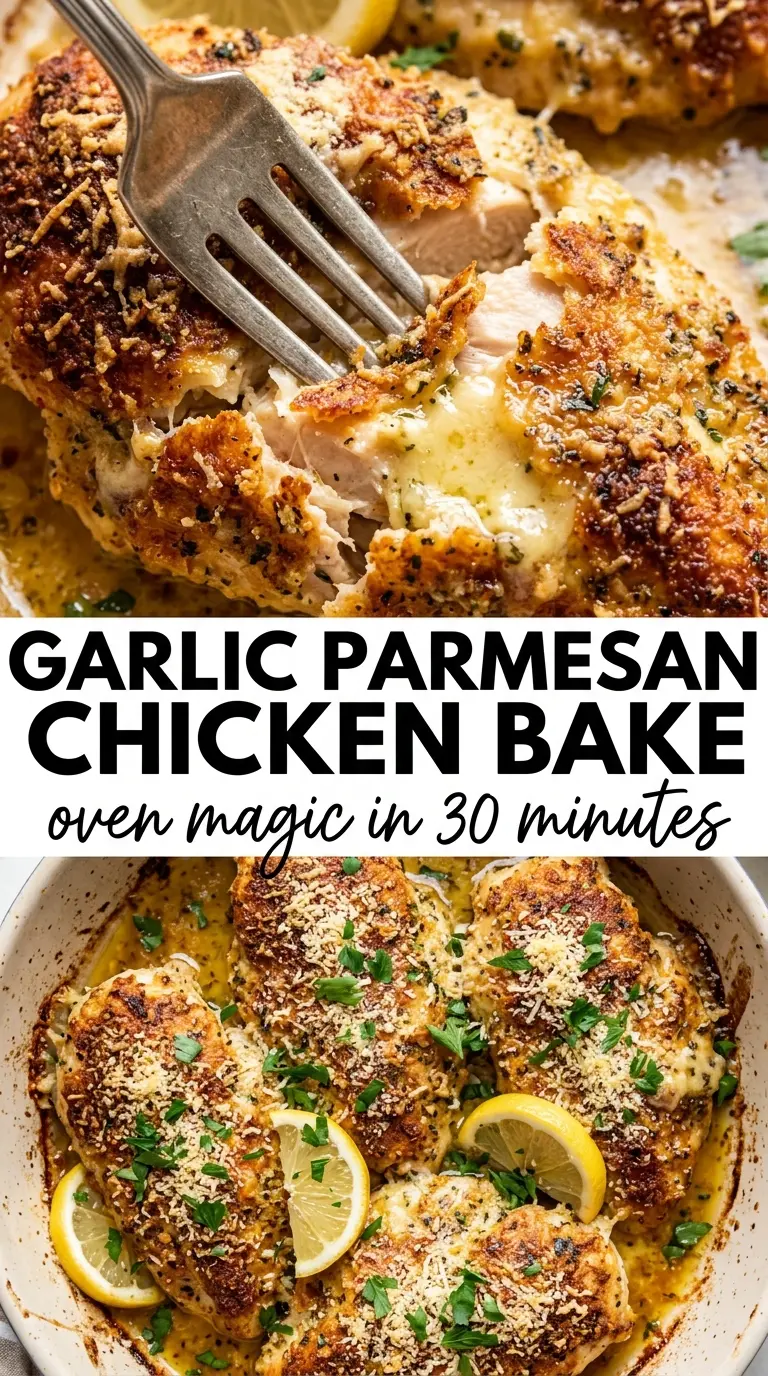
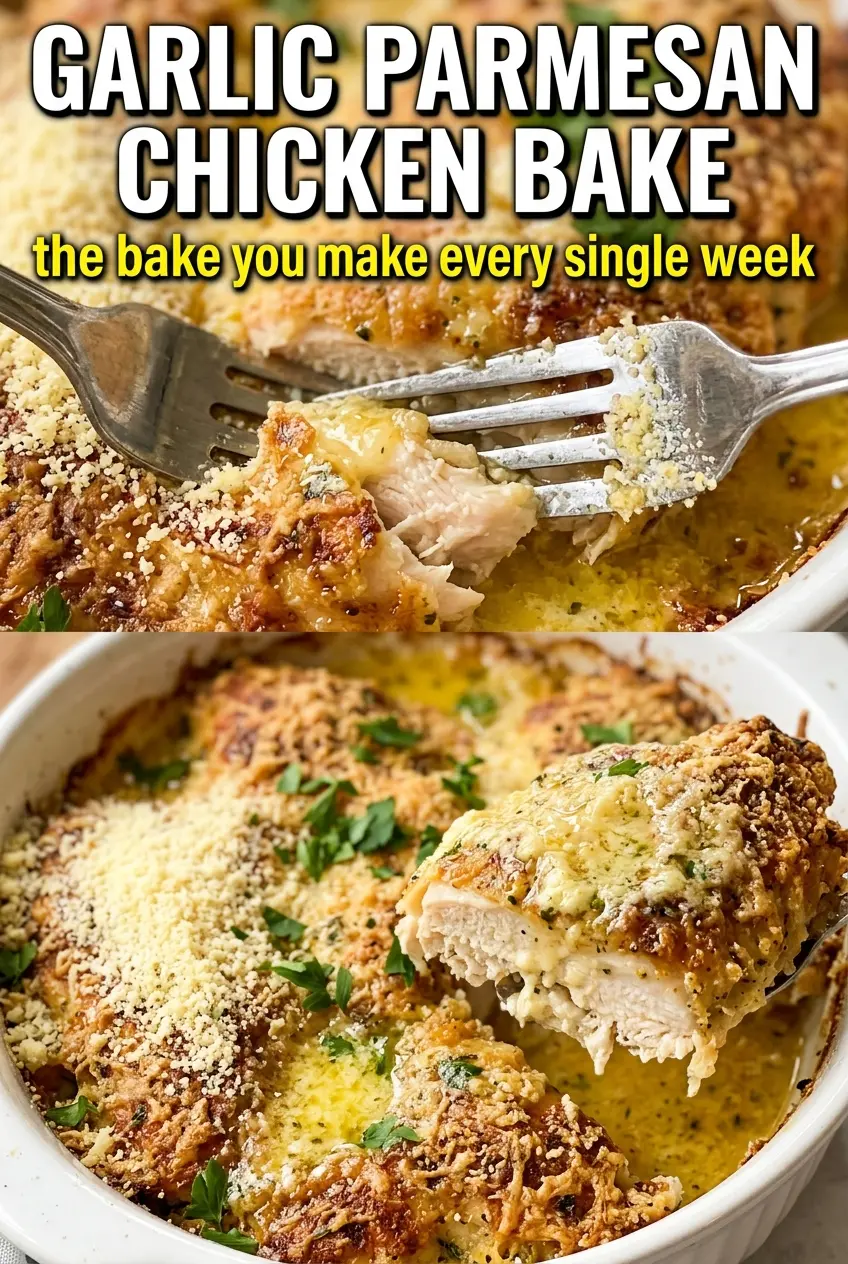
Golden, crackled Parmesan on top and juicy chicken underneath is the kind of dinner that earns repeat status fast. The crust turns crisp at the edges, browned and nutty in the center, and the garlic butter seeps into the chicken as it bakes, so every bite tastes seasoned all the way through instead of sitting under a dry topping.
What makes this version work is the order: butter and garlic first, then a firmly pressed coating of Parmesan and panko. That combination gives you two textures at once — a savory, bronzed crust and tender chicken that stays moist because it bakes in a moderate oven instead of blasting in dry heat. Freshly grated Parmesan matters here because the pre-shredded stuff won’t melt and brown the same way.
Below, I’ve included the small details that keep the crust from sliding off, plus the easiest swaps if you need this to fit what’s in your kitchen.
The crust stayed on beautifully and got those crunchy browned edges I never seem to get with baked chicken. I served it with lemon wedges like you suggested, and the whole pan disappeared.
Save this Garlic Parmesan Chicken Bake for the nights when you want a crackly Parmesan crust and a 30-minute chicken dinner.
The Crust Needs Pressure, Not Just Heat
The biggest mistake with baked Parmesan chicken is sprinkling the topping on top and hoping it stays put. It won’t. The butter needs to coat the chicken first, and the cheese mixture needs to be pressed down firmly so it clings while the chicken cooks. That pressure is what gives you a crust that browns in place instead of falling apart the second you slice into it.
Another thing that matters here is thickness. If one breast is much thicker than the others, it will still be pale and undercooked when the thinner pieces are done. Pound the thickest end lightly or split oversized breasts so everything cooks at the same pace. Evenness matters more than size.
- Chicken breasts — Use boneless, skinless breasts of similar size so they finish together. If yours are very thick, butterfly or lightly pound them to an even thickness; that keeps the topping from burning before the chicken is cooked through.
- Freshly grated Parmesan — This is the ingredient that gives the crust its sharp, salty bite and that browned, lacy finish. Pre-grated cheese often has anti-caking agents that keep it from melting into the same crisp layer.
- Panko breadcrumbs — Panko adds lift and crunch. Regular breadcrumbs work in a pinch, but the crust will be tighter and less airy.
- Butter and garlic — Melted butter carries the garlic across the whole surface of the chicken and helps the topping toast. Garlic powder on the chicken itself gives you deeper seasoning so the flavor doesn’t stop at the crust.
Getting the Topping to Brown Before the Chicken Dries Out
Season the Chicken First
Season the chicken directly in the baking dish so every piece gets salt, pepper, and garlic powder on the meat itself, not just on the coating. That step matters because the crust is flavorful, but it won’t season the inside of the chicken for you. If you skip it, the topping tastes good and the chicken underneath tastes flat.
Brush on the Garlic Butter
Mix the melted butter with the minced garlic, then brush it generously over each breast. You want the surface glossy, not pooled with butter in the bottom of the dish. Too much butter underneath the chicken can loosen the coating, while too little leaves dry spots that won’t brown evenly.
Press the Crust In, Don’t Sprinkle It On
Combine the Parmesan, panko, Italian seasoning, parsley, and smoked paprika, then press the mixture firmly onto the buttered chicken. Use your hand or the back of a spoon and actually compact it a little. That firm contact is what helps the crust form a single layer instead of a patchy topping that slides around as it bakes.
Bake Until the Top Is Deeply Golden
Put the dish in a 400°F oven and bake until the crust is deeply golden and the chicken reaches 165°F in the thickest part. If the top browns before the chicken is done, it usually means the breasts were too thick or the oven runs hot; tent loosely with foil for the last few minutes if needed. Let it rest briefly before serving so the juices settle instead of running out onto the cutting board.
How to Adapt This Chicken Bake Without Losing the Crunch
Gluten-Free Version
Swap the panko for gluten-free panko or crushed gluten-free crackers. You’ll still get a crisp top, though crackers tend to brown a little faster, so watch the last 5 minutes closely.
Dairy-Free Adjustment
Use a plant-based butter and a dairy-free Parmesan-style topping. The texture will still be crisp, but the flavor will be milder and less nutty than the original, so add a pinch more garlic powder and a little extra salt.
Boneless Thighs Instead of Breasts
Boneless thighs work well if you want richer, juicier meat. They usually need a few extra minutes in the oven and won’t have the same lean, sliceable texture, but the topping stays excellent.
Storage and Reheating
- Refrigerator: Store leftovers in an airtight container for up to 3 days. The crust softens a bit in the fridge, but the flavor holds well.
- Freezer: It freezes, though the topping won’t stay as crisp. Freeze in a single layer, then wrap tightly and thaw in the refrigerator before reheating.
- Reheating: Reheat in a 350°F oven until hot through. The oven keeps the coating from turning soggy, while the microwave tends to steam the crust and flatten the texture.
Answers to the Questions Worth Asking
Garlic Parmesan Chicken Bake
Ingredients
Equipment
Method
- Preheat the oven to 400°F and grease a 9x13 baking dish. Make sure the dish is evenly coated so the chicken releases cleanly.
- Season the chicken breasts with salt, pepper, and garlic powder, then place them in the prepared dish. Keep the chicken in a single layer for even browning.
- Mix the melted butter with the minced garlic, then brush generously over each chicken breast. Cover the surface so the topping sticks and browns.
- Combine Parmesan cheese, panko breadcrumbs, Italian seasoning, dried parsley, and smoked paprika, then press the mixture firmly over the buttered chicken to coat. Use firm pressure so the crust forms a thick, crackly layer.
- Bake for 25-30 minutes at 400°F until the Parmesan crust is deeply golden and internal temperature reaches 165°F. Look for browned, fragrant cheese and a crust that looks set and crackled.
- Garnish with fresh parsley and serve with lemon wedges. Add the lemon at the table for bright flavor over the browned crust.