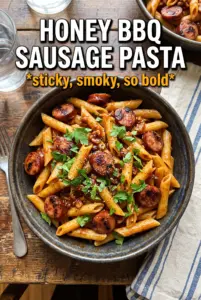
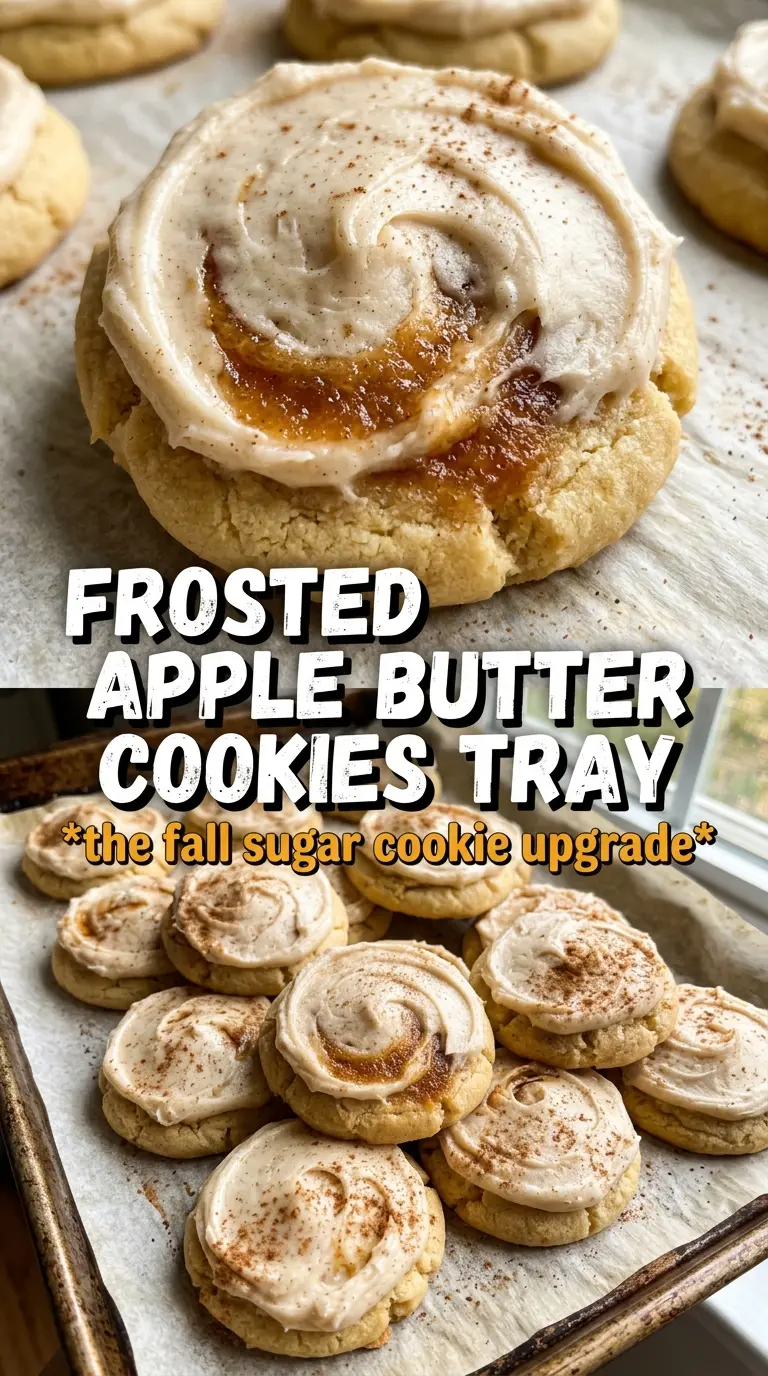
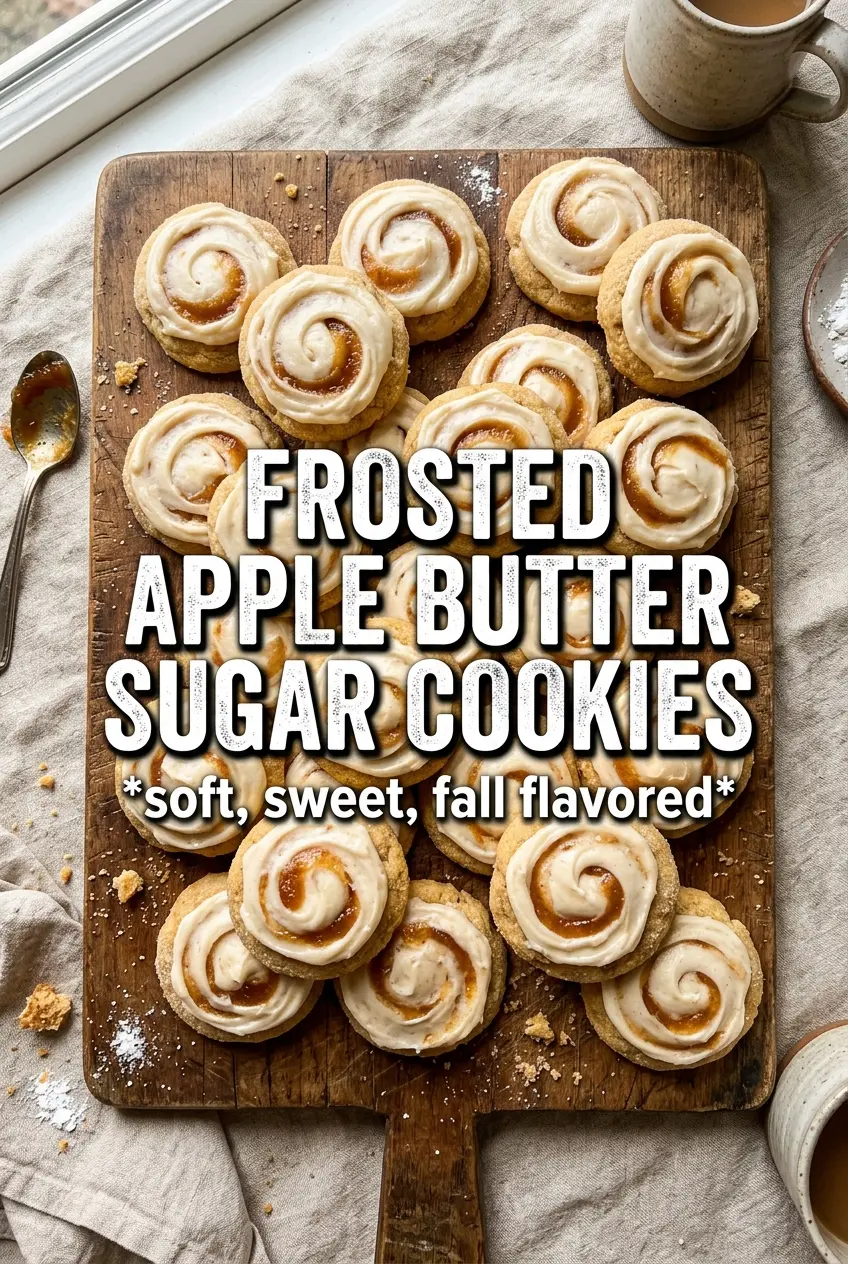
Frosted apple butter sugar cookies bake up soft in the center with just enough edge to hold their shape, then get finished with a tangy apple butter frosting that settles into every swirl. The apple butter keeps the cookie base from tasting plain or one-note, and the cinnamon in both the dough and the topping gives the whole batch that warm bakery smell the second they come out of the oven.
What makes these work is balance. The dough is rolled after a short chill, which keeps the cut-outs neat and stops the cookies from spreading into round, shapeless puddles. The frosting is built with cream cheese and a little more apple butter, so it tastes bright instead of heavy and sweet. A final dusting of cinnamon sugar and a thin caramel drizzle gives each cookie a little crunch and stickiness on top without hiding the apple flavor underneath.
Below, I’ll walk through the one chilling step that protects the shape, the frosting texture you’re aiming for, and a few smart swaps if you need to adjust the batch for what’s already in your kitchen.
The dough rolled out cleanly after chilling, and the cookies stayed thick instead of spreading. The frosting had just enough tang to balance the apple butter, and the caramel drizzle made them taste like a bakery cookie.
Save these frosted apple butter sugar cookies for the days when you want soft cut-outs with cinnamon, apple butter, and a glossy caramel finish.
The Chilling Step That Keeps These Cut-Out Cookies from Spreading
Apple butter adds moisture and sweetness, which is great for flavor and not so great for cookie structure if you skip the chill. The dough needs that hour in the fridge so the butter firms up and the flour has time to hydrate. If you roll and bake too soon, the cookies lose their edges before the centers set.
The other detail that matters is thickness. A 1/4-inch roll gives you a cookie that stays soft in the middle but still lifts cleanly from the baking sheet. Thinner than that, and they turn crisp and brittle; thicker than that, and the centers can stay doughy while the edges dry out. Bake them just until the edges look set and the centers lose their raw shine.
- Butter temperature — softened butter should press easily with a finger but still hold shape. If it’s greasy or melting, the dough will need extra flour and the texture gets dense.
- Apple butter — this is the flavor backbone, not a small add-in. Use a thick apple butter for the best texture; a loose, watery one can make the dough harder to handle.
- Cinnamon — there’s cinnamon in the dough and more in the frosting, and that layering is what gives the cookies their warm finish instead of a flat apple taste.
- Caramel drizzle — use a thick drizzle, not a flood. A little goes a long way once it sets on top of the frosting.
What Each Ingredient Is Actually Doing in the Dough and Frosting
- All-purpose flour — this gives the cookies their structure without making them tough. Don’t swap in cake flour if you want clean cut-outs; it makes the dough too delicate.
- Apple butter — use the real thing here. Applesauce won’t give the same concentrated flavor or thickness, and it can make the dough too loose.
- Cream cheese — it’s what keeps the frosting from turning into straight powdered sugar sweetness. Full-fat cream cheese gives the smoothest, most stable frosting.
- Powdered sugar — this thickens the frosting without grittiness. Add the milk slowly so you stop at spreadable, not runny.
- Milk — the amount changes depending on how thick your apple butter is and how soft the cream cheese is. Add just enough to loosen the frosting so it spreads without tearing the cookies.
From Dough to Frosted Finish Without Losing the Shape
Mixing the Dough Until It Just Comes Together
Beat the butter, sugar, and apple butter until the mixture looks fluffy and a little lighter in color, then add the egg and vanilla. Once the dry ingredients go in, stop as soon as the flour disappears. Overmixing here develops the gluten in the flour and turns a soft sugar cookie into something bready and tough.
Rolling After the Chill
Chill the dough for a full hour, then roll it to 1/4 inch on a lightly floured surface. If the dough cracks, let it sit for a few minutes so it warms just enough to cooperate. Cut the shapes, move them to the pan with a thin spatula, and keep the extra dough cold between rounds so the cookies hold their edges.
Baking Until the Edges Set
Bake at 350°F for 8 to 10 minutes, just until the edges look set and the centers still look pale. You’re not waiting for deep color here. If they brown much at all, they’ve gone too far and will dry out once they cool. Let them sit on the pan for a few minutes before moving them so they finish setting without breaking.
Whipping the Frosting Smooth
Beat the cream cheese, butter, apple butter, powdered sugar, cinnamon, and milk until the frosting looks smooth and spreadable. If it seems too thick, add milk a teaspoon at a time. If it looks loose, add a bit more powdered sugar and give it another minute of mixing so it firms up before you frost the cookies.
Finishing for the Best Texture
Spread the frosting over fully cooled cookies, then finish with cinnamon sugar and a light drizzle of caramel. Warm cookies will melt the frosting and slide the toppings right off, so wait until every cookie is cool to the touch. The cinnamon sugar adds a tiny crunch, which keeps the top from tasting too soft all the way through.
How to Adapt These Frosted Apple Butter Sugar Cookies for Different Kitchens
Gluten-Free Version
Use a 1:1 gluten-free flour blend that contains xanthan gum. The dough will be a little more fragile, so chill it well and roll it between two sheets of parchment if needed. The cookies still bake up soft, but the texture is slightly more tender and less chewy than the original.
Dairy-Free Swap
Use a plant-based butter for the dough and a dairy-free cream cheese for the frosting. Choose versions that are firm, not whipped, or the frosting can turn loose fast. The flavor stays close, though the frosting will be a touch less tangy.
No Cookie Cutter Needed
If you don’t want to roll and cut shapes, scoop the dough into balls and flatten them slightly before baking. You’ll lose the crisp, bakery-style edges of a cut-out cookie, but you gain a faster, more rustic version that still carries the apple butter flavor and frosting beautifully.
Storage and Reheating
- Refrigerator: Store frosted cookies in an airtight container for up to 4 days. The frosting stays stable, but the cinnamon sugar softens a bit over time.
- Freezer: Freeze the unfrosted cookies for up to 2 months. Layer them with parchment so they don’t stick, then thaw at room temperature before frosting.
- Reheating: These are best served at room temperature, not warmed. Heat will melt the frosting and blur the caramel drizzle, so let chilled cookies sit out for 15 to 20 minutes before serving instead of microwaving them.
Answers to the Questions Worth Asking
Frosted Apple Butter Sugar Cookies
Ingredients
Equipment
Method
- Beat the unsalted butter, granulated sugar, and apple butter until smooth. Add the egg and vanilla extract and mix until combined.
- Fold in the all-purpose flour, baking powder, salt, and cinnamon until no dry streaks remain. Stop mixing once the dough comes together.
- Refrigerate the dough for 1 hour. Cover the dough so it doesn’t dry out.
- Preheat the oven to 350F and line a sheet pan. Keep the oven at 350F while the cookies bake.
- Roll the dough to 1/4-inch thickness on a lightly floured surface. Cut into rounds or apple shapes.
- Bake for 8-10 minutes at 350F until the edges are just set. The centers should still look slightly soft before cooling.
- Cool the cookies completely before frosting. Wait until fully cool so the frosting won’t melt or slide.
- Beat the cream cheese, unsalted butter, apple butter, powdered sugar, and cinnamon until smooth. Add milk 1 tablespoon at a time until spreadable.
- Spread frosting over each cooled cookie. Add a dusting of cinnamon sugar on top.
- Drizzle caramel over the frosted cookies for finishing. Use a light swirl so the amber frosting remains visible.