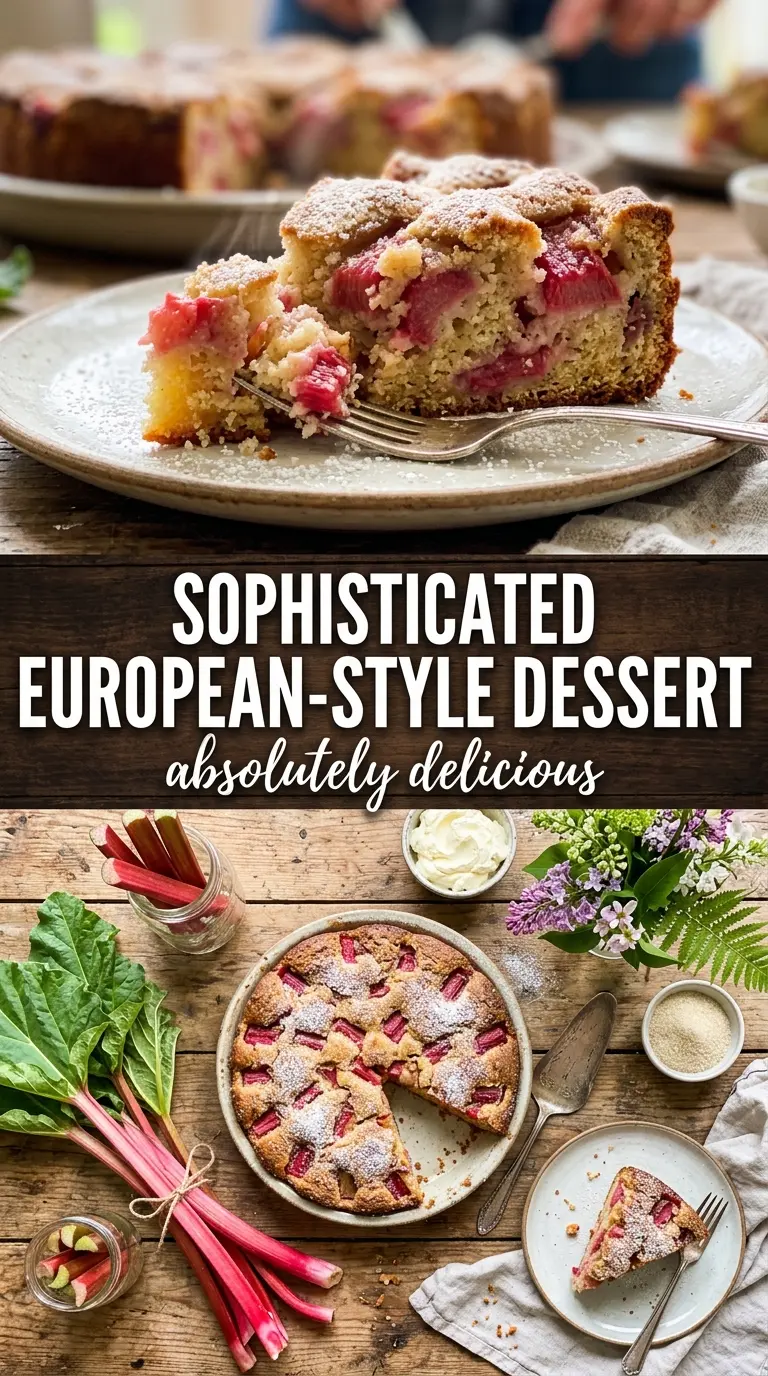
French rhubarb cake bakes into something I keep coming back to: a tender, buttery crumb underneath and jewel-like rhubarb on top that softens just enough without disappearing. It lands between rustic and elegant, which is exactly why it works for both a simple dessert and a cake you can set out with coffee after dinner. The rhubarb stays visible, the top turns golden, and each slice looks as good as it tastes.
What makes this version work is restraint. The batter is plain in the best way, with enough butter and milk to stay soft, but not so much that it turns heavy under the fruit. The rhubarb goes on top instead of being folded through, which keeps the cake from sinking in the middle and lets the tart pieces roast slightly as they bake. A little sugar over the fruit pulls out its juices and gives the top a glossy finish.
You’ll find the small details that matter below, including how to keep the batter light, how to arrange the rhubarb so the top looks intentional, and a few ways to adapt the cake if your fruit runs extra tart.
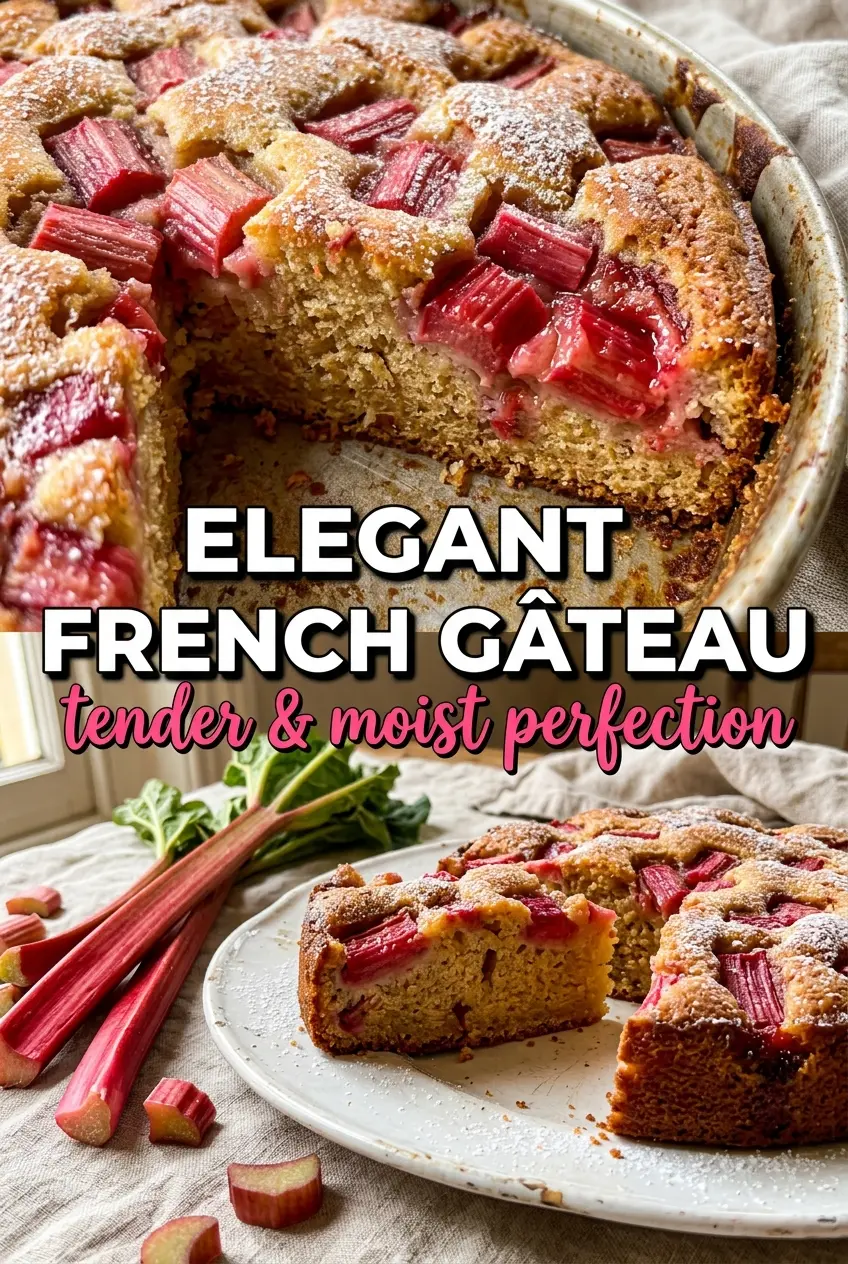
The rhubarb stayed on top instead of sinking, and the cake came out with a soft, buttery crumb that sliced cleanly after cooling. I also liked that the sugar on the fruit gave it a little sparkle without making it too sweet.
French rhubarb cake with a golden top and tart fruit pattern
The Part That Keeps Rhubarb Cake from Sinking
Rhubarb cake falls apart most often for one simple reason: the fruit is too wet or too heavy for the batter beneath it. This version avoids that by keeping the rhubarb on top, where it can soften and release its juices without dragging the middle down. The batter stays thick enough to support the fruit, but not dense, so you still get a light crumb under the baked-in top layer.
The other thing that matters is the pan. A 9-inch springform gives the cake room to rise and makes it easy to remove without tearing the sides. If you use a regular cake pan, line it well with parchment overhanging the edges, because the fruit and sugar can stick more than people expect.
What the Butter, Milk, and Rhubarb Are Each Doing Here
- Butter — This gives the cake its soft, almost shortbread-like tenderness. Use softened butter, not melted butter, so it can trap air when creamed with the sugar; that’s what keeps the crumb light.
- Sugar — The sugar in the batter sweetens the cake, while the sugar on top helps the rhubarb glisten and mellow. If your rhubarb is especially sharp, you can add an extra teaspoon or two to the topping, but don’t overdo it or the fruit turns syrupy.
- Fresh rhubarb — Fresh stalks hold their shape best and bake into neat, tart pieces. Frozen rhubarb can work in a pinch, but thaw it first and pat it dry, or the extra moisture can make the center gummy.
- Milk — Milk loosens the batter just enough to spread evenly in the pan. Whole milk gives the best texture, but 2% works fine if that’s what you keep on hand.
- All-purpose flour — This keeps the cake sturdy without making it bready. Don’t swap in cake flour here unless you want a more delicate, less structured crumb that may struggle under the fruit.
Building the Batter and Topping It the Right Way
Creaming the Base
Beat the butter and sugar until the mixture looks pale, fluffy, and a little increased in volume. That step matters because it builds the structure that helps the cake rise. If the butter is too cold, the mixture stays grainy and the cake bakes up heavy, so let it soften fully before you start.
Adding the Dry Ingredients Without Toughening the Cake
Whisk the flour, baking powder, and salt together before adding them to the bowl. Then alternate the dry ingredients with the milk, mixing just until the flour disappears. Overmixing at this stage gives you a tight, rubbery crumb, and this cake should slice tenderly.
Arranging the Rhubarb
Spread the batter into the pan, then place the rhubarb pieces on top in a circular pattern. Keep the pieces in a single layer and press them in just enough so they sit on the surface. If you bury them, they disappear into the cake instead of giving you that pretty, rustic top.
Baking to the Point of Set and Shine
Bake until the top is golden and a toothpick comes out clean from the center, usually around 40 to 45 minutes. The rhubarb should look softened and glossy, but not collapsed into mush. If the top browns before the center is done, lay a loose piece of foil over it for the last 10 minutes.
Strawberries for a Sweeter, Softer Cake
Swap up to half the rhubarb for sliced strawberries if you want a gentler tartness. The cake turns juicier and a little more dessert-like, but it loses some of the clean rhubarb bite that makes the original stand out.
Dairy-Free Version
Use a good plant-based butter and unsweetened non-dairy milk with similar fat content, like oat milk. The cake still rises well, but the flavor is a little less rich and the crumb is slightly less tender than the butter version.
Gluten-Free Adaptation
A 1:1 gluten-free baking blend can work here if it includes xanthan gum. The texture will be a touch more delicate and slightly more crumbly, so let the cake cool fully before slicing.
Storage and Reheating
- Refrigerator: Store covered for up to 3 days. The rhubarb will soften more, but the cake stays pleasant and moist.
- Freezer: Freeze slices tightly wrapped for up to 2 months. The texture softens after thawing, but it still works well for a make-ahead dessert.
- Reheating: Warm slices in a 300°F oven for 8 to 10 minutes. Avoid the microwave if you can, because it makes the crumb rubbery and the fruit wet.
Questions I Get Asked About This Recipe
French Rhubarb Cake
Ingredients
Equipment
Method
- Preheat the oven to 350°F and grease a 9-inch springform pan. Lightly coat the pan so the cake releases cleanly, keeping the surface ready for the batter.
- Cream the softened butter and 1 cup sugar until fluffy, then beat in the eggs one at a time and add the vanilla extract. Mix until the batter looks lighter in color and smoother.
- Whisk together the all-purpose flour, baking powder, and salt. Whisking evenly distributes the leavening for a consistent rise.
- Add the dry mixture to the butter mixture alternating with the milk, mixing until just combined. Stop as soon as the flour disappears to avoid a tough crumb.
- Pour the batter into the prepared pan and arrange the rhubarb pieces on top in a circular pattern. Place them evenly so the cake bakes with artful coverage.
- Sprinkle the rhubarb with 2 tablespoons sugar. This helps the fruit turn golden and glossy as it bakes.
- Bake for 40-45 minutes at 350°F until golden and a toothpick comes out clean. The top should look set and lightly browned.
- Cool the cake for 30 minutes before serving. The texture firms up as it cools, making slices neater.
- Dust the top with powdered sugar just before serving. Aim for a light, snowy finish over the rhubarb.