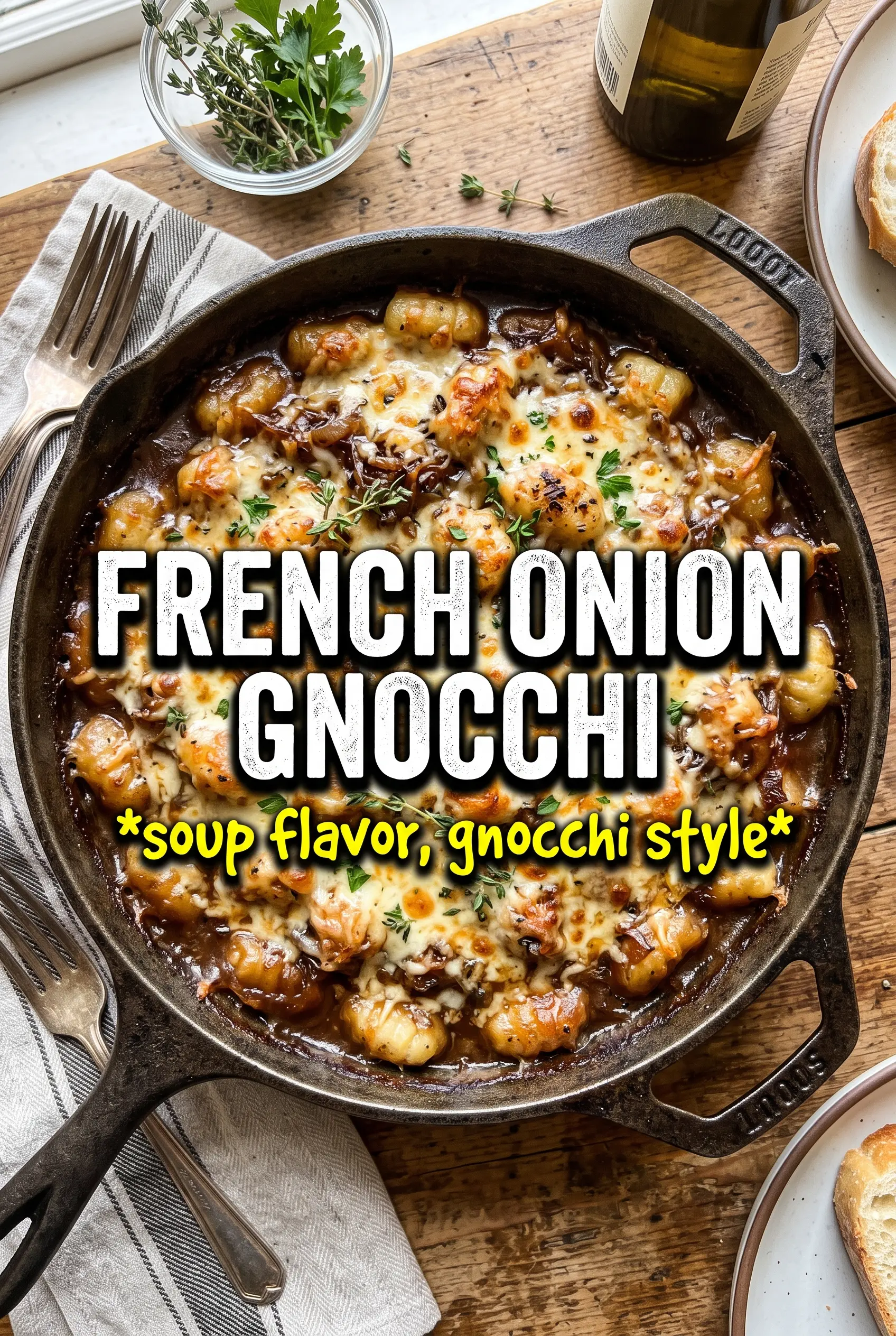
French onion gnocchi lands somewhere between a cozy skillet dinner and the kind of rich, glossy pasta bake that disappears fast at the table. The onions turn deeply sweet and jammy, the gnocchi cooks right in the sauce, and the Gruyere bubbles into a browned top that pulls into long, salty strands with each scoop. It eats like comfort food but still feels a little special.
The key is giving the onions enough time to do their thing. If they stay pale, the sauce tastes flat; if you let them cook slowly until they’re soft, amber, and almost sticky, they carry the whole dish. A splash of white wine lifts the browned bits off the pan, the broth keeps the sauce savory, and the cream rounds everything out without muting the onion flavor.
Below you’ll find the timing that keeps the gnocchi tender instead of mushy, plus a few swaps that still respect what makes this skillet work. The broiler finish matters more than it looks, so don’t skip that last minute of color.
The onions took their time, but the payoff was worth it — the sauce turned silky and the gnocchi stayed pillowy instead of getting gummy. My husband went back for seconds before I even sat down.
Save this French onion gnocchi for the night you want caramelized onions, bubbling Gruyere, and one skillet doing all the work.
The Part Most People Rush: The Onions Have to Go Deeply Golden
The mistake in French onion-style dishes is treating the onions like a quick sauté. They need time for the water to cook off and the sugars to concentrate, which is why the pan should stay at medium-low instead of cranked up. If the heat is too high, the edges scorch before the center turns sweet, and you end up with bitter bits instead of that soft, savory base this dish depends on.
Butter carries the onions and helps them brown evenly, but the real work is patience. Stir them often enough that nothing catches, then leave them alone long enough between stirs that they can actually color. By the time they’re deep amber and almost jammy, the whole kitchen will smell like French onion soup, and that’s the point where the dish starts tasting like itself.
What the Butter, Wine, and Gruyere Are Really Doing Here

- Yellow onions — These are the foundation. Sweet onions work, but standard yellow onions give the best balance of sweetness and depth once they caramelize. Slice them evenly so they cook at the same pace; thick pieces stay sharp and watery while thin ones vanish before the rest are ready.
- Butter — Butter gives the onions a richer, rounder flavor than oil alone. It also helps the pan collect those brown fond bits without making the sauce greasy. If you need to go dairy-free, use a neutral oil, but expect a less luxurious finish.
- Dry white wine — The wine pulls the browned bits from the pan and adds a bright edge that keeps the sauce from tasting heavy. Use something you’d drink, not cooking wine. If you skip it, add a small splash of extra broth with a teaspoon of white wine vinegar for that lift.
- Gruyere — This is the cheese that gives the dish its French onion character. It melts smoothly and browns beautifully under the broiler. Swiss cheese works in a pinch, but it’s milder and less nutty, so the final dish tastes softer.
- Potato gnocchi — Shelf-stable gnocchi is ideal here because it cooks directly in the sauce and soaks up flavor as it softens. Fresh gnocchi can work too, but watch it closely; it turns tender faster and can go from pillowy to bloated if it sits too long.
Building the Sauce Around the Gnocchi, Not Beside It
Caramelizing the onions without scorching them
Cook the onions in butter over medium-low heat until they’re soft, collapsed, and a deep golden brown. They should smell sweet and almost nutty, not sharp or raw. If they start sticking too hard, add a spoonful of water and keep going; that loosens the fond without washing away flavor. Don’t rush this stage, because pale onions make a thin sauce.
Deglazing the pan with wine
Once the onions are ready, add the garlic and thyme, then pour in the wine. It should hiss and loosen the browned bits right away. Let it simmer until the sharp alcohol smell fades and the liquid looks a little syrupy. If you stop too soon, the sauce can taste boozy instead of rounded.
Simmering the broth and cream
Add the broth, Worcestershire, and cream, then bring everything to a gentle simmer, not a hard boil. You want the sauce moving lazily around the edges, because a rolling boil can make the cream separate and throw off the texture. At this point the sauce should look slightly loose; it will tighten when the gnocchi cooks in it.
Cooking the gnocchi in the skillet
Stir in the uncooked gnocchi and let it simmer in the sauce for 4 to 5 minutes. The gnocchi should turn soft and float a little, and the sauce should thicken enough to coat a spoon. If the pan looks too tight, add a splash of broth rather than water so you keep the flavor concentrated. Pull it off the heat as soon as the gnocchi is tender, because it will keep absorbing liquid.
Broiling the Gruyere until it bubbles
Scatter the cheese evenly over the top and slide the skillet under the broiler until it melts, bubbles, and picks up browned spots. Stay close, because this goes from perfect to scorched fast. The best finish is golden at the edges with a few darker freckles on top, the kind that crackle when the spoon goes through.
How to Adjust This Skillet When You Need It to Fit Your Table
Make it vegetarian
Swap the beef broth for a deep vegetable broth and use vegetarian Worcestershire if needed. You’ll lose a little of the savory backbone, so let the onions cook all the way down and don’t skimp on the cheese. The finished dish still tastes rich, just a little lighter in a good way.
Make it dairy-free
Use olive oil instead of butter and swap the cream for full-fat coconut milk or an unsweetened oat cream. The sauce won’t taste quite as classic, and you’ll lose the Gruyere topping unless you use a dairy-free melty cheese, but the caramelized onions still carry plenty of flavor. Keep the heat low so the alternative cream doesn’t split.
Use a different cheese
Swiss, fontina, or a mild provolone will melt well if Gruyere isn’t in the fridge. Gruyere gives the most classic French onion flavor, though, because it’s nutty and a little sharp. If you use a softer cheese, add a pinch more salt at the end to wake the sauce back up.
Storage and Reheating
- Refrigerator: Store leftovers in an airtight container for up to 3 days. The gnocchi will absorb more sauce as it sits, so the dish gets thicker overnight.
- Freezer: I don’t recommend freezing this one. The cream sauce can separate and the gnocchi turns soft in a way that doesn’t recover well.
- Reheating: Warm it gently on the stove over low heat with a splash of broth or cream to loosen the sauce. The common mistake is blasting it in the microwave or over high heat, which tightens the sauce and makes the gnocchi tough on the outside.
Answers to the Questions Worth Asking
French Onion Gnocchi
Ingredients
Equipment
Method
- Melt the unsalted butter in a cast iron skillet over medium-low heat, then add the thinly sliced onions. Cook 35-40 minutes, stirring occasionally, until the onions are deeply caramelized.
- Add the minced garlic and fresh thyme to the skillet and cook for 1 minute. Pour in the dry white wine and cook for 2 minutes to deglaze.
- Stir in the beef broth, Worcestershire sauce, and heavy cream, then bring the mixture to a simmer. Keep it simmering until it’s bubbling and ready for the gnocchi.
- Add the potato gnocchi directly to the simmering sauce. Cook 4-5 minutes, stirring gently as needed, until the gnocchi is cooked through and the sauce thickens.
- Scatter the shredded Gruyere evenly over the top of the gnocchi. Broil 3-4 minutes until golden and bubbly.