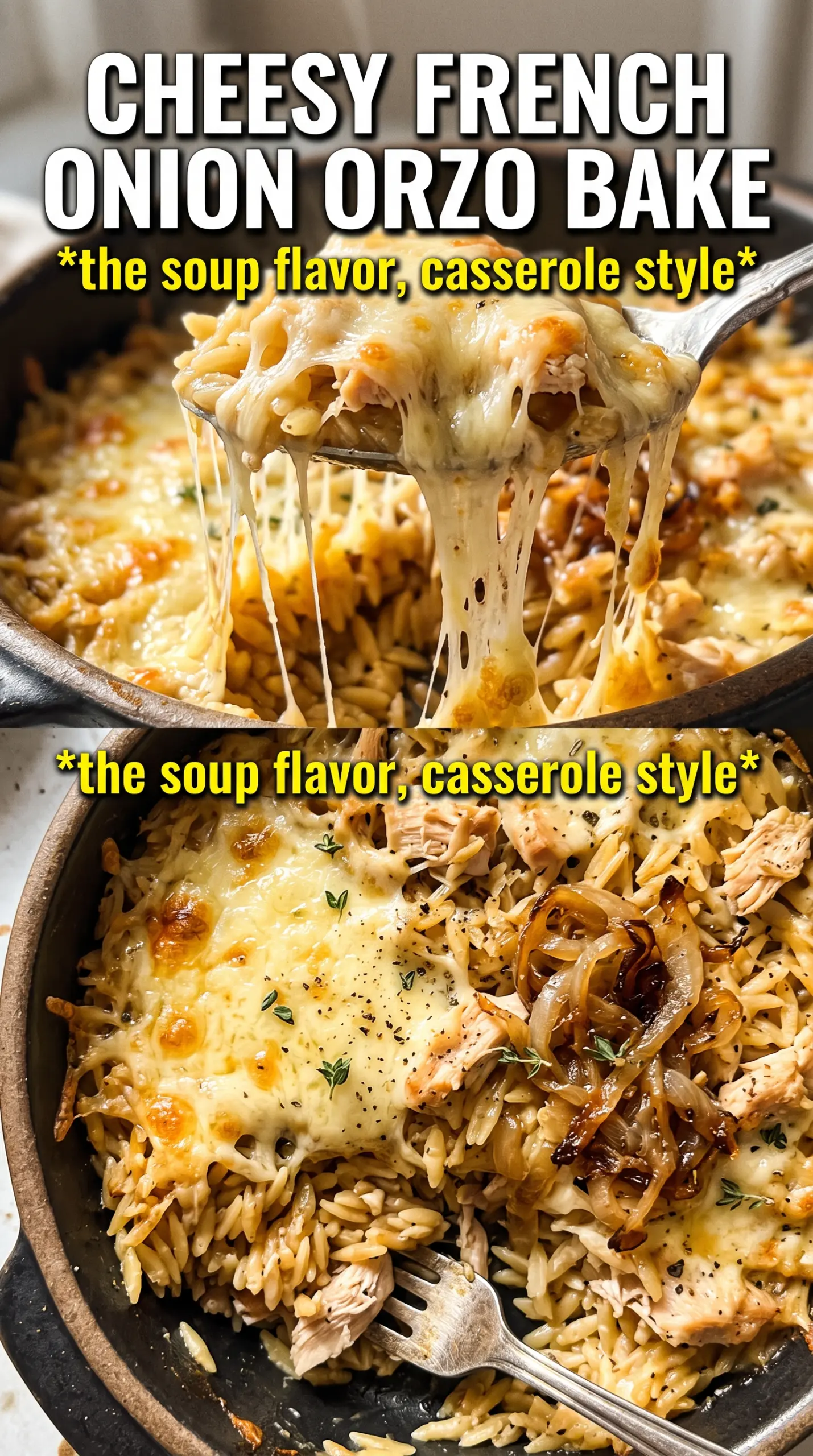
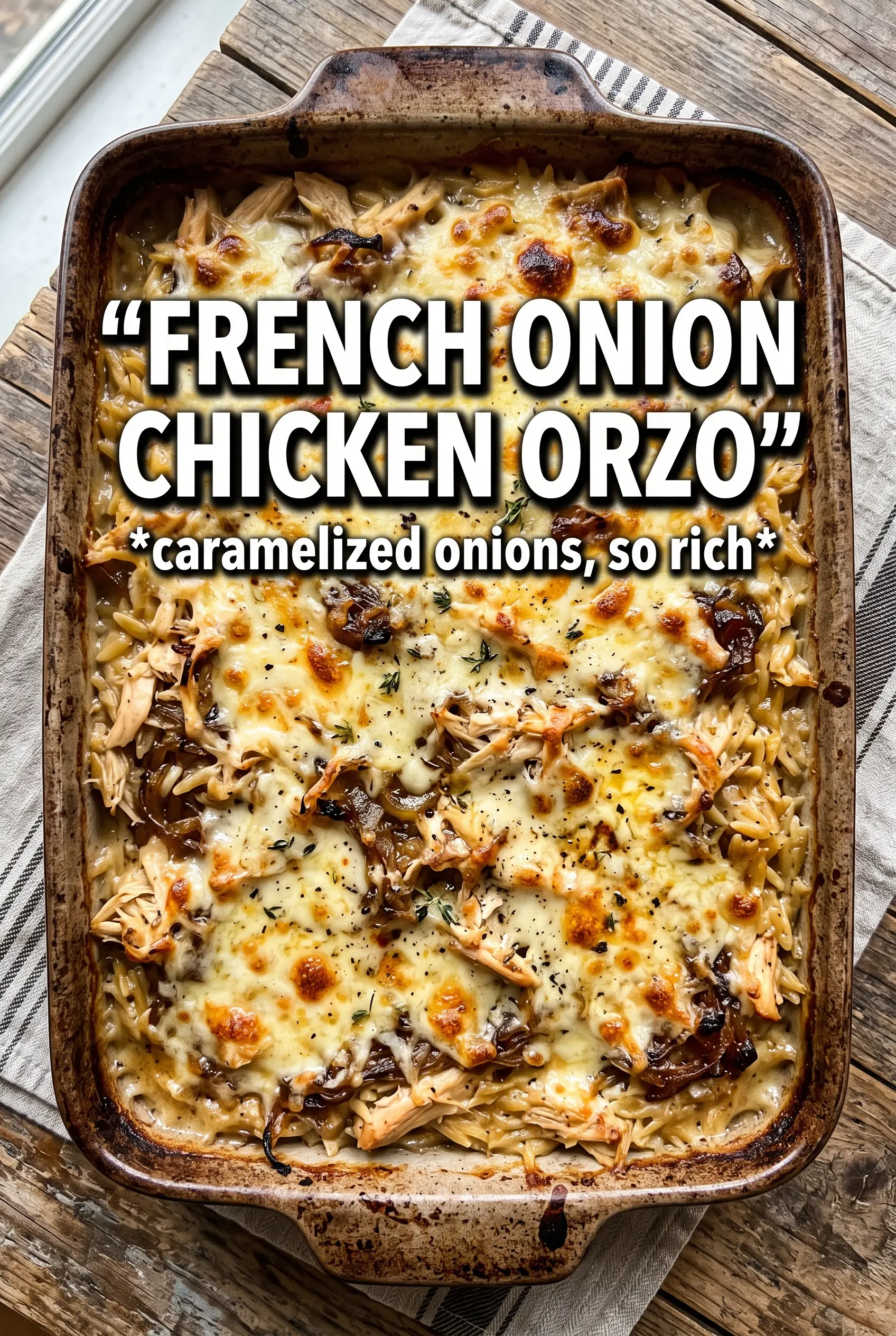
French onion chicken orzo casserole lands in that sweet spot between comforting and a little elevated: tender chicken, creamy orzo, deeply caramelized onions, and a browned Gruyère top that cracks when your spoon goes in. The best part is that it eats like a full meal from one baking dish, with enough richness to feel special and enough structure to hold together on the plate.
What makes this version work is patience at the beginning. The onions need time to go from sharp and raw to soft, mahogany-sweet, because that’s where the French onion flavor actually comes from. The orzo cooks right in the broth and wine, which means it absorbs flavor instead of tasting like a separate pasta stir-in. Cream cheese gives the filling body without needing flour, and Gruyère melts into that stretchy, nutty finish that makes the whole thing taste complete.
Below you’ll find the little details that matter most here: how dark to take the onions, when to stop stirring the cream cheese, and what to watch for so the orzo turns creamy instead of mushy.
The onions took a little patience, but they turned sweet and jammy, and the Gruyère browned into a perfect crust. The orzo stayed creamy without getting gummy, which is exactly what I hoped for.
Save this French onion chicken orzo casserole for the nights when you want caramelized onions, creamy orzo, and a golden Gruyère crust all in one pan.
The Part Most Onion Casseroles Get Wrong
The biggest mistake in a French onion-style bake is rushing the onions. If they only soften, the dish tastes sweet in a one-note way and never gets that deep savory backbone. You want them reduced, glossy, and bronze all the way through, with a few darker edges that melt into the sauce later.
The other place people lose control is the liquid balance. Orzo drinks broth fast, and if the pan is too dry before it goes into the oven, you end up with firm pasta and a thick paste instead of a creamy casserole. The wine adds sharpness, the broth gives body, and the cream cheese holds everything together once the pasta starts absorbing liquid.
- Onions — These are the whole flavor base. Yellow onions are the right choice because they caramelize well and turn sweet without getting flimsy. Slice them evenly so they cook at the same pace; thin, uneven shreds will burn before the rest is ready.
- Gruyère — This is worth buying if you can get it. It melts smoothly and gives you that nutty, French onion finish that mozzarella can’t mimic. Swiss cheese will work in a pinch, but it tastes milder and the crust won’t be as rich.
- Dry white wine — Use one you’d actually drink. It deglazes the pan and lifts all the browned onion bits into the sauce. If you need a non-alcoholic swap, use extra broth with a splash of white wine vinegar or lemon juice for brightness.
- Cream cheese — This is the shortcut to a creamy filling without making a separate sauce. Cube it before adding it so it melts faster and more evenly. Cold blocks dropped in whole can leave little soft pockets that never fully disappear.
- Orzo — Uncooked orzo is what makes this feel like a casserole instead of chicken in gravy. It thickens the pan as it bakes, so you don’t need flour. If you substitute a larger pasta shape, the timing and liquid ratio won’t hold the same way.
What Each Ingredient Is Actually Doing in This Recipe
- Primary ingredient (the star) — Quality matters most. Choose the best you can find.
- Cooking medium (oil, butter, or broth) — This carries flavors and prevents dryness.
- Seasonings (salt, pepper, spices, herbs) — Layer flavors so nothing overpowers. Build depth gradually.
- Aromatics (garlic, onion, herbs) — Cook with fat to bloom flavors. Become the foundation.
- Supporting ingredients — Complement the main ingredient without overpowering it.
- Sauce or liquid (if applicable) — Brings flavors together. Balance richness with acid.
- Acid (lemon, vinegar, wine, or other) — Brightens and prevents flat-tasting results.
- Final finish (garnish, glaze, or sauce) — Prevents one-dimensional taste and adds visual appeal.
How the Casserole Builds Its Creamy, Golden Finish
Caramelizing the Onions Properly
Melt the butter in a large oven-safe skillet and add the onions with a pinch of salt. Cook them over medium heat for 30 to 35 minutes, stirring often at the start and more frequently as they darken. You’re looking for soft, jammy onions with a deep amber color, not just pale translucence. If the pan starts to look dry before the onions are ready, lower the heat and add a small splash of water to keep the sugars from scorching.
Building the Savory Base
Once the onions are deeply caramelized, add the garlic and thyme and cook just until fragrant. Garlic burns fast in a hot pan, so this stage only needs a couple of minutes. Pour in the wine and scrape up the browned bits on the bottom; that fond is where a lot of the flavor lives. Let the wine cook down until it no longer smells sharp and the liquid looks slightly syrupy.
Letting the Orzo Thicken the Pan
Stir in the broth, Worcestershire sauce, and uncooked orzo, then add the diced chicken. Bring everything to a gentle simmer before the pan goes into the oven. The mixture should look loose and soupy at this point; the pasta needs that liquid to finish cooking. If it already looks thick in the skillet, the casserole will likely dry out in the oven.
Finishing in the Oven
Stir in the cream cheese until it disappears into the broth and the sauce looks smooth, then season with salt and pepper. Scatter the Gruyère over the top and bake until the chicken is cooked through, the orzo is tender, and the cheese is bubbling with browned spots. Let it rest for 5 to 10 minutes before serving so the sauce settles and the casserole slices instead of running across the plate.
How to Adapt This Without Losing the Character of the Dish
Make It Gluten-Free
Use a certified gluten-free orzo or small gluten-free pasta shape and watch the liquid closely, since some gluten-free pastas absorb broth differently. Worcestershire sauce can also contain gluten, so check the label or use a gluten-free version. The finished dish will still be creamy and savory, just a little more delicate in texture.
Make It Without Wine
Replace the wine with extra beef broth plus 1 to 2 teaspoons of white wine vinegar or lemon juice. You’ll lose some of the sharp edge that wine brings, but the dish will still taste balanced if you keep the acid in there. Add it sparingly so the casserole doesn’t lean sour.
Use Chicken Thighs Instead
Boneless, skinless thighs work well here and stay a little juicier than breast meat. Cut them into similar-sized pieces so they cook evenly in the oven. The flavor gets a touch richer, which plays nicely with the onions and Gruyère.
Storage and Reheating
- Refrigerator: Store leftovers in an airtight container for up to 4 days. The orzo will thicken as it sits, so expect a much firmer texture after chilling.
- Freezer: This freezes, but the sauce can turn a little grainy after thawing because of the dairy. Freeze in portions, then thaw overnight in the fridge for the best chance of keeping the texture intact.
- Reheating: Reheat covered in a 325°F oven with a splash of broth to loosen the pasta. The common mistake is blasting it in the microwave until the cheese separates and the chicken turns dry.
Answers to the Questions Worth Asking
French Onion Chicken Orzo Casserole
Ingredients
Equipment
Method
- Preheat oven to 375F. Use an oven-safe skillet so you can go from stovetop to bake.
- Melt butter in a large oven-safe skillet over medium heat and add the thinly sliced onions. Cook 30-35 minutes, stirring occasionally, until deeply caramelized and golden-brown at the edges.
- Add minced garlic and dried thyme to the caramelized onions. Cook for 2 minutes until fragrant.
- Pour in the dry white wine. Cook for 2 more minutes, letting the alcohol cook off slightly.
- Add beef broth, Worcestershire sauce, and uncooked orzo, then stir in the diced chicken. Stir until the orzo is coated and the chicken is distributed through the mixture.
- Bring the mixture to a simmer, then stir in the cubed cream cheese until melted and smooth. Keep it at a steady simmer so the orzo starts cooking.
- Season with salt and pepper to taste. Scatter the shredded Gruyere evenly over the top for a golden crust.
- Bake at 375F for 25-30 minutes. Bake until the orzo is cooked through, the chicken is done, and the cheese is golden and bubbling at the edges.