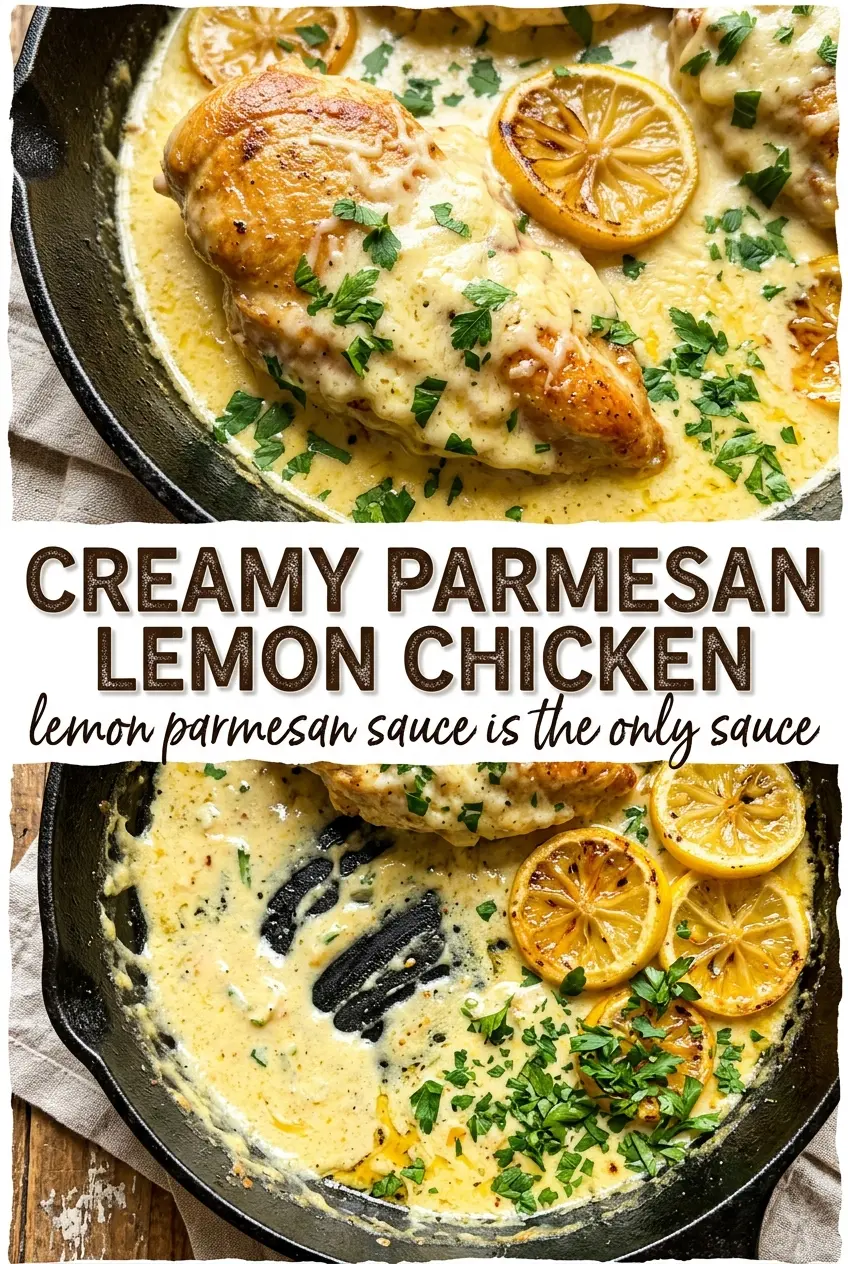
Golden seared chicken breasts in a silky lemon Parmesan cream sauce earn a permanent place in the dinner rotation because they hit that narrow sweet spot between fast and special. The chicken stays juicy, the sauce clings instead of puddling, and the lemon keeps the cream from tasting heavy. It’s the kind of skillet dinner that looks like you fussed, even when the whole thing comes together in under 40 minutes.
The difference here is in the order. The chicken gets a hard sear first so it brings real flavor into the pan, then the garlic and wine pick up every browned bit before the cream goes in. Parmesan and lemon are added with enough heat to thicken the sauce, but not so much that the dairy turns grainy or the citrus tastes sharp.
Below, I’ve included the exact cues I watch for in the pan, the one substitution that still keeps the sauce balanced, and a few variations for nights when you need to stretch the recipe or skip the wine.
The sauce thickened up beautifully and never broke, even after I added the lemon. I served it over mashed potatoes and my husband went back for seconds before I sat down.
Save this creamy Parmesan lemon chicken for the nights when you want a silky skillet sauce with bright lemon and almost no cleanup.
The Chicken Sear That Keeps the Sauce From Going Flat
The biggest mistake with skillet chicken in cream sauce is rushing the browning. Pale chicken gives you a pale sauce, and once the pan is crowded or the heat is too low, the meat steams before it sears. Here, the chicken needs enough space to pick up a deep golden crust on both sides before it comes out of the pan. That crust is the backbone of the sauce because the wine or broth lifts all those browned bits right back into the skillet.
- Chicken breasts — Use boneless, skinless breasts and pound the thicker ends lightly so they cook at the same rate. If you skip that step, one end dries out before the center is done.
- Olive oil — A neutral-tasting olive oil with a decent smoke point is enough here. You only need enough to coat the pan and encourage the sear.
- Dry white wine or chicken broth — Wine gives the sauce a little edge and complexity, while broth keeps it family-friendly. If you use broth, add an extra squeeze of lemon at the end to keep the sauce lively.
- Parmesan — Freshly grated Parmesan matters. The pre-shredded stuff usually has anti-caking agents that make the sauce less smooth and can leave it a little gritty.
- Lemon juice and zest — Juice brings brightness, but zest carries the lemon aroma without extra acidity. Both together make the sauce taste balanced instead of sharp.
Building the Sauce Without Breaking the Cream

The Garlic and Wine Base
After the chicken comes out, lower the heat enough that the garlic sizzles gently instead of browning hard. Thirty seconds is enough; any longer and it can turn bitter. Pour in the wine or broth and scrape the pan until the bottom looks clean and the liquid has taken on color from the fond. Let it simmer for a minute or two so the alcohol cooks off and the liquid concentrates before the cream goes in.
The Cream, Cheese, and Lemon Finish
Stir in the cream, then add the Parmesan a little at a time so it melts smoothly. If the pan is too hot here, the cheese can seize and the sauce turns grainy, so keep the heat at a gentle simmer, not a boil. Add the lemon juice and zest once the sauce has started to thicken. The acid sharpens the flavor, but if it goes in too early over high heat, the dairy can separate. Finish with butter for sheen, then return the chicken and spoon sauce over every piece until the top looks lacquered.
Make It Gluten-Free Without Changing the Texture
This recipe is naturally gluten-free as written as long as your broth is certified gluten-free. The sauce thickens from reduction and Parmesan, not flour, so you don’t lose the silky finish by skipping a roux.
Dairy-Free Version That Still Tastes Rich
Use full-fat canned coconut milk in place of the cream and a dairy-free Parmesan-style cheese if you have one that melts well. The sauce will be a little less sharp and a touch sweeter, so add the lemon gradually and taste as you go.
Chicken Thighs for a Juicier Skillet Dinner
Boneless skinless thighs work well if you want more forgiveness on the stovetop. They stay tender a little longer than breasts, but they need a few extra minutes to get properly browned before the sauce goes in.
Skip the Wine and Keep the Brightness
Chicken broth works fine in place of wine. If you go that route, finish with a small extra splash of lemon juice after the sauce thickens so it still tastes balanced instead of flat.
Storage and Reheating
- Refrigerator: Store leftovers in an airtight container for up to 3 days. The sauce will thicken as it chills.
- Freezer: I don’t recommend freezing this one. Cream sauces can separate after thawing, and the lemon flavor gets dull.
- Reheating: Warm gently in a covered skillet over low heat with a splash of broth or cream. High heat is the fastest way to break the sauce and dry out the chicken.
Questions I Get Asked About This Recipe
Creamy Parmesan Lemon Chicken
Ingredients
Equipment
Method
- Season the chicken breasts on both sides generously with salt, pepper, garlic powder, and Italian seasoning.
- Heat olive oil in a large skillet over medium-high heat and sear chicken for 5-6 minutes per side until golden, then transfer to a plate and verify internal temperature reaches 165°F.
- Add minced garlic to the skillet and cook for 30 seconds until fragrant.
- Pour in dry white wine (or chicken broth) to deglaze, scraping up browned bits, then simmer for 2 minutes.
- Stir in heavy cream, Parmesan cheese, fresh lemon juice, and lemon zest, then simmer for 4-5 minutes until the sauce thickens and looks glossy at the edges.
- Swirl in butter until fully melted and the sauce turns smooth and shiny.
- Return the chicken to the skillet, spoon the sauce over each breast, and top with fresh parsley and lemon slices.