Smoky sausage, penne, and a Cajun cream sauce make this the kind of skillet pasta that disappears fast and never feels fussy. The sauce clings to every ridge of the pasta, the peppers stay just tender, and the sausage brings enough salt and spice to make each bite taste finished without needing a long ingredient list.
What makes this version work is the layering. Browning the sausage first leaves flavorful bits in the pan, and those browned spots get picked up by the onion, peppers, garlic, and broth. The cream goes in after the broth has started to simmer, which keeps the sauce smooth instead of greasy, and a splash of pasta water gives it the loose, silky texture you want before the parmesan tightens everything up.
Below, I’m walking through the part that matters most: how to keep the sauce creamy, not heavy, and how to season it so the sausage and Cajun spice stay balanced. There’s also a short section on the swaps that still hold up when you need to use what’s already in the kitchen.
The sauce clung to the penne perfectly and didn’t turn grainy when I added the parmesan. I also loved that the sausage stayed browned instead of getting lost in the sauce.
Creamy Cajun sausage pasta is the kind of skillet dinner worth keeping close for busy nights and second helpings.
The Trick Most Creamy Sausage Pastas Miss: Build the Sauce Before the Cheese
The biggest mistake with a pasta like this is rushing the dairy. If the pan is too hot when the cream and parmesan go in, the sauce can turn greasy or slightly grainy instead of smooth and glossy. The fix is simple: let the broth and cream simmer together first so the liquid reduces a bit, then add the parmesan off the fiercest heat so it melts into the sauce instead of seizing up.
The other piece that matters is the sausage fond. Those browned bits on the bottom of the pan are concentrated flavor, and the vegetables need just enough time to soften and lift them without steaming. If the onions and peppers go in at a hard sizzle but never actually soften, the finished pasta tastes sharp instead of rounded.
What Each Ingredient Is Actually Doing in This Skillet
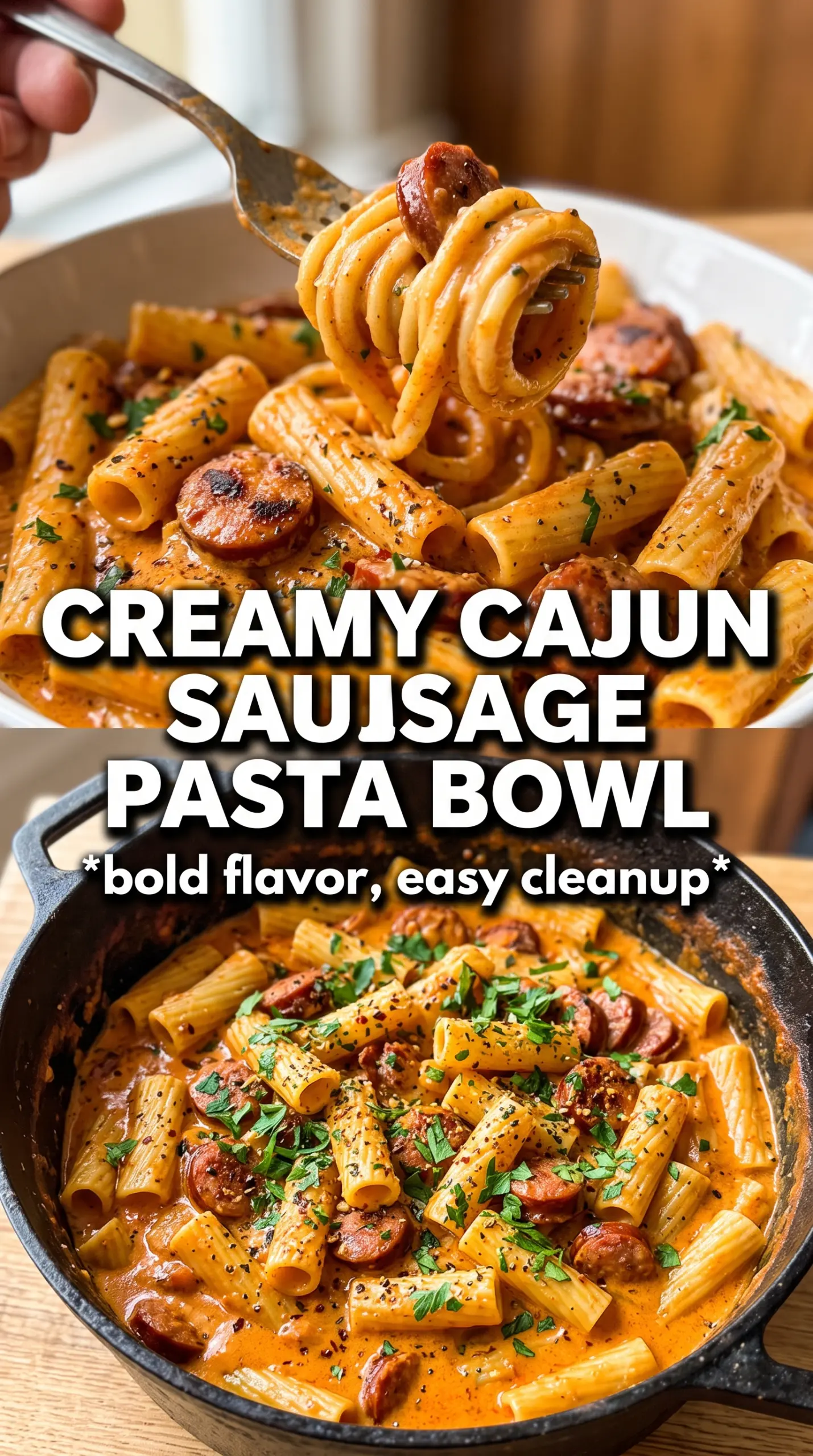
- Andouille or smoked sausage — This is the backbone of the dish. Andouille brings more spice, while smoked sausage gives a milder, rounder flavor. Either one works, but it should be a sausage that browns well and holds its shape so the slices stay meaty instead of breaking down into the sauce.
- Cajun seasoning — This does more than add heat. It seasons the meat, the vegetables, and the cream all at once, which is what makes the sauce taste cohesive. If your blend is salt-heavy, wait until the end to season the dish so you don’t overdo it.
- Heavy cream — This gives the sauce body and that silky finish. Half-and-half will work in a pinch, but the sauce will be thinner and a little more likely to separate if it boils. Keep the heat at a steady simmer, not a hard boil.
- Chicken broth — This loosens the cream and carries the spice through the pan. It also keeps the sauce from tasting heavy. Use a good-tasting broth here; watery broth makes the whole dish flatter.
- Parmesan — Grate it yourself if you can. Pre-shredded parmesan often has anti-caking agents that make the sauce less smooth. Stir it in after the heat comes down so it melts cleanly.
- Pasta water — This is the texture fix. The starch in the water helps the sauce cling to the penne and smooths out any thickness from the cream and cheese. Add it a splash at a time until the sauce looks glossy and coats the pasta instead of sitting on top of it.
How to Keep the Pasta Creamy From the First Stir to the Last
Brown the sausage hard enough to matter
Cook the sausage in butter in a large skillet until the edges are deeply browned and a little crisp. That color is the flavor base for the whole dish, so don’t rush it by overcrowding the pan. Once it’s browned, move it out of the skillet so it doesn’t overcook while the vegetables soften.
Soften the vegetables in the fond, not in steam
Add the onion and bell peppers to the same pan and cook them until they lose their raw crunch and start to look glossy, about 4 to 5 minutes. If the pan looks dry, the vegetables should still be able to slide and sizzle, not sit in a puddle of liquid. Stir in the garlic and Cajun seasoning at the end of this stage so the garlic stays fragrant, not bitter.
Let the cream and broth thicken before the cheese goes in
Pour in the broth and cream and let the mixture simmer until it looks slightly thicker and more uniform. You’re looking for small bubbles around the edge and a sauce that coats the back of a spoon. If it boils hard, it can separate later, so keep it at a gentle simmer and give it a few minutes to reduce.
Finish with pasta water and parmesan
Toss in the cooked penne with a little reserved pasta water first, then stir in the parmesan. The pasta water helps the sauce emulsify, and the cheese melts more smoothly into a looser sauce than it would into a thick one. Return the sausage at the end so it warms through without losing the browned edge you worked for.
How to Adapt This When You Need a Different Version of the Same Dinner
Make it gluten-free without changing the sauce
Use a gluten-free penne that holds up well in boiling water, and keep a little extra pasta water on hand because some gluten-free pastas need more help loosening the sauce. The sauce itself is naturally gluten-free as long as your sausage and Cajun seasoning are.
Swap the sausage for chicken
Use bite-size pieces of boneless chicken thighs and brown them well before building the sauce. Chicken gives you a cleaner, lighter result, but it won’t bring quite the same smoky richness, so the Cajun seasoning and parmesan matter more here.
Make it dairy-free with a different finish
Use an unsweetened dairy-free cream substitute and skip the parmesan, then finish with a spoonful of nutritional yeast if you want a savory note. The sauce won’t be as rich or glossy as the original, but it will still hold the Cajun spice and sausage nicely if you keep the heat gentle.
Stretch it for a bigger crowd
Add another bell pepper and an extra splash of broth if you want more volume without making the sauce heavy. The best way to scale this up is in a wider skillet or Dutch oven so the vegetables still sauté instead of steaming.
Storage and Reheating
- Refrigerator: Store leftovers in an airtight container for up to 4 days. The pasta will absorb some sauce as it sits, so it will look thicker the next day.
- Freezer: This freezes, but the cream sauce can lose some of its smoothness after thawing. Freeze in portions for up to 2 months and expect to stir in a little broth or cream when reheating.
- Reheating: Warm it slowly on the stove with a splash of broth, milk, or cream. The common mistake is blasting it in the microwave until the sauce breaks and the pasta turns dry. Gentle heat brings the sauce back together.
Answers to the Questions Worth Asking
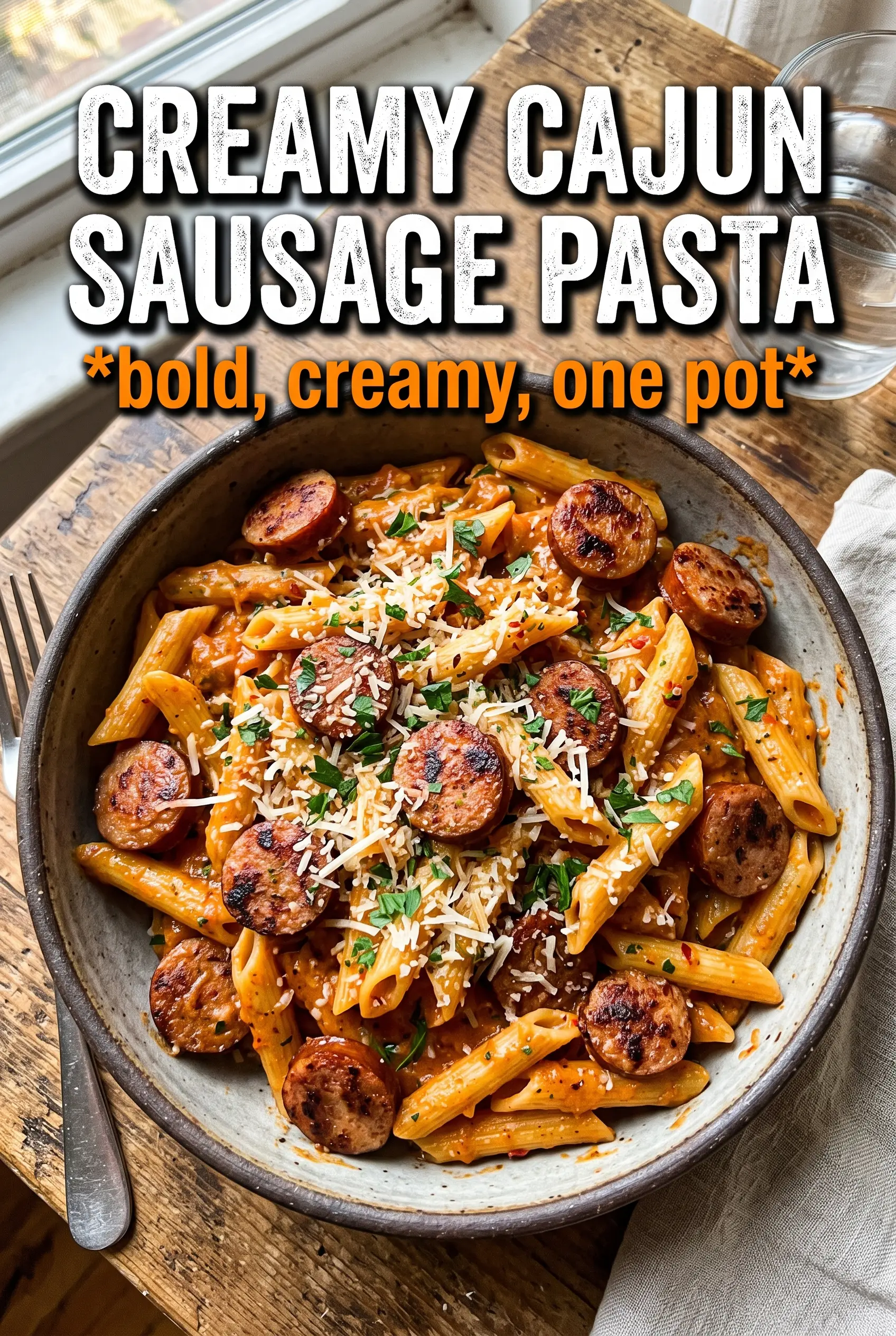
Creamy Cajun Sausage Pasta
Ingredients
Equipment
Method
- Bring a pot of salted water to a boil, then cook the penne until al dente, stirring to prevent sticking. Reserve 1/2 cup of pasta water before draining, and set both aside.
- Heat the butter in a large skillet over medium-high heat, then brown the sliced andouille or smoked sausage until lightly crisped on the edges. Remove the sausage from the skillet and set aside.
- Add the onion and bell peppers to the same skillet and sauté for 4-5 minutes until softened. Add the garlic and Cajun seasoning and cook for 2 minutes until fragrant.
- Pour in the chicken broth and heavy cream, then simmer for 5 minutes until slightly thickened. Keep the simmer gentle so the sauce stays creamy.
- Toss the drained penne into the skillet with the reserved pasta water, stirring until the sauce clings to the pasta. Stir in the parmesan until melted and smooth.
- Return the browned sausage to the skillet and toss to coat, then season with salt to taste. Turn off the heat when everything looks evenly coated.
- Top the pasta with green onions and parsley for serving and serve immediately while the sauce is glossy.