Cowboy Butter Chicken Linguine comes out glossy, punchy, and just a little bit fiery, with seared chicken tucked into strands of pasta that soak up every bit of the sauce. The butter clings to the linguine instead of pooling at the bottom of the bowl, and the lemon, garlic, and herbs keep it from tasting heavy.
What makes this version work is the balance in the sauce. Dijon gives it backbone, smoked paprika brings depth, and a pinch of cayenne sharpens the finish without turning the dish harsh. The chicken is cooked hard and fast in a hot skillet, which gives you those browned edges that make the whole bowl taste more savory.
Below, I’ve included the little details that matter here: how to keep the sauce smooth, when to use pasta water, and what to swap if you need a dairy-free or slightly milder version. The method is straightforward, but a few small choices make the difference between buttery and bland.
The sauce coated the linguine perfectly, and the little hit of lemon at the end kept it from feeling too rich. I loved that the chicken stayed juicy even after tossing everything together.
Save this cowboy butter chicken linguine for the nights when you want a bold, saucy pasta with seared chicken and a lemony herb finish.
The Reason the Sauce Stays Glossy Instead of Greasy
The mistake that ruins pasta like this is treating the butter like the whole sauce. Butter alone will coat the noodles for a minute, then separate into a slick layer that slides off. Here, the garlic, Dijon, lemon, and a splash of pasta water turn it into an emulsion that clings to the linguine and wraps around the chicken.
High heat belongs with the chicken, not the sauce. Once the butter goes in, drop the heat to medium and keep it moving. Garlic burns fast, and burned garlic tastes bitter enough to take over the whole skillet. The pasta water matters here too because its starch helps the sauce tighten up without turning heavy.
- Chicken strips — Cutting the chicken into even strips helps it cook quickly and brown before it dries out. If the pieces are thick in some spots and thin in others, the thin ends overcook before the thicker ones are done.
- Dijon mustard — This is the ingredient that keeps the sauce from tasting flat. It doesn’t make the pasta taste like mustard; it adds sharpness and helps the butter hold together.
- Lemon juice — Use fresh lemon juice here. Bottled juice can taste dull and can flatten the finish instead of brightening it.
What Each Ingredient Is Actually Doing in the Pan
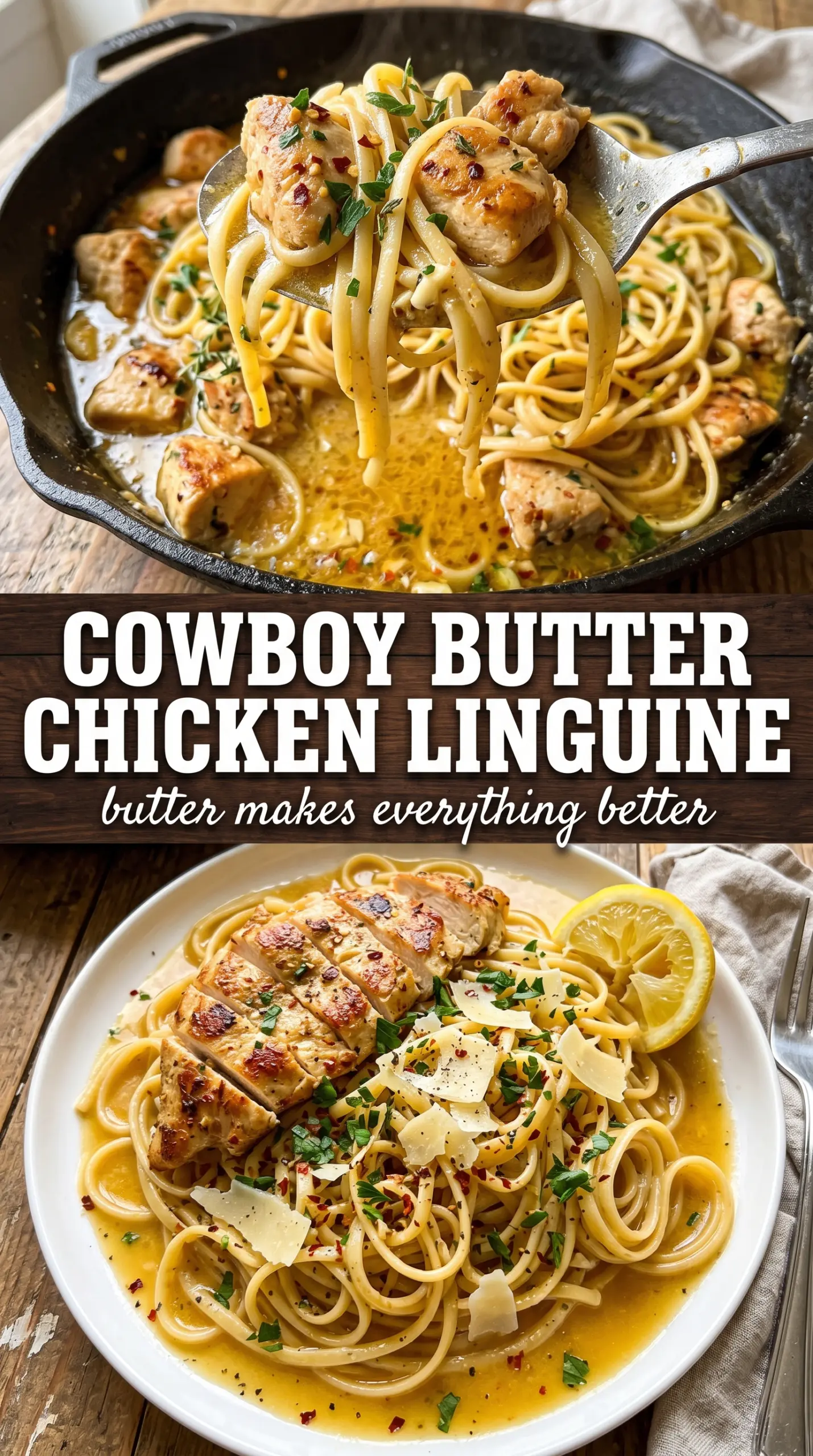
Butter is the base of the sauce, so use the real thing. There isn’t a substitute that gives the same round, rich finish. If you need dairy-free, vegan butter will work, but the sauce will taste a little less lush and a little more neutral.
Smoked paprika and Cajun seasoning bring the cowboy butter idea into focus. The smoked paprika gives warmth without heat, while Cajun seasoning seasons the chicken itself so the finished dish tastes layered instead of one-note. If your Cajun blend is salty, ease up on extra salt at the chicken stage.
Red pepper flakes and cayenne give this pasta its edge. The red pepper flakes add little bursts of heat, while cayenne spreads the heat through the sauce. If you want a milder bowl, cut the cayenne first; don’t remove the red pepper flakes unless you want to lose the look and texture of the sauce too.
Parsley and chives go in at the end because they’re here for freshness, not long cooking. Add them too early and they lose the bright, green lift that keeps the butter from feeling heavy.
Cooking the Chicken and Sauce in the Right Order
Getting the Chicken Charred
Heat the olive oil in a large skillet until it shimmers, then lay in the chicken in a single layer. You want a sizzle the moment it hits the pan. Let it sit long enough to pick up color before turning it, because pale chicken makes the whole dish taste less bold. If the skillet is crowded, the chicken steams instead of searing, so cook in batches if needed.
Building the Cowboy Butter Base
Take the pan down to medium heat before the butter goes in. Stir in the garlic and cook just until fragrant, about a minute, then add the Dijon, paprika, red pepper flakes, and cayenne. The mixture should smell warm and toasty, not sharp or burnt. If the garlic starts to brown fast, pull the skillet off the heat for a few seconds before continuing.
Bringing the Pasta Together
Add the lemon juice, parsley, and chives, then toss in the cooked linguine. Start with a small splash of pasta water and add more only as needed until the sauce glosses the noodles instead of pooling underneath them. The pasta should look coated, not soupy. Slide the chicken back in at the end so it stays juicy, and serve it right away while the sauce is still silky.
How to Adapt This Cowboy Butter Pasta Without Losing What Makes It Good
Make It Milder
Cut the cayenne in half or leave it out, then keep the red pepper flakes low as well. You’ll still get the smoky, buttery backbone of the dish, just with less heat on the finish.
Dairy-Free Version
Use a high-quality vegan butter that melts smoothly, then add the pasta water a little more gradually. The texture will still be glossy, but the flavor will be a touch less rich, so don’t skip the lemon and herbs.
Swap the Linguine
Fettuccine or spaghetti both work if that’s what you have. Short pasta will catch some sauce, but long noodles hold the cowboy butter best because you can toss them until every strand is coated.
Storage and Reheating
- Refrigerator: Store leftovers in an airtight container for up to 3 days. The pasta will soak up some of the sauce as it sits.
- Freezer: This pasta isn’t a great freezer candidate. The butter sauce can separate after thawing, and the noodles soften too much.
- Reheating: Warm it gently in a skillet over low heat with a splash of water or broth. The common mistake is blasting it in the microwave, which dries out the chicken and makes the sauce look oily.
Answers to the Questions Worth Asking
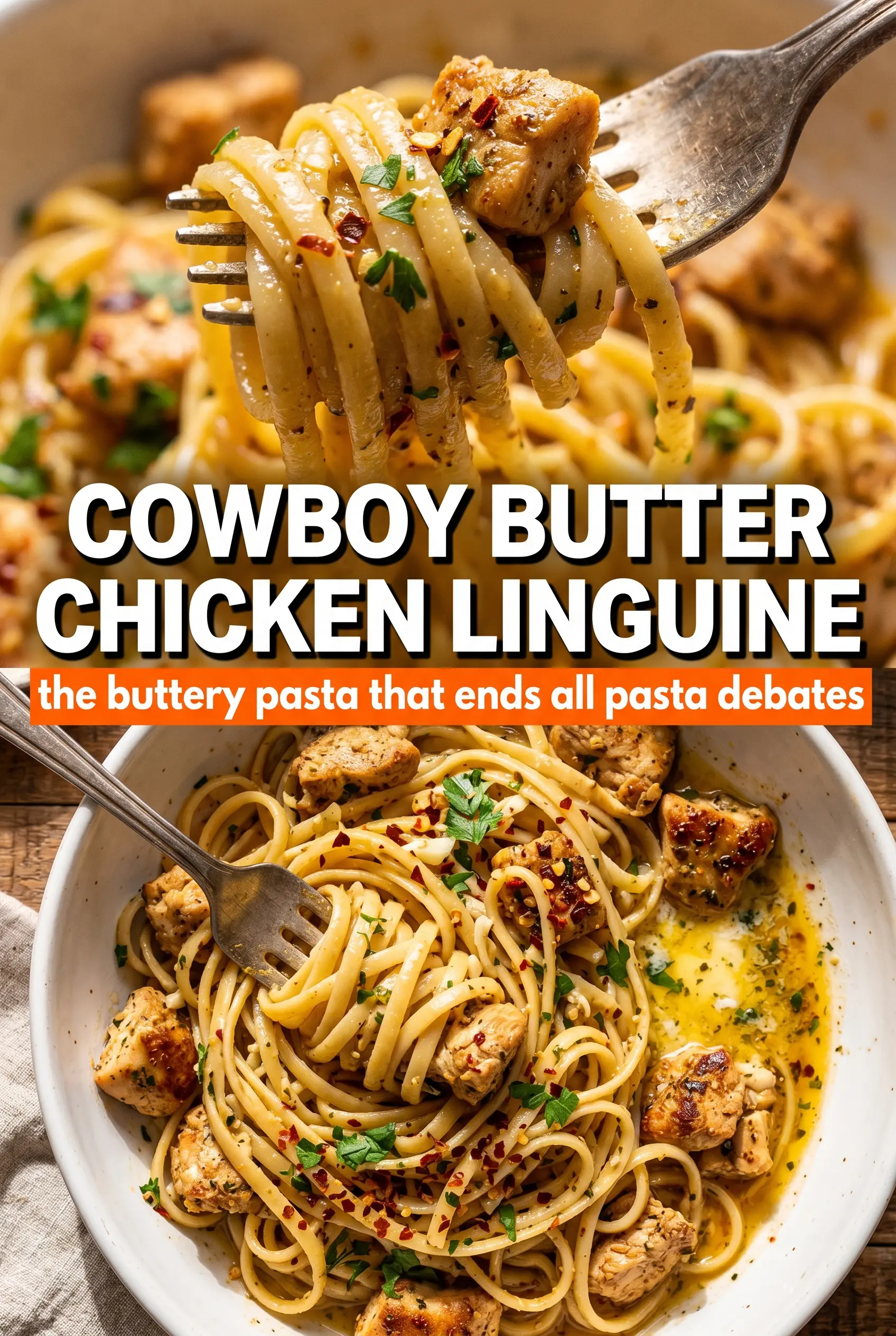
Cowboy Butter Chicken Linguine
Ingredients
Equipment
Method
- Season the chicken strips with salt, pepper, and Cajun seasoning, then heat olive oil in a large skillet over high heat until shimmering.
- Add the chicken in a single layer and cook for 4-5 minutes, until charred and cooked through, then remove to a plate.
- Melt the butter in the same skillet over medium heat.
- Add the minced garlic and cook for 1 minute.
- Stir in the Dijon mustard, smoked paprika, red pepper flakes, and cayenne pepper, then cook for 30 seconds.
- Stir in the fresh lemon juice, chopped parsley, and chopped chives.
- Add the cooked linguine to the skillet and toss, adding pasta water as needed until the sauce coats the noodles.
- Top the pasta with the seared chicken strips and serve immediately.