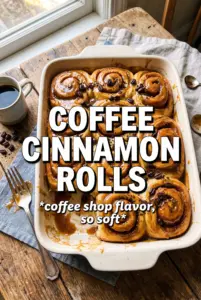
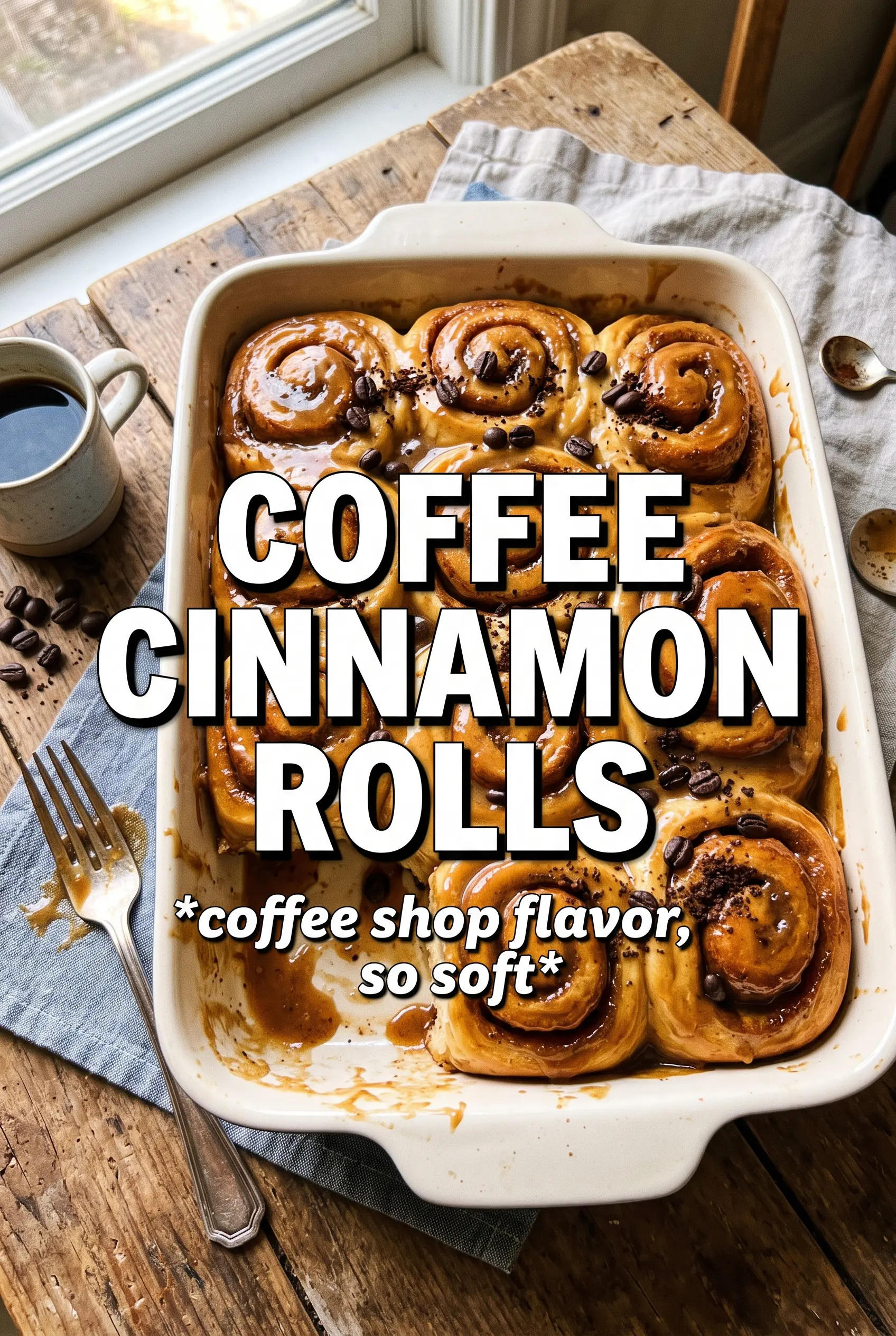
Coffee cinnamon rolls bake up with a soft, tender crumb and a deep espresso-kissed swirl that makes the whole pan smell like a bakery before the glaze even goes on. The coffee in the dough doesn’t just add flavor; it gives the rolls a richer color and a subtle bitterness that keeps the sweetness in balance. Once they’re warm and glazed, you get that perfect pull-apart texture with a sticky top and a pillowy center.
What makes this version stand out is that the coffee shows up in three places: the dough, the filling, and the glaze. That layered approach keeps the flavor present without tasting flat or overly sweet. I also like using strong brewed coffee rather than a splash of instant mixed with water, because it brings a rounder flavor and helps the dough itself taste intentional instead of just tinted.
Below, I’ve included the little details that matter most, like how warm the coffee should be for the yeast, what the dough should feel like after kneading, and how to keep the glaze drizzly instead of thick and pasty. If you’ve made cinnamon rolls before and wanted a version with more depth, this one delivers.
The coffee flavor came through without making the rolls bitter, and the glaze soaked into the swirls just enough to stay soft on top. Mine rose right on schedule and baked up fluffy in the middle with golden edges.
Save these coffee cinnamon rolls for the mornings when you want a soft, espresso-swirled pan of rolls with a coffee cream cheese glaze.
The Part Most Coffee Rolls Get Wrong: A Flat Flavor After Baking
The easiest way to lose the coffee character is to tuck it into just one component and hope it survives the oven. Coffee cinnamon rolls need enough coffee flavor to stand up to the sugar, butter, and cinnamon, which is why this recipe spreads it across the dough and glaze instead of relying on one big hit. The result tastes like coffee all the way through, not just on top.
Warm coffee does double duty here. It wakes up the yeast and gives the dough a deeper color, but it also needs to be cool enough that it doesn’t scald the yeast before it starts working. If your coffee is hot to the touch, wait. Lukewarm is the sweet spot.
- Strong brewed coffee — This is the backbone of the recipe. Weak coffee gets lost after baking, while strong coffee keeps the dough and glaze tasting bold.
- Espresso powder — This sharpens the coffee flavor without thinning anything out. You can use instant espresso powder here, but don’t skip it if you want the rolls to taste unmistakably coffee-forward.
- Butter in two places — Melted butter in the dough gives richness and a softer crumb, while softened butter in the filling helps the cinnamon sugar spread evenly and melt into the spirals.
- Cream cheese — It keeps the glaze tangy and thick enough to cling to warm rolls. A plain coffee glaze works, but it won’t give you the same balance.
What Each Ingredient Is Doing Between the Swirl and the Glaze
- Yeast — It needs warm liquid and a little sugar to get going. If the coffee is too hot, it can kill the yeast; if it’s too cold, the dough will take much longer to rise.
- Flour — Four cups gives you a dough that is soft but still easy to roll. Add only enough extra flour to keep the dough from sticking to the counter, or the rolls will bake up dense.
- Brown sugar — It melts into the filling and gives the center a sticky caramel note. Granulated sugar won’t give the same moist, gooey swirl.
- Cream cheese glaze — Beat the cream cheese until completely smooth before adding the powdered sugar and coffee. If the cheese is even a little lumpy at the start, the glaze will stay grainy.
Building the Dough So It Stays Soft After Baking
Waking Up the Yeast
Stir the yeast into the warm coffee with the sugar and let it sit until it looks foamy on top. That foam tells you the yeast is alive and ready. If nothing happens after a few minutes, the coffee was probably too hot, the yeast is old, or both, and the dough won’t rise the way it should. Add the butter, eggs, and vanilla only after the yeast mixture looks active so the yeast gets a clean head start.
Kneading to the Right Feel
Work in the flour, espresso powder, and salt until the dough turns smooth and elastic, about 8 minutes by hand or with a mixer. It should feel soft and a little tacky, not wet and sticky enough to smear all over your fingers. If you dump in too much flour, the rolls bake up dry and bready instead of tender. The dough is ready when it stretches without tearing immediately and springs back slowly when pressed.
Filling, Rolling, and Cutting Clean Spirals
Spread the softened butter all the way to the edges, then mix the brown sugar, cinnamon, and espresso powder together before sprinkling it on. That even mixing matters because the espresso powder keeps the filling from tasting like plain cinnamon sugar. Roll the dough into a tight log so the spirals stay neat, then cut 12 even pieces with unflavored dental floss or a sharp knife. If the log gets squashed while cutting, the rolls still bake fine, but the layers won’t look as clean.
The Second Rise and the Bake
Let the cut rolls rise until they’re puffy and touching lightly at the edges. That second rise is what gives you the soft, tear-apart texture people expect from a good cinnamon roll. Bake at 375°F until the tops are golden and the centers are set, about 22 to 25 minutes. Pull them before they get too dark; an overbaked roll loses the soft middle that makes the glaze soak in instead of sitting on top.
The Glaze While They’re Still Warm
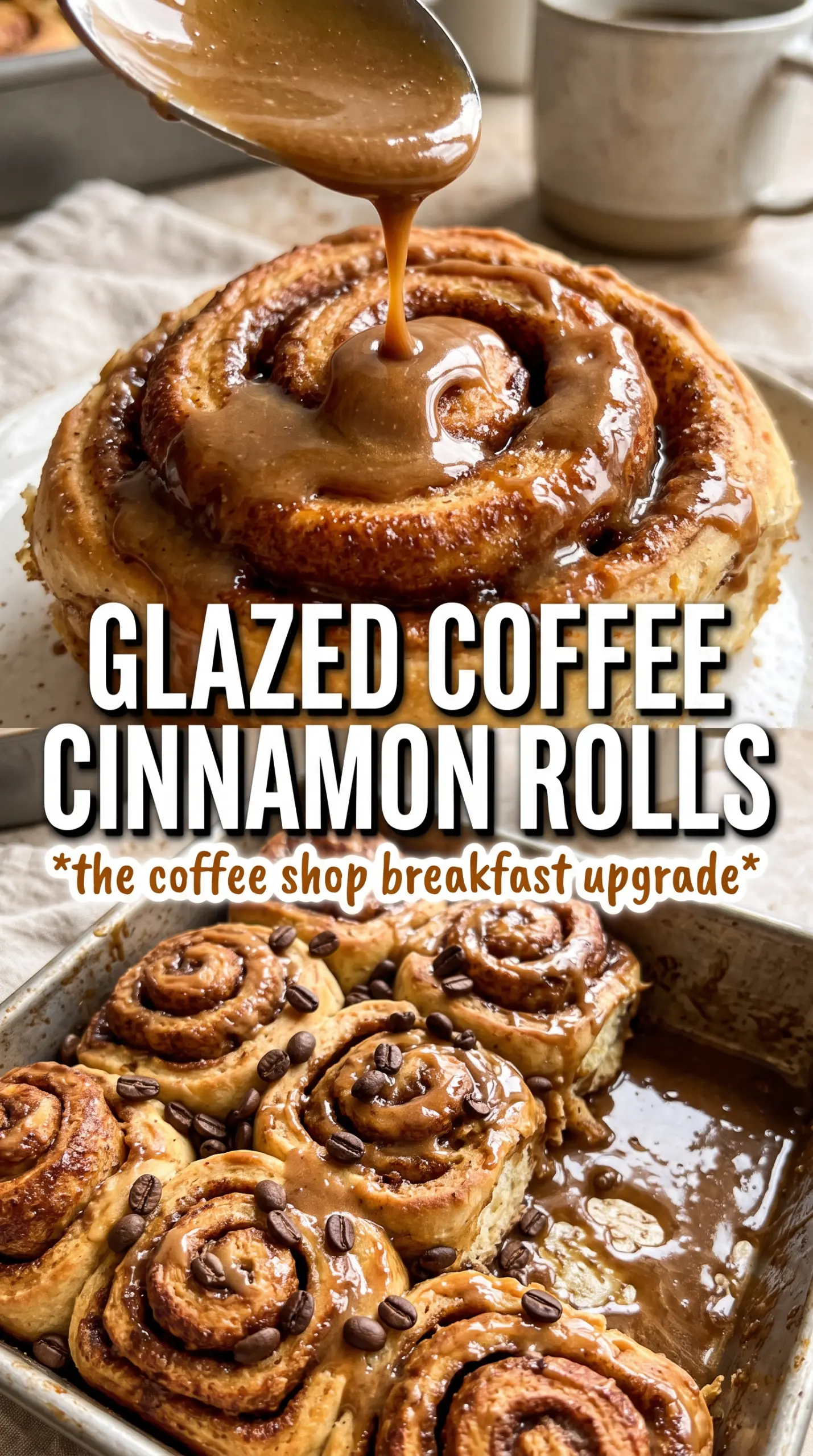
Beat the cream cheese until smooth, then add the powdered sugar, coffee, and vanilla. The glaze should fall off the spoon in thick ribbons, not clump or run like milk. Drizzle it over the rolls while they’re still warm so it melts slightly into the swirls, then finish with a light dusting of espresso powder if you want a stronger coffee hit on top. If the rolls are piping hot, the glaze will disappear; if they’re cold, it just sits there.
How to Adapt These Coffee Cinnamon Rolls Without Losing the Point
Dairy-Free Version
Use plant-based butter in both the dough and filling, and swap in a dairy-free cream cheese for the glaze. The texture stays close to the original, though the glaze will taste a little less tangy depending on the brand you choose.
Strong Espresso Flavor
Replace part of the brewed coffee in the glaze with cooled espresso and add a pinch more espresso powder to the filling. This pushes the flavor darker and more assertive, which works well if you want the coffee to taste unmistakable after baking.
Make-Ahead Overnight Rolls
After shaping the rolls, cover the pan tightly and refrigerate overnight instead of doing the second rise at room temperature. The next morning, let them sit out until they look puffy again before baking. This is the best move when you want fresh rolls without an early start.
Smaller-Sugar Filling
Reduce the brown sugar slightly if you want the coffee flavor to lead more than the sweetness. The filling will be less sticky and a little more restrained, but the spirals will still bake up soft and aromatic.
Storage and Reheating
- Refrigerator: Store covered for up to 4 days. The rolls will firm up a little, but they stay tender once warmed.
- Freezer: Freeze baked rolls without glaze for up to 2 months, wrapped well. Thaw overnight in the fridge before reheating.
- Reheating: Warm individual rolls in the microwave in short bursts or cover the pan and heat in a low oven. Heavy heat dries out the edges fast, so gentle warming keeps the center soft.
Answers to the Questions Worth Asking
Coffee Cinnamon Rolls
Ingredients
Equipment
Method
- In a bowl, combine warm strong coffee and yeast, then add sugar, melted butter, eggs, and vanilla. Stop when the mixture looks smooth and starts to smell fragrant from the coffee.
- Add flour, espresso powder, and salt, then knead for 8 minutes until the dough looks elastic and slightly tacky. Use a light press-and-fold motion so the dough tightens rather than tears.
- Cover the dough and let it rise for 1 hour until it has doubled in size. It should feel puffy and spring back slowly when lightly pressed.
- Roll the dough out and spread softened butter over the surface. Spread to the edges so every roll has filling.
- Sprinkle brown sugar, cinnamon, and espresso powder evenly across the buttered dough. Aim for an even layer with no large bare spots.
- Roll the dough into a tight log, then cut it into 12 rolls. Use gentle downward pressure so the swirls stay intact.
- Place the rolls on a sheet pan, cover, and rise for 45 minutes until noticeably puffy. They should touch or almost touch as they expand.
- Bake at 375°F for 22-25 minutes until the tops turn golden brown. Look for set edges and a springy center when you lightly tap a roll.
- Beat cream cheese, powdered sugar, strong coffee, and vanilla until smooth and pourable. The glaze should ribbon off a spoon without lumps.
- Drizzle the glaze over the warm rolls, then dust with espresso powder. Finish when the glaze looks glossy and the espresso dust is visibly speckled on top.