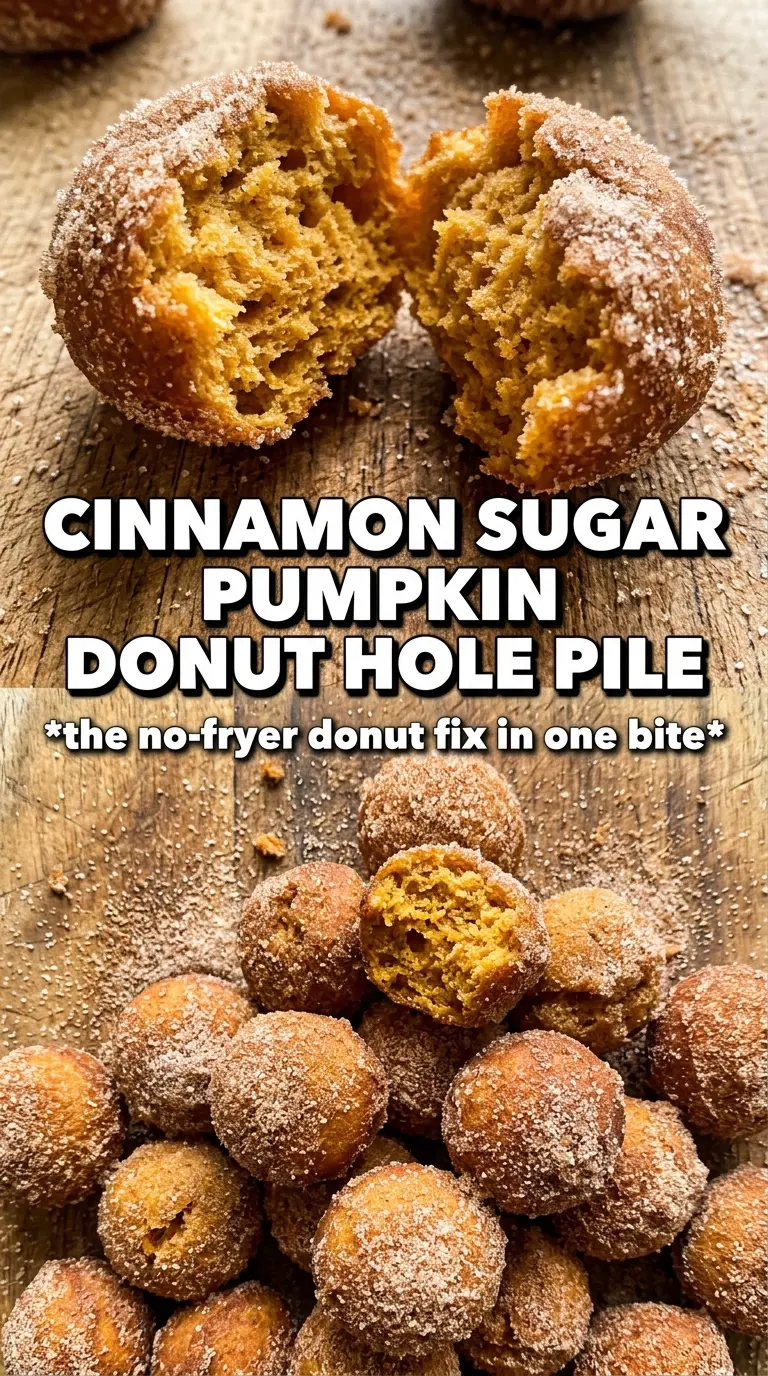
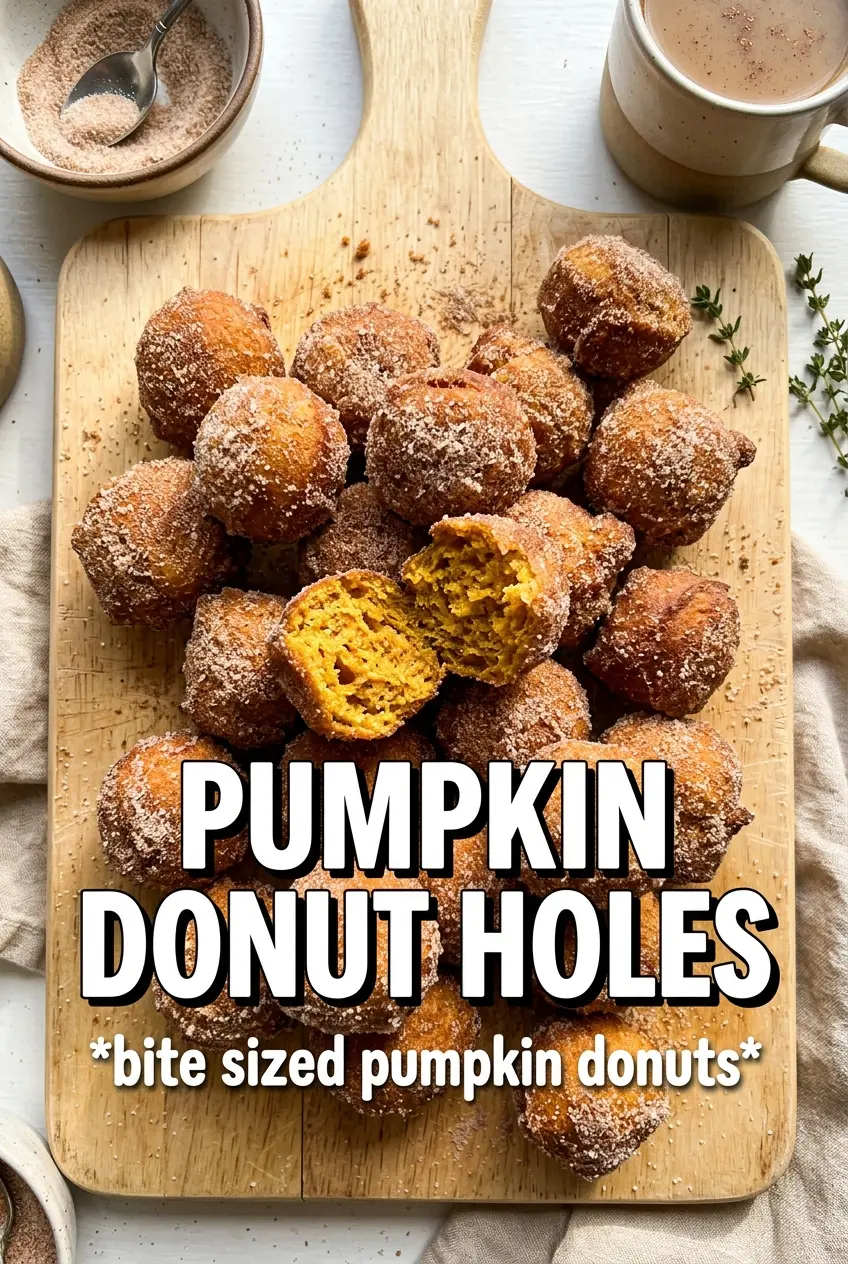
Golden pumpkin donut holes have a soft, cakey center and a crisp sugar-coated shell that makes them hard to stop eating warm from the bowl. The pumpkin flavor stays gentle and cozy, while the cinnamon-sugar coating gives every bite that bakery-style finish people usually expect from a fried dough shop, not a home kitchen.
What makes these work is the balance: enough pumpkin puree for flavor and tenderness, but not so much that the dough turns dense or gummy. The batter is mixed just until the flour disappears, which keeps the crumb light. Frying gives the most classic result, but baking them in a mini muffin tin still delivers that round, poppable shape with a little less fuss.
Below, I’m walking through the small details that matter most, including the difference between a dough that holds its shape and one that spreads, plus the coating trick that makes the sugar stick while the donut holes are still warm.
The pumpkin flavor came through without making them heavy, and the cinnamon sugar coating stuck perfectly while they were still warm. I baked half and fried half, and both batches disappeared fast.
Save these pumpkin donut holes for the mornings when you want a warm cinnamon-sugar breakfast with a soft center and crisp edges.
The Detail That Keeps Pumpkin Donut Holes Light Instead of Gummy
Pumpkin puree is the ingredient that gives these donut holes their flavor and tender crumb, but it’s also the one that can make them heavy if the batter gets overmixed. The starch in the flour needs just enough moisture to come together; once you start stirring past that point, the texture shifts from cakey to tight. That’s the most common mistake with pumpkin fritters, muffins, and donut holes alike.
The other thing that matters is temperature. If the oil isn’t at 350F, the donut holes soak up too much fat before the outside sets, and if it runs too hot, the outside browns before the middle has time to cook through. You’re looking for a steady sizzle and a deep golden color, not a frantic, aggressive fry.
- Pumpkin puree — Use plain pumpkin puree, not pumpkin pie filling. Pie filling already has sugar and spices added, which throws off the balance and can make the batter too sweet and loose.
- Brown sugar — This adds moisture and that caramel note that works so well with pumpkin. Light or dark brown sugar both work; dark brown sugar gives a deeper molasses flavor.
- Pumpkin pie spice and cinnamon — The spice blend gives the pumpkin its round, warm flavor, while the extra cinnamon keeps the coating from tasting flat. If you’re out of pumpkin pie spice, use more cinnamon plus a pinch each of nutmeg and ginger.
- Whole milk — The fat in whole milk helps the batter stay tender. 2% works in a pinch, but skim milk makes the crumb a little drier.
What Each Ingredient Is Actually Doing in This Recipe
- Primary ingredient (the star) — Quality matters most. Choose the best you can find.
- Cooking medium (oil, butter, or broth) — This carries flavors and prevents dryness.
- Seasonings (salt, pepper, spices, herbs) — Layer flavors so nothing overpowers. Build depth gradually.
- Aromatics (garlic, onion, herbs) — Cook with fat to bloom flavors. Become the foundation.
- Supporting ingredients — Complement the main ingredient without overpowering it.
- Sauce or liquid (if applicable) — Brings flavors together. Balance richness with acid.
- Acid (lemon, vinegar, wine, or other) — Brightens and prevents flat-tasting results.
- Final finish (garnish, glaze, or sauce) — Prevents one-dimensional taste and adds visual appeal.
Frying or Baking Without Losing the Tender Center
Mixing the Batter Just Enough
Whisk the dry ingredients together first so the baking powder and spices are evenly distributed. In a separate bowl, stir the pumpkin, brown sugar, egg, milk, melted butter, and vanilla until smooth, then fold the wet mixture into the dry ingredients just until no flour streaks remain. If you keep stirring after that, the gluten tightens up and the donut holes lose their soft, cakey bite.
Frying for the Classic Texture
Heat the oil to 350F and keep it there as best you can. Drop teaspoon-sized portions into the oil carefully, giving them space so the temperature doesn’t crash. They should turn golden in 2 to 3 minutes, and you’ll know they’re ready to turn when the bottoms look set and the dough no longer looks wet on the outside. If they brown too fast, lower the heat; if they stay pale and greasy, the oil is too cool.
Baking for a Simpler, Lighter Version
Grease a mini muffin tin well and fill each cup about three-quarters full. The batter should dome slightly and bake into little round bites in 10 to 12 minutes at 375F. Pull them when the tops spring back lightly and a toothpick comes out with a few moist crumbs, not raw batter. Overbaking is what makes baked donut holes taste dry instead of tender, so watch the edges closely near the end.
Coating While They’re Still Warm
Brush the warm donut holes with melted butter, then roll them in the cinnamon-spice sugar right away. That warm surface is what helps the coating stick in an even layer. If they cool first, the butter won’t cling as well and the sugar will slide off instead of forming that crackly crust people expect.
How to Adjust These Pumpkin Donut Holes for Different Kitchens
Bake Instead of Fry
If you want less cleanup or don’t want to fry, the mini muffin tin version is the easiest swap. You’ll lose the faint crisp shell that comes from oil, but you still get a soft, round bite with all the pumpkin spice flavor.
Dairy-Free Version
Use a neutral plant milk and swap the butter for melted dairy-free butter or refined coconut oil. The texture still works, but coconut oil can add a slight coconut note, so choose it only if that won’t bother you.
Gluten-Free Adjustment
A cup-for-cup gluten-free flour blend can work here, especially one that already includes xanthan gum. The batter may be a little softer, so let it sit for 5 minutes before scooping; that gives the flour time to hydrate and helps the donut holes hold their shape.
Storage and Reheating
- Refrigerator: Store in an airtight container for up to 3 days. The sugar coating softens a bit, but the centers stay tender.
- Freezer: Freeze the uncoated baked or fried donut holes for up to 2 months. Thaw, warm, then brush with butter and coat in sugar so the outside stays crisp instead of soggy.
- Reheating: Warm in a 300F oven for 5 to 8 minutes or in the air fryer for a few minutes until heated through. Skip the microwave if you can; it makes the coating sticky and flattens the texture.
Questions I Get Asked About This Recipe
Pumpkin Donut Holes
Ingredients
Equipment
Method
- Whisk all-purpose flour, baking powder, pumpkin pie spice, cinnamon, and salt in a bowl until evenly combined.
- Whisk pumpkin puree, brown sugar, egg, whole milk, melted butter, and vanilla in a separate bowl until smooth.
- Fold the wet ingredients into the dry ingredients until just combined, with no dry streaks remaining.
- Heat vegetable oil to 350F and drop teaspoon-sized balls into the oil in small batches.
- Fry for 2-3 minutes, until the donut holes are deep golden, then transfer to a rack to drain.
- Grease a mini muffin tin, fill each cup about 3/4 full with batter, and place the tin on a sheet pan.
- Bake at 375F for 10-12 minutes, until the donut holes look set and lightly golden.
- Mix the melted butter with sugar, cinnamon, and pumpkin pie spice to make a coating.
- While warm, brush each donut hole with melted butter and roll in the cinnamon-spice sugar until coated all over.