Cinnamon coffee crinkle cookies bake up with a soft, brownie-like center, crisp sugar-coated edges, and those dramatic cracks that show off the cinnamon-brown dough underneath. The coffee doesn’t make them taste like straight espresso; it deepens the chocolate-adjacent warmth and gives the cinnamon a little more backbone. That contrast between the dark cookie and snowy sugar top is what makes them disappear fast.
The trick here is starting with melted butter, then chilling the dough long enough for it to firm up. That keeps the cookies from spreading too much before the crinkles set. Rolling the dough in granulated sugar first, then the powdered sugar mixture, also matters more than people think — the first coat helps the second one cling in thicker patches instead of dissolving into the dough.
Below, I’ve included the small details that keep the cookies cracked, not flat, plus a few ways to adjust the coffee flavor depending on how bold you want it.
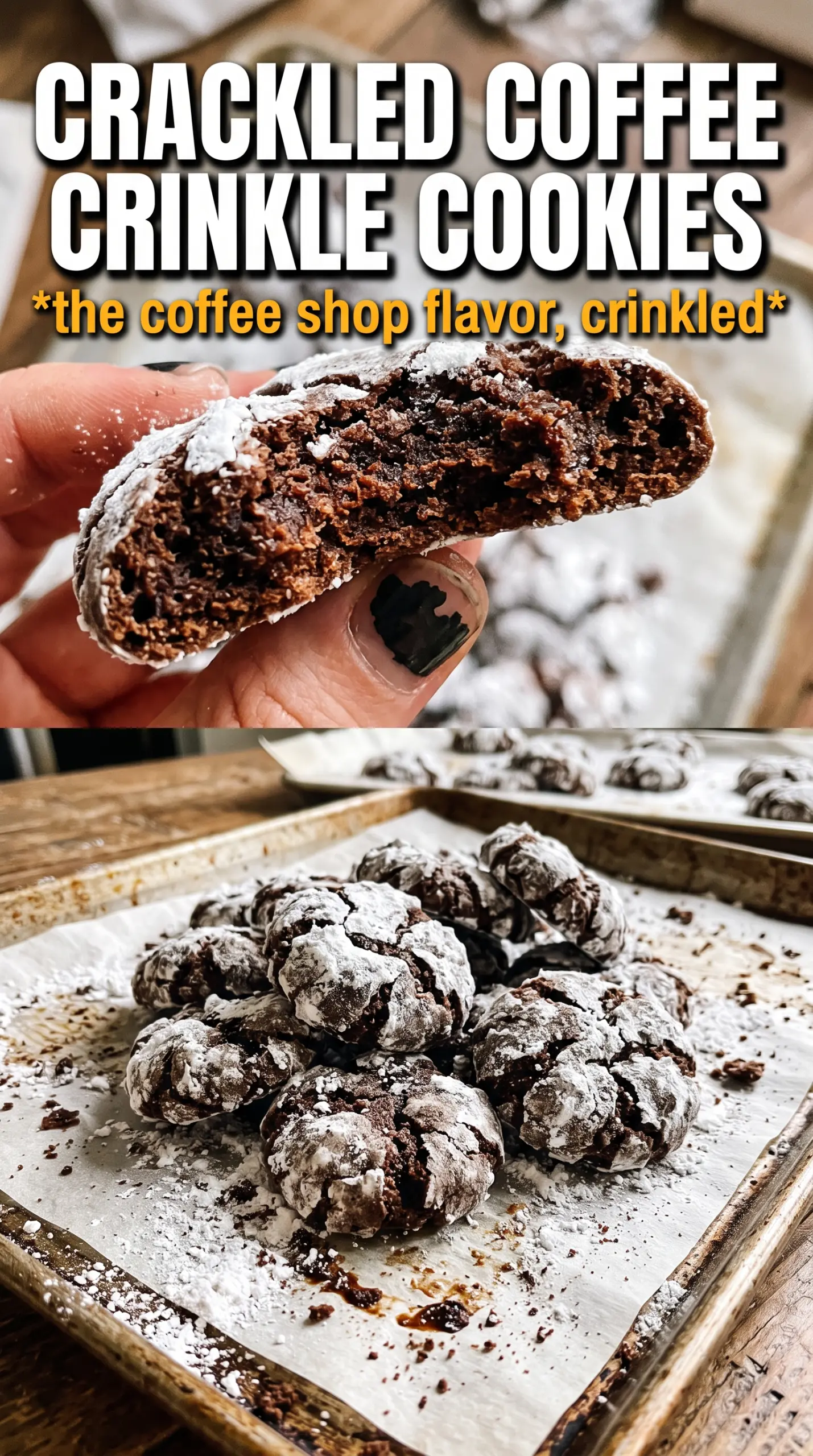
The centers stayed soft and fudgy, and the powdered sugar didn’t melt away in the oven. I chilled the dough for the full hour and the cookies came out with those deep cracks everyone loves.
Save these cinnamon coffee crinkle cookies for the kind of day that calls for deep cracks, powdered sugar, and a soft coffee-spiced center.
Why the Chill Time Matters More Than the Mixing Bowl
The dough for these cookies starts out sticky on purpose. That’s because melted butter gives you a richer, denser cookie, but it also means the dough needs time in the fridge to firm up before baking. Skip that hour and the cookies spread too fast, which blurs the crinkles and leaves you with flatter tops and less of that dramatic sugar finish.
The other thing working in your favor is the sugar coating. Granulated sugar first, then the powdered sugar-cinnamon mixture, gives the outside enough grip to crack apart as the cookies bake. If you go straight into powdered sugar, it can melt into the dough and disappear in the oven, which is exactly what you don’t want here.
- Espresso powder — This is what gives the cookies that deep coffee note without watering down the dough. Instant coffee can work in a pinch, but espresso powder tastes cleaner and stronger.
- Brown sugar — It adds moisture and a little molasses depth, which helps the cookies stay soft in the center. Light brown sugar is ideal here.
- Cinnamon in both the dough and the coating — The double hit keeps the spice from getting lost under the sugar. If you want a milder cookie, cut the cinnamon in the coating before you cut it in the dough.
- Melted butter — This creates that dense, chewy texture. Softened butter will whip in more air and give you a puffier, less crackled cookie.
What Each Ingredient Is Actually Doing in This Recipe
- Primary ingredient (the star) — Quality matters most. Choose the best you can find.
- Cooking medium (oil, butter, or broth) — This carries flavors and prevents dryness.
- Seasonings (salt, pepper, spices, herbs) — Layer flavors so nothing overpowers. Build depth gradually.
- Aromatics (garlic, onion, herbs) — Cook with fat to bloom flavors. Become the foundation.
- Supporting ingredients — Complement the main ingredient without overpowering it.
- Sauce or liquid (if applicable) — Brings flavors together. Balance richness with acid.
- Acid (lemon, vinegar, wine, or other) — Brightens and prevents flat-tasting results.
- Final finish (garnish, glaze, or sauce) — Prevents one-dimensional taste and adds visual appeal.
Building the Crinkle So It Stays Craggy
Mix the Dough Without Overworking It
Whisk the dry ingredients first so the espresso powder and cinnamon are evenly dispersed. Once the wet ingredients go in, stir only until the flour disappears. If you keep mixing after that, the dough gets tighter and the cookies bake up tougher instead of soft and dense.
Chill Until the Dough Feels Scoopable
After the dough rests in the fridge, it should be firm enough to scoop cleanly but still soft enough to roll. If it feels sticky and slack, give it another 15 to 20 minutes. That extra chill time is what keeps the cookies from flattening before the sugar crust has a chance to crack.
Coat Generously for the Best Cracks
Roll each portion in granulated sugar first, then pack on the powdered sugar-cinnamon mixture. Don’t be shy with the second coating; a thin dusting won’t give you the bold contrast these cookies need. Bake until the edges are set and the tops are deeply crinkled, then pull them before the centers look fully dry. They finish setting on the pan.
Make Them More Coffee-Forward
Add another 1/2 teaspoon of espresso powder to the dry ingredients for a deeper coffee edge. The flavor gets bolder without changing the texture, but don’t overdo it or the cookies can turn bitter.
For a Dairy-Free Batch
Swap the butter for a good plant-based stick butter with a similar fat content. The cookies will still crinkle and stay chewy, though the flavor is a little less rich than with real butter.
If You Want a Stronger Cinnamon Finish
Increase the cinnamon in the coating by another 1/2 teaspoon. That gives the outside a warmer spice note, especially if you serve the cookies with coffee or hot chocolate.
Storage and Reheating
- Refrigerator: Store in an airtight container for up to 5 days. The powdered sugar coating may soften a little, but the cookies stay chewy.
- Freezer: Freeze baked cookies for up to 2 months, or freeze scooped dough balls after coating. If freezing dough, freeze them on a tray first so the sugar shell stays intact, then bag them.
- Reheating: Warm baked cookies for 5 to 8 minutes in a 300F oven. The mistake to avoid is microwaving too long, which melts the sugar coating and turns the centers gummy.
Answers to the Questions Worth Asking
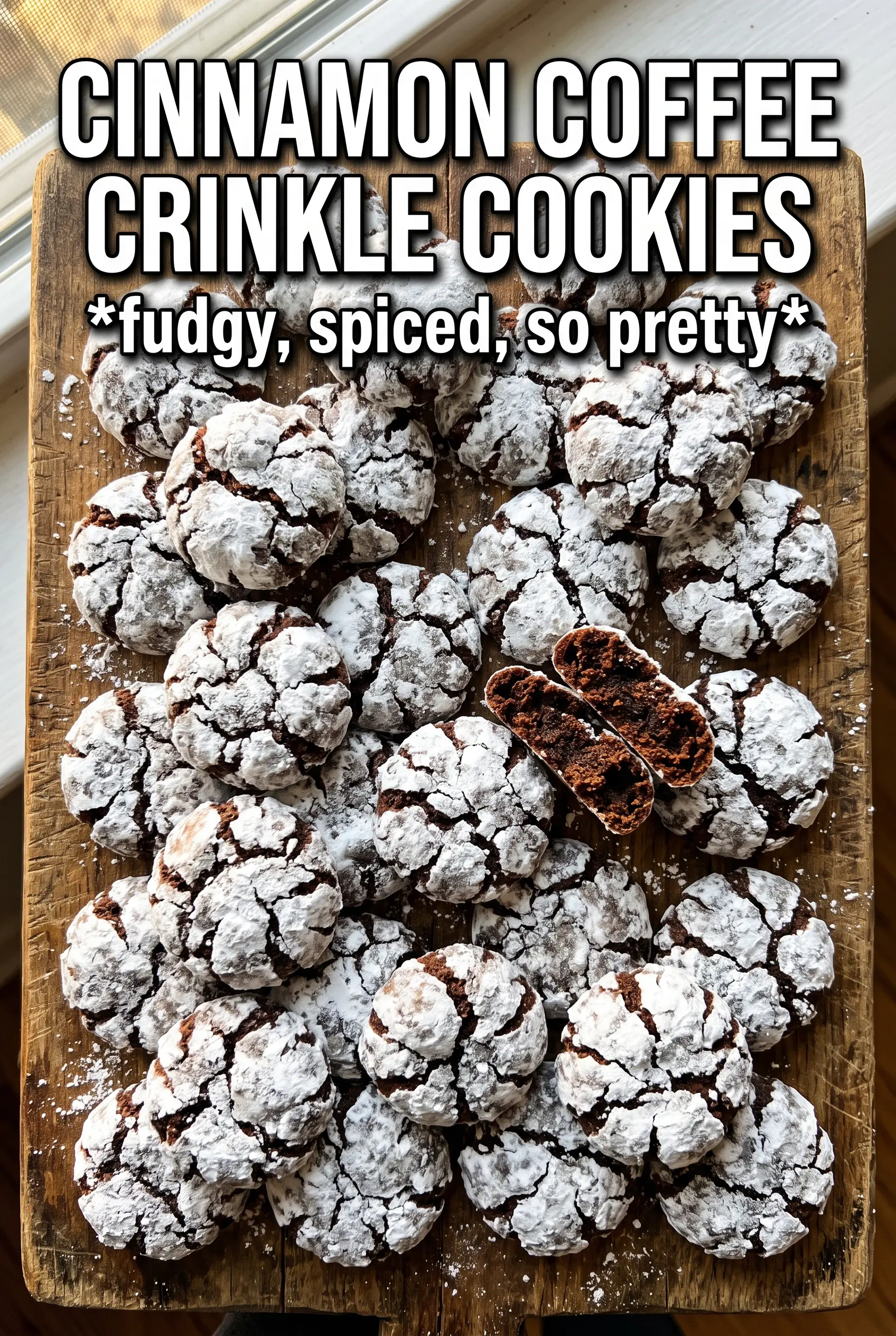
Cinnamon Coffee Crinkle Cookies
Ingredients
Equipment
Method
- Whisk all-purpose flour, espresso powder, cinnamon, baking powder, and salt in a bowl until evenly combined. The mixture should look uniform in color with no visible clumps.
- Whisk melted unsalted butter with granulated sugar and packed brown sugar until smooth. Then whisk in eggs, espresso (cooled), and vanilla extract until glossy and thick.
- Fold the flour mixture into the wet mixture until a sticky dough forms. Stop when no dry streaks remain; the dough will be tacky rather than firm.
- Refrigerate the dough for 1 hour. It should firm up so it can be scooped cleanly.
- Preheat the oven to 350F and line sheet pans with parchment paper. This prevents sticking and helps the crinkle edges set.
- Mix cinnamon into the powdered sugar coating until the powder is evenly speckled. Set granulated sugar aside for the first roll.
- Scoop dough into 1-1/2 tablespoon balls and roll first in granulated sugar, then generously in the powdered sugar-cinnamon mixture. Press lightly so the coating adheres in thick layers.
- Bake 10-12 minutes at 350F until the tops are crinkled and the edges are set—do not overbake. Cookies should look dry on top with cracks visible, then rest briefly before moving.