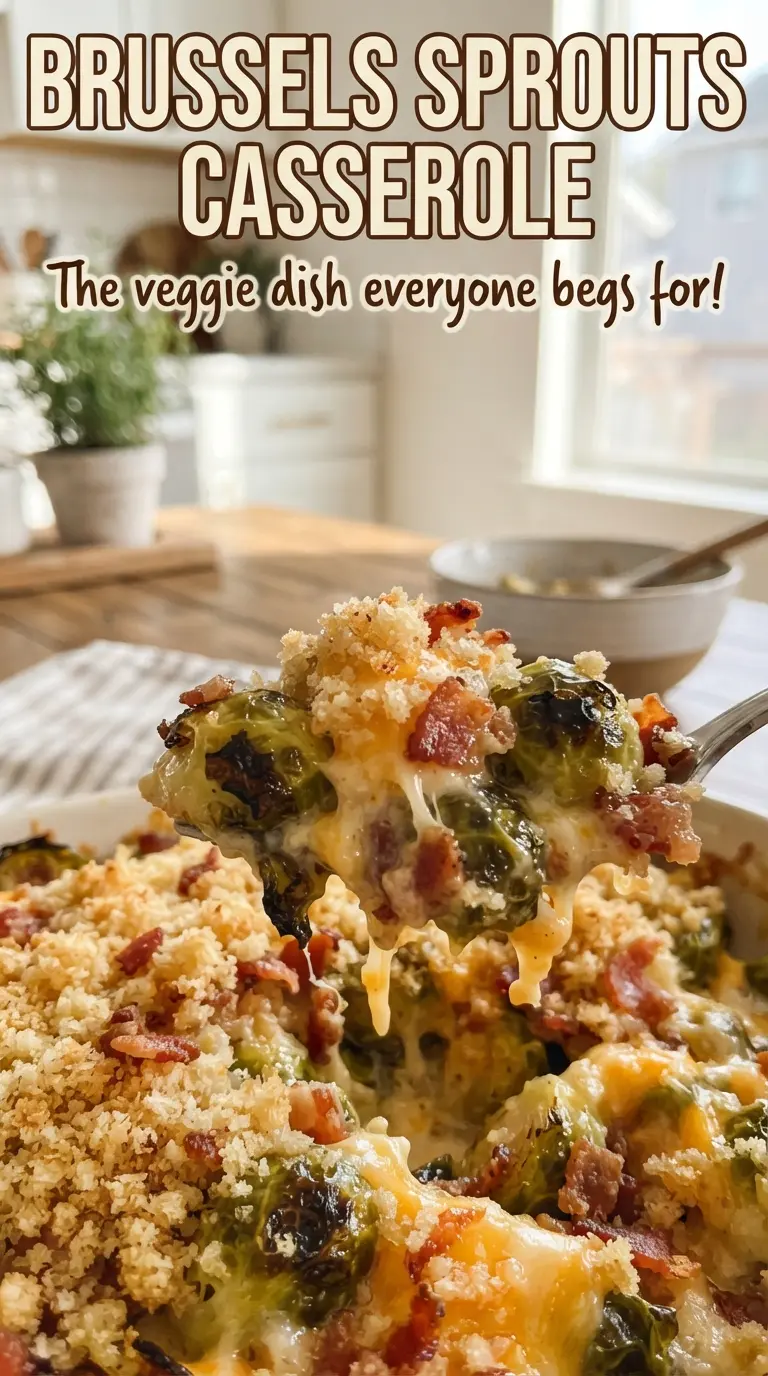
Bubbly Brussels sprouts casserole lands on the table with a creamy center, crisp bacon, and a golden topping that crackles under the spoon. The sprouts stay tender but still have shape, which matters here; nobody wants a mushy side dish hiding under cheese. This version earns its place because the sauce is rich without turning heavy, and the bacon gets layered both inside and on top so every bite tastes complete.
The trick is giving the Brussels sprouts a short blanch before they go into the oven. That quick boil takes the raw edge off and starts the cooking evenly, so the casserole finishes tender instead of dry and overbrowned at the edges. A brief simmer after the milk and cream go in keeps the sauce smooth and lets the flour lose its raw taste before the cheese melts in. From there, the panko on top handles the crunch while the Gruyere stays nutty and elastic underneath.
Below, I’ve included the small details that keep the sauce creamy, the topping crisp, and the Brussels sprouts from turning waterlogged. If you’ve ever had a vegetable casserole collapse into a thin puddle, this one will be a relief.
The sauce thickened beautifully and the panko stayed crisp even after sitting on the table for a bit. My husband kept going back for another spoonful because the Brussels sprouts were tender but still held their shape.
Love the creamy Brussels sprouts casserole with its bacon-and-panko crust? Save it to Pinterest for the nights when you want a cozy side dish with real crunch.
The Reason This Casserole Stays Creamy Instead of Turning Watery
Brussels sprouts give off moisture as they cook, and that’s the main reason vegetable casseroles end up loose at the bottom. Blanching them briefly helps, but the bigger fix is building a sauce that’s thick before the sprouts go in. If the base is thin in the pan, it will only get thinner once the sprouts release steam in the oven.
The flour needs a full minute with the butter and bacon drippings before the milk goes in. That step cooks out the raw flour taste and gives the sauce enough structure to coat the sprouts instead of sliding off them. Keep the simmer gentle once the dairy is added; a hard boil can tighten the sauce too fast and make the cheese grainy when it melts.
What Each Ingredient Is Doing in the Dish
- Brussels sprouts — Halved sprouts give you enough surface area for the sauce to cling to, while still holding some bite after baking. If yours are large, trim the stem end a little more so they cook through at the same pace.
- Bacon and drippings — The bacon brings salt, smoke, and crunch, but the drippings matter just as much because they carry flavor into the sauce base. If your bacon gives off more than a tablespoon of fat, use just what you need; if it’s lean, top up with butter.
- Gruyere — This is the cheese that gives the casserole its stretch and nutty depth. A good Gruyere melts cleanly, so it’s worth using the real thing here instead of a generic shredding cheese.
- Parmesan — Parmesan sharpens the sauce and helps the topping brown. Finely grated works best because it disappears into the sauce instead of clumping.
- Panko — Panko stays lighter and crisper than regular breadcrumbs, which keeps the top from going soft under the cheese. If you only have standard breadcrumbs, use them, but expect a denser crust.
Getting the Sprouts, Sauce, and Topping to Finish at the Same Time
Blanching the Brussels Sprouts
Bring a pot of salted water to a boil and cook the halved sprouts for about 4 minutes, just until they turn bright green and the outer leaves loosen. Drain them well; if they go into the casserole dripping wet, the sauce will loosen and the bake will take longer. You’re not cooking them through here, only taking away the raw crunch so the oven finish feels tender, not tough.
Building the Sauce in the Same Pan
Cook the bacon until crisp, then leave one tablespoon of drippings in the pan and use that with the butter, garlic, and flour. Stir the flour for a full minute before adding the milk and cream, then whisk until the sauce starts to coat the spoon. If it looks lumpy, the dairy went in too fast; keep whisking over low heat and it will smooth out before the cheese is added.
Melting in the Cheese Without Breaking It
Take the pan off the heat or keep it very low when you stir in the Gruyere and Parmesan. Cheese melts best into a sauce that’s hot but not aggressively boiling, and that’s what keeps the texture silky instead of sandy. Once the sauce is smooth, fold in the sprouts and half the bacon so every piece gets coated before it hits the baking dish.
Baking Until the Top Turns Golden
Spread the casserole in the dish, scatter the remaining cheese, bacon, and panko on top, and bake until the edges are bubbling and the top is a deep golden brown. The center should look set, not soupy, when you pull it out. Let it sit for a few minutes before serving so the sauce settles enough to spoon cleanly.
Three Ways to Adjust the Casserole Without Losing the Good Parts
Make it gluten-free
Swap the all-purpose flour for a gluten-free 1:1 flour blend and use gluten-free panko. The sauce should thicken in the same way, though it may need an extra minute on the stove before it looks fully smooth. The finished casserole still bakes up creamy with a crisp top.
Make it vegetarian
Leave out the bacon and replace the drippings with another tablespoon of butter. The casserole loses the smoky edge, so add a small pinch of smoked paprika if you want some of that depth back. The texture stays rich and the cheese still carries the dish.
Use a different cheese blend
Swap part of the Gruyere for fontina, sharp white cheddar, or Swiss if that’s what you have. Fontina gives a softer melt, cheddar adds a sharper edge, and Swiss leans closest to the original nutty note. Keep at least some Gruyere if you can, because it gives the sauce its clean melt and polished finish.
Storage and Reheating
- Refrigerator: Store leftovers in a covered container for up to 4 days. The topping softens a little, but the flavor deepens overnight.
- Freezer: Freeze in a tightly wrapped baking dish or airtight container for up to 2 months. The sauce may separate slightly after thawing, so freezing works best if you reheat it gently.
- Reheating: Warm covered in a 350F oven until hot in the center. Uncover for the last few minutes if you want the topping to crisp back up; microwaving tends to soften the panko and can make the sauce greasy.
Questions I Get Asked About This Recipe

Brussels Sprouts Casserole
Ingredients
Equipment
Method
- Preheat the oven to 400F. Bring a pot of boiling salted water to a boil and blanch the halved Brussels sprouts for 4 minutes, then drain well and set aside.
- Cook the chopped bacon until crisp, then remove and reserve 1 tablespoon drippings. In the same pot, melt butter with the drippings, add minced garlic and flour, and cook for 1 minute while whisking.
- Whisk in the whole milk and heavy cream, then simmer until thickened, about 5–8 minutes. Stir in 1 cup shredded Gruyere, grated Parmesan, salt, and black pepper until smooth.
- Fold the blanched Brussels sprouts and half the reserved bacon into the cheese sauce, then pour into a baking dish. Top with the remaining Gruyere, the remaining bacon, and the panko breadcrumbs.
- Bake at 400F for 20–25 minutes until the casserole is bubbly and the top is golden. Rest 5 minutes before serving so the cheese sets slightly.