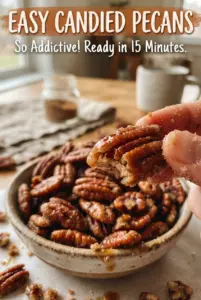
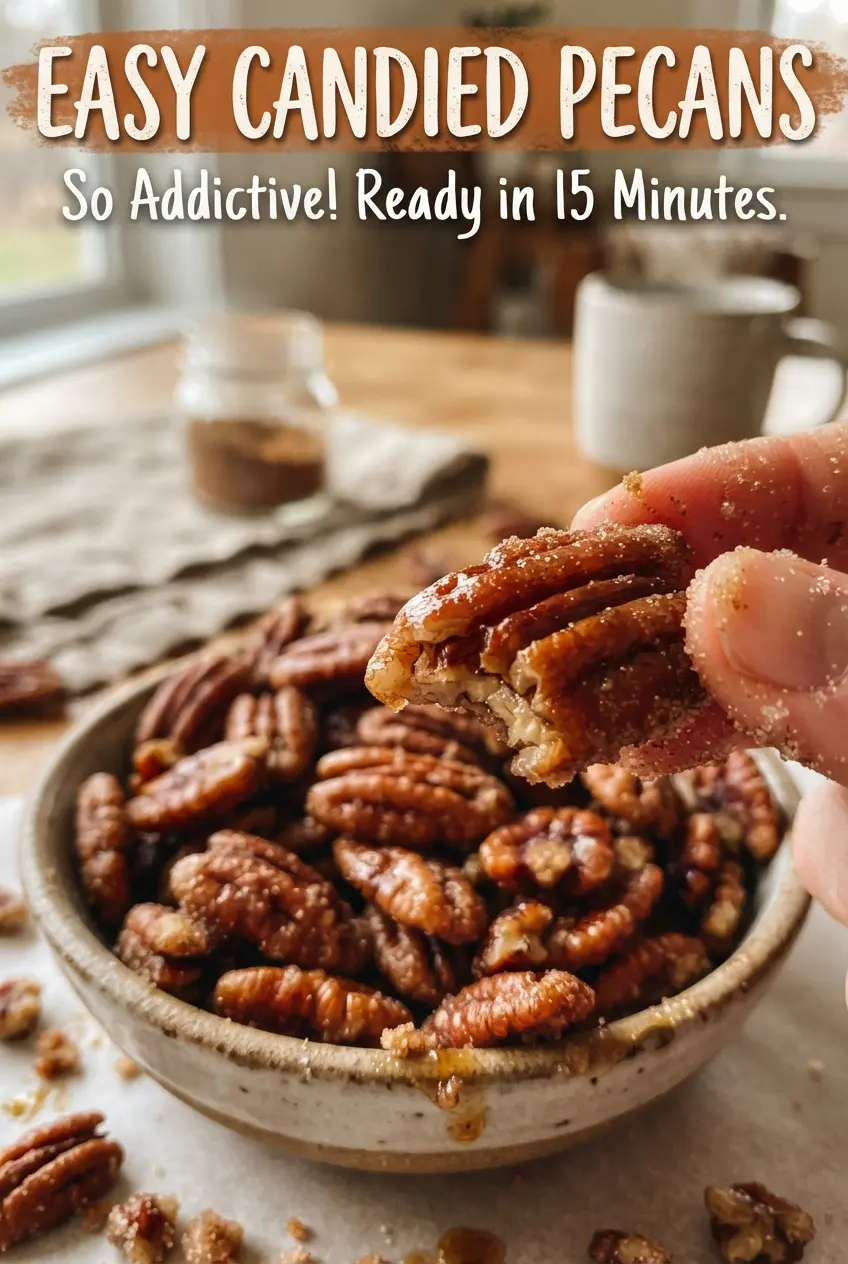
Candied pecans are at their best when the coating turns glassy and crisp, clinging to every ridge of the nut without feeling sticky or sandy. The real payoff is the contrast: sweet, cinnamon-warm shell on the outside and a rich, toasty pecan underneath. When they cool correctly, they snap apart instead of clumping into one big sheet.
This version uses a frothy egg white mixture to give the sugar something to grip, then bakes the nuts low and slow so the coating dries out instead of burning. The oven temperature matters here. Too hot and the sugar browns before the pecans have time to toast; too cool and the coating stays tacky. Stirring during baking keeps the nuts separated and helps the shell set evenly.
Below, I’ve added the timing cues that matter most, plus a few simple swaps if you want to adjust the spice level or make a different nut work the same way. If you’ve ever ended up with candy-coated pecan clumps that never quite crisped, this method fixes that.
The coating baked up crisp instead of sticky, and the cinnamon came through without making the pecans taste burnt. I stirred them every 15 minutes like the recipe said and they broke apart perfectly once cooled.
Save these crunchy cinnamon candied pecans for gifting, snacking, or topping salads and desserts all week.
The Part That Keeps Candied Pecans Crisp Instead of Sticky
The biggest mistake with candied pecans is rushing the oven. The sugar coating needs time to dry out and harden, and that happens at a low temperature. If the heat is too high, the sugar scorches before the egg white mixture has a chance to set into that thin crackly shell. If the heat is too low, the pecans toast slowly but never lose the tacky finish that makes them clump.
The other thing that matters is the stir. Every 15 minutes, the nuts need to be turned so the coating doesn’t pool on one side of the pan. That movement also keeps the pieces separate enough to cool into distinct clusters instead of one heavy slab. The pecans are done when they look dry and lightly sandy in spots, not shiny-wet.
What Each Ingredient Is Actually Doing in These Candied Pecans
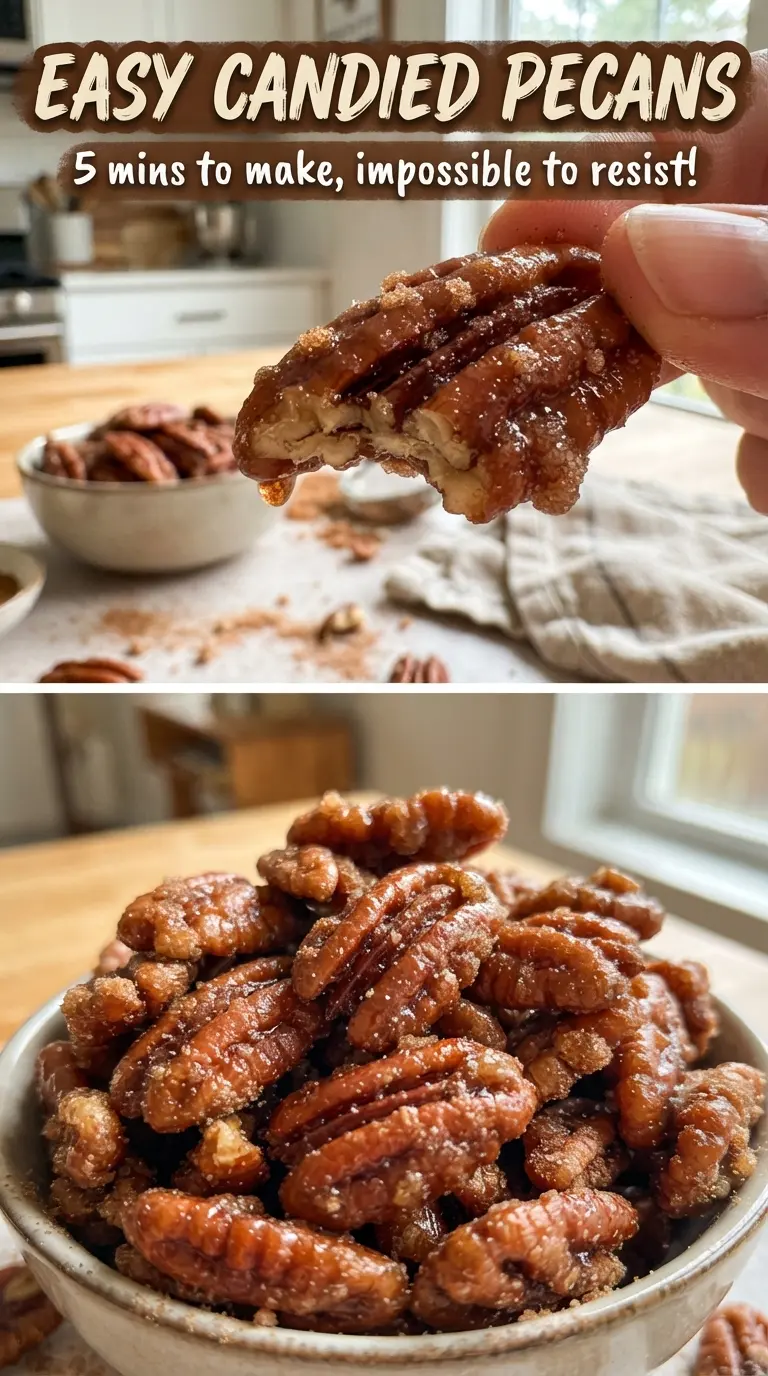
- Pecan halves — Halves give you the best texture and the most even coating. Pieces work in a pinch, but they brown faster and tend to look less polished. If your pecans taste stale before you start, toast them lightly first; old nuts don’t improve in the oven.
- Egg white — This is what creates the thin adhesive layer that lets the sugar cling. Whisk it until frothy, not stiff; you want foam, not meringue. There isn’t a true substitute that behaves the same way, but aquafaba can stand in if you need an egg-free version.
- Sugar, cinnamon, and salt — Sugar builds the shell, cinnamon gives the warm bakery note, and salt keeps the sweetness from going flat. Don’t cut the salt too much or the nuts taste one-dimensional. Fine granulated sugar works better than coarse sugar because it melts and dries more evenly.
- Vanilla extract — Vanilla rounds out the coating and keeps the cinnamon from tasting sharp. It doesn’t need to be expensive, but use the real extract here because imitation vanilla can leave a flat aftertaste once baked.
How to Bake the Coating Until It Turns Snappy
Whisking the Glossy Base
Start by whisking the egg white, water, and vanilla until the mixture looks foamy and loose. You’re not building peaks; you’re adding air and making a light coating that can spread over every pecan. If the white stays stringy, keep whisking for another few seconds before adding the nuts. That first texture change matters because it controls how evenly the sugar sticks.
Coating the Pecans Evenly
Toss the pecans until every surface looks lightly damp, then add the sugar mixture and keep tossing until the coating is even. A few bare spots are fine, but if you see wet patches with no sugar on them, those nuts won’t crisp the same way. The goal is a thin, clinging layer, not a thick batter. If the coating looks pasty, there’s too much egg white on the nuts and the finish will be heavier.
Baking Low and Slow
Spread the pecans in a single layer on parchment and bake them at 250°F for a full hour, stirring every 15 minutes. The surface should gradually dry out and become matte, while the kitchen starts smelling like toasted sugar and cinnamon. If the nuts darken too fast, your oven runs hot, and you should check them a few minutes early. By the end, they should feel dry to the touch and look lightly crusted rather than glossy.
Cooling Them the Right Way
Let the pecans cool completely on the pan before touching them. This is when the coating finishes setting, and it’s the reason they turn crisp instead of chewy. If you move them while they’re still warm, you’ll break the shell before it hardens and create sticky pieces. Once they’re fully cool, break apart any clusters and store them in an airtight container.
How to Adapt These Candied Pecans Without Losing the Crunch
Make Them Spicier
Add a pinch of cayenne or replace a small part of the cinnamon with pumpkin pie spice for a warmer finish. Keep the amount modest so the sugar coating stays the star; too much spice can make the batch taste dusty instead of balanced.
Egg-Free Version
Use aquafaba in place of the egg white and whisk it until foamy before tossing in the pecans. The coating won’t taste exactly the same, but it will still help the sugar cling and crisp in the oven. Keep the bake time the same and watch for a dry, set surface.
Swap in Other Nuts
Walnuts and almonds both work well, though almonds stay a little firmer and walnuts taste a touch more bitter. Keep an eye on smaller nuts or chopped pieces because they can overbake before the coating fully dries. Use the same method, just shorten the last stir if the nuts look done early.
Storage and Reheating
- Refrigerator: Store in an airtight container at room temperature for up to 2 weeks. Refrigeration can add moisture and soften the coating.
- Freezer: They freeze well for up to 3 months in a sealed freezer bag. Thaw at room temperature with the bag closed so condensation doesn’t make the sugar sticky.
- Reheating: Reheating usually isn’t needed, but if they soften, spread them on a parchment-lined pan and warm them in a 250°F oven for 5 to 8 minutes. Don’t use the microwave; it melts the sugar and turns the coating tacky.
Questions I Get Asked About This Recipe
Easy Candied Pecans
Ingredients
Equipment
Method
- Preheat oven to 250F and line a sheet pan with parchment for easy release.
- Gather your ingredients and keep a spatula or spoon nearby for stirring.
- Whisk egg white, water, and vanilla until frothy and lighter in color.
- Toss pecans in the egg mixture until evenly coated so every piece gets a sheen.
- Mix sugar, cinnamon, and salt, then toss with the pecans until the coating looks evenly dusted.
- Spread the pecans in a single layer on the sheet pan so they bake crisp instead of steaming.
- Bake 1 hour at 250F, stirring every 15 minutes for a consistent crackly sugar coating.
- Cool completely on the pan until crunchy, then break apart into clusters.
- Store airtight after cooling for best crispness.