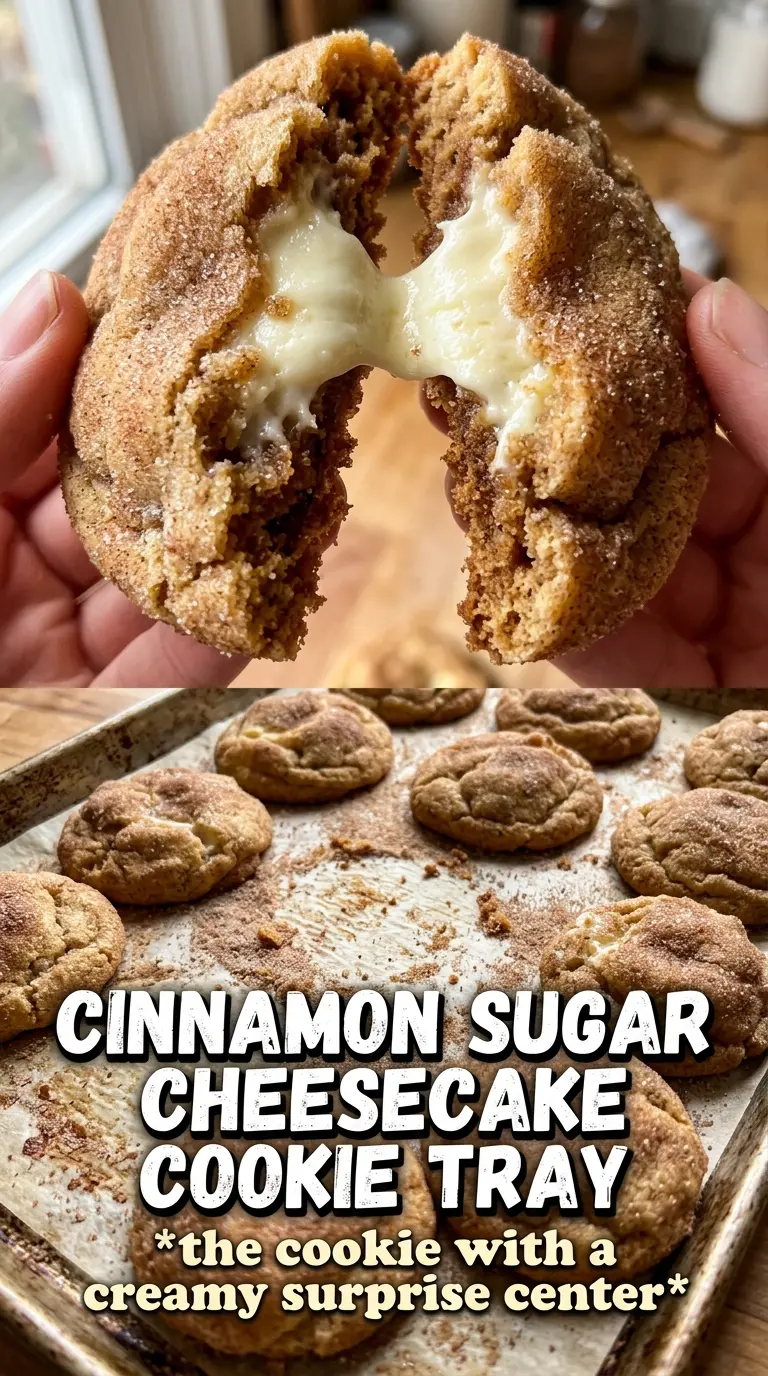
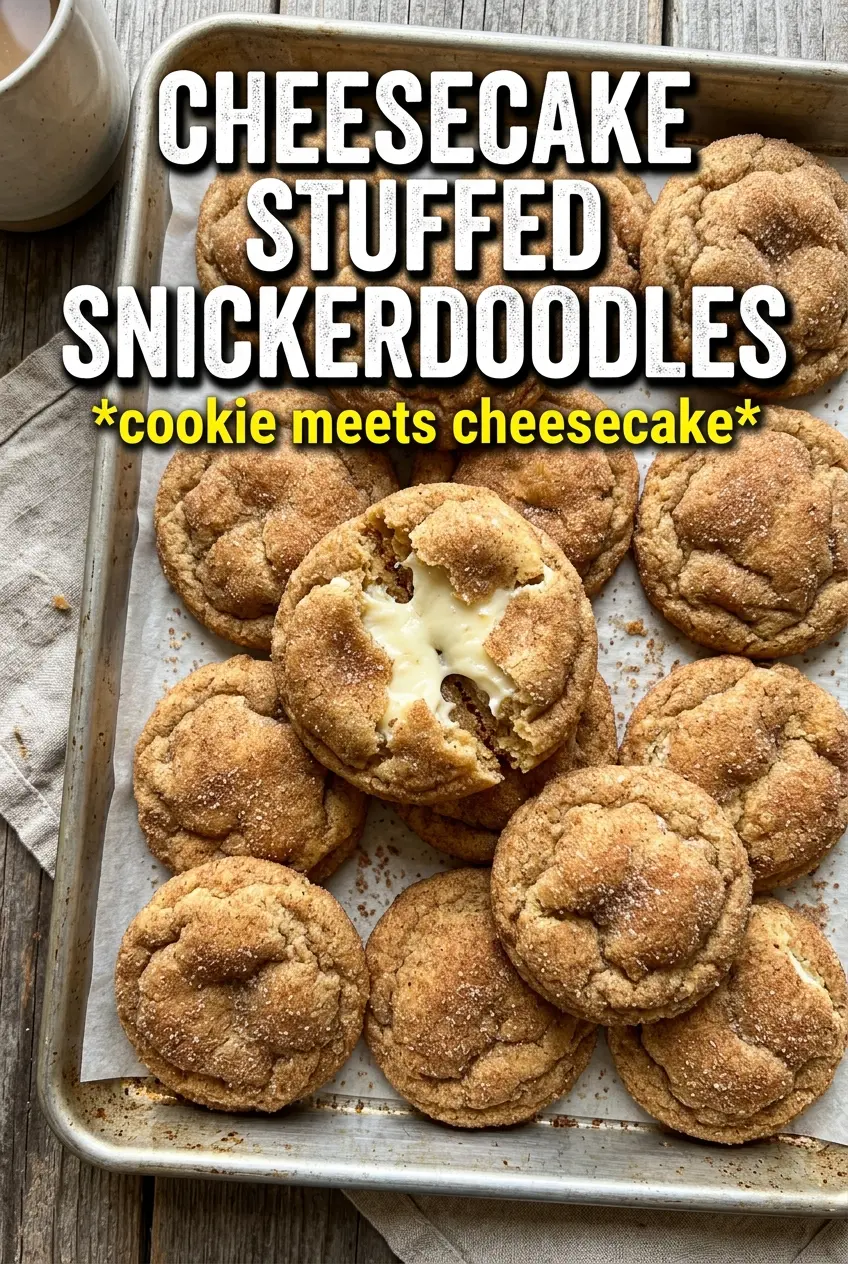
Cheesecake stuffed snickerdoodles bake up with crisp cinnamon-sugar edges, soft centers, and a cool creamy middle that turns every bite into a little surprise. The cookie itself stays tender instead of spreading thin, and the tangy filling gives the whole thing a rich, bakery-style finish without tasting heavy.
The key is freezing the cream cheese filling before it goes into the dough. That keeps the center contained long enough for the cookies to set, so you get a neat pocket of cheesecake instead of a leak on the baking sheet. Cream of tartar gives the dough that classic snickerdoodle chew and slight tang, while the cinnamon sugar on the outside bakes into the crinkled crust everyone expects from a good snickerdoodle.
Below, I’ve included the timing that matters most, the texture cues that tell you when these are done, and a few smart swaps for when you need to work with what you have on hand. The filling firms up as the cookies cool, so don’t judge them too early.
The filling stayed tucked inside and the cookies baked up with those crackly cinnamon tops I was hoping for. I froze the cream cheese balls like you said, and not one cookie leaked.
Cheesecake stuffed snickerdoodles with a creamy center and crackly cinnamon sugar crust are worth keeping handy for the next cookie swap.
The Freezer Step That Keeps the Cheesecake Inside
The most common failure with stuffed cookies is a filling that melts out before the dough sets. That’s why the cream cheese mixture gets frozen into small balls first, not just chilled. Frozen filling holds its shape long enough for the cookie dough to wrap around it and bake into a clean, sealed center.
Snickerdoodle dough is soft by design, which is great for chew but tricky for stuffing. If it gets warm while you work, the cookies spread too quickly and the filling has a chance to escape. Keep the filled dough portions moving from tray to oven, and line the baking sheet before you start so you’re not waiting with warm cookies in your hands.
- Cream cheese — Use full-fat brick cream cheese here. Tub-style cream cheese has too much moisture and a softer set, which makes the filling more likely to ooze.
- Cream of tartar — This is what gives snickerdoodles their signature tang and soft chew. There isn’t a true substitute if you want the classic texture.
- Butter — Softened butter creams smoothly with the sugar and helps the cookies spread in a controlled way. If it’s melted, the dough turns greasy and loose.
- Powdered sugar in the filling — It sweetens the cheesecake mixture and helps it freeze into a firmer, less icy ball than granulated sugar would.
- Cinnamon sugar coating — Don’t skimp here. The outside coating is what gives the cookies that crackled, spiced shell.
Building the Dough Around the Filling Without Leaks
- Flour — Spoon and level it if you can. Too much flour makes a dry dough that cracks when you try to wrap it around the filling.
- Vanilla — Use real vanilla if you have it. It rounds out both the dough and the filling, so the cookies taste like a complete dessert instead of just sugar and spice.
- Eggs — Add them one at a time if the mixture looks dense. They build structure, and the dough should look smooth before the dry ingredients go in.
- Frozen filling balls — Work with them straight from the freezer. As soon as they start softening, the wrapping gets messier and the seals are harder to close.
The Part of the Bake That Gives You the Crinkled Tops
Mixing the Base
Beat the butter and sugar until the mixture looks pale and fluffy, then add the eggs and vanilla. That aeration helps the cookies stay soft instead of dense. Once the dry ingredients go in, stop mixing as soon as the flour disappears. Overmixing tightens the dough and makes it harder to seal around the filling.
Wrapping the Centers
Scoop about 2 tablespoons of dough and flatten it in your palm. Set a frozen cream cheese ball in the center, then fold the dough up and around it, pinching every seam closed. If you can still see the filling, keep sealing. Any thin spot becomes the weak point where the cookie can split open in the oven.
Rolling and Baking
Roll each stuffed dough ball generously in the cinnamon sugar, then space them on the baking sheet with room to spread. Bake at 375°F just until the edges are set and the tops are crinkled, about 10 to 12 minutes. They may look a little soft in the center when they come out, and that’s right. The cookies finish setting on the pan, and pulling them too late is what dries out the filling.
Make Them Extra Cinnamon-Heavy
Add an extra 1/2 teaspoon cinnamon to the rolling sugar if you want a darker, spicier crust. The flavor comes through more on the first bite, but the cookies can read a little warmer and less sweet overall.
Gluten-Free Version
Use a 1:1 gluten-free baking flour that includes xanthan gum. The cookies will still bake up soft, but the dough may be a little more fragile when you wrap the filling, so chill it briefly if it feels sticky.
Dairy-Free Swap
Use plant-based cream cheese and a good dairy-free butter stick. The texture will still be creamy and soft, though the filling usually sets a touch looser than the original once baked and cooled.
Storage and Reheating
- Refrigerator: Store in an airtight container for up to 5 days. The filling stays creamy, but the cookies soften a little as they sit.
- Freezer: Freeze baked cookies for up to 2 months. Layer them with parchment so the sugar coating doesn’t rub off.
- Reheating: Warm a cookie in the microwave for 8 to 10 seconds, just enough to soften the center without melting the filling out. Too much heat makes the cheesecake run.
Questions I Get Asked About This Recipe
Cheesecake Stuffed Snickerdoodles
Ingredients
Equipment
Method
- Beat the cream cheese with the powdered sugar and vanilla until smooth, then portion into 24 teaspoon-sized balls and freeze for 30 minutes until firm.
- Keep the frozen cheesecake balls in the freezer while you prepare the cookie dough so they stay solid for stuffing.
- Preheat the oven to 375F and line baking sheets to prevent sticking.
- Beat the butter and sugar until creamy, then beat in the eggs and vanilla until fully combined.
- Fold in the flour, cream of tartar, baking soda, cinnamon, and salt just until the dough comes together.
- Scoop about 2 tablespoons of dough, flatten it in your hands, and place one frozen cheesecake ball in the center.
- Wrap the dough around the filling and seal completely so the cream cheese is fully enclosed.
- Roll each stuffed cookie in the cinnamon sugar mixture, pressing lightly so the coating adheres.
- Bake for 10-12 minutes at 375F until the cookies look crinkled and the edges are golden.
- Cool the cookies completely on the baking sheet or a rack until the filling firms as it cools, then serve.