Golden sourdough, sharp cheddar, crispy bacon, and warm turkey make this melt feel like the best kind of diner lunch, only sturdier and better balanced at home. The bread gets deeply toasted in butter while the cheese melts into the turkey and bacon, so every bite has crunch, salt, and that stretchy middle that disappears fast once it hits the plate.
What makes this version work is the split spread: Dijon on one half and mayonnaise on the other. The mustard cuts through the richness of the bacon and cheddar, while the mayo helps the sandwich brown evenly without drying out the bread. Using thick-cut bacon also matters here, because thin bacon can vanish under the turkey and cheese instead of giving you a real crisp bite.
Below you’ll find the little timing details that keep the sandwich from turning greasy or falling apart, plus a few easy swaps if you want to change the cheese, bread, or add-ins without losing the best part of the melt.
The sourdough got crisp without burning, and the cheddar melted all the way through the turkey. The Dijon on one side kept it from tasting heavy, and my husband asked if I could make these again the next day.
Like a melty, crispy turkey sandwich with cheddar and bacon? Save this sourdough melt for the days when you want lunch that tastes like it came off a griddle.
The Trick to Keeping This Melt Crisp Instead of Soggy
The biggest mistake with a turkey melt is loading it up and then cooking it too fast. The bread burns before the cheese has a chance to soften, and the fillings steam themselves into a soft, greasy middle. Medium heat gives the sourdough time to turn golden while the cheddar melts cleanly all the way through.
The second thing that matters is where the spreads go. Butter belongs on the outside for browning, but the Dijon and mayonnaise do different jobs inside. Dijon wakes up the turkey and bacon, while mayonnaise adds a little richness and helps keep the sandwich from eating dry. If you skip that inside spread, the sandwich can taste flat even when the cheese is fully melted.
- Sourdough bread — Its sturdy crumb holds up to the fillings and gives you a crisp shell instead of a floppy sandwich. If you use a softer bread, shorten the cook time and press gently or it can collapse before the center melts.
- Sharp cheddar — Sharp cheddar brings enough flavor to stand up to bacon and turkey. Mild cheddar works, but the sandwich tastes less defined. Slice it evenly so it melts at the same pace as the bread browns.
- Dijon mustard — This is the ingredient that keeps the melt from tasting heavy. A grainy or spicy Dijon works fine; use the one you like most because the flavor stays front and center.
- Mayonnaise — Mayo adds moisture and helps the bread brown with an even, deep color. If you want to swap it, use a thin layer of softened butter inside, but the sandwich will lose a little of that creamy middle balance.
- Thick-cut bacon — Thick-cut bacon gives you real texture and enough smoky salt to balance the cheese. Crispy is the goal here; chewy bacon turns the sandwich into a mess when you bite through it.
What Each Ingredient Is Actually Doing in This Recipe

- Primary ingredient (the star) — Quality matters most. Choose the best you can find.
- Cooking medium (oil, butter, or broth) — This carries flavors and prevents dryness.
- Seasonings (salt, pepper, spices, herbs) — Layer flavors so nothing overpowers. Build depth gradually.
- Aromatics (garlic, onion, herbs) — Cook with fat to bloom flavors. Become the foundation.
- Supporting ingredients — Complement the main ingredient without overpowering it.
- Sauce or liquid (if applicable) — Brings flavors together. Balance richness with acid.
- Acid (lemon, vinegar, wine, or other) — Brightens and prevents flat-tasting results.
- Final finish (garnish, glaze, or sauce) — Prevents one-dimensional taste and adds visual appeal.
Building the Melt So the Cheese Stays in the Sandwich
Prepping the Fillings
Cook the bacon until it’s fully crisp and let it drain before it goes anywhere near the bread. If the bacon is still warm and greasy, it can soften the sourdough from the inside and make the melt feel slick instead of crisp. Keep the turkey in loose slices so it warms quickly in the skillet without clumping into one dense layer.
Setting Up the Bread
Spread the softened butter all the way to the edges of each slice. That’s what gives you the deep golden crust, especially around the corners, where bread tends to dry out first. Flip the slices and add Dijon to half and mayonnaise to the other half; this split spread keeps both sides interesting and stops the sandwich from tasting one-note.
Melting and Browning in the Pan
Cook the sandwiches over medium heat, not high. High heat gives you dark bread before the cheddar loosens, and then you’re left with a cold center. Flip only when the first side is fully golden and the cheese is starting to soften at the edges, because that edge-melt tells you the inside is almost ready.
Finishing With the Fresh Layer
Add the arugula and tomato after the sandwich comes off the heat and just before serving. Putting them inside too early turns the greens wilted and the tomato watery, which is how a good melt gets soggy in the last minute. A quick press after adding them is enough to hold everything together without squeezing the filling out the sides.
Three Smart Ways to Change This Turkey Melt
Gluten-Free Version
Use a sturdy gluten-free sandwich bread with enough structure to toast well in butter. Softer gluten-free loaves can crumble when flipped, so choose one that already feels dense and sliceable. The filling doesn’t need any changes.
Dairy-Free Swap
Swap the cheddar for a dairy-free meltable slice and use a plant-based butter on the outside of the bread. The result won’t have quite the same sharp cheddar finish, so lean harder on the Dijon for contrast. Pick a cheese made to melt, not just one marketed as shredded or sliced.
No Bacon, Still Satisfying
Leave out the bacon and add a few extra tomato slices or a little more cheese so the sandwich still feels layered and complete. You’ll lose the smoky salt, so a small pinch of salt in the turkey layer helps bring the flavor back into focus. This version is lighter, but it still needs the same medium-heat toast.
Storage and Reheating
- Refrigerator: Store assembled leftovers for up to 2 days, though the bread softens a bit once the tomato and greens are inside.
- Freezer: I don’t recommend freezing the finished sandwich. The lettuce, tomato, and toasted bread all suffer too much after thawing.
- Reheating: Reheat in a skillet over medium-low heat or in a toaster oven until the bread crisps back up and the center is warm. Avoid the microwave if you want to keep the sourdough from turning limp.
Questions I Get Asked About This Recipe
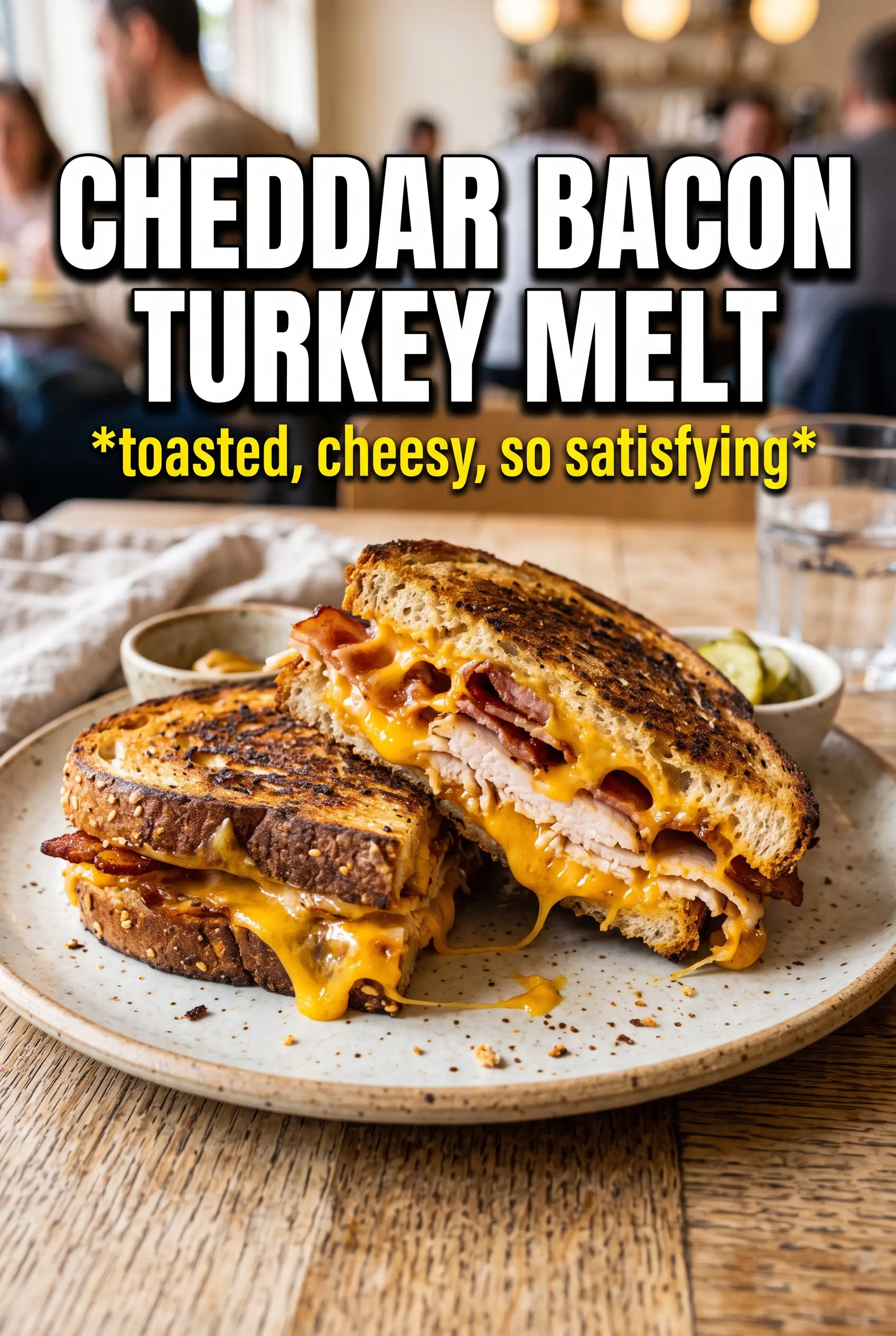
Cheddar and Bacon Turkey Melt on Sourdough
Ingredients
Equipment
Method
- Cook the thick-cut bacon until crispy, then drain and set aside.
- Set the crispy bacon aside so it stays crisp while you prep the sandwiches.
- Spread softened unsalted butter on one side of each sourdough bread slice.
- Flip the bread over and spread Dijon mustard on half the slices and mayonnaise on the other half.
- Layer sliced deli turkey breast, crispy bacon, and sharp cheddar cheese on the Dijon side of the bread.
- Heat a skillet or griddle over medium heat and place sandwiches butter-side down.
- Top with the mayonnaise-spread slices butter-side up.
- Cook 3-4 minutes per side until golden and cheddar is fully melted, flipping once during cooking.
- Open each sandwich and add arugula or mixed greens and tomato slices.
- Press closed and serve right away.