Carne guisada earns its place on the table because the beef turns spoon-tender while the gravy cooks down into something dark, savory, and clinging enough to soak into a warm flour tortilla. The best versions don’t taste rushed. They taste like the pan was given time to do its work, with browned beef, softened onion, and a chile-spiced sauce that settles into every bite.
What makes this version work is the layering: the beef gets seasoned before it ever hits the pot, the flour cooks with the vegetables long enough to lose its raw edge, and the browned bits stay in the pan where they belong. That’s where the depth comes from. The tomatoes don’t make it taste like chili, and the broth doesn’t stay thin because the simmer has enough time to turn everything into a proper gravy.
Below, I’ll show you the one stage that matters most for flavor, how to keep the gravy from turning pasty, and the best way to serve it when you want the tortillas to stay soft and warm.
The gravy thickened up beautifully and the beef was fall-apart tender after two hours. I served it in flour tortillas with lime and my husband went back for thirds.
Save this carne guisada for tender beef, rich chile-spiced gravy, and warm tortilla dinners that taste like they simmered all afternoon.
The Part Most Carne Guisada Gets Wrong: Rushing the Brown Bits
Carne guisada lives or dies by the fond left in the pot after browning the beef. If you crowd the pan, the meat steams and gives off liquid, and you lose the deep flavor that makes the gravy taste cooked instead of flat. Browning in batches takes a few extra minutes, but it’s the difference between a decent stew and one that tastes like it’s been simmering all day even when it hasn’t.
The other place people get tripped up is the flour. It needs a full minute with the vegetables before the broth goes in, or the sauce can taste raw and pasty. Once the liquid hits, scrape the bottom well and keep the simmer gentle. Hard boiling tightens the beef instead of softening it, and it can break the texture of the gravy.
What Each Ingredient Is Doing in the Pot
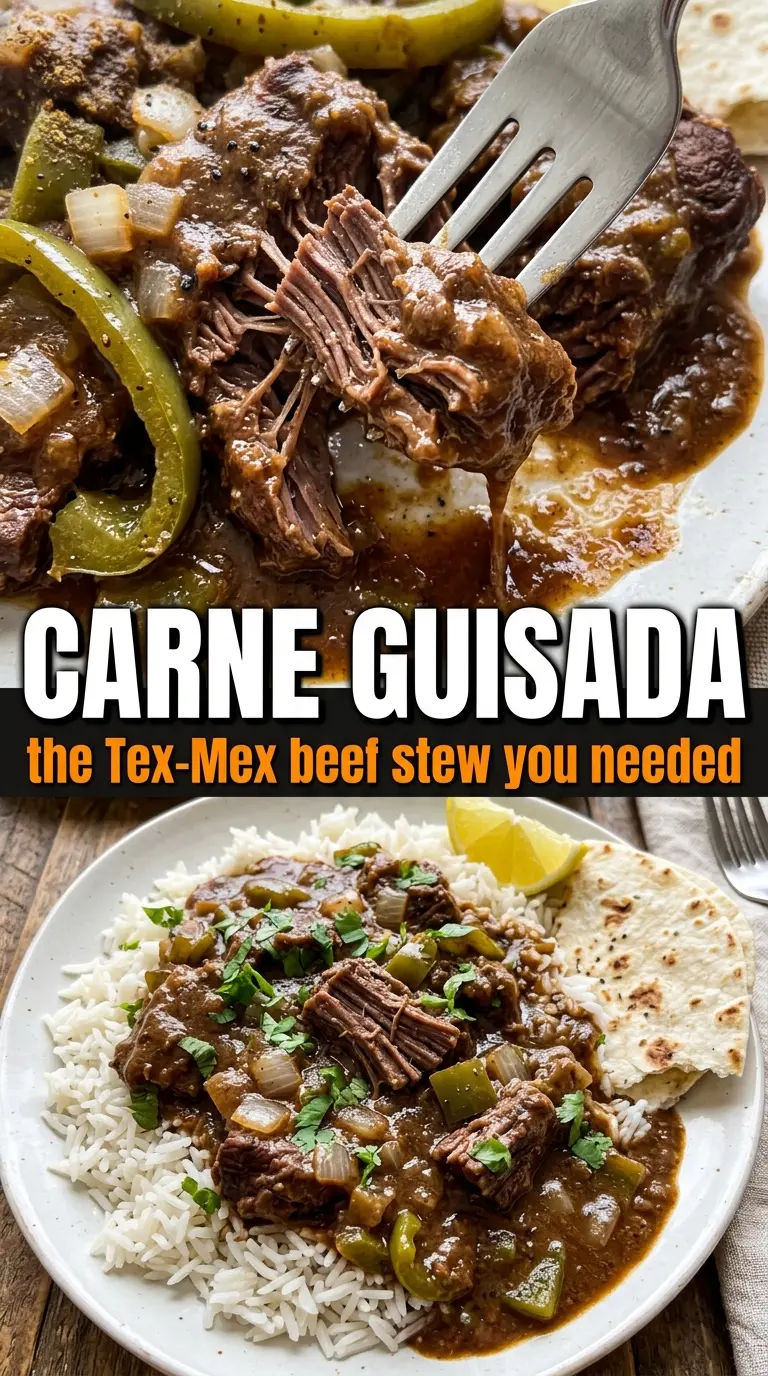
- Beef chuck — This is the cut that gives you tender, shreddable chunks after a long simmer. Leaner stew meat can work in a pinch, but it usually dries out before it gets truly soft.
- Onion and green bell pepper — They build the base and give the gravy its Tex-Mex backbone. The onion should turn translucent and sweet, not browned; the pepper should soften enough to disappear into the sauce.
- Flour — This is what turns the braising liquid into gravy instead of broth. Cook it with the vegetables before adding liquid so it thickens cleanly and doesn’t leave a chalky taste.
- Diced tomatoes — They add body and a little acidity without making the dish taste tomato-heavy. If you want a smoother gravy, crush them lightly with a spoon as they go in.
- Cumin, chili powder, oregano, and garlic — These are the seasoning notes that give carne guisada its familiar warm, earthy flavor. Fresh garlic matters most here; the powders can be ordinary store-bought and still do the job.
Building the Gravy and Braising the Beef Until It Gives Up
Seasoning and Browning the Beef
Coat the beef cubes generously with salt, pepper, cumin, chili powder, and garlic powder before they hit the pot. You want each piece seasoned all the way through, not just the sauce around it. Get the oil hot enough that the beef sizzles on contact, then leave space between the pieces so the surface can sear instead of steam. If the pot starts filling with liquid, stop and let that moisture cook off before adding more meat.
Softening the Vegetables
After the beef comes out, the onion and green bell pepper go into the same pot. Stir them through the browned bits until the onion turns soft and the pepper loses its raw edge, about five minutes. Add the garlic near the end so it doesn’t scorch; burnt garlic turns bitter fast and will stay bitter in the finished gravy.
Making the Gravy Base
Sprinkle the flour over the vegetables and stir until it looks a little sandy and smells cooked, not dusty. Then add the broth and tomatoes slowly while scraping the bottom of the pot. That scraping step matters because it dissolves the browned layer into the gravy instead of leaving it stuck and wasted. If the liquid looks thin at first, don’t worry — it thickens as the simmer goes on.
Low Simmer, Long Payoff
Return the beef to the pot, add the oregano, cover, and hold the heat low enough for small bubbles around the edges. A hard boil makes the meat tighten up and the sauce reduce too fast. You’re looking for beef that breaks apart with a spoon and a gravy that coats the back of the spoon without turning gluey. If the sauce gets too thick before the beef is tender, add a splash of broth and keep going.
Make It Spicier Without Losing the Gravy
Add a pinch of cayenne or a chopped jalapeño with the onions and peppers. That gives the dish more heat without thinning the sauce or changing the braise time. Keep the cumin and oregano steady so the spice reads as deeper heat, not a completely different stew.
Gluten-Free Carne Guisada
Swap the flour for a cornstarch slurry at the end if you need a gluten-free version. The texture will be a little silkier and less rustic than a flour-thickened gravy, but it still clings well to the beef. Mix the cornstarch with cold water first, then stir it into the simmering liquid and cook just until it thickens.
A Tomato-Lighter Version
Use half the can of diced tomatoes if you want the gravy darker and more beef-forward. You’ll lose a little acidity and brightness, so add a small squeeze of lime at the end to bring the dish back into balance. The texture stays the same; the flavor just leans more savory than tangy.
Storage and Reheating
- Refrigerator: Keeps for 4 days. The gravy thickens as it chills, which is normal.
- Freezer: Freezes well for up to 3 months. Cool it completely first and store it in airtight containers with a little room at the top.
- Reheating: Warm it gently on the stove over low heat with a splash of broth if needed. Don’t blast it in a hard boil, or the beef can tighten and the gravy can separate.
Answers to the Questions Worth Asking
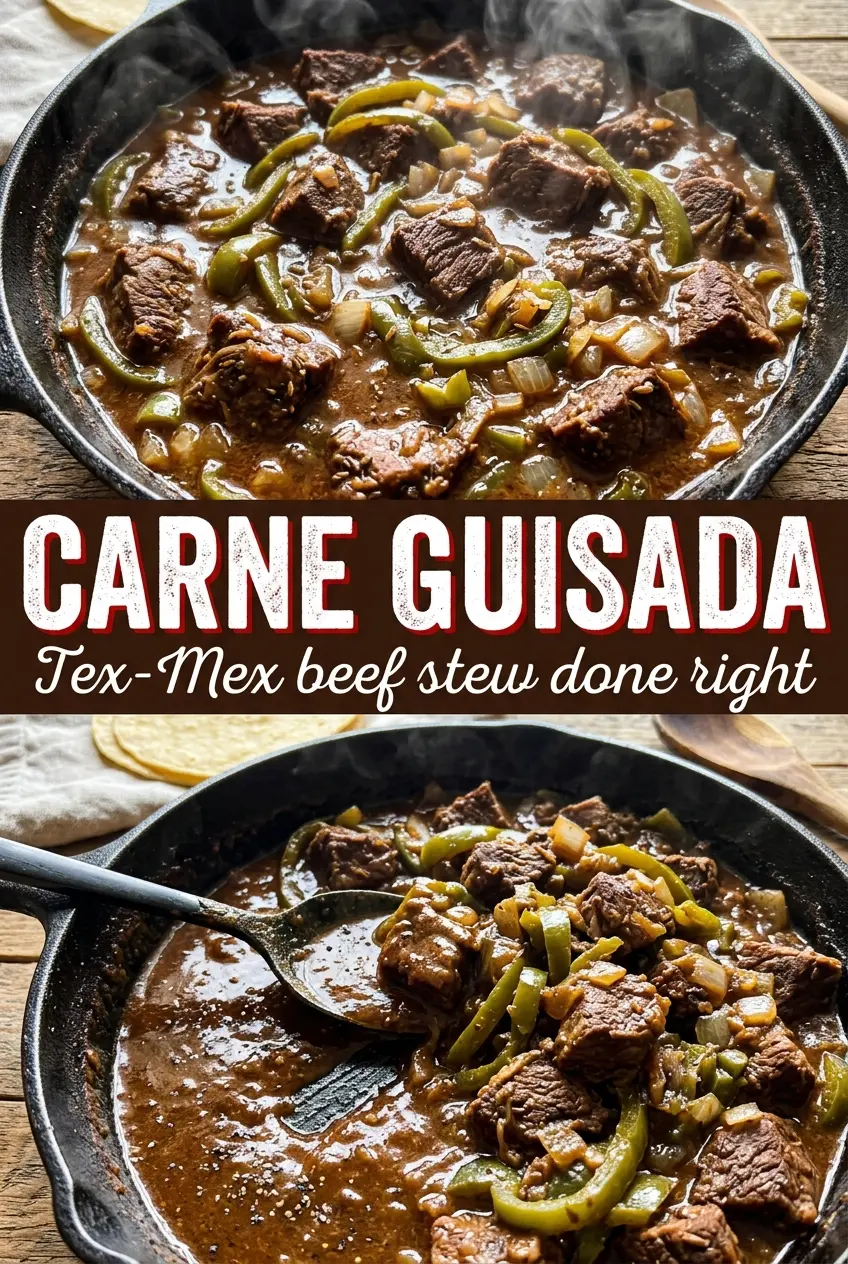
Carne Guisada
Ingredients
Equipment
Method
- Season the beef cubes generously with salt, black pepper, cumin, chili powder, and garlic powder.
- Brown the beef in batches in hot oil over high heat in a heavy pot; do not crowd, and remove to a plate when browned on the outside.
- Sauté the onion and green bell pepper for 5 minutes in the same pot over medium-high heat.
- Add the garlic and cook 1 minute, stirring, until fragrant.
- Sprinkle the flour over the vegetables and stir for 1 minute to cook out the raw flour taste.
- Add beef broth and diced tomatoes, scraping up the browned bits from the bottom of the pot.
- Return the browned beef to the pot and add oregano.
- Cover and simmer on low for 1.5–2 hours until the beef is extremely tender and the gravy has thickened.
- Serve hot with warm flour tortillas, cilantro, and fresh lime.