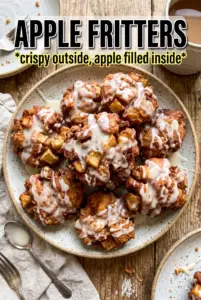
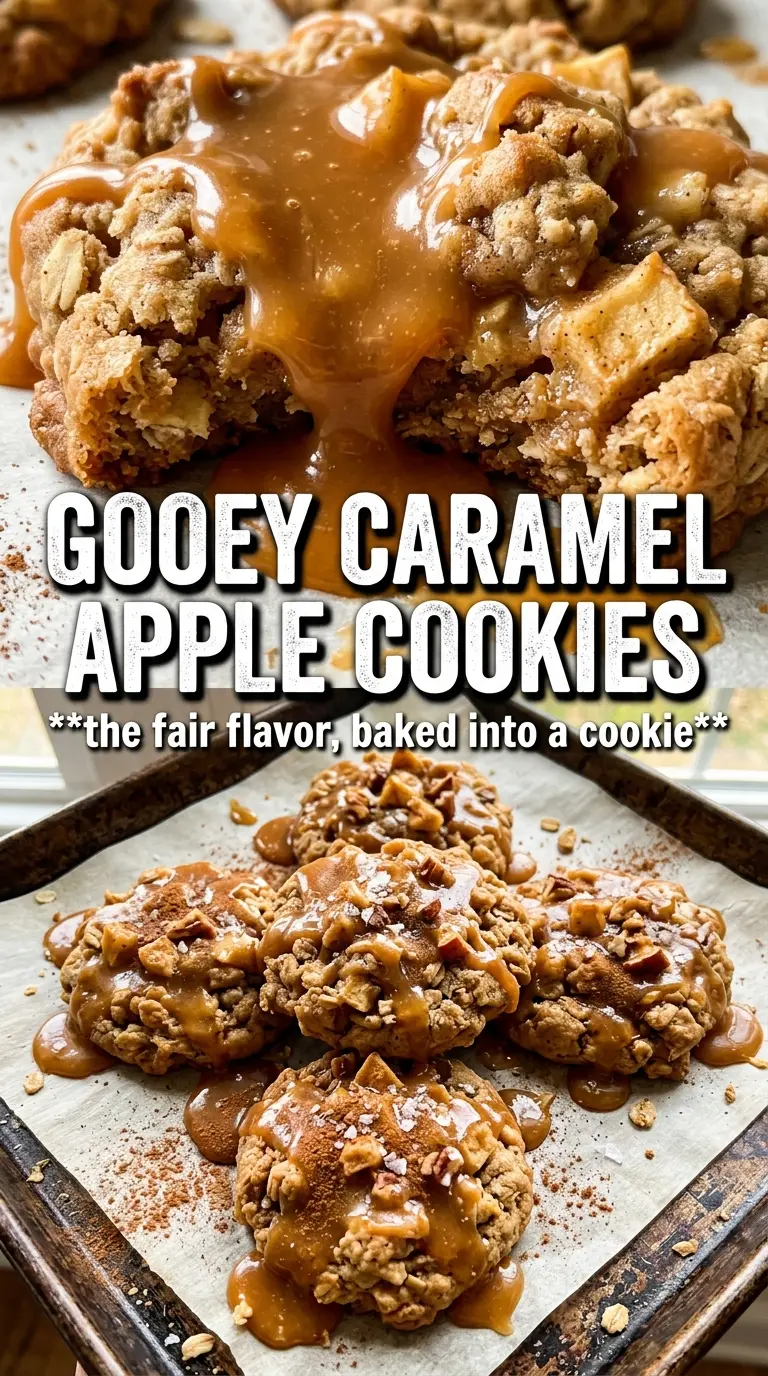
Caramel apple cookies bake up soft in the center with golden edges, little pockets of melted caramel, and tiny bites of apple that stay tender instead of turning mushy. The finish matters here: a drizzle of caramel sauce and a pinch of flaky salt turn a good cookie into the kind people reach for before they’ve finished the first one.
What makes this version work is the prep. The apple has to be diced very small and patted dry, or the extra moisture can make the dough spread too much and bake up cakey in the wrong way. The dough itself is built like a classic drop cookie, with enough brown sugar for chew and enough cinnamon, nutmeg, and allspice to make the apple taste deeper, not just sweeter.
Below, I’ll walk you through the small details that keep the cookies from going soggy, how to know when they’re done, and the easiest way to finish them so the caramel sets up in glossy ribbons instead of soaking in.
I was worried the apple pieces would make these cakey, but dicing them tiny and drying them first worked perfectly. The cookies stayed soft, the caramel bits melted into little pockets, and the salt on top made them taste like bakery cookies.
Caramel Apple Cookies with soft centers, caramel pockets, and a salty caramel drizzle belong in your fall cookie rotation.
The Apple Trick That Keeps These Cookies Soft Instead of Wet
The biggest mistake with apple cookies is treating the fruit like mix-ins that behave the same way every time. Apples hold a lot of moisture, and once that moisture hits the dough, the cookies can spread too much, bake up gummy, or lose that clean soft-chewy texture. Finely dicing the apple helps it distribute evenly, but drying it thoroughly is what keeps the dough stable.
Caramel bits add their own challenge. They melt into pockets instead of disappearing into the dough, which is exactly what you want, but if they’re too big they can create uneven blobs and sticky edges. Chop soft caramels smaller if that’s what you’re using, and keep the apple pieces tiny enough that each cookie gets a little of everything in every bite.
- Apples — Use a firm baking apple if you have one, but the more important rule is to dice it very finely and blot it dry until the paper towels come away clean. A juicy apple will push too much liquid into the dough, and that’s where sogginess starts.
- Caramel bits or soft caramels — Caramel bits are the easiest choice because they hold their shape a little better and melt into distinct pockets. If you chop soft caramels, cut them small so they don’t clump into one heavy patch that sinks to the pan.
- Brown sugar — This gives the cookies their chew and keeps the centers tender. Granulated sugar helps the edges set, but brown sugar is what makes these taste rich instead of flat.
- Spices — Cinnamon, nutmeg, and allspice do more than make the cookies taste like fall; they deepen the apple flavor and keep the caramel from tasting one-note. Fresh spices matter here because the dough is simple enough that stale spice shows up fast.
What Each Ingredient Is Actually Doing in This Recipe
- Primary ingredient (the star) — Quality matters most. Choose the best you can find.
- Cooking medium (oil, butter, or broth) — This carries flavors and prevents dryness.
- Seasonings (salt, pepper, spices, herbs) — Layer flavors so nothing overpowers. Build depth gradually.
- Aromatics (garlic, onion, herbs) — Cook with fat to bloom flavors. Become the foundation.
- Supporting ingredients — Complement the main ingredient without overpowering it.
- Sauce or liquid (if applicable) — Brings flavors together. Balance richness with acid.
- Acid (lemon, vinegar, wine, or other) — Brightens and prevents flat-tasting results.
- Final finish (garnish, glaze, or sauce) — Prevents one-dimensional taste and adds visual appeal.
Building the Dough So the Apples Don’t Fight It
Whisk the dry ingredients first
Start by whisking the flour, baking soda, cinnamon, nutmeg, allspice, and salt together until the mixture looks even in color. That keeps the baking soda from leaving bitter little pockets and makes sure the spices are spread through every cookie. If you skip the whisking and dump everything in together, the first few scoops can taste more heavily spiced than the last ones.
Cream the butter and sugars until fluffy
Beat the softened butter with both sugars until the mixture turns lighter in color and looks airy around the edges of the bowl. That step traps the air that helps the cookies lift, and it also gives the sugar time to work into the butter so the texture stays soft instead of greasy. Add the eggs and vanilla after that base is fluffy; if the butter looks separated when the eggs go in, it was too cold or not creamed long enough.
Fold in the fruit and caramel at the end
Once the flour mixture goes in, mix only until you stop seeing dry streaks, then fold in the dried apple and caramel bits by hand. Overmixing here tightens the dough and breaks down the fruit, which can make the cookies tough or patchy. The final dough should look thick and scoopable, with the apple and caramel scattered evenly rather than mashed into the base.
Bake just until the edges set
Scoop the dough into 2-tablespoon rounds and bake until the edges are golden and the centers still look a little soft. That slight underdone center is what gives you a chewy cookie after cooling; if you wait until the whole top looks firm in the oven, they’ll bake up drier than they should. Move them off the hot pan after a few minutes so they don’t keep cooking into hard little domes.
Finish while the cookies are warm
Drizzle with caramel sauce and add flaky sea salt while the cookies are still warm enough to help the topping settle in. The warmth loosens the caramel just enough to cling without running off the sides. If the cookies are fully cool before finishing, the drizzle sits on top and loses that glossy bakery look.
Three Ways to Change the Batch Without Breaking the Texture
Gluten-free version
Use a good 1:1 gluten-free baking flour with xanthan gum already included. The cookies will still spread and brown, but they’ll be a little more delicate when warm, so let them cool on the pan for a few extra minutes before moving them.
Dairy-free caramel apple cookies
Swap in plant-based butter sticks, not tub margarine, and use dairy-free caramel candies or a dairy-free caramel drizzle for the finish. The texture stays close to the original, but the flavor is a little less rich, so the flaky salt becomes even more important.
Extra-caramel version
Add a few more chopped caramel bits to the dough, but don’t overload it or the cookies can puddle around the melted candy. You’ll get bigger caramel pockets and a stickier center, which is great if you want a more candy-bar style cookie.
Storage and Reheating
- Refrigerator: Store in an airtight container for up to 4 days. The apple softens a bit as they sit, but the cookies stay chewy.
- Freezer: Freeze baked cookies for up to 2 months, or freeze portioned dough balls for fresh-baked results later. If freezing dough, add the caramel drizzle after baking, not before.
- Reheating: Warm cookies for 8 to 10 seconds in the microwave or a few minutes in a low oven. Don’t overheat them, or the caramel will get hard on the edges before the center warms through.
Questions I Get Asked About This Recipe

Caramel Apple Cookies
Ingredients
Equipment
Method
- Preheat the oven to 375°F and line baking sheets with parchment, so the cookies bake on a nonstick surface.
- Dice the apples very finely and blot completely dry with paper towels until no moisture remains.
- In a bowl, whisk together the flour, baking soda, cinnamon, nutmeg, allspice, and salt until evenly combined with no dry streaks.
- Beat the butter, granulated sugar, and brown sugar until fluffy, with a lighter color and smoother texture.
- Add the eggs and vanilla extract and beat just until the batter looks uniform.
- Fold in the flour mixture until no visible dry flour remains.
- Fold in the dried apple and chopped caramel bits so the dough is speckled throughout.
- Scoop the dough into 2-tablespoon rounds and space them on the lined baking sheets.
- Bake at 375°F for 10-12 minutes, until the edges are golden and the centers look slightly set.
- Drizzle caramel sauce and sprinkle flaky sea salt over the cookies while warm so it clings.