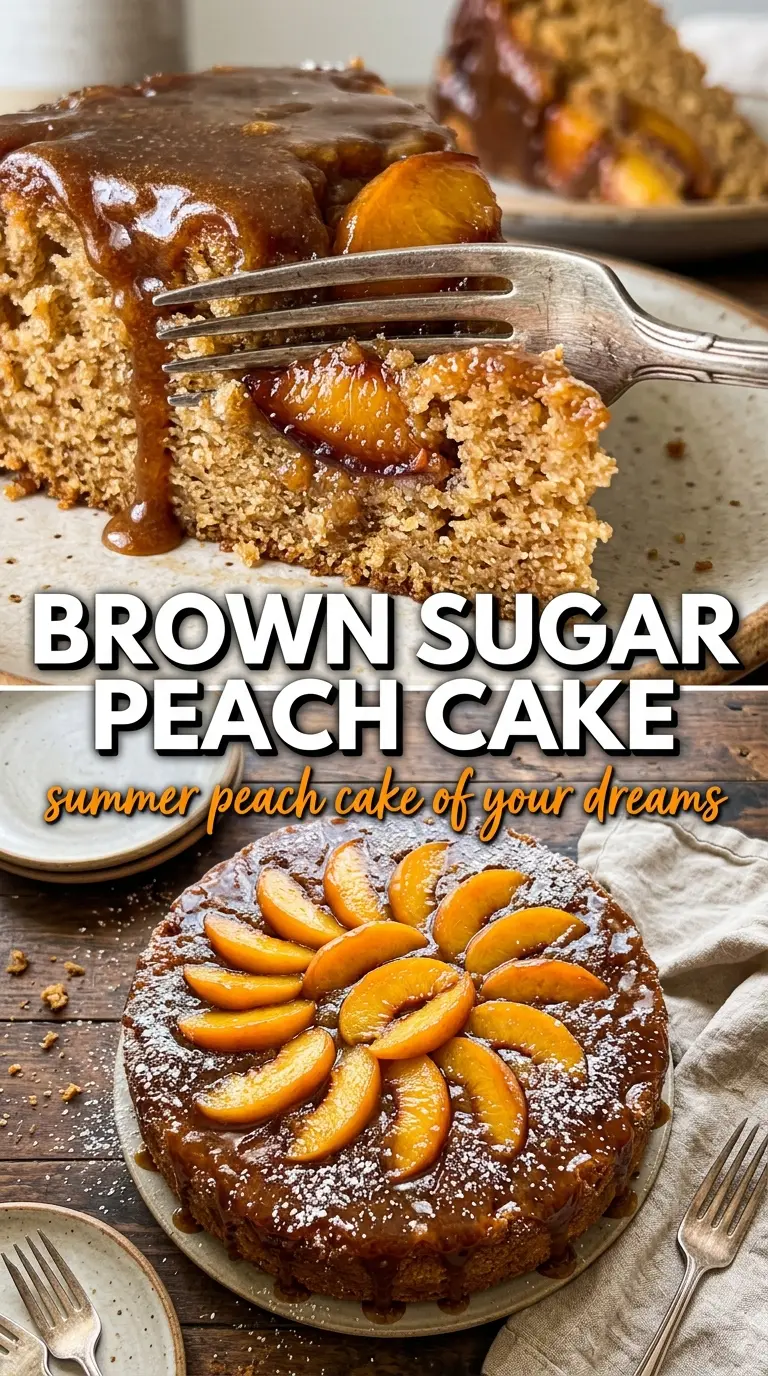
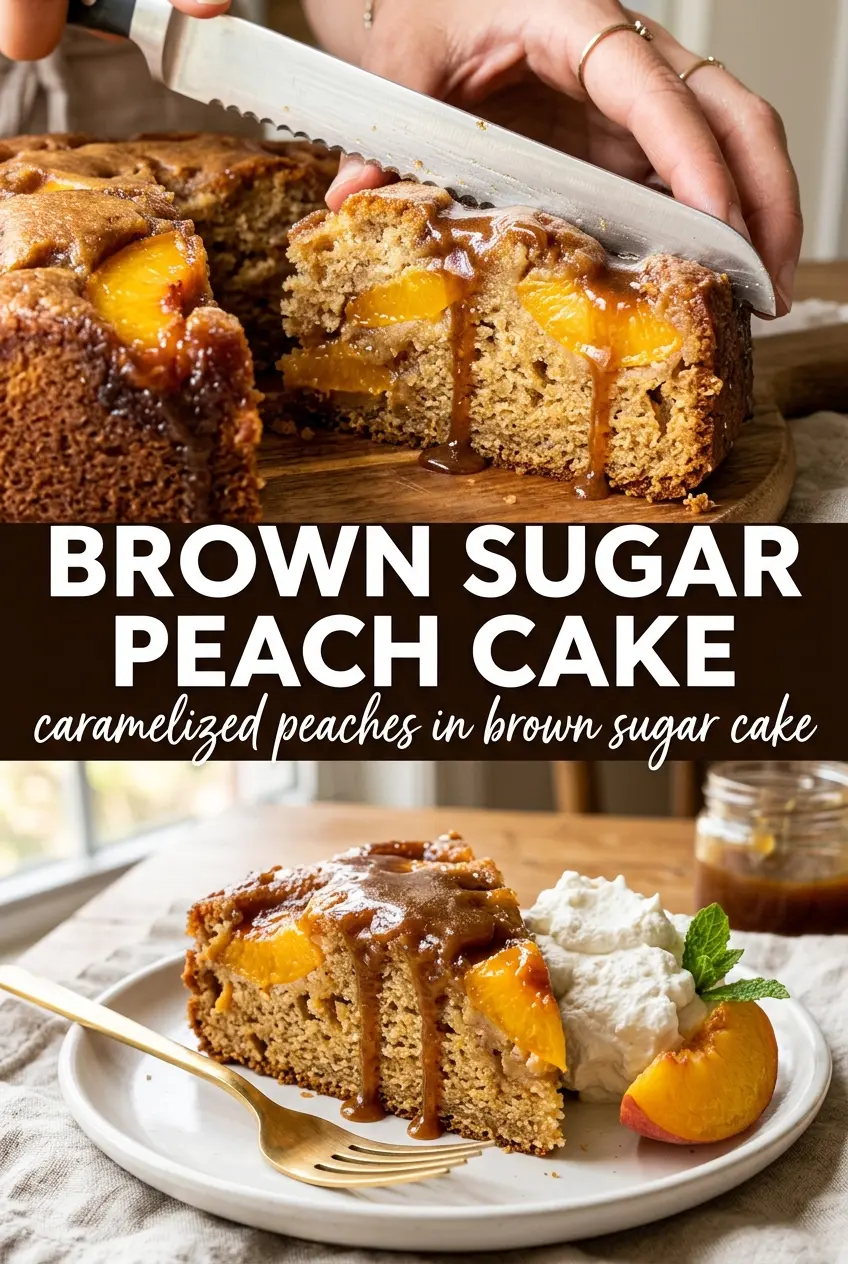
Brown sugar and ripe peaches bake into a cake that stays tender, smells like caramel the second it comes out of the oven, and cuts into neat layers without falling apart. The crumb is plush from sour cream, the edges turn deep golden, and the peach pieces soften just enough to melt into the cake instead of turning mushy.
What makes this version worth baking is the balance. Brown sugar gives the cake a deeper, almost toffee-like flavor, while a little granulated sugar keeps the crumb from getting heavy. Sour cream brings enough acidity and fat to keep the texture moist for days, and folding the peaches in by hand keeps them from sinking or streaking the batter.
Below, I’ll walk through the one step that keeps the cake light, the ingredient swaps that actually work, and the best way to frost it so the caramel cream cheese stays thick and glossy instead of sliding off the layers.
The cake layers baked up fluffy and the peach pieces stayed evenly distributed instead of sinking. I loved how the caramel cream cheese frosting set just enough to slice cleanly after chilling for a bit.
Save this brown sugar peach cake for the days when you want a tender layer cake with caramel cream cheese frosting and fresh peaches baked right into the crumb.
The Trick to Keeping Peaches from Collapsing the Cake
Fresh peaches bring a lot of water, and that’s where a peach cake can go soft or gummy if the batter isn’t built to handle it. The fix is simple: use ripe peaches, dice them small, and fold them in at the very end so they’re coated in batter instead of crushed into it. That coating helps keep the fruit suspended through the bake.
Butter and brown sugar give this cake enough structure to stand up to the fruit, but sour cream is what keeps the crumb plush instead of dry. If the peaches are extra juicy, pat them dry after peeling and dicing. You don’t want to drain away flavor, just remove the surface moisture that can loosen the batter.
- Brown sugar — This does more than sweeten. It deepens the cake with a molasses note that plays beautifully with peaches and helps the crumb stay moist.
- Sour cream — This is the texture insurance. Plain yogurt works in a pinch, but sour cream gives a richer crumb and a little more tenderness.
- Fresh peaches — Use ripe but still firm fruit. Overripe peaches can disappear into the batter and make the cake wet in the center.
- Cinnamon — Just enough to warm the fruit without turning the cake into spice cake. It should support the peaches, not compete with them.
What Each Ingredient Is Actually Doing in This Dessert
- Sugar (the sweetness and structure) — Sugar tenderizes baked goods and creams into butter to create air. Don’t skip it or reduce it too much.
- Fat (butter, oil, or cream cheese) — This carries flavors and creates tender crumb. Proper creaming with sugar adds volume to cakes.
- Eggs (the binder and lift) — Eggs create structure and help baked goods rise. Room temperature eggs incorporate better than cold ones.
- Flour (the structure) — This is what makes baked goods hold together. Don’t overmix or the texture becomes tough and dense.
- Flavoring (vanilla, chocolate, fruit, spices) — These define the personality of the dessert. Use good quality flavorings so they shine.
- Leavening (baking powder, baking soda, whipped eggs) — This creates rise and light crumb. Too much makes the dessert taste bitter.
- Liquid (milk, water, or fruit juice) — This hydrates flour and carries flavors. Too much makes the dessert dense; too little makes it dry.
- Final finish (frosting, glaze, fruit, whipped cream) — The topping adds moisture, flavor, and visual appeal. Don’t skip it or the dessert feels incomplete.
Building the Batter So the Layers Stay Tender
Whipping the Butter and Sugars
Beat the butter, brown sugar, and granulated sugar until the mixture looks pale and fluffy, not just combined. That extra minute or two traps air, which gives the cake lift before the peaches go in. If you stop too early, the layers bake up dense and the crumb feels heavy.
Adding the Eggs and Sour Cream
Beat in the eggs one at a time so the batter stays smooth and emulsified. Once the vanilla and sour cream go in, the mixture may look a little curdled; that’s normal. It comes back together as soon as the dry ingredients are added. The mistake here is rushing and dumping everything in at once, which can leave the batter streaky and uneven.
Folding in the Peaches
Mix the dry ingredients into the wet batter just until the flour disappears, then fold in the peaches with a spatula. Stop the second the fruit looks distributed. Overmixing after the flour goes in develops gluten and turns a tender cake into a tougher one, and aggressive stirring breaks the peach pieces down into juice.
Baking Until the Center Springs Back
Divide the batter evenly between the pans and bake until the tops are set and a toothpick comes out with only a few moist crumbs. The cake should pull slightly from the sides and spring back when touched in the center. If the tops are browning too quickly, your oven runs hot; tent the pans loosely with foil for the last 10 minutes so the middle finishes without darkening the crust.
How to Adapt This Cake Without Losing the Good Parts
Make it dairy-free
Use a plant-based butter and a thick dairy-free yogurt in place of the sour cream. The cake will still be moist, but the crumb won’t have quite the same richness, and the frosting will need a dairy-free cream cheese that holds up well when whipped.
Turn it into a sheet cake
Bake the batter in a 9×13-inch pan and start checking early, around 30 to 32 minutes. You’ll lose the layer-cake look, but you gain a cake that’s easier to serve for a crowd and stays just as tender.
Use frozen peaches
Thaw them first, drain well, and blot them dry before folding them in. Frozen peaches work, but they release more liquid, so the batter needs that extra moisture removed or the middle can bake up soft and slightly damp.
Lighten the frosting
For a less rich finish, skip the caramel drizzle in the frosting and use a little less powdered sugar. The frosting will be tangier and softer, which works well if you want a cleaner cream cheese flavor instead of a full caramel finish.
Storage and Reheating
- Refrigerator: Store covered for up to 4 days. The frosting stays stable, and the crumb actually gets a little more settled after a day.
- Freezer: Freeze the unfrosted cake layers tightly wrapped for up to 2 months. The frosted cake can be frozen, but the cream cheese frosting softens after thawing, so I only freeze the layers when I can.
- Reheating: Bring slices to room temperature before serving. If you want a warm slice, heat the cake only briefly and skip the frosting on top, because cream cheese frosting can slide and separate if it gets too warm.
Questions I Get Asked About This Recipe
Brown Sugar Peach Cake
Ingredients
Equipment
Method
- Preheat the oven to 350°F and grease two 9-inch round cake pans, then line the bottoms with parchment (for easy release).
- In a bowl, whisk together all-purpose flour, baking powder, baking soda, salt, and cinnamon until evenly combined (no dry streaks).
- Beat butter and packed brown sugar with granulated sugar until light and fluffy, scraping the bowl as needed (the mixture should look paler).
- Add eggs one at a time, mixing well after each addition, until the batter looks smooth.
- Mix in vanilla extract until incorporated and the batter is glossy.
- Alternately mix in the flour mixture and sour cream, starting and ending with the flour mixture (mix just until smooth).
- Gently fold in the diced peaches so they’re distributed without overmixing.
- Divide batter evenly between the pans, then bake for 35-40 minutes at 350°F until a toothpick in the center comes out clean (tops will be deeply golden).
- Cool the cakes completely in the pans for at least 30 minutes, then remove and cool fully before frosting.
- Beat cream cheese and butter until smooth (no lumps) using low to medium speed.
- Beat in powdered sugar, then mix in caramel sauce and vanilla extract until fluffy and thick enough to spread.
- Place one cake layer on a serving plate and spread frosting over the top, then add the second layer.
- Fill and frost the cake with the caramel cream cheese frosting so it’s thick between layers and coats the sides (let it drip slightly for a defined look).
- Arrange fresh peach slices on top, then drizzle with extra caramel before serving for visible caramel sheen on the fruit.