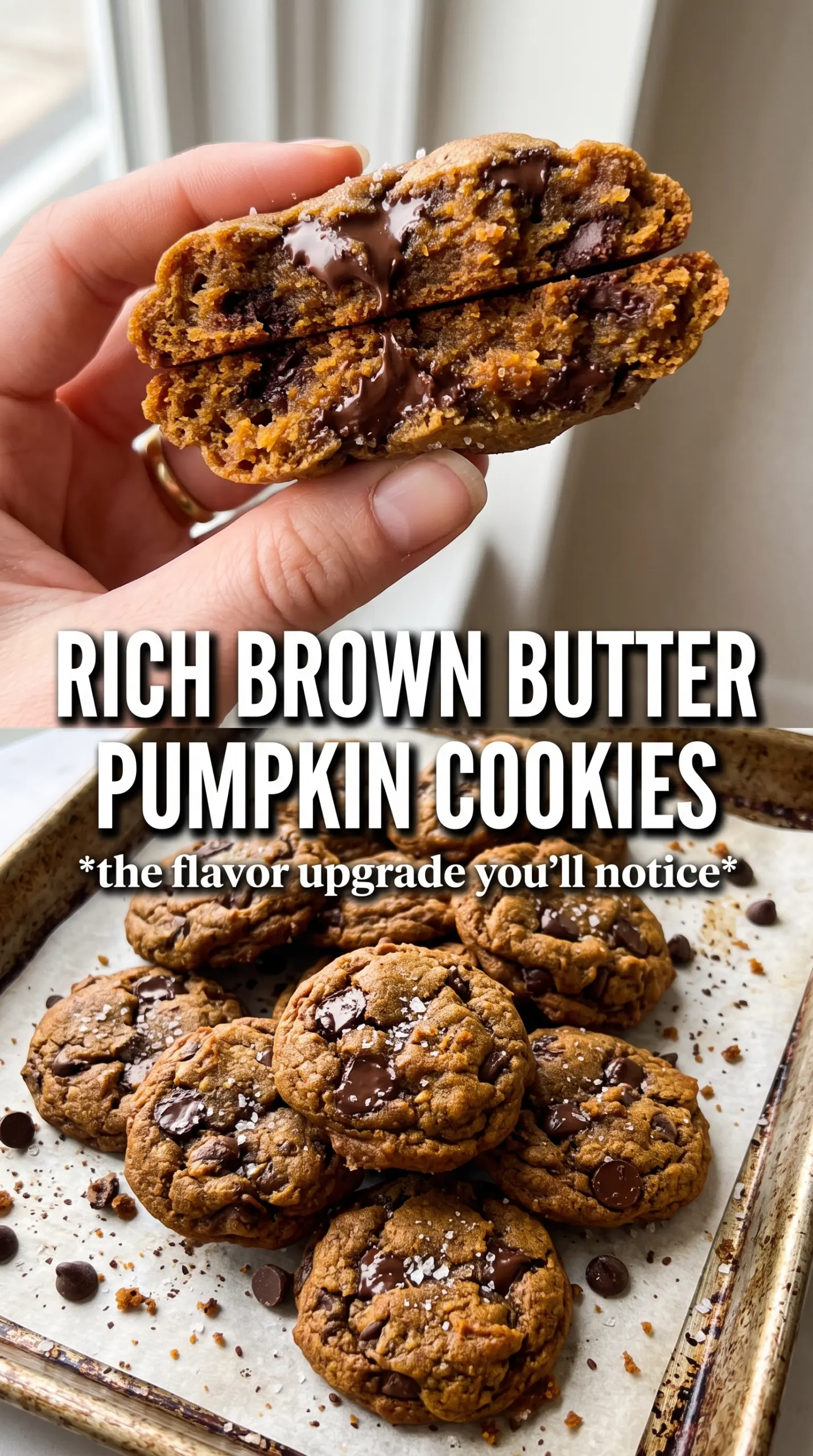
Brown butter pumpkin chocolate chip cookies bake up with crisp edges, soft centers, and those little pockets of melted chocolate that make people reach for a second one before the first has even cooled. The browned butter brings a toasty, almost nutty depth that keeps the pumpkin from tasting flat or one-note, and the flaky salt on top pulls the whole cookie into focus.
The trick is treating the pumpkin like a moisture issue, not just a flavor choice. A little blotted pumpkin puree gives the dough that warm pumpkin color and gentle spice, but too much water turns these cookies cakey and dulls the chew. Cooling the browned butter until it’s solid again also matters more than it sounds like it should, because it lets the butter cream properly with the sugars instead of sliding into an oily, loose dough.
Below, I’m walking through the part that matters most: how to get the brown butter right, how dry the pumpkin should be, and what to expect from the dough so the cookies bake up thick, soft, and full of chocolate.
The brown butter made these taste deeper than regular pumpkin cookies, and blotting the pumpkin kept them soft instead of cakey. Mine spread just enough and the chocolate stayed in little puddles.
Save these brown butter pumpkin chocolate chip cookies for the kind of bake that stays soft in the middle, smells like toasted spice, and finishes with a crackly hit of flaky salt.
Why the Pumpkin Needs to Be Dry Before It Ever Hits the Bowl
Pumpkin adds flavor here, but it also adds water. That’s the part most cookie recipes don’t talk about clearly enough, and it’s why pumpkin cookies often turn soft in a wet, cakey way instead of staying thick and chewy. Blotting the puree before you measure it gives you the pumpkin taste without flooding the dough.
The brown butter pulls in the other direction, which is why this recipe lands so well. It has less water than regular butter once it’s browned and cooled back to solid, so the dough stays richer and bakes with a deeper edge. If you skip the solidifying step and use warm liquid brown butter, the sugars won’t cream properly and the cookies will spread too fast.
- Brown butter — This is the backbone of the recipe. Brown it until the milk solids are golden and fragrant, then chill it until firm again. Liquid brown butter behaves like melted fat, not creamed butter, and the texture of the dough changes immediately.
- Pumpkin puree — Use plain pumpkin puree, not pumpkin pie filling. The puree should be blotted until it feels thick and almost paste-like. That small step keeps the cookies from going cakey.
- Pumpkin pie spice — It gives the cookies their warm spice note without needing a long list of separate spices. If you only have cinnamon, use it, but the blend gives the cookie a fuller pumpkin bakery flavor.
- Chocolate chips — Dark or semi-sweet both work. Dark chocolate gives the best contrast against the sweet dough and pumpkin spice, while semi-sweet keeps the cookies a little more classic and mellow.
What Each Ingredient Is Actually Doing in This Recipe
- Primary ingredient (the star) — Quality matters most. Choose the best you can find.
- Cooking medium (oil, butter, or broth) — This carries flavors and prevents dryness.
- Seasonings (salt, pepper, spices, herbs) — Layer flavors so nothing overpowers. Build depth gradually.
- Aromatics (garlic, onion, herbs) — Cook with fat to bloom flavors. Become the foundation.
- Supporting ingredients — Complement the main ingredient without overpowering it.
- Sauce or liquid (if applicable) — Brings flavors together. Balance richness with acid.
- Acid (lemon, vinegar, wine, or other) — Brightens and prevents flat-tasting results.
- Final finish (garnish, glaze, or sauce) — Prevents one-dimensional taste and adds visual appeal.
Getting the Dough Mix Right So the Cookies Stay Thick
Bring the Brown Butter Back to a Creamy Solid
The browned butter needs to be cooled until solid, not just lukewarm. When you beat it with the sugars, it should look fluffy and thick, the same way soft butter and sugar would. If it still looks greasy or sloshes in the bowl, stop and chill it longer, because that’s the point where spread gets out of control.
Work the Pumpkin In Without Overmixing
Once the butter and sugar are creamed, add the blotted pumpkin, eggs, and vanilla and mix only until combined. The batter may look a little looser than a plain chocolate chip dough, and that’s normal. Stirring past that point won’t improve it; it just warms the fat and makes the dough weaker.
Fold, Scoop, and Bake for Edges First
Add the dry ingredients and chocolate chips with a light hand. The dough should look thick and scoopable, not shiny or sticky like cake batter. Use a 2-tablespoon scoop, bake until the edges are set and golden, and pull them when the centers still look slightly soft. They finish on the pan, and that’s how you keep the middle tender instead of dry.
Make Them With Walnuts for Extra Crunch
Fold in up to 3/4 cup chopped walnuts along with the chocolate chips. The nuts add a little bite that plays nicely with the soft center, but they’ll also pull some attention away from the pumpkin spice, so the cookies read a little more nutty and less dessert-bakery-sweet.
Gluten-Free Version That Still Holds Its Shape
Swap in a 1:1 gluten-free baking flour blend that includes xanthan gum. The cookies will be a little more delicate when warm, but the texture stays close if you let them cool fully on the pan before moving them. Skip almond flour here; it changes the balance too much and makes the dough spread unevenly.
Dairy-Free Brown Butter Style Cookies
Use a plant-based butter that browns well if you can find one, but expect a slightly less nutty finish than with dairy butter. The rest of the method stays the same, though you’ll want to chill the butter substitute until firm before creaming so the dough doesn’t turn oily.
Storage and Reheating
- Refrigerator: Store in an airtight container for up to 5 days. The cookies stay soft, though the chocolate will firm up once chilled.
- Freezer: Freeze baked cookies for up to 2 months, or freeze scooped dough balls and bake from frozen with 1 to 2 extra minutes added. This dough freezes well.
- Reheating: Warm baked cookies in a 300°F oven for 3 to 5 minutes or microwave one cookie for about 8 to 10 seconds. Long reheating dries out the centers and makes the chocolate greasy instead of melty.
Questions I Get Asked About This Recipe
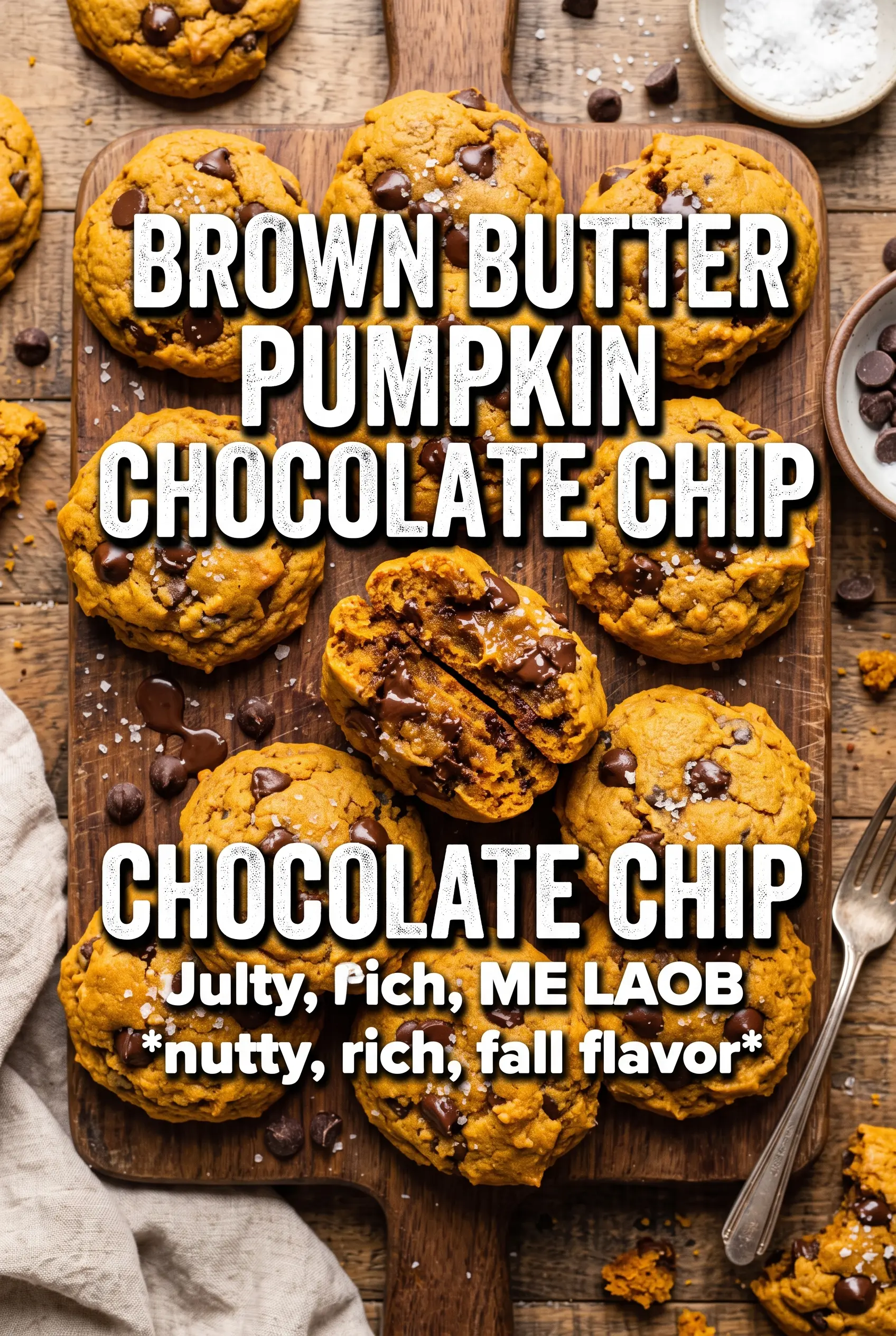
Brown Butter Pumpkin Chocolate Chip Cookies
Ingredients
Equipment
Method
- Brown the butter in a saucepan until it turns golden and smells nutty, then pour it out to cool. Chill in the fridge until solid, about 1 hour, so it creams easily.
- Preheat the oven to 375F and line baking sheets with parchment. Keep the trays ready so you can bake right after scooping.
- Whisk the all-purpose flour, baking soda, pumpkin pie spice, and salt together in a bowl. Whisk until evenly speckled with spices.
- Beat the solidified brown butter with the brown sugar and granulated sugar until creamy. Scrape down as needed for a smooth, cohesive mixture.
- Beat in the blotted pumpkin puree, then add the eggs and vanilla extract. Mix just until incorporated and the dough looks uniform.
- Fold the flour mixture into the wet ingredients until no dry streaks remain. Fold gently to keep the dough tender.
- Fold in the chocolate chips until they are evenly distributed. Stop mixing once the chips are fully incorporated.
- Scoop the dough into 2-tablespoon rounds and space them on the prepared baking sheets. Keep the scoops consistent for even baking.
- Bake at 375F for 10-12 minutes until the edges are golden. The centers should still look slightly soft.
- Sprinkle the cookies immediately with flaky sea salt right after they come out of the oven. This helps the salt adhere before the surface sets.
- Cool on the pan for 5 minutes before transferring. Let them firm up slightly for clean edges and chewy centers.