Blueberry crumble cheesecake brings together three things that should absolutely be on the same fork: a crisp graham crust, a dense and creamy baked cheesecake layer, and a buttery oat crumble that turns golden and shatters when you cut into it. The blueberry topping bakes down just enough to bleed into the filling without disappearing, so every slice has that mix of tart fruit, rich cream cheese, and toasted streusel crunch.
What makes this version work is the order of the layers and the way they’re handled. The crust gets a quick bake first, which keeps it from going soggy under the filling. The cheesecake batter stays plain and smooth, with lemon zest to brighten the richness, then the blueberries go on top before the crumble so the fruit stays visible and juicy instead of buried. The water bath does the slow, gentle work that keeps the filling from cracking or turning grainy.
Below, you’ll find the one technique that matters most for a clean slice, plus a few smart swaps for when you need to work with what’s in the kitchen.
The cheesecake set up beautifully and the blueberry layer stayed bright instead of sinking into the filling. I chilled it overnight, and the crumble still had a nice little crunch the next day.
Save this blueberry crumble cheesecake for the dessert nights when you want a creamy baked cheesecake with a jammy berry top and a crisp oat crumble.
The Reason Most Cheesecakes Crack Before the Crumble Ever Hits the Pan
The biggest failure point in a baked cheesecake is rushing the heat. Cream cheese filling looks sturdy long before it’s actually set, and if the oven runs hot or the batter gets overmixed, the eggs puff too much and then collapse. That’s how you end up with a dry edge, a sunken center, or a crack right where the top should have stayed smooth.
The water bath is doing more than preventing drama. It creates gentle, even heat so the custard bakes from the outside in without tightening too fast. The other quiet safeguard is the cool-down in the turned-off oven with the door cracked; that slow drop in temperature keeps the center from shocking and splitting after it leaves the heat.
- Room-temperature cream cheese — Cold blocks beat into lumps, and those lumps never fully disappear. Soften it until it bends easily when pressed.
- Sour cream — This adds tang and keeps the filling plush. Plain Greek yogurt works in a pinch, but the texture is a little less silky.
- Fresh blueberries — They hold their shape better than frozen berries, which leak more juice and can muddy the top layer. If you must use frozen, don’t thaw them first.
- Rolled oats — These give the crumble its nubby, toasty texture. Quick oats can work, but the topping will be finer and less crisp.
What Each Layer Is Actually Doing in This Cheesecake
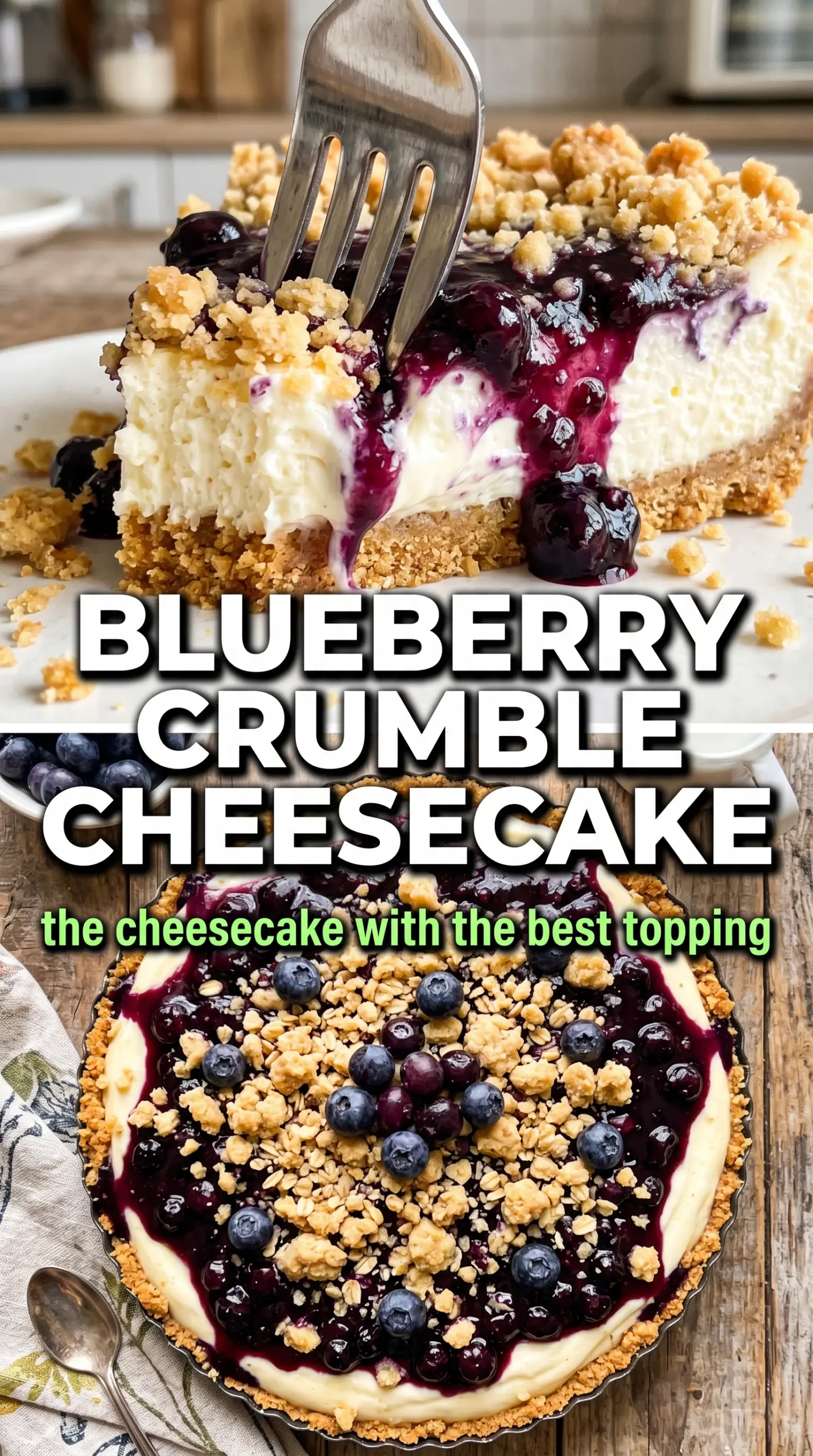
- Graham cracker crumbs — They create a sturdy base with enough sweetness to stand up to the tangy filling. If you crush your own, aim for fine crumbs so the crust presses evenly.
- Butter — Melted butter is what binds the crust and browns it slightly in the oven. There’s no real substitute if you want that firm, sliceable base.
- Vanilla and lemon zest — Vanilla rounds out the dairy richness, and the zest keeps the cheesecake from tasting flat. The lemon doesn’t make it lemony; it just brightens the whole pan.
- Cornstarch in the blueberry layer — This is what turns loose berry juices into a glossy topping instead of a watery puddle. Don’t skip it unless you want the fruit to slide around when you cut the cheesecake.
- Brown sugar in the crumble — It adds a deeper caramel note than white sugar and helps the topping clump into those craggy bits that bake up crisp.
Building the Layers Without Sinking the Fruit
Start with the Crust
Press the graham mixture firmly into the springform pan, especially along the bottom edge where slices tend to fall apart first. A quick 8-minute bake sets the crust so it stays crisp under the filling instead of turning pasty. Let it cool before the batter goes in, because warm crust can soften the cheesecake base and make the bottom greasy.
Mix the Filling Gently
Beat the cream cheese and sugar until the mixture is smooth and no pale lumps remain, then add the eggs one at a time. Stop mixing as soon as each egg disappears. Too much air in the batter is what gives you cracks later, and overbeating after the eggs go in makes that problem worse. Sour cream, vanilla, and lemon zest go in last so the batter stays silky and doesn’t look separated.
Layer the Blueberries and Crumble
Spoon the blueberry mixture over the cheesecake batter rather than dumping it in one place. You want it spread in little pockets across the top, not shoved under the batter where it disappears. The crumble goes on last, and the best texture comes from pinching the oat mixture into clumps before scattering it. Those uneven pieces bake into the golden, crunchy top that makes this cheesecake stand out.
Bake Low and Cool Slower
Bake until the center barely jiggles when you gently shake the pan. If the whole middle waves like liquid, it needs more time; if it looks fully firm in the oven, it’s probably already overbaked. The hour in the cracked-off oven is part of the bake, not an optional pause, and the cheesecake needs that slow finish before it goes into the fridge.
How to Adapt This Blueberry Crumble Cheesecake Without Losing the Texture
Make it gluten-free with one swap
Use gluten-free graham-style crumbs for the crust and replace the all-purpose flour in the crumble with a 1:1 gluten-free baking blend. The texture stays close to the original, though the crumble may be a little more delicate when you slice.
Use frozen blueberries when fresh aren’t around
Frozen berries work, but keep them frozen until the moment they go into the bowl so they don’t leak too much juice. The topping will bake up a little softer and darker, but the flavor still lands well.
Make it lighter with a yogurt swap
Swap the sour cream for full-fat plain Greek yogurt if that’s what you have. The filling will still set, but it comes out a touch tangier and a little less rich on the palate.
Storage and Reheating
- Refrigerator: Keep covered for up to 5 days. The crumble softens a little, but the cheesecake stays creamy.
- Freezer: It freezes well if you wrap slices tightly and freeze them without garnish. Thaw overnight in the refrigerator for the cleanest texture.
- Reheating: Don’t reheat this cheesecake. Serve it chilled or let a slice sit at room temperature for 15 to 20 minutes so the filling loosens slightly without losing its set.
Answers to the Questions Worth Asking
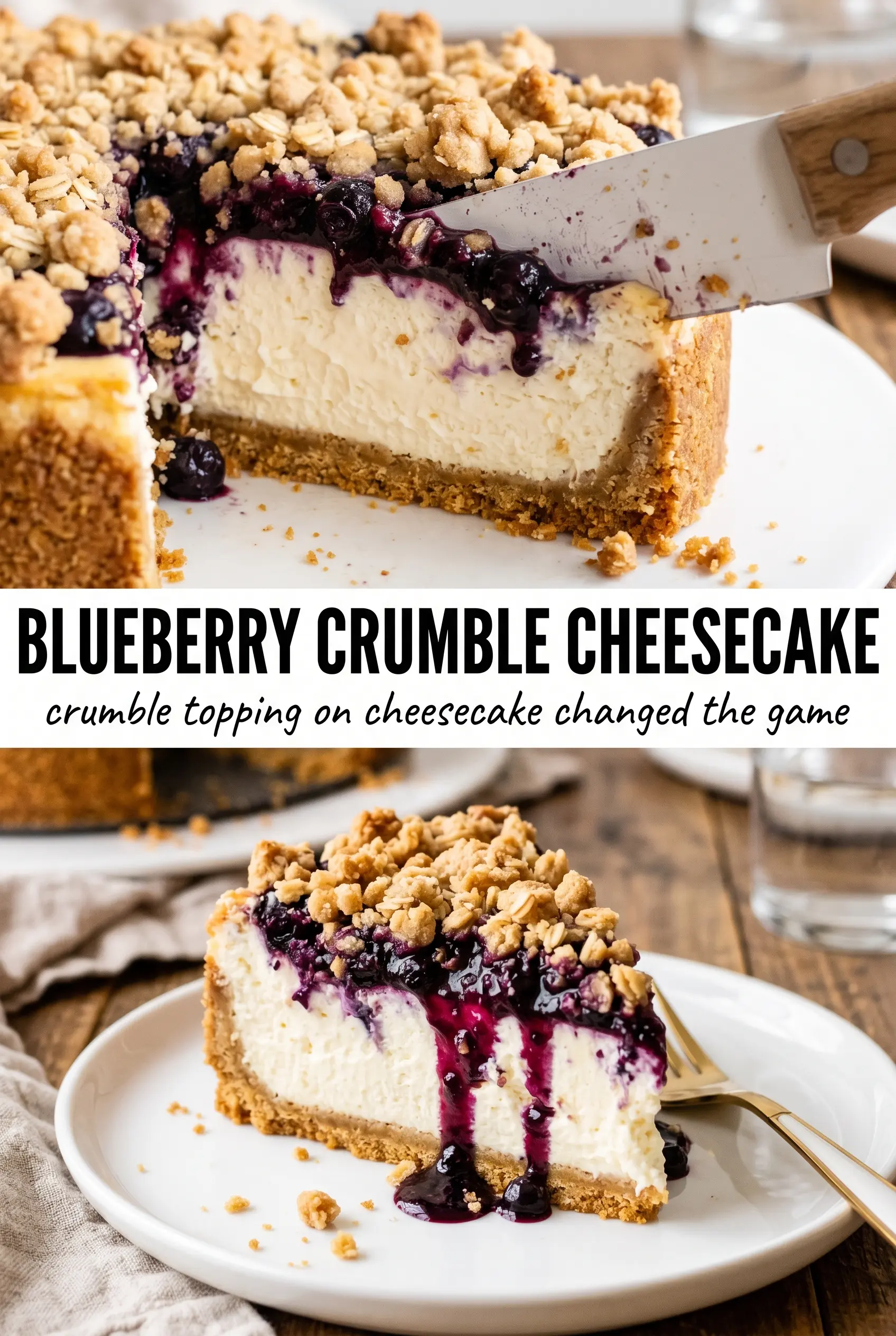
Blueberry Crumble Cheesecake
Ingredients
Equipment
Method
- Preheat the oven to 325°F, then press the graham cracker crumbs crust into a 9-inch springform pan and bake for 8 minutes.
- Let the crust cool completely.
- Beat the softened cream cheese and granulated sugar until smooth, then add the eggs one at a time, mixing after each addition.
- Mix in the sour cream, vanilla extract, and lemon zest until fully combined, then pour the batter over the cooled crust.
- Combine the fresh blueberries, sugar, cornstarch, and lemon juice, then spoon the mixture over the cheesecake batter.
- Mix the rolled oats, all-purpose flour, and brown sugar, then rub in the cold butter cubes with fingertips until clumpy.
- Scatter the oat crumble evenly over the blueberry layer.
- Bake in a water bath at 325°F for 55-65 minutes, until the center barely jiggles.
- Cool in the oven with the door cracked for 1 hour.
- Refrigerate at least 4 hours to fully set the cheesecake.
- Unmold the cheesecake and serve.