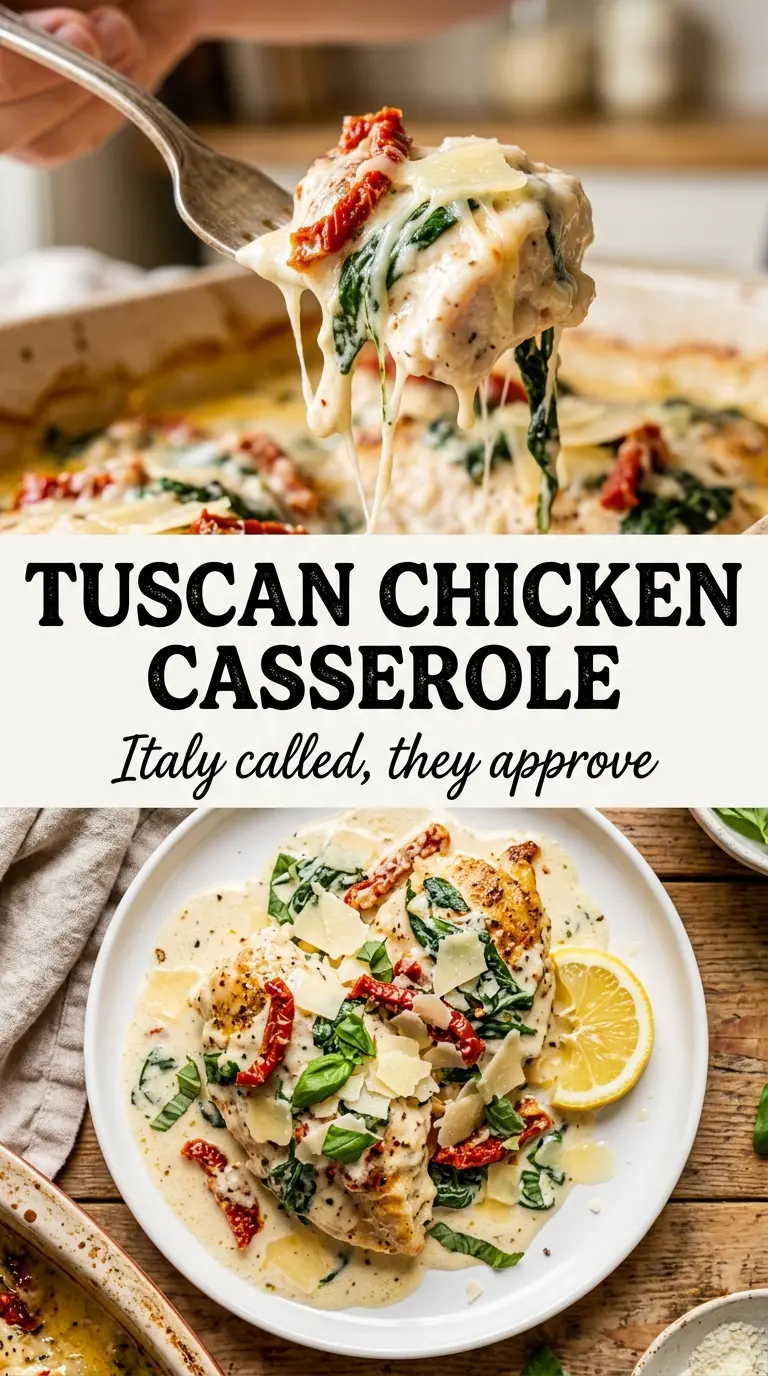
Baked Tuscan chicken casserole lands on the table with crackling golden skin, a creamy sun-dried tomato sauce, and spinach that melts right into the pan in the best way. The chicken braises just enough in the oven to stay juicy while the top stays bronzed, and the sauce turns silky instead of thin or greasy.
The trick is starting with bone-in, skin-on thighs and giving them a real sear before the casserole goes into the oven. That step renders the fat, builds flavor in the pan, and keeps the chicken from steaming in the cream sauce. The sun-dried tomatoes bring a concentrated tang, while a modest amount of Parmesan thickens the sauce without turning it pasty.
Below, I’ll walk through the part that matters most: how to keep the sauce smooth, when to add the spinach so it stays bright, and what to change if you want to make this with boneless chicken instead.
The chicken skin stayed crisp even after baking, and the sauce thickened into this glossy, spoon-coating cream with the sun-dried tomatoes and spinach folded right in. I served it over pasta and my husband asked if there was enough for lunch tomorrow.
Save this baked Tuscan chicken casserole for the night you want golden skin, a silky Parmesan sauce, and dinner in one pan.
The Reason the Sauce Stays Creamy Instead of Splitting
Most casseroles go wrong when the dairy gets blasted with high heat before the pan has a chance to cool down from the sear. Here, the broth deglazes the pan first, which loosens all those browned bits and drops the temperature just enough before the cream and Parmesan go in. That keeps the sauce smooth and glossy instead of grainy.
The other small but important detail is leaving the chicken skin-side up for the oven. The skin stays exposed, so it has a chance to stay crisp while the sauce bubbles underneath. If you tuck the chicken too deeply into the liquid, the top goes soft fast and you lose the contrast that makes this dish worth making.
What Each Ingredient Is Actually Doing in This Casserole
- Bone-in, skin-on chicken thighs — These give you the best insurance against dry chicken. The bones help hold onto moisture, and the skin renders into flavor that coats the sauce. Boneless thighs will work, but they cook faster and won’t give you the same rich pan juices.
- Sun-dried tomatoes in oil — These bring concentrated tomato flavor that fresh tomatoes can’t match here. Drain them before slicing so the sauce doesn’t turn oily, but keep some of the seasoning clinging to them if your jarred tomatoes are well flavored.
- Chicken broth — This is the liquid that turns the skillet drippings into a real sauce. Stock works too, but broth is usually a touch saltier and keeps the dish balanced without needing extra seasoning later.
- Heavy cream and Parmesan — The cream gives the sauce body; the Parmesan thickens and seasons it. Grate the cheese yourself if you can, because pre-shredded Parmesan often contains starches that can make the sauce less silky.
- Baby spinach — Spinach wilts in seconds and adds freshness without weighing the sauce down. Add it at the end so it stays green and doesn’t disappear into the cream.
Building the Casserole So the Chicken Stays Juicy
Seasoning the Chicken Thoroughly
Coat the thighs well with salt, pepper, garlic powder, Italian seasoning, and smoked paprika before they hit the pan. The seasoning needs to go on the chicken itself, not just into the sauce, or the meat tastes flat under all that cream. Let the thighs sit while the oven heats if you have time; even ten minutes helps the salt start working into the meat.
Getting a Deep Sear on the Skin
Place the thighs skin-side down in hot olive oil and leave them alone until the skin is deeply golden and releases easily from the pan. If you try to flip too early, the skin will stick and tear, and you’ll lose the crisp layer that carries the whole dish. The goal is rendered, bronzed skin, not pale chicken with a little color around the edges.
Making the Sauce in the Same Pan
After the chicken comes out, add the garlic and sun-dried tomatoes to the same pan for just a minute. Then pour in the broth and scrape the bottom well; those browned bits are the backbone of the sauce. Stir in the cream and Parmesan over gentle heat. If the pan is too hot, the cheese can clump and the sauce can separate, so keep it at a low simmer.
Finishing in the Oven
Return the chicken skin-side up and bake uncovered until the thighs hit 165°F and the sauce is bubbling around the edges. Uncovered baking matters here because it keeps the skin from going rubbery. Stir in the spinach after the chicken is done so it wilts from the residual heat without overcooking.
How to Adapt This Baked Tuscan Chicken Casserole Without Losing What Makes It Good
Boneless Chicken Thighs or Breasts
Boneless thighs cook faster and stay forgiving, while breasts give you a leaner result but need closer attention so they don’t dry out. Pull them from the oven as soon as they reach temperature, and don’t let them sit in the sauce too long before serving.
Dairy-Free Version
Use full-fat canned coconut milk in place of the cream and skip the Parmesan or add a dairy-free hard-style cheese at the end. The sauce will be a little less sharp and a little more rounded, but it still turns creamy and holds up well with the tomatoes and spinach.
Gluten-Free Dinner
This dish is naturally gluten-free as written if your broth is gluten-free. The one thing to double-check is the seasoning blend, since some pre-mixed Italian seasonings contain anti-caking additives or fillers depending on the brand.
Storage and Reheating
- Refrigerator: Store leftovers in an airtight container for up to 4 days. The sauce thickens as it chills, which is normal.
- Freezer: It freezes, but the cream sauce may separate a bit when thawed. For the best texture, freeze the chicken and sauce together for up to 2 months, then thaw slowly in the fridge.
- Reheating: Warm covered in a 325°F oven or gently on the stovetop with a splash of broth. High heat is what breaks the sauce, so reheat slowly and stir only until it loosens again.
Answers to the Questions Worth Asking

Baked Tuscan Chicken Casserole
Ingredients
Equipment
Method
- Preheat the oven to 400°F and place a rack in the center. Season the chicken thighs with salt, pepper, garlic powder, Italian seasoning, and smoked paprika.
- Heat the olive oil in a large oven-safe skillet or braiser over medium-high heat. Sear the chicken skin-side down for 6-7 minutes until deeply golden.
- Flip the chicken and sear for 3 more minutes to set the color. Remove the chicken to a plate.
- In the same pan, cook the garlic and sun-dried tomatoes for 1 minute. Pour in the chicken broth and deglaze, stirring to lift browned bits.
- Stir in the heavy cream, Parmesan, Italian seasoning, and red pepper flakes until the sauce looks smooth and thickening. Keep it at a gentle simmer so the cheese melts evenly.
- Return the chicken to the pan skin-side up, nestling it into the sauce. Bake uncovered at 400°F for 20-22 minutes until the chicken reaches 165°F.
- Stir the baby spinach into the hot sauce until wilted. Garnish with fresh basil and serve right away.