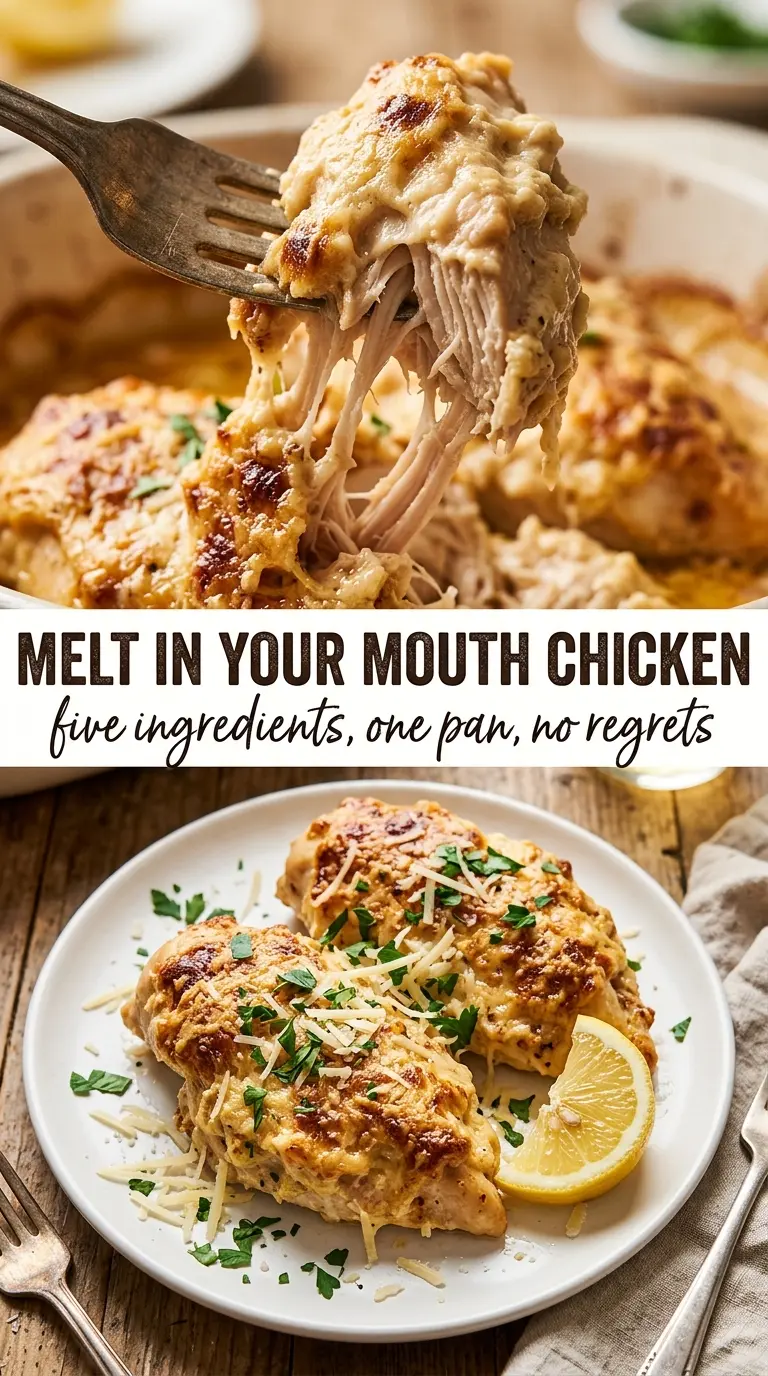
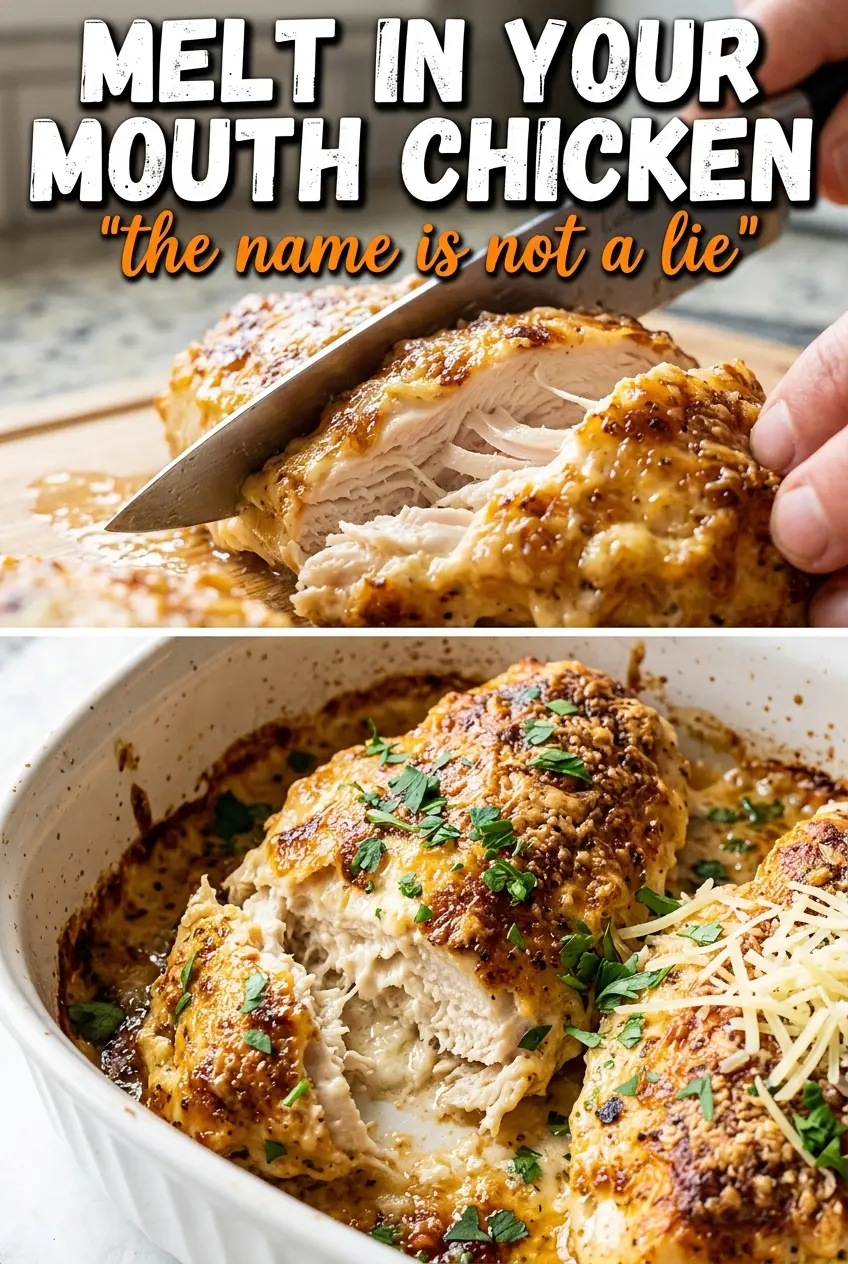
Melt In Your Mouth Chicken earns its name the second you cut into it. The topping bakes into a golden, savory crust that keeps the chicken breast underneath tender and moist, not dry and stringy the way baked chicken can sometimes turn out. The edges get a little crisp, the center stays juicy, and the whole thing lands somewhere between comfort food and a dinner you’d happily serve to guests.
The trick is the mayo-Parmesan mixture. Mayonnaise acts like a built-in moisture shield, while the cheese melts and browns into a crust that clings to the chicken instead of sliding off. A little lemon juice keeps the richness from feeling heavy, and the garlic powder, onion powder, and smoked paprika give the topping enough backbone that you don’t need a long marinade or extra sauce.
Below, I’ll walk through the part that matters most: how thick to spread the topping, what the crust should look like when it’s done, and how to adapt it if you want a lighter version or need to work with what’s already in your fridge.
The topping browned beautifully and stayed on the chicken instead of running all over the pan. My chicken breasts were done in right about 28 minutes and came out so juicy that I didn’t even need gravy.
Golden Parmesan mayo chicken is worth pinning for those nights when you want juicy baked chicken with almost no prep and a crust that actually stays put.
The Topping Needs to Stay Thick, Not Runny
The biggest mistake with this kind of chicken is making the topping too loose. If the mayo mixture is thinned out with extra liquid, it slides off the chicken and puddles in the pan instead of forming that creamy, browned cap. Keep the mix thick enough to spread like frosting. That’s what lets it protect the chicken as it bakes and gives you those savory browned bits on top.
Chicken breast thickness matters too. If one side is much thicker than the other, the thin end overcooks before the center is done. Pounding them to an even thickness, or buying breasts that are already fairly even, gives you the best shot at juicy chicken all the way through. The topping does a lot of the work, but it can’t fix a wildly uneven piece of chicken.
What Each Ingredient Is Actually Doing in the Dish
- Mayonnaise — This is what keeps the chicken moist and helps the topping brown without drying out. Full-fat mayo works best because it has enough body to stay put and enough fat to carry the cheese and seasonings. Light mayo can work in a pinch, but the crust won’t be quite as rich or stable.
- Freshly grated Parmesan — This gives the topping its salty bite and helps it bake into a real crust. Pre-grated Parmesan usually has anti-caking agents that keep it from melting as smoothly, so freshly grated is worth it here. If you only have the shelf-stable kind, use it, but expect a drier, less cohesive topping.
- Lemon juice — Just a tablespoon is enough to cut through the richness and brighten the whole dish. Don’t skip it unless you have to; the chicken can taste flat without that small hit of acid. Bottled lemon juice works in a pinch, though fresh has a cleaner finish.
- Smoked paprika, garlic powder, and onion powder — These season the topping from the inside out, so the chicken doesn’t rely on salt alone. Smoked paprika adds depth without making it spicy. If you only have sweet paprika, use it, but you’ll lose that subtle smoky edge.
Baking It Hot Enough to Brown, Not Dry Out
Building the Parmesan Mayo Mixture
Mix the mayonnaise, Parmesan, garlic powder, onion powder, smoked paprika, and lemon juice until the topping looks smooth and spreadable. It should hold its shape on the spoon, not pour. If it seems greasy or separated, the cheese was probably added too fast; keep stirring and it will come together as the Parmesan hydrates. Season the chicken lightly before adding the topping, because the crust needs a little salt underneath to season the meat itself.
Covering the Chicken Evenly
Spoon the mixture over the top of each breast and spread it all the way to the edges. A generous layer is the point here — too little topping bakes up patchy and doesn’t protect the meat well enough. You want an even, thick coat that looks a little messy going into the oven. It settles as it bakes, and the parts that look overdone at first are usually the ones that turn into the best crust.
Watching for the Right Finish
Bake until the topping is deeply golden, bubbling at the edges, and the chicken reaches 165°F in the thickest part. If the top browns before the chicken is done, cover the dish loosely with foil for the last few minutes. The most common mistake is pulling it when the center still looks a little pink under the crust but the thermometer hasn’t reached temp yet. Let the temperature guide you, not the color alone.
How to Adapt This for Different Tables and Pantry Shelves
Dairy-Free Version with a Different Kind of Richness
Use a dairy-free mayonnaise and replace the Parmesan with a dairy-free hard cheese alternative that grates finely. The crust won’t be quite as nutty, but you’ll still get a thick, savory topping that protects the chicken. Choose an alternative that melts rather than one that stays chalky, or the topping will bake up grainy.
For Thighs Instead of Breasts
Boneless skinless chicken thighs work well if you want a richer, more forgiving cut. They usually need a few extra minutes in the oven, and the finished dish will be juicier and a little less lean. Keep the topping amount the same, but check for doneness at the thickest part rather than relying on the clock.
Gluten-Free by Default
This recipe is naturally gluten-free as written, which makes it an easy main dish when you need something simple that still feels complete. Just check the labels on your Parmesan and spices if you’re cooking for someone with celiac disease, since seasoning blends can sometimes hide fillers. The method doesn’t need any adjustment.
Lower-Fat, But Still Tender
You can swap in a lighter mayonnaise, but the topping will be less plush and won’t brown quite as deeply. If you go this route, watch the chicken closely and don’t overbake it, because the lower fat content gives you less insurance against dryness. The flavor stays similar, just with a lighter finish.
Storage and Reheating
- Refrigerator: Store leftovers in an airtight container for up to 3 days. The crust softens as it sits, but the chicken stays moist.
- Freezer: It freezes, though the topping loses some of its texture after thawing. Wrap portions tightly and freeze for up to 2 months for the best result.
- Reheating: Warm in a 325°F oven, covered loosely with foil, until heated through. The biggest mistake is blasting it in the microwave, which makes the topping oily and the chicken rubbery.
Questions I Get Asked About This Recipe
Melt In Your Mouth Chicken
Ingredients
Equipment
Method
- Preheat the oven to 375°F and grease a 9x13 baking dish.
- Season the chicken breasts lightly with salt and pepper, then place them in the prepared dish.
- Mix together the mayonnaise, Parmesan, garlic powder, onion powder, smoked paprika, and lemon juice until smooth.
- Spread the Parmesan mayonnaise mixture generously over the top of each chicken breast, covering completely.
- Bake at 375°F for 25-30 minutes until the topping is golden and bubbly and the internal temperature reaches 165°F.
- Garnish with fresh parsley and serve immediately.