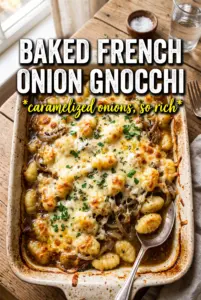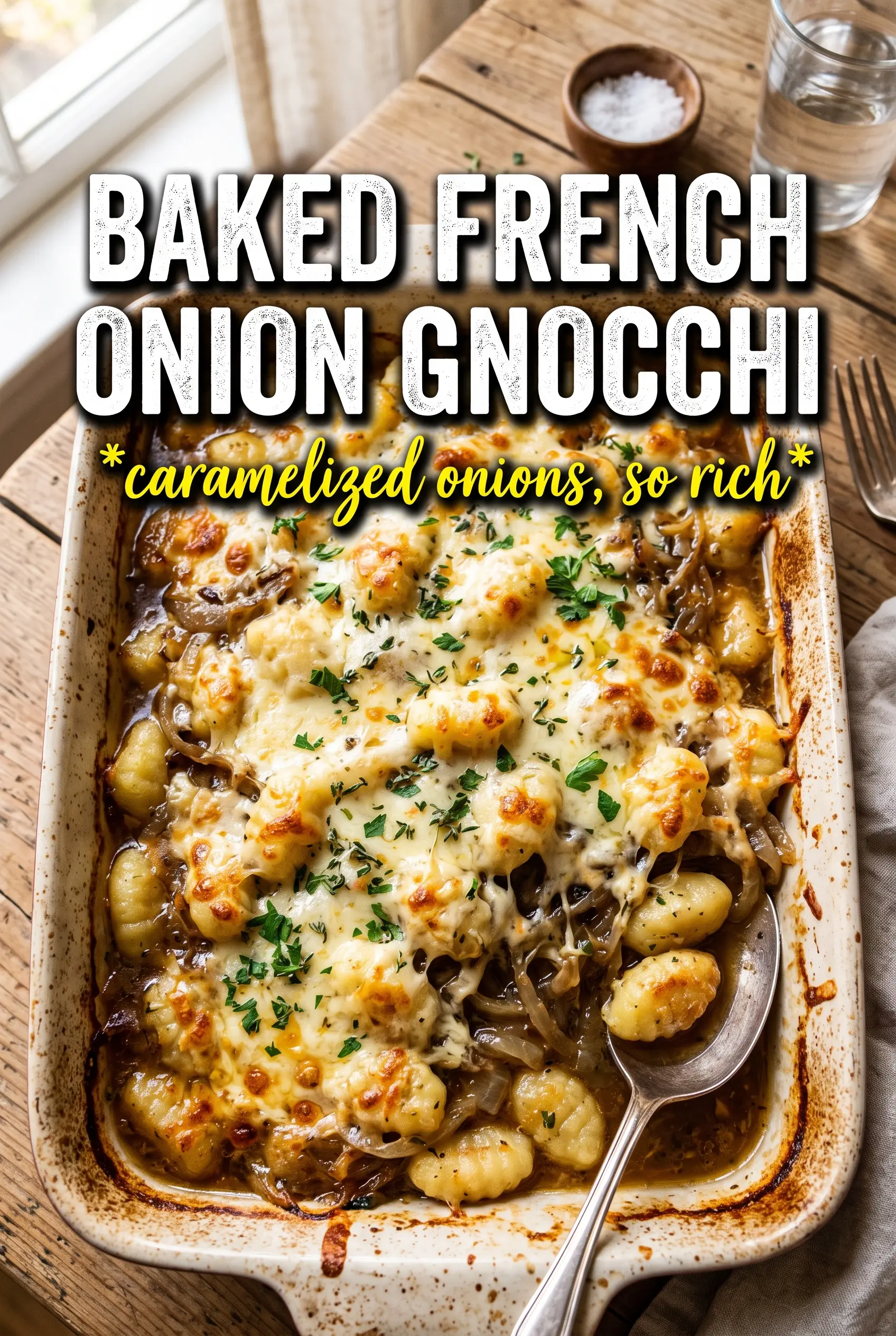
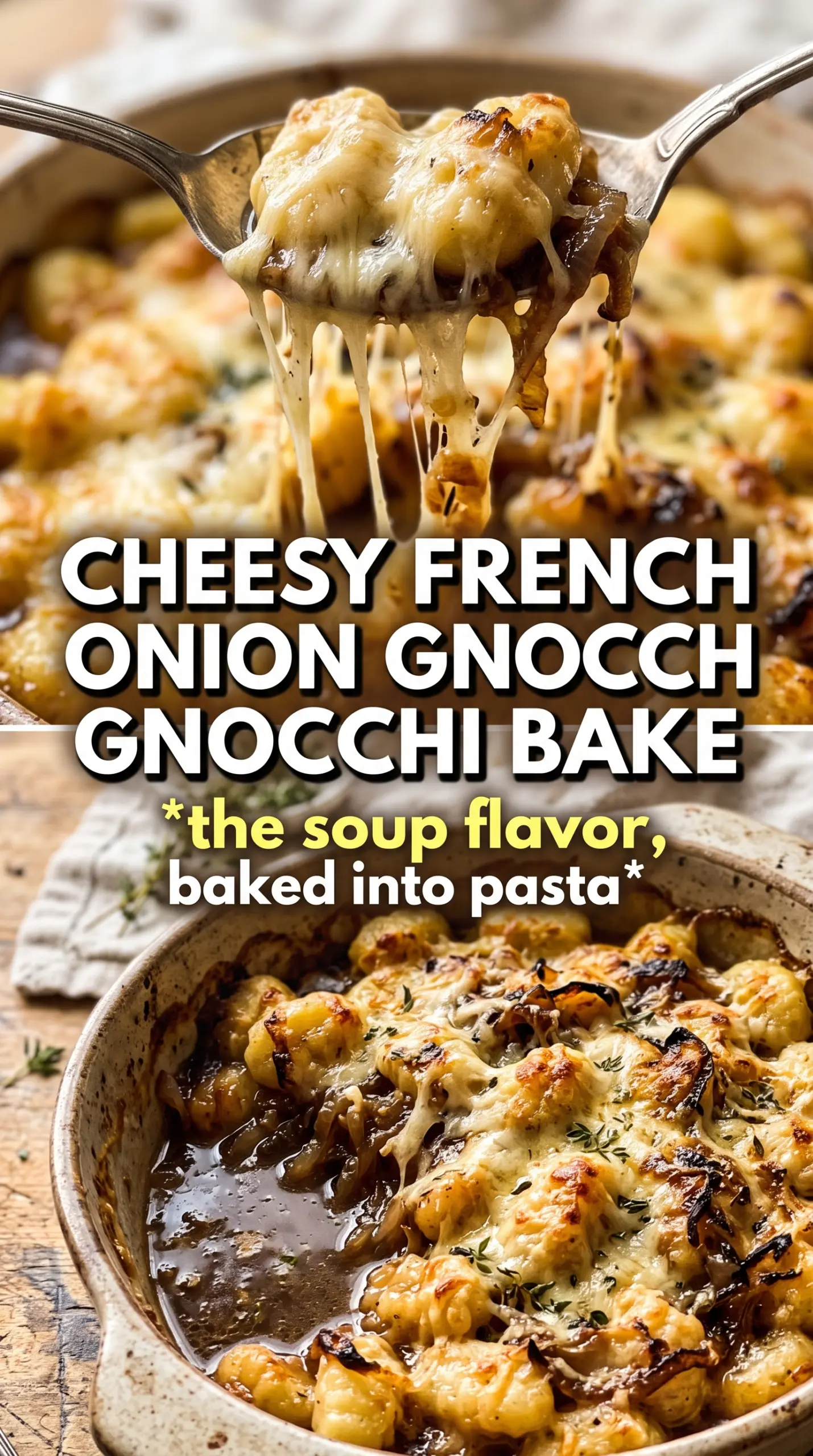
Baked French onion gnocchi lands in the bowl with everything people love about French onion soup, only heartier and more satisfying. The onions turn jammy and sweet, the broth gets rich and savory, and the gnocchi puff just enough in the oven to hold onto all that sauce. Then the Gruyere melts into a golden cap that cracks slightly on top and goes stretchy underneath.
The part that makes this work is patience with the onions. They need time over medium-low heat until they lose their raw edge, turn deeply browned, and collapse into a soft base for the whole dish. After that, the wine lifts the browned bits off the pan, and the cream smooths out the broth without dulling the flavor. Uncooked gnocchi go straight into the sauce so they absorb it as they bake instead of tasting separate from it.
Below, I’ve included the little details that keep the sauce from tasting flat or the topping from overbrowning before the gnocchi are done. If you’ve ever wanted French onion soup to eat like a full meal, this is the one to make.
The onions cooked down into the sweetest, richest base, and the gnocchi came out tender without turning mushy. I broiled it for the last couple minutes and got that perfect Gruyere crust on top.
Baked French onion gnocchi with that golden Gruyere top is the kind of one-pan dinner worth pinning for later.
The Part Most People Rush: Turning the Onions Sweet Without Burning Them
Deep caramelization is what gives this dish its French onion character, and it can’t be hurried without losing the whole point. If the onions are cooked too fast, they brown on the outside before the natural sugars fully develop, and the finished sauce tastes sharp instead of mellow. Keep the heat at medium-low and let the pan do the work. Stir often enough to keep the edges from scorching, but not so much that the onions never get a chance to sit against the pan and pick up color.
You’re looking for onions that have collapsed, turned glossy, and taken on a deep amber color with a few darker bits around the edges. Those dark spots are where the flavor lives, but blackened specks mean the heat was too high. A heavy oven-safe skillet helps because it holds steady heat and gives you more control over the browning.
What Each Ingredient Is Actually Doing in This Dish
- Potato gnocchi — Uncooked gnocchi soak up the sauce as they bake, which is why they taste integrated instead of dropped into the pan at the end. Shelf-stable gnocchi work well here, and fresh gnocchi will also work if they hold their shape in the oven.
- Onions — These are the backbone of the dish, so this is where quality and time matter most. Yellow onions are the best choice because they caramelize beautifully and build sweetness without turning muddy.
- Dry white wine or dry sherry — This loosens the browned bits on the bottom of the pan and adds acidity to keep the sauce from tasting heavy. If you skip the alcohol, use a splash of extra broth with a teaspoon of lemon juice stirred in at the end.
- Gruyere — Gruyere gives you that nutty, stretchy top that fits French onion flavor better than a plain melting cheese. You can use Swiss in a pinch, but the finish will be milder and less complex.
- Beef broth and Worcestershire sauce — Together they create the savory base that makes the dish taste like French onion soup instead of cream sauce with onions. A good broth matters here because the liquid isn’t heavily reduced before baking.
- Heavy cream — This softens the broth and gives the sauce body without making it clingy or gluey. Half-and-half can work, but the sauce will be a little looser and less rich.
Building the Sauce So the Gnocchi Bake Evenly
Caramelizing the Onion Base
Melt the butter with the olive oil, then add the sliced onions and a good pinch of salt. Cook them slowly until they turn deep golden brown and smell sweet, not sharp. If they start to catch too quickly, lower the heat and add a spoonful of water to loosen the browned bits. The pan should have a dark fond on the bottom, but the onions themselves should look soft and jammy, not crispy or fried.
Deglazing Without Losing the Flavor
Pour in the wine or sherry and scrape the bottom of the skillet right away. Those stuck-on browned bits are concentrated flavor, and they need a liquid to dissolve back into the sauce. Let the wine cook for a minute or two until the sharp alcohol smell fades. If you skip this part or rush it, the sauce can taste flat and the onions won’t have that classic French onion depth.
Simmering the Broth and Cream
Stir in the garlic and thyme first, then add the broth, Worcestershire, and cream. Bring everything to a steady simmer, not a hard boil. A boil can make the cream separate and can reduce the liquid too fast before the gnocchi have time to cook. Taste the sauce now and adjust salt and pepper, because once the cheese goes on, it’s harder to correct the seasoning cleanly.
Baking Until the Top Turns Golden
Add the gnocchi straight into the sauce and stir so every piece is coated. Scatter the Gruyere over the top and bake until the sauce bubbles around the edges and the gnocchi are tender in the center. Broil only at the end if you need extra color, and keep a close eye on it because Gruyere can go from golden to burnt in under a minute. The dish is ready when the cheese is deeply melted, the sauce is thickened, and the gnocchi feel pillowy when you spoon through them.
How to Adapt This for a Lighter Pantry or a Different Table
Gluten-Free Version
Use certified gluten-free gnocchi and check that your broth and Worcestershire sauce are gluten-free. The texture and flavor stay close to the original, but the sauce still needs the same slow onion treatment to taste full and rounded.
Dairy-Free Version
Swap the butter for dairy-free butter, replace the cream with unsweetened oat cream or cashew cream, and use a dairy-free melty cheese on top. You’ll lose a little of Gruyere’s nutty richness, but the onion and broth base still carries the dish well.
Vegetarian Version
Use vegetable broth and swap the Worcestershire for a vegetarian version or a small splash of soy sauce plus balsamic. The result is a little less meaty, but still deeply savory and balanced.
Make-Ahead Timing
You can caramelize the onions a day or two ahead and refrigerate them, which cuts the active time almost in half. Assemble and bake just before serving so the gnocchi go into the oven at the right texture and don’t absorb too much liquid while sitting.
Storage and Reheating
- Refrigerator: Store leftovers in an airtight container for up to 3 days. The gnocchi will soften a bit more as they sit, but the flavor holds up well.
- Freezer: This dish freezes, but the cream sauce and gnocchi both change texture a little after thawing. Freeze in portions if you want, and expect a softer finish when reheated.
- Reheating: Reheat covered in a 350F oven until hot, adding a splash of broth if the sauce has tightened up. The mistake to avoid is blasting it in the microwave, which can make the gnocchi rubbery and the sauce separate.