Juicy baked chicken breasts need more than a hot oven and a timer. The difference between dry, stringy chicken and a dinner you’ll actually want to make again comes down to even thickness, a light oil coating, and a short roast at high heat. Done right, the outside turns deeply golden and fragrant while the center stays tender enough to slice cleanly without losing its juices.
This version leans on a simple herb and spice rub that gives the chicken a proper crust without turning it muddy or burnt. The chicken bakes fast enough for a weeknight, but the method still respects the two things that matter most: uniform shape and temperature. If one breast is thicker than the rest, it will always finish late and push the others past their best texture, so that quick pound-down step earns its place here.
Below, I’ll walk through the small details that keep baked chicken breasts moist, plus a few ways to change the seasoning without wrecking the result. There’s also a storage note worth knowing if you like to cook once and eat twice.
I finally got chicken breasts that stayed juicy all the way through. Pounding them to the same thickness and pulling them at 165 made the biggest difference, and the herb crust came out golden instead of bland.
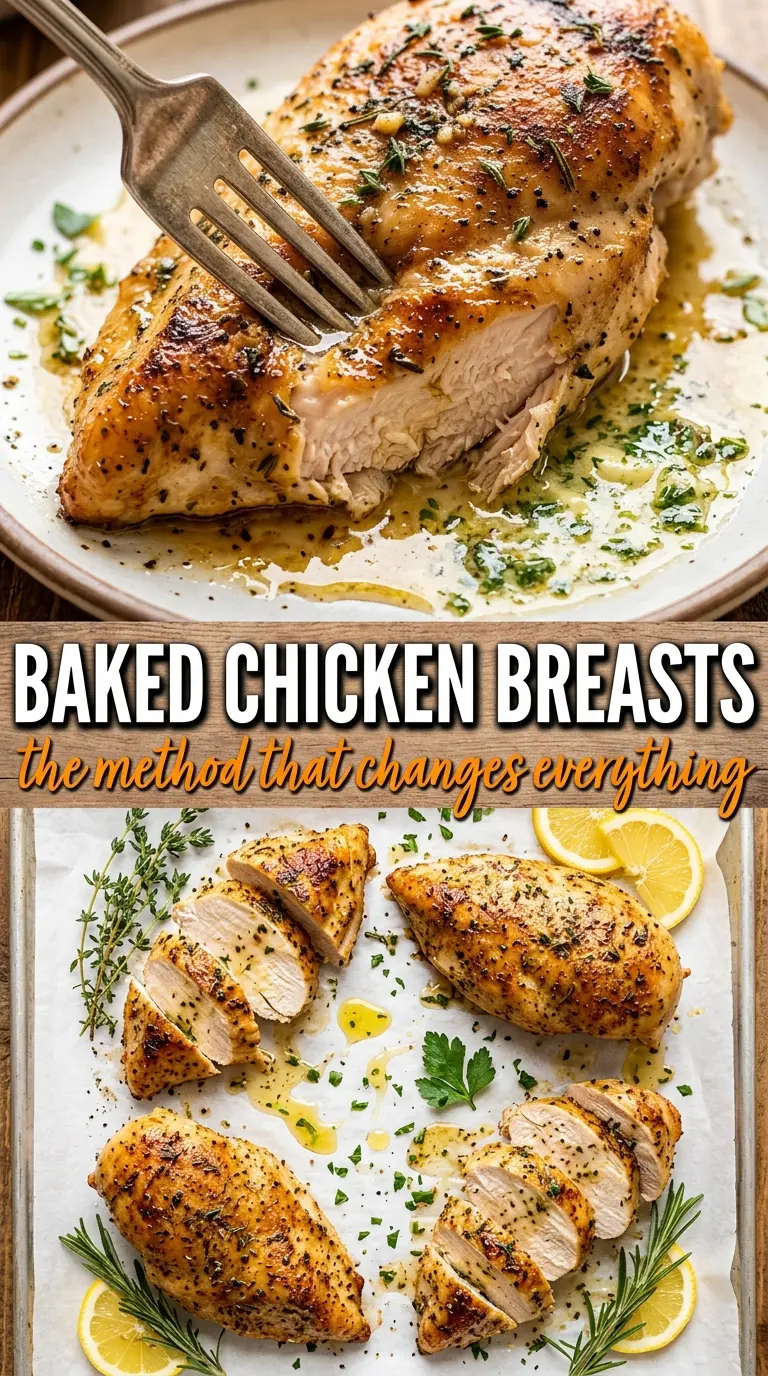
Save these baked chicken breasts for the nights when you want juicy meat, a caramelized herb crust, and dinner on the table fast.
The Mistake That Turns Baked Chicken Breasts Dry
The biggest problem with baked chicken breasts isn’t the oven. It’s uneven thickness. A thick end needs a lot more time than the tapered end, and by the time the center finishes, the thin side is already tight and dry. Pounding the breasts to an even 3/4-inch thickness gives you one cooking target instead of four different ones, which is why this method works so reliably.
The second mistake is chasing color for too long. Chicken breasts need enough heat to brown the spice rub, but they don’t need a long roast. The moment the internal temperature hits 165°F, pull them out and let them rest. That short rest matters because the juices settle back into the meat instead of running onto the cutting board.
What the Seasoning Rub Is Doing Here
- Olive oil — This helps the spices stick and encourages the top to brown instead of drying out. You can use a neutral oil if that’s what you have, but olive oil gives the crust a better finish and a little more flavor.
- Garlic powder and onion powder — These build a savory base without adding moisture. Fresh garlic is a bad swap here because it can scorch before the chicken is done.
- Smoked paprika — This adds color and a gentle smoky note that makes the chicken taste seasoned all the way through. Regular paprika works, but you’ll lose some depth.
- Italian seasoning — This brings the herb side of the crust together. If your blend is salt-free, that’s ideal, because it keeps the seasoning balanced and easier to control.
- Chicken breasts — Boneless, skinless breasts are what make this such a fast oven dinner, but they need attention. If they’re very large, slice them horizontally after pounding or expect them to take the full upper end of the bake time.
Getting the Oven-Baked Chicken to Stay Juicy
Start With Even Thickness
Place the chicken between two pieces of plastic wrap or inside a zip-top bag and pound the thicker side until the whole breast is about 3/4-inch thick. You’re not trying to flatten it into cutlet territory; you’re just removing the bulky end that cooks slower than everything else. If the chicken tears a little at the edges, it’s fine. What matters is a consistent shape so the oven can finish the whole breast at the same pace.
Coat, Season, and Give the Top a Head Start
Brush the chicken with olive oil on both sides, then rub the seasoning blend over every surface. The oil should leave the chicken glossy, not greasy. Put the breasts into a lightly greased baking dish with a little space between them so they roast instead of steam. If they’re crowded together, the seasoning softens and the top stays pale.
Watch for Color, Then Check Temperature
Bake at 425°F for 18 to 22 minutes, but use the color and thermometer together. The tops should look golden and the edges should start to brown, while the center still feels plump, not shrunken. The reliable sign is 165°F in the thickest part of the breast. If you keep going past that point, the chicken tightens fast, and there’s no seasoning trick that can fix overbaked meat.
Let the Juices Settle Before Slicing
Rest the chicken for 5 minutes after it comes out of the oven. This is the part people skip, then wonder why the cutting board fills up with juice. During the rest, the fibers relax and the moisture redistributes, which is what gives you that clean, juicy slice instead of a dry, crumbly one. Finish with parsley and a squeeze of lemon if you want the crust to taste a little brighter.
How to Adapt These Baked Chicken Breasts Without Losing the Juiciness
Dairy-Free and Naturally Gluten-Free
This recipe already fits both. The seasoning blend doesn’t rely on flour or cheese, so the crust comes from spice and oil alone. That means the texture stays clean and the chicken still browns well without any special ingredients.
Use Chicken Thighs Instead
Boneless skinless thighs work if you want a richer, more forgiving result. They usually need a few extra minutes in the oven, and they won’t dry out as quickly if you go a little long. The tradeoff is less clean slicing and a softer crust.
Swap the Herb Blend
If you don’t have Italian seasoning, use dried thyme, oregano, and a pinch of basil. That keeps the herb note balanced without turning the chicken into a generic spice blend. Avoid loading on fresh herbs before baking, since they can darken and taste muted by the time the chicken is done.
Storage and Reheating
- Refrigerator: Store for up to 4 days in an airtight container. The crust softens a little, but the chicken stays useful for slicing onto salads, rice bowls, or sandwiches.
- Freezer: It freezes well for up to 2 months if wrapped tightly and sealed after cooling. Slice it before freezing if you want faster reheating later.
- Reheating: Warm gently in a covered dish at 300°F with a spoonful of broth or water, or reheat slices in a skillet over low heat. High heat dries out the edges before the center warms through, which is the mistake that ruins leftover chicken most often.
Answers to the Questions Worth Asking

Baked Chicken Breasts
Ingredients
Equipment
Method
- Preheat the oven to 425°F and lightly grease a baking dish or sheet pan with a thin film of oil.
- Pound the chicken breasts to an even 3/4-inch thickness if they vary in size, for consistent cooking.
- Brush both sides of each chicken breast with olive oil.
- Mix garlic powder, onion powder, smoked paprika, Italian seasoning, salt, and cracked black pepper, then rub the seasoning evenly over both sides of the chicken (a well-coated surface should be visible).
- Bake at 425°F for 18–22 minutes, until the internal temperature reaches 165°F and the tops look golden; avoid overbaking (no pale tops).
- Rest the chicken for 5 minutes before slicing so the juices redistribute.
- Garnish with fresh parsley and lemon wedges right before serving, then slice to show a juicy interior.