Golden puff pastry wrapped around baked brie turns into one of those appetizers people hover over before it even hits the table. The crust bakes up flaky and shattering, then gives way to warm, molten cheese with just enough sweet jam and toasted nut crunch to keep every bite moving. It looks polished, tastes indulgent, and disappears fast.
The trick is keeping the brie cold enough to hold its shape while the pastry bakes, then giving the wheel a short rest before serving so the cheese settles from lava-hot to scoopable. A little brown sugar deepens the jam without making it cloying, and the pecans add texture that stops the filling from feeling one-note. Egg wash matters here, too; it gives the pastry that deep, glossy finish that makes the whole thing look bakery-made.
Below, you’ll find the small details that keep the pastry crisp, the cheese molten, and the center from running all over the pan the second you cut into it.
The pastry came out crisp all the way around, and the brie stayed perfectly gooey after that 10-minute rest. I used fig jam and it balanced the saltiness of the cheese so well.
Save this baked brie for the puff pastry crust, molten center, and sweet raspberry jam filling that make it vanish fast.
The Part That Keeps the Brie From Blowing Out
Puff pastry and brie fail in the same place most often: the seam. If the pastry isn’t sealed tightly, the cheese finds the weakest spot and leaks before the crust has a chance to brown. Turning the wrapped brie seam-side down does a lot of the work for you, and that one move keeps the package neat while the oven heat sets the pastry.
Another common mistake is baking until the pastry just looks pale-golden. At that point the center usually hasn’t fully warmed, so the cheese is still tight instead of flowing. You want a deep, even brown on the outside and a short rest after baking, which gives the brie time to relax without turning the whole wheel into a puddle.
What Each Ingredient Is Actually Doing in This Baked Brie
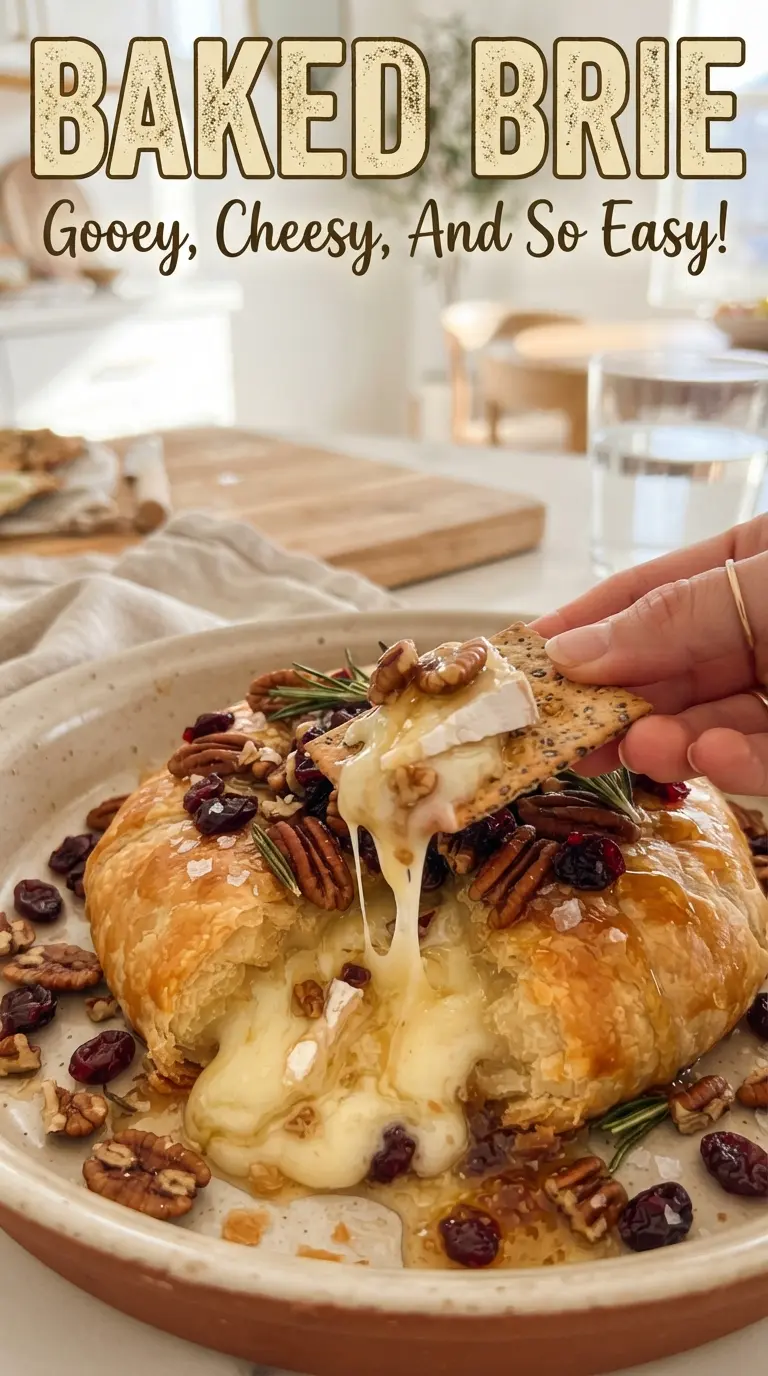
- Puff pastry — This is the structure and the crunch. Thawed but still cool pastry bakes best; if it gets warm and sticky before it goes in the oven, the layers don’t puff as well. Store-bought is the right choice here.
- Brie — An 8-ounce wheel is the sweet spot for this amount of pastry. Leave the rind on; it helps the cheese hold together as it melts and it doesn’t taste strong once baked.
- Jam — Raspberry gives a sharper fruit note, while fig reads deeper and a little more savory. Either one works, but a thick jam is important because thin preserves can run and soften the pastry.
- Pecans and brown sugar — The pecans bring crunch, and the brown sugar nudges the filling toward caramel without turning it into dessert. If you’re out of pecans, chopped walnuts are the closest swap.
- Egg wash — This is what gives the pastry its color and shine. Water alone won’t do the same job, so don’t skip it if you want that glossy finish.
Wrapping, Baking, and Giving the Cheese Time to Set
Preparing the Pastry
Roll the puff pastry just enough to smooth the seams and give yourself a square big enough to wrap around the brie. Keep the dough cold and work quickly; if it warms up too much, it gets sticky and can tear when you fold it. Place the brie in the center and spoon the jam directly over the top so it stays stacked instead of sliding toward the edges.
Sealing the Package
Fold the pastry up and over the cheese, trimming away heavy excess if needed, then press the seams together firmly. The goal is a snug parcel with as few weak spots as possible. Flip it seam-side down onto the baking sheet so gravity helps hold everything closed, then brush the top and sides with egg wash for an even bronze color.
Baking to a Deep Golden Finish
Bake at 400°F until the pastry is deeply golden and the bottom feels crisp, not soft, when you lift the edge with a spatula. If the top looks pale, it isn’t done yet; pale pastry usually means the cheese inside hasn’t had enough time to soften. Let it rest for 10 minutes before cutting, because slicing too early sends the center running across the board instead of oozing in thick ribbons.
Three Ways to Make This Baked Brie Work for Your Table
Go Fig Instead of Raspberry
Fig jam makes the filling deeper and less sharp, which pairs nicely with the creamy brie and toasted pecans. It also tends to be thicker than raspberry, so the center stays neater when you cut into it.
Make It Nut-Free
Leave out the pecans and add a little extra jam if you want the filling to feel more cohesive. You lose the crunch, but the pastry still carries the texture, and the brie remains the star.
Use Gluten-Free Puff Pastry
A good gluten-free puff pastry works here if you keep it cold and bake until fully browned, since underbaked gluten-free dough can taste gummy. The texture won’t puff quite as dramatically, but it still wraps the brie nicely and delivers the same molten center.
Add a Savory Edge
A few chopped rosemary leaves or a small pinch of black pepper makes the brie taste less sweet and more appetizer-like. Use that approach when you plan to serve it with salty crackers and crisp apple slices.
Storage and Reheating
- Refrigerator: Store leftovers covered for up to 3 days. The pastry softens a bit in the fridge, but the flavor holds well.
- Freezer: Freezing isn’t ideal after baking because the brie can separate and the pastry loses its crispness. If you need to get ahead, assemble the wrapped brie unbaked and freeze it tightly wrapped, then bake from partially thawed.
- Reheating: Warm leftovers in a 325°F oven until the center loosens and the pastry crisps back up. The microwave will melt the cheese faster, but it turns the crust soggy, which is the mistake that ruins this dish.
Answers to the Questions Worth Asking
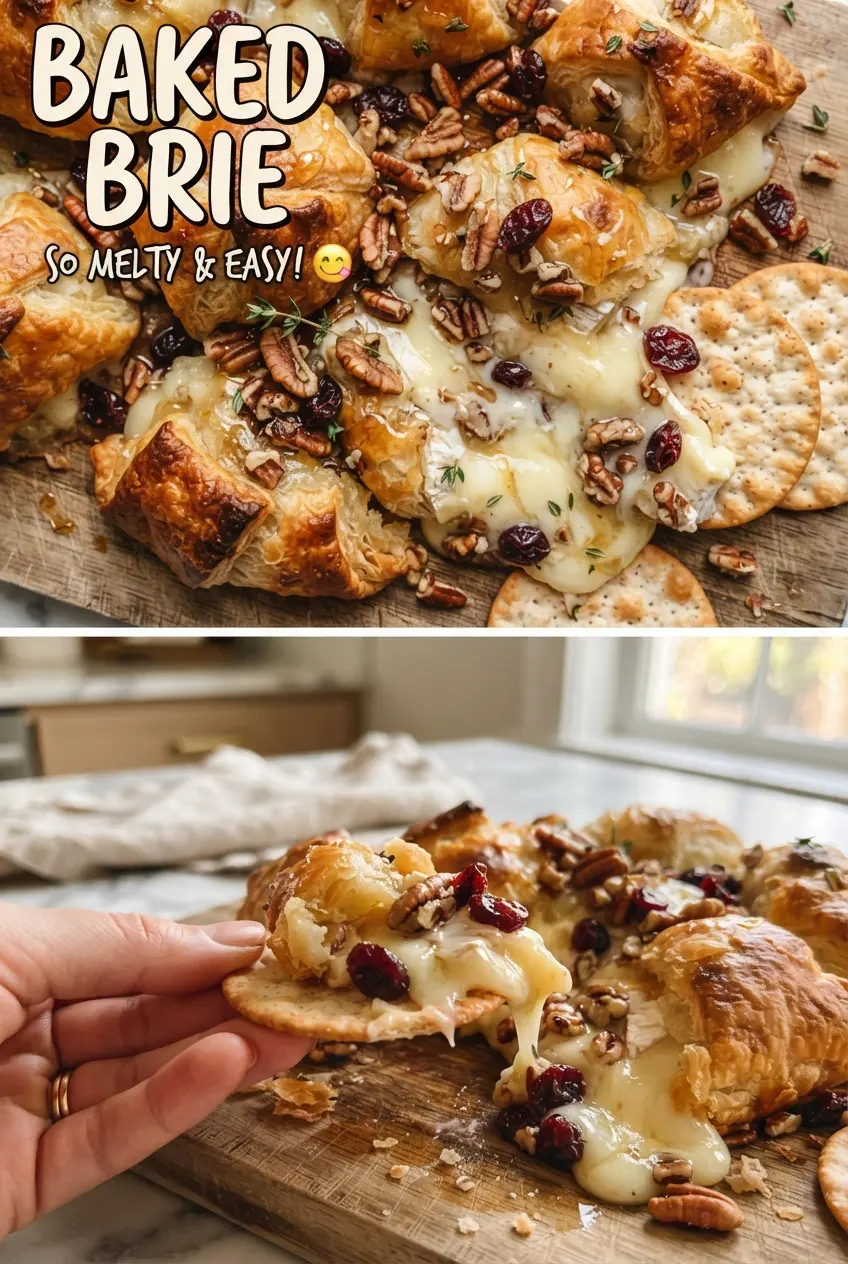
Baked Brie
Ingredients
Equipment
Method
- Preheat oven to 400°F and line a baking sheet with parchment so the brie won’t stick.
- Roll the puff pastry slightly and place the brie in the center, leaving pastry border for folding.
- Spread jam over the brie, then sprinkle with pecans and brown sugar so the filling stays concentrated in the center.
- Fold the pastry up over the brie, trimming excess and pressing seams to seal.
- Flip seam-side down onto the baking sheet, then brush with egg wash for a golden, glossy crust.
- Bake 22-25 minutes at 400°F until deep golden brown so the pastry puffs and crisps around the cheese.
- Rest 10 minutes so the cheese sets slightly, making it easier to scoop and dip without running immediately.
- Garnish with fresh rosemary and serve with crackers and apple slices for contrast in texture and flavor.