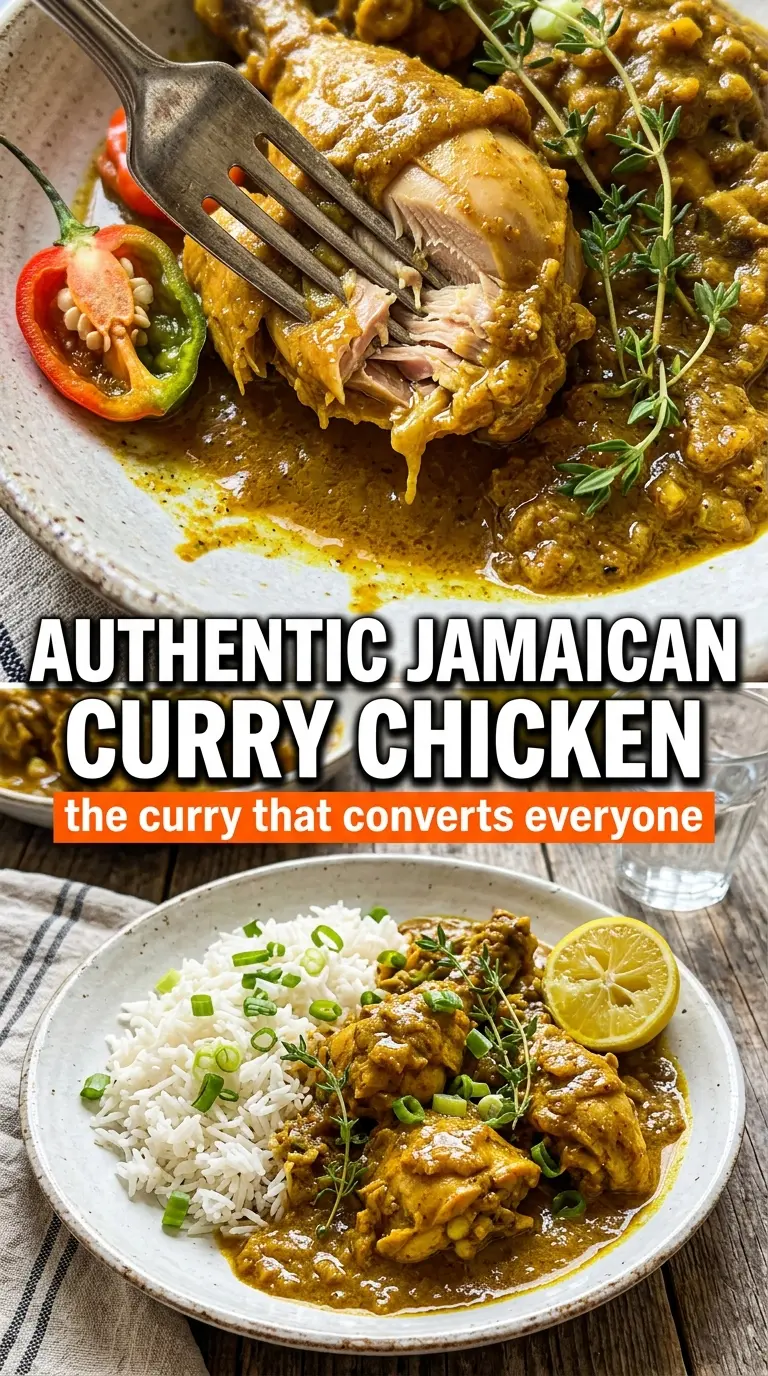
Deep golden Jamaican curry chicken earns its place in the rotation because the sauce turns glossy and thick enough to cling to the meat, while the potatoes soak up all that seasoned broth without falling apart. The chicken comes out tender from the simmer, but the real payoff is the curry base: earthy, fragrant, and built layer by layer instead of dumped together and boiled flat.
This version works because the curry powder gets toasted in the oil before the liquid goes in, which wakes up the spices and gives the sauce its signature color. Browning the chicken first adds another layer of flavor, and keeping the Scotch bonnet whole lets it perfume the pot without taking over the whole dish unless you want it to. The potatoes also do more than fill space — they help thicken the sauce naturally as they cook down a little.
Below, I’ll walk through the points that matter most: how to build a curry that tastes round instead of muddy, which ingredient swaps hold up, and how to keep the heat in check without losing the island-style flavor that makes this dish worth making.
The curry sauce thickened up beautifully and the potatoes held their shape just enough. I kept the Scotch bonnet whole like you said, and the heat came through without drowning everything else out.
Like this curry chicken? Save it to Pinterest for the nights when you want bold Jamaican spice, tender chicken, and a thick sauce for rice and peas.
The Step Most People Skip That Gives Jamaican Curry Its Real Depth
Jamaican curry chicken can taste flat when the spices go straight into liquid. The curry powder needs a minute in the hot oil to bloom, and that short toast changes everything: the color deepens, the aroma opens up, and the finished sauce tastes cooked instead of dusty. If you’ve ever had curry that tasted thin or one-note, this is usually the missing step.
Browning the chicken before the simmer matters for the same reason. You’re building flavor in the pot, not just cooking the meat through. The browned bits left behind mix with the toasted curry powder and onion to form the base of the sauce, so don’t rush that part or crowd the pan until the chicken steams instead of sears.
What Each Ingredient Is Actually Doing in This Pot
- Jamaican curry powder — This is the backbone of the dish, and it’s not the place to swap in a generic curry blend if you want that Jamaican profile. Jamaican curry powder usually has a stronger turmeric-forward color and a different spice balance, which is why the sauce looks deep gold instead of beige.
- Bone-in chicken thighs and drumsticks — Bone-in pieces stay juicier through the long simmer and give the sauce more body than boneless chicken. Thighs are the safest cut here because they stay tender even after the potatoes go soft.
- Scotch bonnet or habanero — Keeping the pepper whole gives you heat and aroma without turning the pot into a fire drill. If you want less heat, leave it whole and remove it early; if you want more, slit it once before it goes in.
- Potatoes — They help thicken the sauce naturally as they simmer, which is part of why this curry eats like a full meal over rice. Starchy potatoes work best; waxy ones can stay too firm and won’t help the sauce the same way.
- Fresh thyme — Use fresh here if you can. Dried thyme works in a pinch, but fresh thyme gives the broth that clean, herbal note that makes the curry taste layered instead of heavy.
- Chicken broth — This is the cooking liquid, so use one that tastes good on its own. A salty or flat broth will show up in the final sauce, since there isn’t much else to hide behind.
Building the Curry Base Without Losing the Sauce
Season and rest the chicken first
Coat the chicken with the curry powder, all-purpose seasoning, garlic powder, onion powder, salt, and black pepper, then let it sit for at least an hour. That rest time gives the spices a chance to cling to the meat instead of washing off in the pot. If you skip the marinating step, the chicken still cooks, but the seasoning stays on the surface and the flavor feels thinner.
Brown the chicken in batches
Heat the oil until it shimmers, then brown the chicken on all sides without overcrowding the pot. You want deep golden patches, not pale gray skin, because that color becomes part of the sauce later. If the pieces steam, lower the heat a bit and work in smaller batches so the pot stays hot enough to sear.
Toast the curry and build the aromatics
After the chicken comes out, add the remaining curry powder and let it bloom in the oil for about a minute. Stir constantly so it doesn’t burn; curry powder can turn bitter fast once the pan is hot and dry. Add the onion next and cook until it softens, then stir in the garlic, thyme, and whole Scotch bonnet before the chicken goes back in.
Simmer until the sauce turns glossy
Pour in the broth and add the potatoes, then bring everything to a boil before lowering the heat to a steady simmer. Cover the pot and cook until the chicken is falling off the bone and the potatoes are tender enough to help thicken the sauce. If the liquid looks too thin at the end, uncover the pot for the last few minutes so it can reduce instead of adding extra flour or cornstarch that muddies the flavor.
How to Adapt This Jamaican Curry Chicken Without Losing the Point
Make it milder without flattening the flavor
Keep the Scotch bonnet whole and remove it after 10 to 15 minutes of simmering. You’ll still get the pepper’s aroma and warmth, but the curry won’t turn sharply hot. If you want almost no heat, use only half a Scotch bonnet and keep it intact the whole time.
Use boneless chicken thighs for a faster dinner
Boneless thighs cut the simmer time a little and make serving easier, but they won’t enrich the sauce the same way bone-in pieces do. Keep the browning step, then start checking for tenderness earlier so the meat doesn’t go dry. The flavor stays strong, just a touch less old-school and rustic.
Make it gluten-free
Use a gluten-free all-purpose seasoning and check your broth label, because those two ingredients are where gluten tends to hide. The rest of the dish already works naturally without flour or thickeners, so nothing else needs to change.
Storage and Reheating
- Refrigerator: Store for up to 4 days. The sauce thickens as it sits, and the curry flavor usually gets even better by day two.
- Freezer: Freezes well for up to 2 months. Cool it fully first, then pack it with a little sauce so the chicken doesn’t dry out when thawed.
- Reheating: Warm it gently on the stove over low heat with a splash of broth or water if needed. High heat can break the sauce and make the chicken tough before the center is hot.
Answers to the Questions Worth Asking
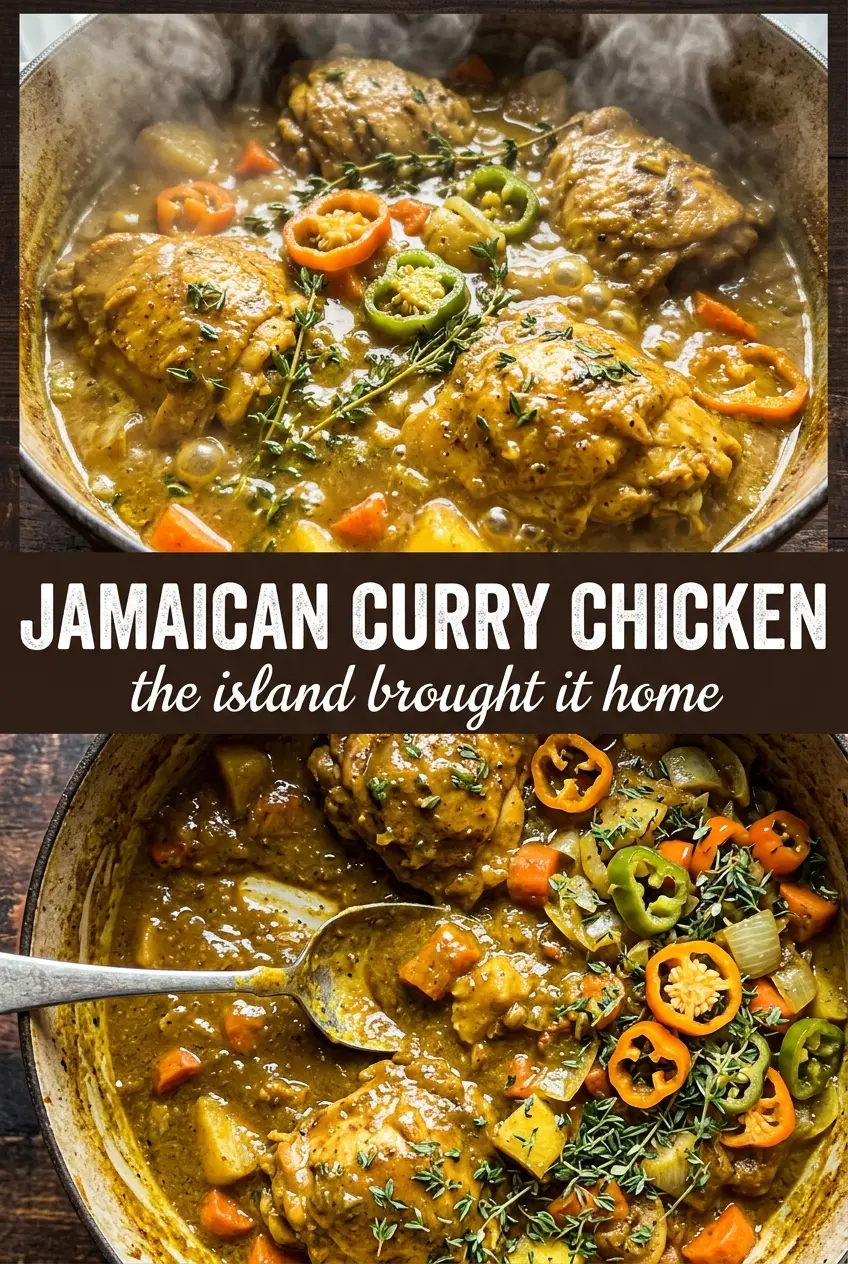
Authentic Jamaican Curry Chicken
Ingredients
Equipment
Method
- Season the chicken with 2 tablespoons Jamaican curry powder, all-purpose seasoning, garlic powder, onion powder, salt, and black pepper, then coat well and marinate for at least 1 hour in the fridge.
- Heat the vegetable oil in a heavy pot over high heat, then brown the chicken in batches on all sides until deeply golden, about 3–5 minutes per batch, and remove to a plate.
- In the same pot, toast the remaining Jamaican curry powder in the oil for 1 minute, stirring constantly until fragrant.
- Add the sliced onion and cook for 4 minutes, stirring, until softened.
- Add the minced garlic, whole Scotch bonnet, and fresh thyme, then cook for 1 minute until aromatic.
- Return the browned chicken to the pot, then add chicken broth and potato cubes.
- Bring to a boil over high heat, then reduce to a gentle simmer and cover.
- Simmer for 35–40 minutes until the chicken is falling off the bone and the sauce has thickened, keeping the heat low enough that it bubbles steadily.
- Remove the whole Scotch bonnet, adjust seasoning to taste, and serve the curry chicken with cooked rice and peas.