Thin-sliced ribeye, caramelized onions, and melted cheese on a toasted hoagie roll hit every note a cheesesteak should: juicy, savory, messy in the best way, and fast enough to make on a griddle without losing that iconic steakhouse feel. The Blackstone gives you the heat and space to cook the onions, peppers, and beef in stages, then bring everything together while the rolls toast right beside it.
What makes this version work is timing. The onions and peppers need enough time to soften and brown before the steak goes down, and the steak itself cooks quickly enough that it stays tender instead of drying out. Ribeye is the right cut here because the fat melts into the meat as it cooks, which gives you that rich, beefy sandwich you expect from a proper Philly-style cheesesteak.
Below, I’ll walk through the little details that keep the meat juicy, the bread from turning soggy, and the cheese exactly where it belongs. There’s also a good swap if you prefer Cheese Whiz, plus a few fixes for the most common cheesesteak mistakes.
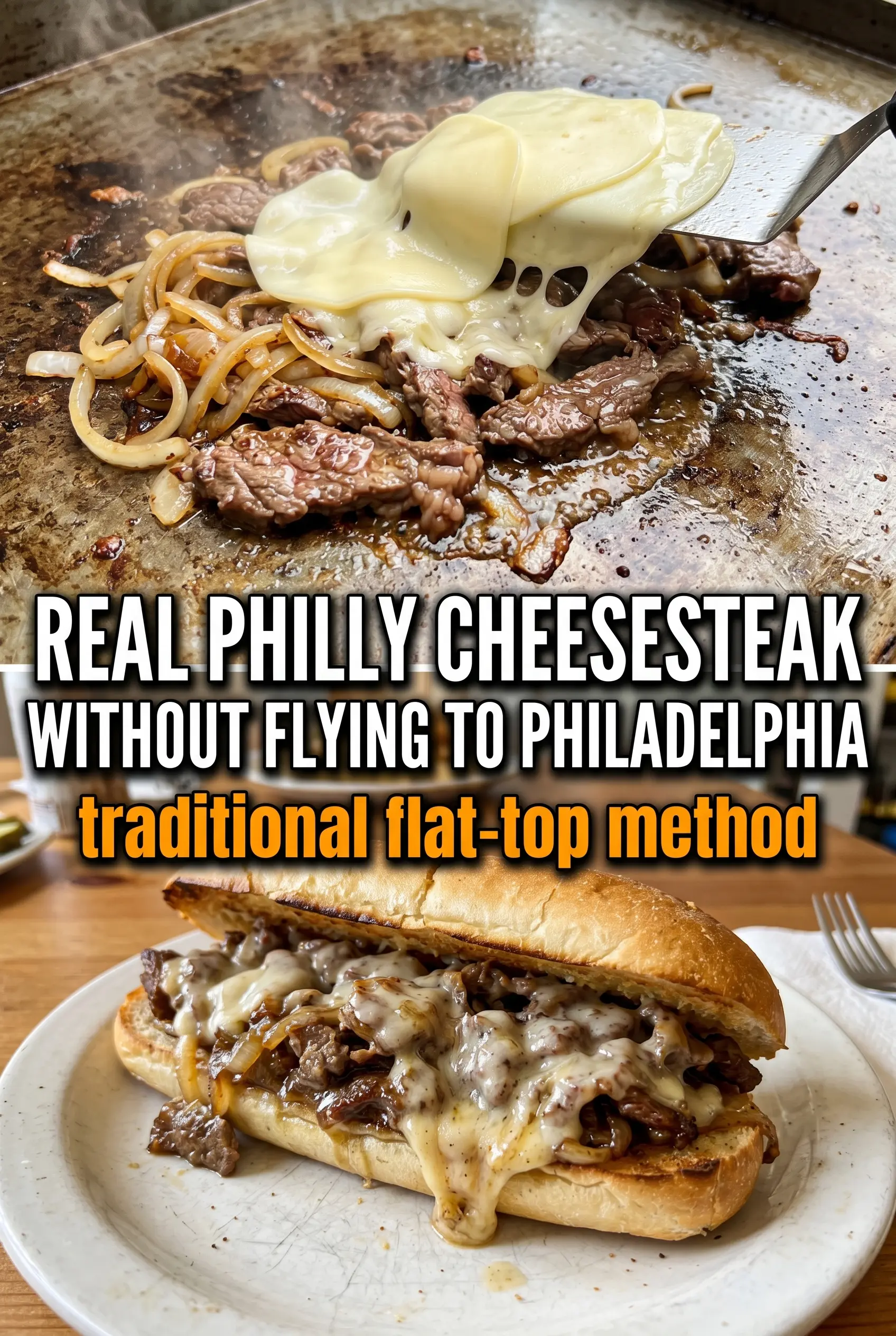
The steak stayed tender, the onions got that sweet browned edge, and the cheese melted right into the meat instead of sliding off. Toasting the rolls on the griddle made the whole sandwich hold together perfectly.
Save this Blackstone Philly Cheesesteak for the nights when you want caramelized onions, melty cheese, and a toasted hoagie in one fast griddle cook.
The Steak Can’t Sit Around Waiting for the Veggies
The biggest mistake with a cheesesteak on a griddle is overcooking the beef while you’re still trying to get the vegetables where you want them. Ribeye cooks fast, and once it’s sliced thin, it only needs a short blast on hot metal. If you cook the steak too early and let it hang out, it loses juice and the texture goes from tender to tired.
That’s why the onions and peppers start first. They need those extra minutes to soften, lose their raw edge, and pick up some color before the steak goes in. Once the meat hits the griddle, everything moves quickly, and the sandwich comes together best when you already have the rolls ready and the cheese within reach.
What Each Ingredient Is Actually Doing in This Cheesesteak
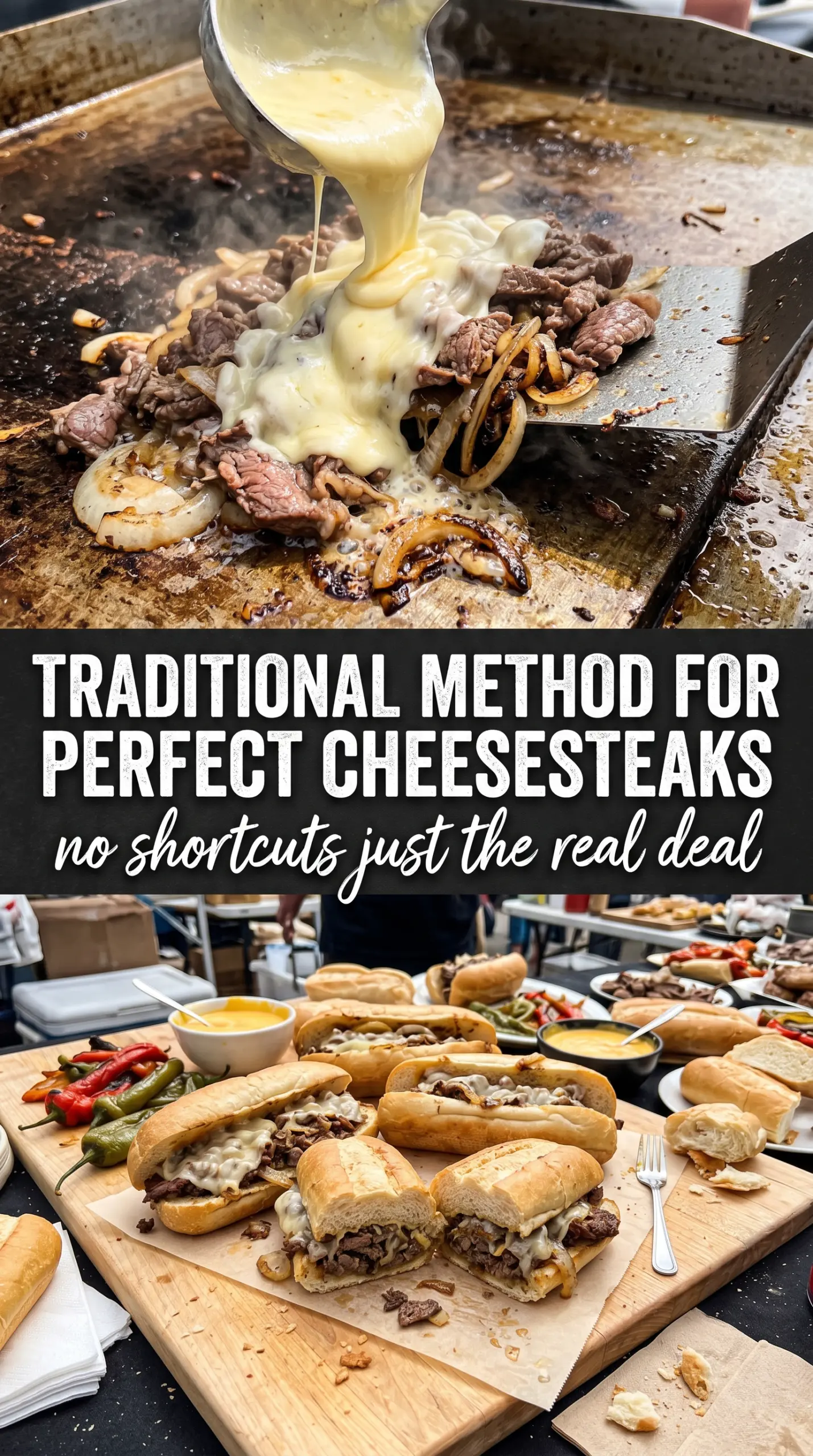
- Ribeye steak — This is the cut that gives you the right balance of beefy flavor and tenderness. Slice it very thin against the grain, and if it’s easier, pop it in the freezer for 20 to 30 minutes first so it firms up enough to cut cleanly.
- Onions — These bring sweetness and body to the sandwich. They need enough time on the griddle to turn soft and browned; if they stay pale, the sandwich tastes flat.
- Green bell peppers — Not every Philly purist wants peppers, but they add a mild bitterness that works well with the rich meat and cheese. Slice them evenly so they cook at the same pace as the onions.
- Provolone or Cheese Whiz — Provolone gives you a smoother, milder melt, while Cheese Whiz brings that classic diner-style cheesesteak finish. Either works, but add the cheese while the meat is still hot so it melts into the steak instead of sitting on top in slices.
- Hoagie rolls — A soft roll with some structure is key. Toasting the inside on the griddle keeps it from going soggy the second the steak and onions land inside.
Building the Cheesesteak on the Griddle Without Losing the Melt
Cooking the Peppers and Onions First
Heat the Blackstone to medium-high and add the oil, then spread the onions and peppers into an even layer. Let them sit long enough to pick up color before stirring, which helps them brown instead of steam. You’re looking for soft edges, a little caramelization, and that sweet smell that tells you the raw bite is gone. If the griddle is crowded, the vegetables will soften but never brown, so give them room.
Chopping and Searing the Ribeye
Push the vegetables to the side and add the sliced steak to the hot spot. Season it with salt and pepper, then use two spatulas to chop and toss it as it cooks so the pieces stay bite-size and tender. Three to four minutes is usually enough; if you keep it on the heat much longer, it starts to dry out and lose that silky steakhouse texture. The meat is ready when it’s just cooked through and still juicy.
Melting the Cheese Into the Meat
Divide the steak into four portions right on the griddle, then lay the cheese over each mound while everything is still sizzling. Covering the portions for a minute helps the cheese melt evenly, especially if you’re using provolone. If you’re using Cheese Whiz, warm it separately until it’s smooth, then spoon it over the meat so it clings instead of seizing up.
Toasting the Rolls and Assembling Fast
Butter the cut sides of the hoagie rolls and toast them until the edges turn golden. That quick toast matters because it gives the bread a little structure and keeps the juices from soaking through too fast. Scoop the steak, onions, and peppers straight into the rolls and serve immediately while the cheese is still molten. Cheesesteaks lose their appeal fast once they sit, so this last part should happen in one quick motion.
How to Adapt a Blackstone Cheesesteak for Different Eaters
Provolone for a milder, cleaner melt
Use provolone if you want a smoother sandwich with a more restrained cheese flavor. It melts into the steak without taking over, which keeps the beef front and center. Thin slices melt faster than thick ones, so they’re easier to work with on the griddle.
Cheese Whiz for the classic diner-style finish
If you want the most old-school cheesesteak experience, swap the provolone for warmed Cheese Whiz. It gives you a looser, saucier bite and coats the meat more evenly. Keep it warm but not boiling, or it can turn grainy and separate.
Gluten-free without changing the filling
The filling itself is naturally gluten-free as long as your cheese and seasonings are checked. Serve it on a sturdy gluten-free roll or over a bowl of the steak mixture with extra vegetables. The only tradeoff is that gluten-free bread usually needs a more careful toast so it doesn’t crumble under the filling.
No peppers if you want a more traditional Philly-style profile
Leave out the bell peppers and double the onions if you want a softer, sweeter filling with a more classic deli-style feel. You’ll lose the mild crunch and vegetal note from the peppers, but the sandwich will taste closer to a stripped-down cheesesteak shop version.
Storage and Reheating
- Refrigerator: Store the steak, vegetables, and rolls separately for up to 3 days. The meat stays best when it’s not packed inside the bread.
- Freezer: The cooked filling freezes well for up to 2 months. Cool it completely, seal it tightly, and thaw it in the fridge before reheating.
- Reheating: Rewarm the filling on a skillet or griddle over medium heat until hot. Don’t microwave the assembled sandwich or the roll turns chewy and the cheese gets greasy; toast a fresh roll and rebuild it instead.
Questions I Get Asked About This Recipe
Authentic Blackstone Philly Cheesesteak
Ingredients
Equipment
Method
- Heat Blackstone griddle to medium-high heat and add oil.
- Cook onions and peppers until caramelized, about 8-10 minutes, then move to the side.
- Season steak with salt and pepper and cook on hot griddle for 3-4 minutes, chopping with spatulas.
- Divide steak into 4 portions and top each with cheese, allowing to melt.
- Butter and toast hoagie rolls on the griddle until golden.
- Scoop each steak portion with onions and peppers into toasted rolls and serve immediately.