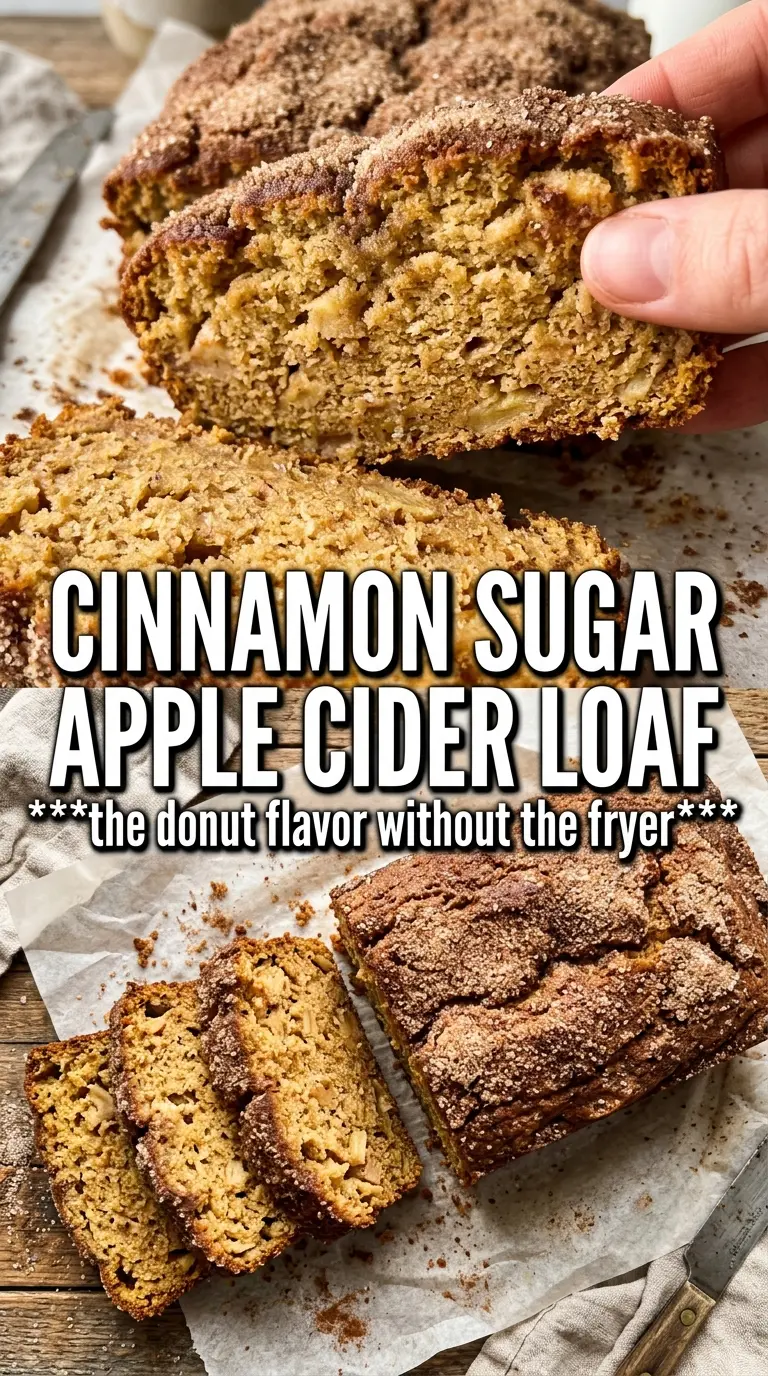
Apple cider doughnut loaf cake bakes up with a deep golden crust, a tender spiced crumb, and that unmistakable bakery-style cinnamon sugar finish that clings to every slice. The reduced cider gives it a concentrated apple note instead of a watered-down flavor, and the loaf format keeps the center soft while the edges bake into the kind of crust that tastes like a cider mill treat without needing a fryer.
What makes this version work is the balance between moisture and structure. Sour cream and oil keep the crumb plush for days, while the reduced cider packs in flavor without adding extra liquid. The butter-and-sugar coating goes on while the loaf is still warm, which is the difference between a light dusting that falls off and a proper apple cider doughnut shell that sticks.
Below, I’ve included the small details that matter most: how far to reduce the cider, when to turn the loaf out, and how to coat it so you get that bakery-style finish on all sides.
The cider flavor came through beautifully, and brushing the loaf while it was still warm made the cinnamon sugar stick all over instead of sliding off. The crumb stayed soft for days.
Save this apple cider doughnut loaf cake for the days when you want a crackly cinnamon sugar crust and a soft, spiced crumb without frying a thing.
The Part That Keeps This Loaf Tasting Like a Doughnut, Not Just Spice Cake
The biggest mistake with apple cider loaf cakes is leaving the cider at full strength and then wondering why the flavor tastes thin or the crumb bakes up a little damp. Reducing the cider concentrates the apple notes and removes extra water, which gives you a cleaner flavor and a better texture. If you skip that step, the loaf can still bake, but it won’t have the same cider-doughnut character that makes this recipe stand out.
The other thing that matters is the coating timing. A warm loaf grabs the melted butter and cinnamon sugar in a way a fully cooled loaf never will. That warm surface turns tacky just enough to hold onto the sugar, and that’s how you get that bakery-style crust instead of a loose dusting that ends up in the pan.
What Each Ingredient Is Actually Doing In This Loaf
- Apple cider — Reducing it to 1/4 cup is non-negotiable if you want the apple flavor to show up clearly. The reduction concentrates the cider without making the batter too loose, and cooled cider mixes in cleanly instead of scrambling the eggs.
- Sour cream — This is what keeps the crumb tender and gives the loaf that soft, bakery-like bite. Plain Greek yogurt works in a pinch, but sour cream gives a slightly richer texture and a softer finish.
- Oil — Butter would add flavor, but oil keeps the loaf moist for longer and helps it stay plush even after the cinnamon sugar coating settles in. Use neutral vegetable oil so the spice blend stays front and center.
- Brown sugar and granulated sugar — The white sugar gives the loaf lift and a cleaner sweetness, while the brown sugar brings a little caramel depth that plays well with the cider. Using both keeps the loaf from tasting flat.
- The spice blend — Cinnamon leads, but nutmeg, allspice, and cardamom give the loaf that old-fashioned doughnut shop warmth. If you’re missing cardamom, leave it out before you reach for extra cinnamon; too much cinnamon can flatten the whole thing.
Building the Batter and Coating It While It’s Still Warm
Reduce the cider first
Pour the apple cider into a small saucepan and simmer it over medium heat until it measures about 1/4 cup. It should look darker and smell concentrated, almost like hard cider without the alcohol. Cool it completely before it goes into the batter, or it can warm the eggs and make the mixture look slightly curdled.
Mix the wet ingredients until smooth
Whisk the oil, both sugars, eggs, vanilla, reduced cider, and sour cream until the mixture looks glossy and evenly blended. Don’t rush this with a very hot batter from the stove; if the cider is still warm, let it sit longer. You want a smooth base with no streaks of egg white or pockets of sour cream before the flour goes in.
Fold, don’t beat, once the flour goes in
Add the dry ingredients and stir just until you no longer see dry flour. Overmixing here is what gives you a tight, bready loaf instead of a tender crumb. The batter will be thick, and that’s exactly what you want for a loaf that slices cleanly after baking.
Bake until the center springs back
Scrape the batter into a greased 9×5 pan and bake until a toothpick comes out clean, usually 60 to 65 minutes. The top should be deeply golden and the center should feel set when you press it lightly. If the top browns too fast, tent it loosely with foil near the end instead of lowering the oven temperature and risking a gummy middle.
Butter and sugar the loaf while it’s warm
Turn the loaf out while it’s still warm, brush it all over with melted butter, then roll or sprinkle on the cinnamon sugar. Warm bread grabs the coating best, and the sides need attention too, not just the top. If the sugar starts sliding off, the loaf has cooled too much, so work quickly once it’s out of the pan.
Three Ways to Adapt This Loaf Without Losing the Good Parts
Make it dairy-free
Swap the sour cream for a thick unsweetened dairy-free yogurt. The loaf will still stay moist, though it may bake up a touch less rich than the original. The butter coating can be replaced with melted dairy-free butter, and the cinnamon sugar finish still works the same way.
Use gluten-free flour with care
A good 1:1 gluten-free baking flour can work here, but it needs to include xanthan gum or a similar binder. The crumb will be a little more delicate and the loaf may need the full bake time. Let it cool for at least 15 minutes before turning it out so it doesn’t break.
Turn it into muffins
Divide the batter into lined muffin cups and bake until the tops spring back and a tester comes out clean. You’ll lose the dramatic loaf slice, but you gain more cinnamon sugar surface area, which means more of that doughnut-style coating in every bite. Start checking several minutes early because muffins bake much faster than a loaf.
Storage and Reheating
- Refrigerator: Store covered for up to 4 days. The sugar coating softens a little, but the crumb stays moist.
- Freezer: Freeze the uncoated loaf tightly wrapped for up to 2 months. Add the butter and cinnamon sugar after thawing so the coating stays crisp and fresh.
- Reheating: Warm individual slices for 10 to 15 seconds in the microwave or a few minutes in a low oven. Too much heat melts the coating and dries the crumb, so keep it gentle.
Answers to the Questions Worth Asking

Apple Cider Doughnut Loaf Cake
Ingredients
Equipment
Method
- Reduce apple cider to 1/4 cup over medium heat until thickened slightly, then cool. Visual cue: the cider should look syrupy and measure close to 1/4 cup.
- Preheat oven to 350F and grease a 9x5 loaf pan. Visual cue: pan is well coated so the loaf releases cleanly.
- Whisk all-purpose flour, baking powder, baking soda, cinnamon, nutmeg, allspice, cardamom, and salt in a bowl until evenly combined. Visual cue: the spice color is uniform throughout.
- Whisk vegetable oil, granulated sugar, brown sugar, eggs, vanilla extract, reduced cider, and sour cream until smooth. Visual cue: no streaks of sour cream remain and the mixture looks glossy.
- Fold the flour mixture into the wet ingredients until just combined. Visual cue: stop mixing as soon as no dry pockets remain.
- Bake at 350F for 60-65 minutes until a toothpick comes out clean. Visual cue: the loaf is deep golden and springs back lightly in the center.
- Remove from the pan while warm, then brush all sides with melted butter. Visual cue: butter sheen coats the surface evenly.
- Roll in or sprinkle generously with cinnamon sugar to coat all sides. Visual cue: a fragrant cinnamon-sugar layer clings and looks speckled on the crust.