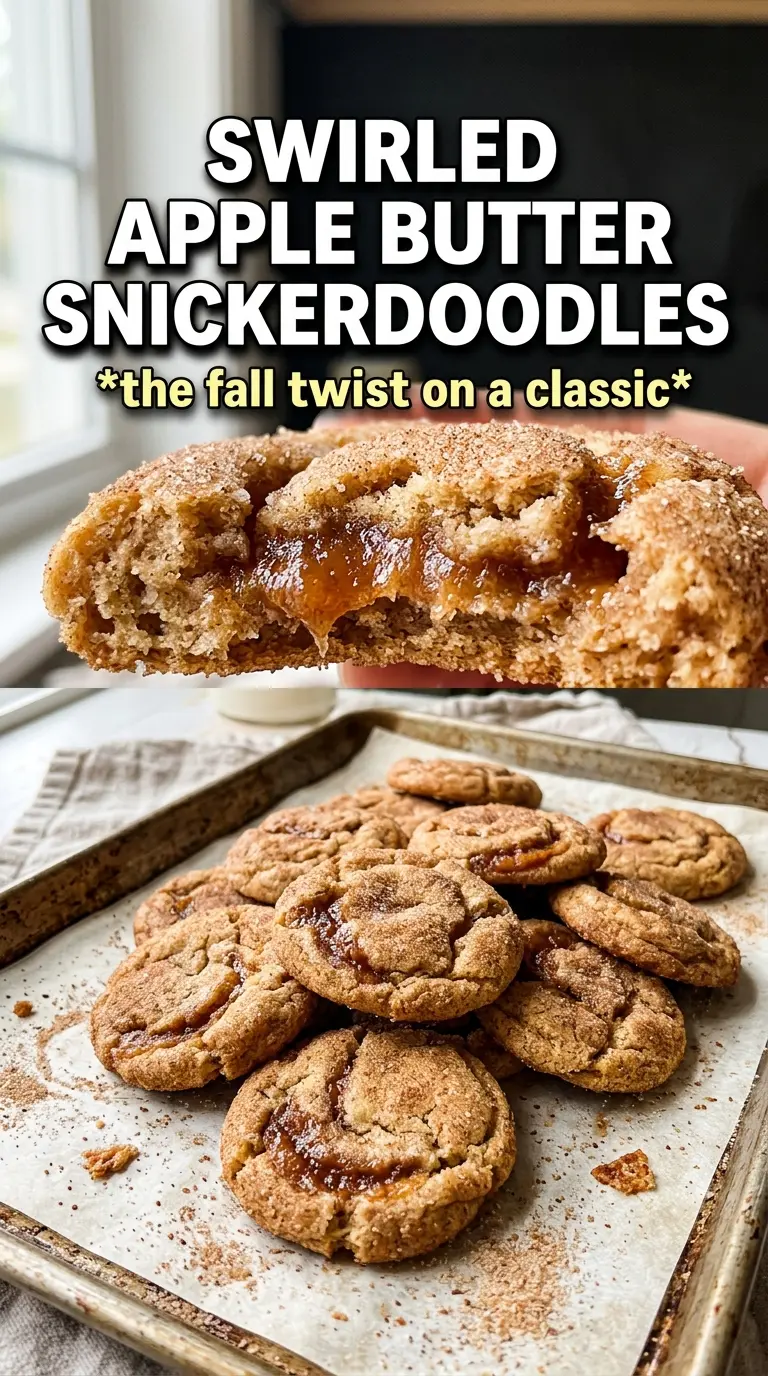
Apple butter snickerdoodles bake up soft in the center with those classic crackled tops and a cinnamon-sugar shell that shatters a little when you bite in. The apple butter doesn’t make them taste like a spiced apple cookie from scratch; it gives the dough a deeper, rounder sweetness and keeps the crumb tender for days. The result is familiar enough to read as a snickerdoodle, but with a warm fruit note that makes people pause after the first bite.
The trick is in the balance. Cream of tartar keeps the cookie tangy and helps with that signature snickerdoodle texture, while the apple butter adds moisture without thinning the dough too much. Beat the butter and sugar until they’re genuinely light and fluffy, then stop mixing as soon as the flour disappears. Overworking the dough turns these from plush cookies into sturdier ones, and this recipe works best when the dough stays soft enough to scoop cleanly.
Below, I’ve included the small details that matter most: how to know when the cookies are baked just enough, when to chill the dough, and what to change if you want a slightly different texture.
The apple butter made the centers stay soft for days, and the cinnamon-sugar coating baked into those perfect crackly tops. I chilled the dough for 30 minutes and the cookies held their shape beautifully.
Save these apple butter snickerdoodles for the days when you want soft centers, crackly cinnamon tops, and a little extra apple warmth in every bite.
The One Step That Keeps Snickerdoodles Soft Instead of Dry
Snickerdoodles get dry when the dough is overbaked or when the base is too stiff before it even hits the oven. Apple butter helps here because it brings moisture and a little body at the same time, but it can also make the dough feel softer than a standard sugar cookie dough. That’s why the dough should look plush and slightly sticky, not loose or wet. If it seems hard to scoop, it’s usually just warm butter, not a bad recipe.
The other thing that matters is the bake. Pull these cookies when the edges are set and the centers still look a touch underdone in the middle. They finish on the pan, and that short rest is what gives you the soft, tender middle instead of a crumbly cookie that goes dry by the next day.
- Cream of tartar — This is what gives snickerdoodles their signature tang and helps create that soft, slightly puffy texture. There isn’t a perfect substitute if you want the classic result.
- Apple butter — Use a smooth, thick apple butter here, not a thin applesauce. Applesauce adds water; apple butter adds concentrated flavor and helps the cookies stay tender without spreading too much.
- Butter — Softened butter creams properly and traps air, which helps the cookies bake up lighter. If the butter is melted or greasy, the cookies spread more and lose that pretty crinkle.
- Rolling sugar — The cinnamon-sugar coating is more than decoration. It forms the crackly outer shell and gives the cookies their snickerdoodle finish, so coat them generously.
What Each Ingredient Is Actually Doing in This Recipe
- Primary ingredient (the star) — Quality matters most. Choose the best you can find.
- Cooking medium (oil, butter, or broth) — This carries flavors and prevents dryness.
- Seasonings (salt, pepper, spices, herbs) — Layer flavors so nothing overpowers. Build depth gradually.
- Aromatics (garlic, onion, herbs) — Cook with fat to bloom flavors. Become the foundation.
- Supporting ingredients — Complement the main ingredient without overpowering it.
- Sauce or liquid (if applicable) — Brings flavors together. Balance richness with acid.
- Acid (lemon, vinegar, wine, or other) — Brightens and prevents flat-tasting results.
- Final finish (garnish, glaze, or sauce) — Prevents one-dimensional taste and adds visual appeal.
Building the Dough, Coating the Cookies, and Knowing When to Pull Them
Whisk the Dry Ingredients First
Combine the flour, cream of tartar, baking soda, cinnamon, nutmeg, and salt before you do anything else. That keeps the leavener and spice evenly distributed, so you don’t end up with one cookie that tastes flat and another that tastes aggressively cinnamon-heavy. A quick whisk is enough, but don’t skip it. Uneven dry ingredients show up fast in a simple cookie like this.
Cream the Butter Until It Turns Pale
Beat the butter and sugar until the mixture looks lighter in color and fluffy around the edges of the bowl. That step builds the structure that gives these cookies lift. If the butter still looks dense and sandy, keep going for another minute or two. Once the eggs, apple butter, and vanilla go in, the mixture may look slightly curdled for a moment, and that’s normal.
Stop Mixing as Soon as the Flour Disappears
Add the dry ingredients and fold just until no streaks of flour remain. The dough should be soft enough to scoop, with a thick, almost mousse-like feel. If you beat it after the flour goes in, the cookies get tighter and less tender. If the dough feels sticky, chill it for 30 minutes instead of adding more flour unless it’s truly unmanageable.
Roll Thick, Not Sparse
Mix the sugar, cinnamon, and apple pie spice in a shallow bowl, then roll each dough ball generously. You want a full coat, not a dusting. The sugar melts and crisps in the oven, which is where that signature crinkled surface comes from. If the coating looks patchy before baking, the finished cookies will be patchy too.
Pull Them While the Centers Still Look Soft
Bake until the edges are set and the tops are crackled, usually 10 to 12 minutes. The centers should still look a little soft when you remove the tray. Let them sit on the pan for 5 minutes so they finish setting without overbaking. If you move them too soon, they can collapse; if you leave them in the oven too long, they lose that soft, pillowy middle.
How to Tweak These Without Losing the Snickerdoodle Character
Gluten-Free Version
Use a good 1:1 gluten-free baking blend in place of the all-purpose flour. The cookies will still be soft and chewy, though they may spread a little less and taste slightly more delicate. Don’t swap in almond flour by itself; it changes the texture too much and won’t give you that classic snickerdoodle bite.
More Apple Flavor, Less Spice
If you want the apple butter to stand out more, keep the cinnamon in the dough but reduce the nutmeg slightly and use just the cinnamon-sugar coating without the apple pie spice. That gives a cleaner apple-cinnamon flavor instead of a heavier spice profile. The cookies will still taste unmistakably like snickerdoodles, just with the apple note pushed forward.
A Soft-Batch, Extra-Tender Cookie
For a softer cookie, chill the dough just long enough to make scooping easier, then bake on the lower end of the time range. The centers stay pillowy, and the edges only set lightly. This version is best if you like a cookie that almost melts as soon as it warms on the tongue.
Storage and Reheating
- Refrigerator: Store in an airtight container for up to 5 days. They stay soft, though the cinnamon sugar coating softens a bit after the first day.
- Freezer: Freeze baked cookies for up to 2 months, or freeze portioned dough balls and roll them in the sugar mixture right before baking. Freezing the dough works especially well if you want fresh cookies on demand.
- Reheating: Warm a baked cookie for 8 to 10 seconds in the microwave if you want that just-baked softness back. Don’t overheat them or the sugar coating can turn tacky instead of crisp.
Answers to the Questions Worth Asking
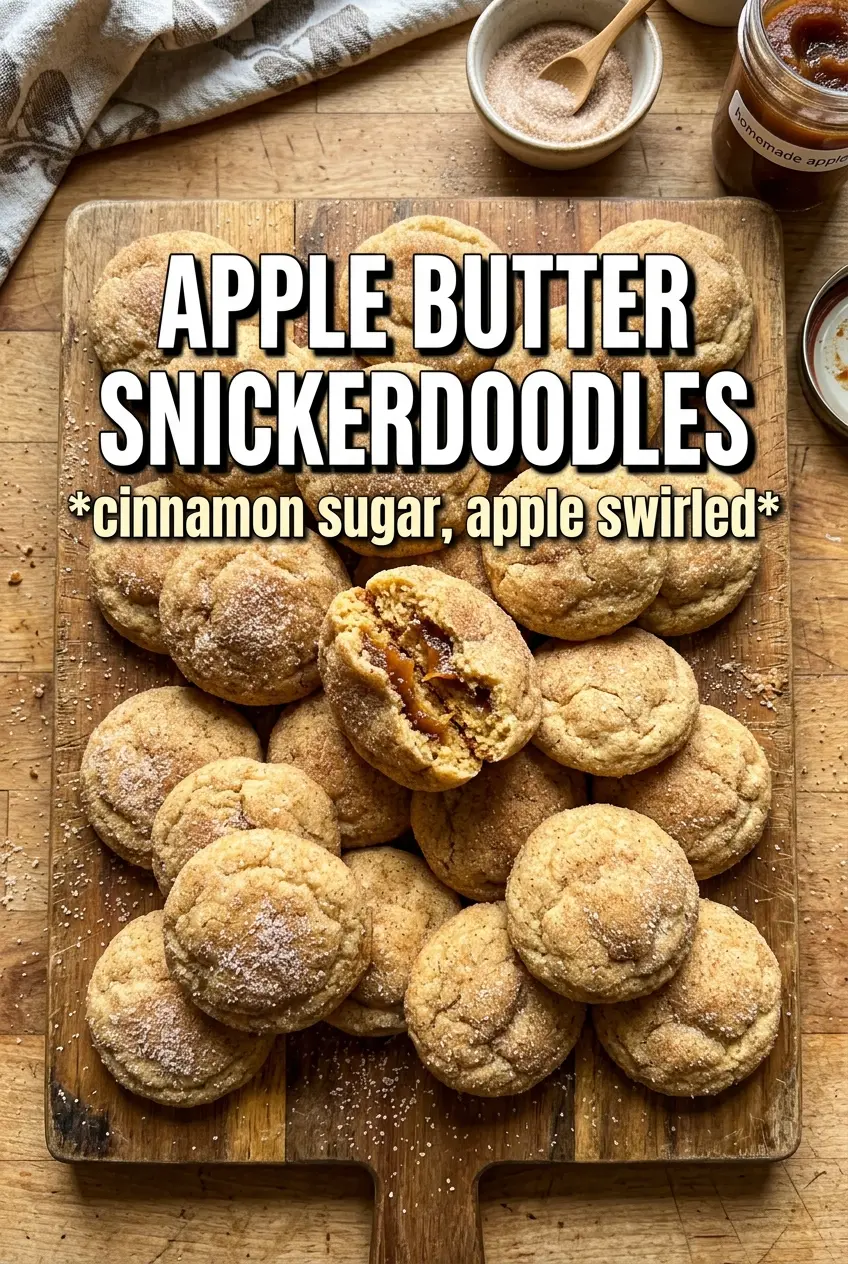
Apple Butter Snickerdoodles
Ingredients
Equipment
Method
- Preheat the oven to 375F and line baking sheets with parchment for nonstick baking and easy cleanup.
- Whisk all-purpose flour, cream of tartar, baking soda, cinnamon, nutmeg, and salt in a bowl until evenly combined and no streaks of spice remain.
- Beat the softened unsalted butter and granulated sugar until very light and fluffy, with the mixture appearing pale and aerated.
- Add eggs one at a time, then mix in apple butter and vanilla extract until smooth and glossy.
- Fold the flour mixture into the wet ingredients just until incorporated; the dough should be soft and thick, not dry.
- Refrigerate for 30 minutes if very sticky, until the dough firms up enough to scoop cleanly.
- Mix the rolling spices—sugar, cinnamon, and apple pie spice—in a shallow bowl so the coating is evenly blended.
- Scoop dough into 1-1/2 tablespoon balls, then roll generously in cinnamon spice sugar until the surface looks fully coated.
- Bake for 10-12 minutes at 375F until the cookies are crinkled and the edges are just set, while centers still look slightly underdone.
- Cool on the pan for 5 minutes so the centers finish setting as they cool and the cookies release more easily.