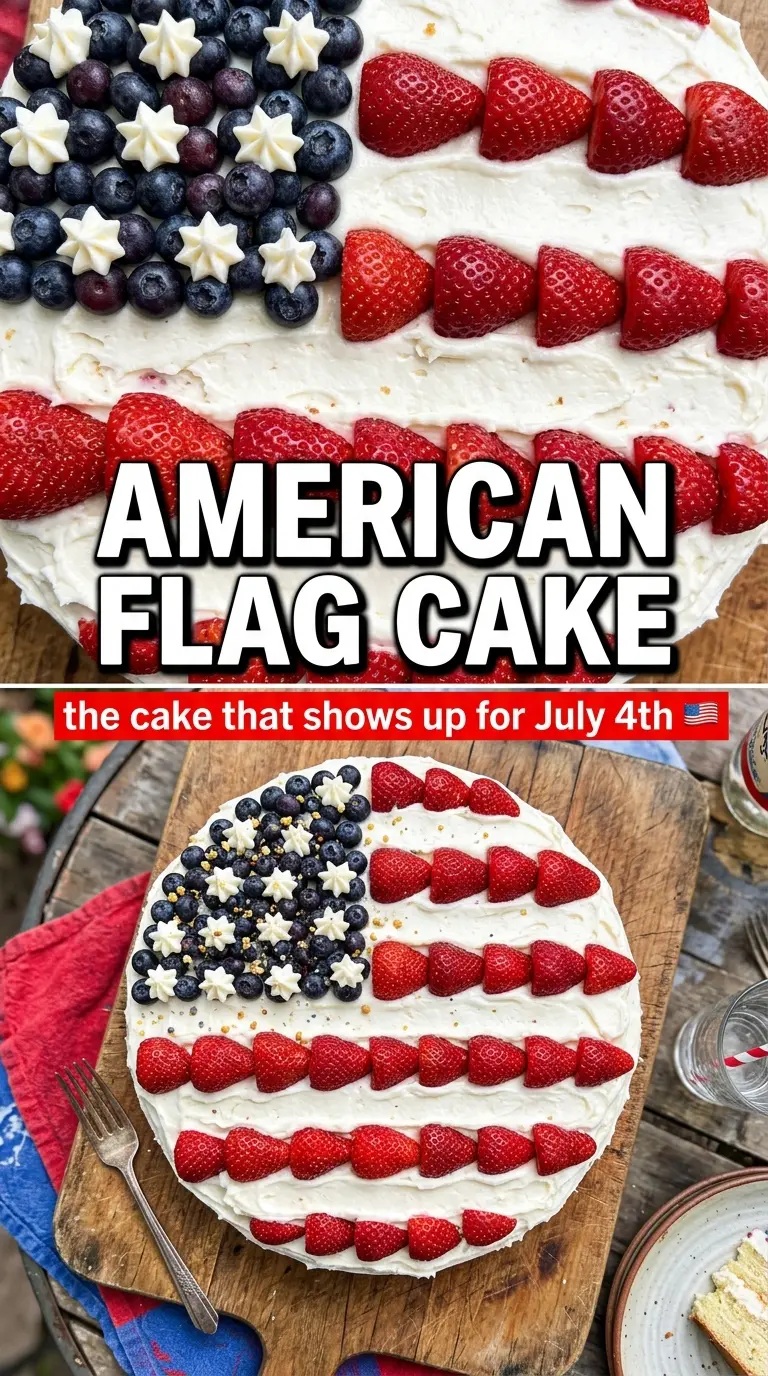
American Flag Cake lands on the table with the kind of clean, festive look that makes people pause before the first bite. The white frosting gives you a blank canvas, but the real payoff is the neat, vivid contrast of blueberry canton and strawberry stripes across a soft sheet cake. It slices easily into generous squares, which means it works as well for a crowd as it does for a smaller backyard get-together.
What makes this version work is the structure underneath the decoration. A sturdy white sheet cake gives you a flat surface that holds the fruit pattern, and a thick buttercream keeps the berries from sliding around. The fruit needs to be dry and arranged with a little patience; if the berries are wet or the frosting is too soft, the design starts to blur fast.
Below, I’ve included the little details that keep the flag pattern sharp, plus the best way to handle the white stripes if you want them to look tidy instead of patchy. The result is a cake that looks planned, not rushed, and still tastes like something people will actually want a second piece of.
I chilled the cake before doing the fruit stripes and it made a huge difference. The blueberries stayed in a neat corner and the strawberry rows didn’t sink into the frosting at all.
Like this American Flag Cake? Save it to Pinterest for the Fourth of July dessert table when you want clean stripes, bright berries, and a sheet cake that slices neatly.
The Reason the Fruit Pattern Stays Sharp Instead of Slumping
The biggest failure with an American flag cake is building the decoration on frosting that’s too warm or too soft. The berries slide, the stripes sag, and the whole top starts looking muddied instead of crisp. A cake that has cooled all the way down gives the buttercream a firm base, and that firm base is what holds the design in place long enough to serve it cleanly.
The other thing that matters is how you handle the fruit. Strawberries should be sliced lengthwise so they lie flat, not tipped on edge, and blueberries need to be packed close enough that the canton reads as one solid block of color. Gaps make the flag pattern look unfinished, while crowded fruit gives you the bold, graphic look that makes this cake work.
What the Buttercream and Fruit Are Doing for Each Other
- White cake mix — A boxed white cake keeps the crumb pale and even, which matters because the fruit design looks best against a light background. If you want a homemade cake here, use a sturdy vanilla cake recipe that bakes up flat and not too airy.
- Butter — Softened butter is what gives the frosting body. Margarine won’t whip the same way and tends to taste flatter, so this is one place where real butter earns its keep.
- Powdered sugar — This is what makes the frosting pipeable and stable enough to hold those white stripes. If the frosting looks stiff, add cream a tablespoon at a time until it spreads smoothly but still keeps its shape.
- Heavy cream — Cream loosens the buttercream without making it greasy. If you substitute milk, start with less because the frosting can turn loose fast and won’t support the fruit as well.
- Blueberries and strawberries — Fresh fruit is the whole point here, and it needs to be dry. Wash, dry, and chill them before decorating so the frosting doesn’t get watery under the weight of the berries.
- Banana slices or extra white frosting — Banana slices give you a softer, fruit-forward white stripe, but they brown as they sit. Extra frosting keeps the cake looking clean longer, which is the better choice if the cake will be on the table for a while.
Building the Flag So the Decorations Don’t Slide
Start with a Completely Cool Cake
Ice the cake only after it’s fully cooled, not just barely warm. Warm cake melts the buttercream on contact, and once that happens the surface turns slippery and the fruit won’t stay where you put it. If you’ve baked the layers in advance, cover them lightly once cool so they don’t dry out before frosting.
Whip the Frosting Until It Spreads Cleanly
Beat the butter first until it looks pale and fluffy, then add the powdered sugar gradually so you don’t end up with a gritty cloud in the bowl. The finished frosting should hold soft ridges but still smooth out when you drag a spatula across it. If it’s too thick, add cream by the teaspoon; if it’s too loose, beat in a little more powdered sugar.
Map the Design Before You Place the Fruit
Think of the upper-left corner as the canton and keep the blueberries tight and rectangular. After that, lay the strawberry rows straight across the cake, using the fruit slices like shingles so the edges overlap slightly. If the rows wander, the flag reads crooked even if the colors are right, so take a minute to line things up before pressing anything into the frosting.
Keep the White Stripes Neat and Simple
If you’re piping frosting for the white stripes, use a round or small open tip and keep the lines even from end to end. Banana slices work too, but they need to be added just before serving because they brown and soften fast. Either way, the white spaces should look deliberate, not empty.
Berry-Free White Stripe Version
Use extra white frosting for every stripe instead of banana slices if you want the cake to hold longer on a warm day. The result is cleaner and less fussy, and you won’t have to worry about the bananas browning before the cake is served.
Gluten-Free Flag Cake
Swap in a gluten-free white cake mix that bakes well in a sheet pan. The decoration stays the same, but you’ll want to cool the cake completely before frosting because gluten-free cakes can be more delicate while warm.
Lighter Dairy-Free Frosting
Use a plant-based butter that whips well and a dairy-free cream alternative with some fat in it. The frosting will be a little softer than the original, so chill the cake briefly after decorating to help the fruit hold its position.
Make It a Day Ahead
You can bake and frost the cake a day ahead, then add the fruit the same day you plan to serve it. That keeps the berries looking fresh and stops the strawberries from bleeding color into the white stripes.
Storage and Reheating
- Refrigerator: Store covered for up to 3 days. The berries will soften a little, and the banana version will brown fastest.
- Freezer: Freeze the unfrosted cake layers only. The decorated cake doesn’t freeze well because the fruit turns watery after thawing.
- Reheating: This cake isn’t meant to be reheated. Serve it chilled or at cool room temperature so the frosting stays firm and the fruit pattern holds.
Answers to the Questions Worth Asking
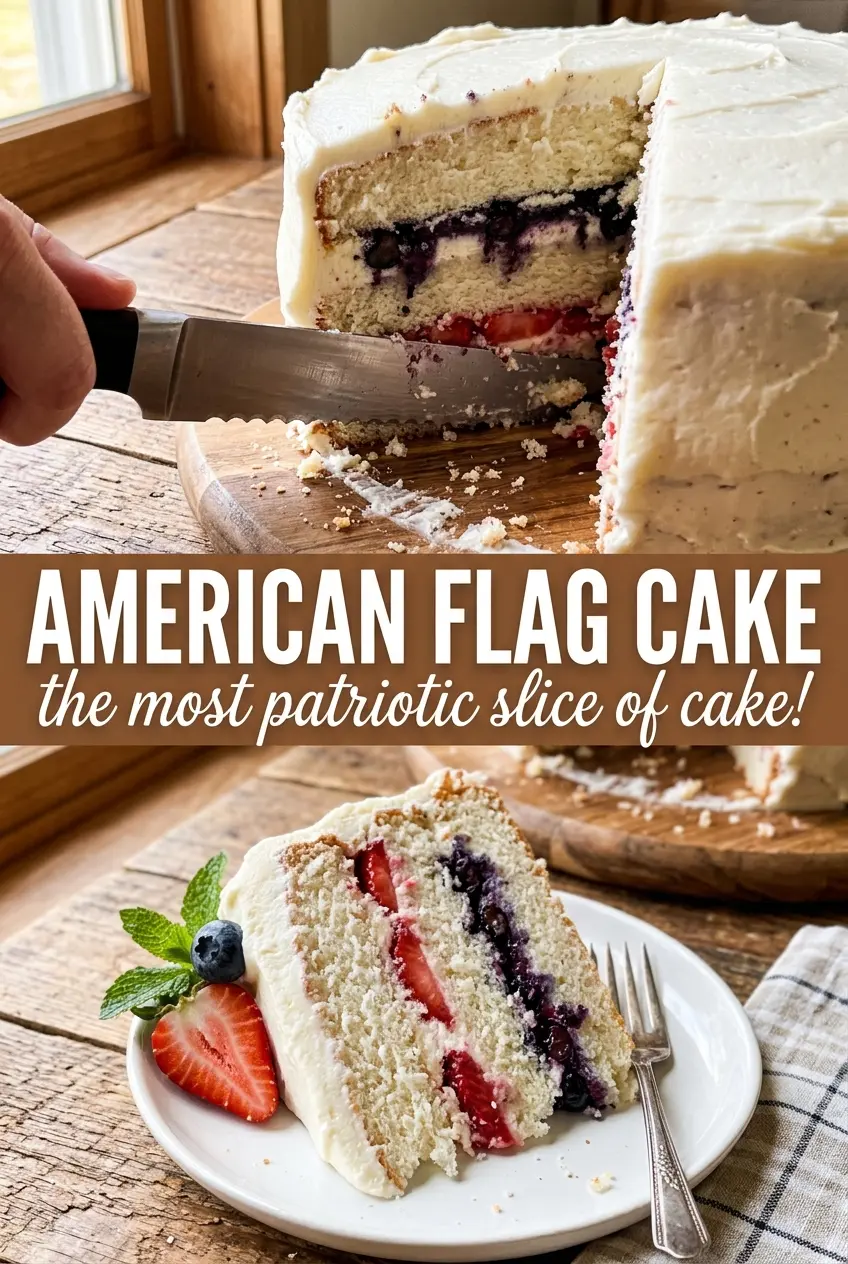
American Flag Cake
Ingredients
Equipment
Method
- Heat the oven and bake both white cake mixes in a large 12x18 sheet pan (or two 9x13 pans joined together) according to package directions. Bake until a toothpick inserted in the center comes out clean, then cool the cake completely.
- Beat the softened unsalted butter until fluffy, using an electric mixer at a medium speed. Continue beating while gradually adding powdered sugar until fully incorporated.
- Add the vanilla extract and 4–6 tablespoons heavy cream, then beat until smooth and spreadable. Stop and scrape the bowl as needed so the frosting has an even texture.
- Spread a thick, even layer of white buttercream over the entire top of the cooled sheet cake. Use a flat spatula to smooth the surface so the fruit pattern looks crisp.
- In the upper left corner, arrange fresh blueberries into a dense rectangle to form the canton. Press them lightly into the frosting so they stay in place.
- Create red stripes by arranging rows of sliced fresh strawberries flat across the length of the cake. Keep the rows uniform and consistent in spacing from edge to edge.
- Fill the white stripes by piping extra frosting in rows between the strawberry rows or placing thin banana slices. Aim for clean lines so the flag design looks vivid from overhead.
- Refrigerate the decorated cake until ready to serve, allowing the frosting to firm up. Chill for about 1 hour, then slice into squares.