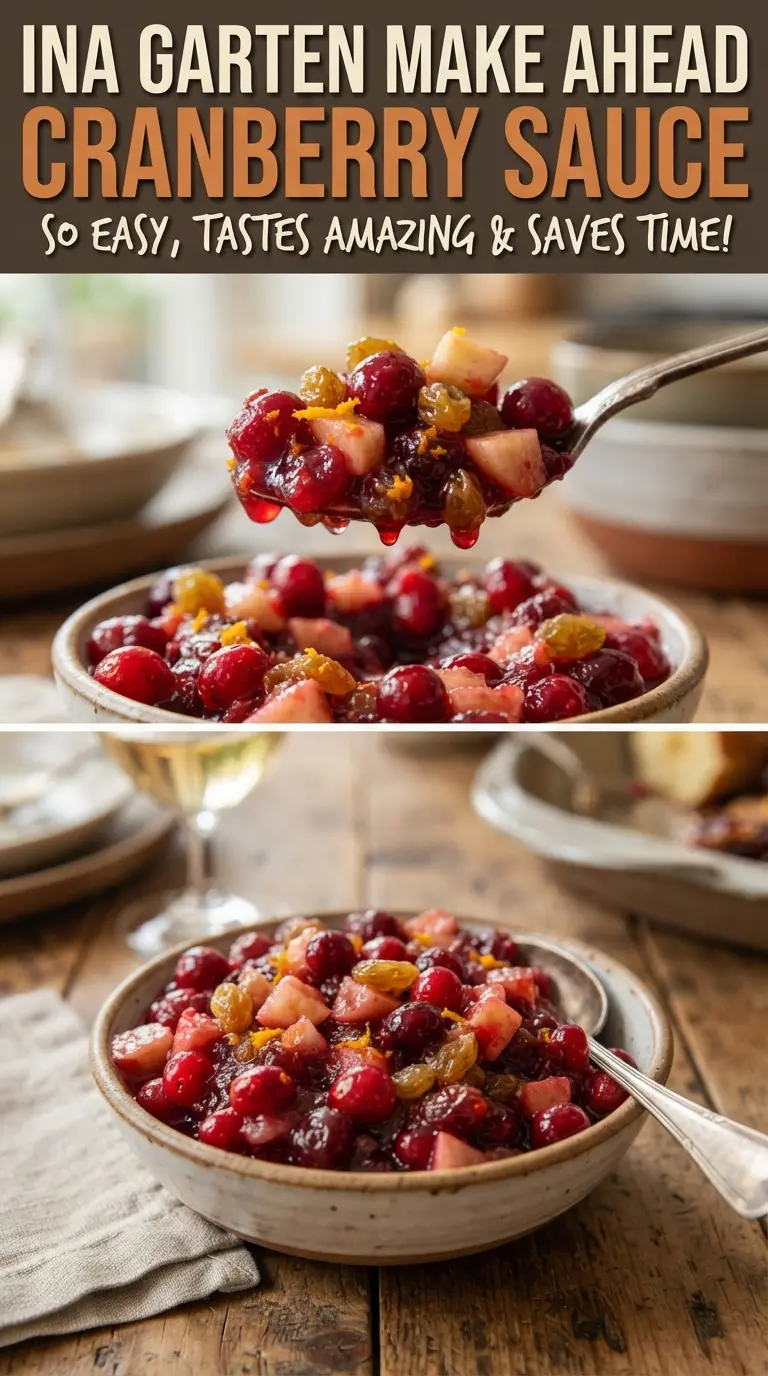
Chunky cranberry sauce lands on the table with a bright, glossy finish that makes plain turkey, stuffing, or even a leftover sandwich taste more finished. The cranberries break down just enough to thicken the sauce while the diced apple stays tender, the citrus keeps everything lively, and the raisins and nuts add little pockets of sweetness and crunch. It tastes like the version people remember from the good holiday table, not the wobbly jelly in a can.
The trick here is balance and timing. The cranberries need the full simmer so they burst and release their pectin, which gives the sauce body without any extra thickeners. The apple goes in after the first boil so it softens without turning to mush, and the nuts only go in at the end so they keep their texture. This is the kind of sauce that tastes even better after a day in the fridge, once the citrus, sugar, and fruit have had time to settle into each other.
Below, I’ll show you the one step that keeps the sauce from tasting flat, how to judge the simmer so it thickens properly, and a few ways to adjust the texture if you like it a little looser or a little more fruit-forward.
The cranberries broke down into the prettiest chunky sauce, and the apple kept just enough bite. I made it the day before, and the orange and lemon came through even more the next day.
Save this chunky cranberry sauce for the make-ahead holiday side dish that gets better after a night in the fridge.
The Part Where Cranberries Turn into Sauce Instead of Jam
The difference between cranberry sauce that tastes vibrant and cranberry sauce that turns gummy is how long you let the berries cook after they burst. You want the sugar and water at a real boil first, then a steady simmer that keeps the cranberries popping without scorching the bottom of the pan. If the heat is too high, the sugar tightens up before the fruit has a chance to soften, and the sauce ends up thick in all the wrong ways.
The other thing that matters is patience after the fruit goes in. Cranberries need time to collapse and release their own natural pectin, which is what gives this sauce its body. The diced apple adds texture and a little extra fruit sweetness, but it should still hold its shape when the sauce is done, not disappear into the pot.
- Cranberries — Fresh berries give the cleanest tart flavor and the best pop as they simmer. Frozen cranberries work too; use them straight from the freezer and add a minute or two to the cooking time.
- Granny Smith apple — This is what keeps the sauce chunky and bright instead of one-note sweet. A firmer tart apple matters here because softer apples melt too quickly.
- Orange and lemon — Using both zest and juice keeps the sauce from tasting flat. The zest carries the oils, which is where most of the aroma lives, while the juice adds the acid that wakes up the sugar.
- Golden raisins and nuts — Stir them in off the heat so they stay distinct. If you add them earlier, the raisins can plump too much and the nuts lose their crunch.
What Each Ingredient Is Actually Doing in This Sauce
- Sugar — This doesn’t just sweeten the sauce; it helps the cranberries break down into a glossy, spoonable texture. Cutting it much lower changes the balance fast, so if you want a tarter sauce, reduce it only slightly and keep the citrus.
- Water — It gives the berries enough liquid to start cooking evenly before they release their own juices. You need it at the beginning, but you don’t need to add more unless the pan is running dry from an especially hot burner.
- Walnuts or pecans — Toasting them first is worth it. Untoasted nuts taste muted, while toasted nuts bring the kind of warm, buttery crunch that keeps the sauce from feeling all soft and sweet.
- Golden raisins — They soften into little bursts of sweetness without turning the sauce heavy. Regular raisins work in a pinch, but golden raisins keep the color lighter and fit the citrus better.
How to Build the Texture So It Stays Chunky and Bright
Starting with the Cranberries and Sugar
Bring the cranberries, sugar, and water to a real boil before lowering the heat. You’re looking for the berries to start popping open and the liquid to take on a deeper red color, not just a warm simmer. If the heat is too gentle at this stage, the sugar stays grainy and the cranberries hold on too long, which leaves you with a thin sauce instead of a jammy one.
Adding the Apple and Citrus
Once the berries have burst, stir in the apple, zest, and juice. The apple should simmer long enough to soften at the edges but still look like diced fruit, not applesauce. Keep the pot uncovered so the excess liquid cooks off and the sauce tightens naturally; covering it traps steam and makes the final texture loose.
Finishing with Raisins and Nuts
Take the pan off the heat before adding the raisins and nuts. That off-heat finish keeps the nuts crisp and lets the raisins soak up the hot syrup without overcooking. The sauce will look a little loose when it’s hot, but it thickens as it cools, so don’t chase a heavy texture in the pan.
How to Adapt This for Different Tables and Timelines
Make it nut-free
Leave out the walnuts or pecans and the sauce still works beautifully. You lose the toasty crunch, but the cranberry, apple, and citrus flavors stay intact, and the texture reads a little smoother.
Lower-sugar version
You can reduce the sugar slightly if you like a sharper sauce, but don’t cut it too far or the cranberries will taste harsh and thin. If you go lighter on sugar, keep the orange and lemon juice in place because the acid helps the flavor read balanced instead of sour.
Use frozen cranberries
Frozen cranberries work without thawing first, which makes this an easy make-ahead side even when fresh berries aren’t around. Expect a minute or two of extra simmering time before the berries start popping.
Storage and Reheating
- Refrigerator: Keeps well for up to 1 week in a covered container. The sauce will thicken as it chills, and the citrus flavor gets brighter after a day.
- Freezer: Freezes well for about 2 months. Cool it completely first and leave a little space in the container for expansion.
- Reheating: Serve it chilled or let it come to room temperature. If you want it warm, use low heat on the stove and stir gently; boiling it again can make the fruit break down too much and soften the nuts.
Answers to the Questions Worth Asking
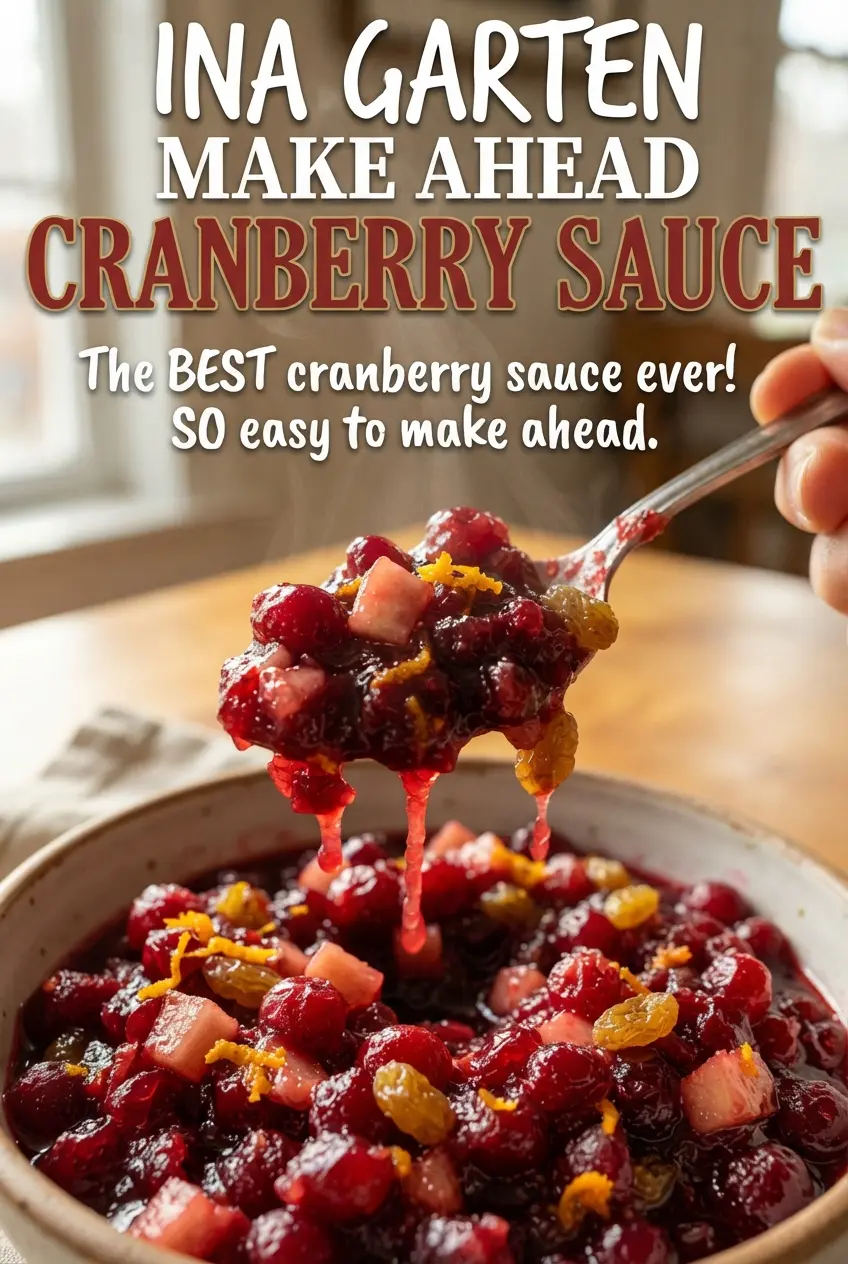
Ina Garten Make Ahead Cranberry Sauce
Ingredients
Equipment
Method
- Bring fresh cranberries, sugar, and water to a boil in a saucepan, stirring until the sugar dissolves and the mixture bubbles actively; simmer 5 minutes until the skins pop (you should see cranberries bursting as they cook).
- Add the diced Granny Smith apple, orange zest, orange juice, lemon zest, and lemon juice to the saucepan and stir to combine; simmer 15 minutes until the mixture thickens slightly and the fruit is tender.
- Remove from heat and stir in golden raisins and toasted walnuts or pecans until evenly distributed and glossy.
- Cool completely before transferring to a covered container and refrigerating up to 1 week (keep covered so it stays fresh).
- Serve chilled or at room temperature, spooning the sauce so it keeps its chunky texture.