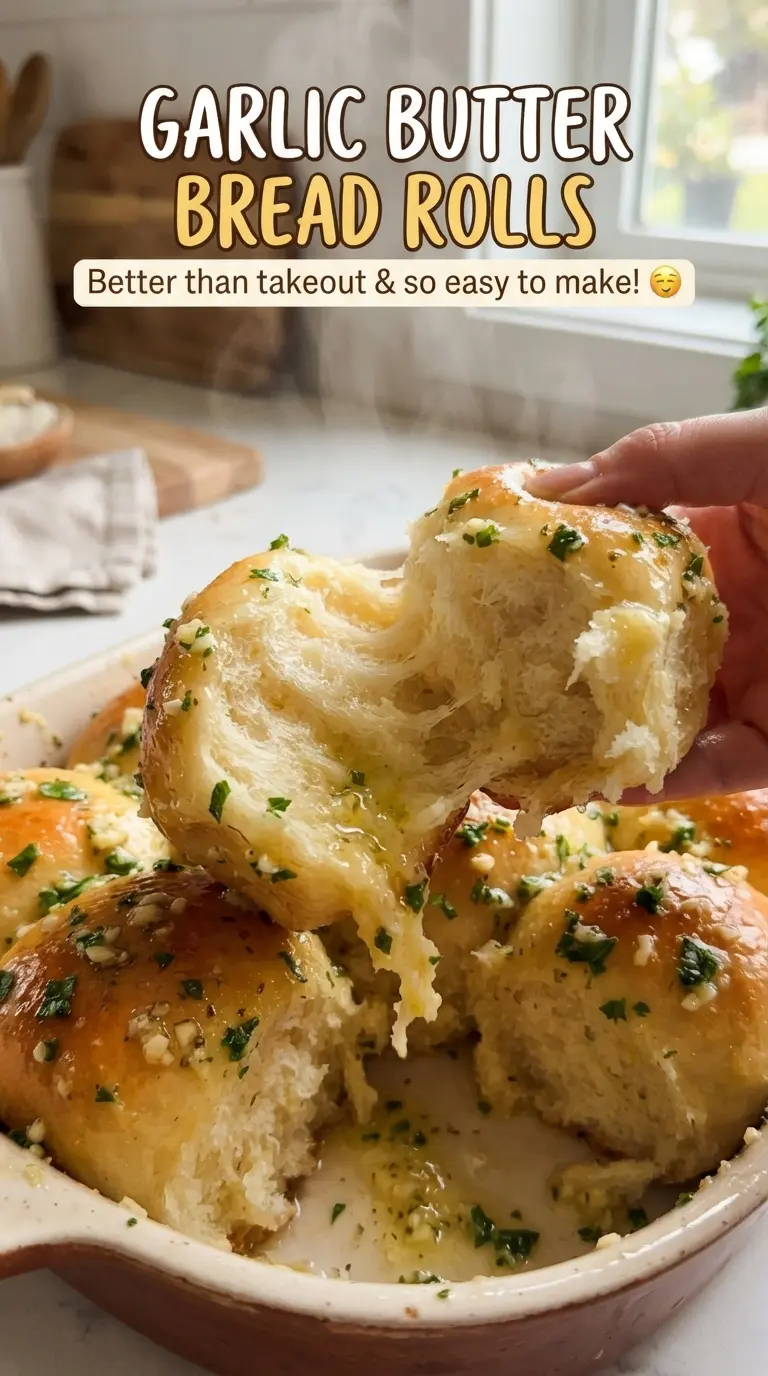
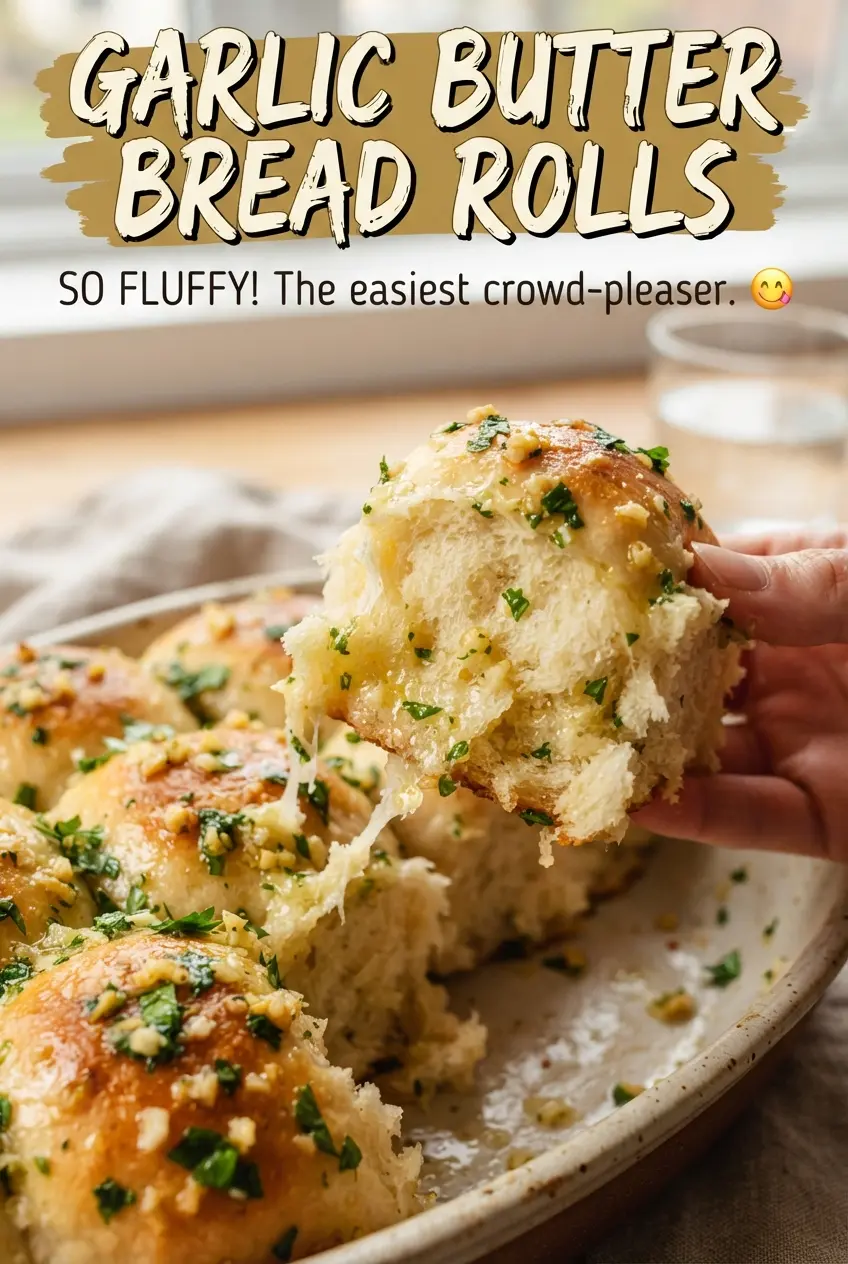
Garlic butter bread rolls come out soft, pull-apart tender, and glossy with enough buttery garlic on top to make the whole pan disappear fast. The crumb stays fluffy instead of dense, and the tops bake up with just enough color to hold onto every drop of the garlic butter. Tear one open while it’s still warm and you get that steamy center that makes homemade rolls worth the little bit of waiting.
The texture depends on two things: a warm but not hot milk base and a dough that’s kneaded until it turns smooth and elastic. Instant yeast gives you a dependable rise without a long proofing schedule, and the sugar gives the yeast a quick head start while also helping the rolls brown. The garlic butter goes on after baking, not before, so the garlic stays fragrant instead of taking on a harsh, burnt edge in the oven.
Below you’ll find the timing cues that matter, the one pan setup that gives these rolls their pull-apart shape, and a few swaps that still keep the texture soft and buttery.
The rolls baked up unbelievably soft, and brushing the garlic butter on while they were hot made the tops soak it right in without getting greasy. I used fresh parsley and the flavor was spot on.
Save these garlic butter bread rolls for the nights when you want soft, pull-apart rolls with a glossy garlic butter finish.
The Dough Needs to Be Smooth Before the First Rise
Most roll dough problems start before the dough ever sees the bowl. If the flour isn’t fully hydrated and the dough still feels shaggy, the rolls bake up uneven and tight instead of soft and even. Knead until the dough pulls away from the sides of the bowl and feels elastic under your hands. That’s the point where the gluten has developed enough to trap the gas from the yeast.
The first rise should double the dough, not just puff it a little. Underproofed dough can still bake into rolls, but they won’t tear apart cleanly and the centers stay a touch gummy. If your kitchen runs cool, give it the full hour and watch the dough, not the clock. Dough that’s ready feels airy and springs back slowly when pressed.
What Each Ingredient Is Doing in These Rolls
- Warm milk — Milk makes the crumb softer than water would, and the warmth wakes up the yeast without shocking it. Keep it around 110°F; hot milk can kill the yeast, and cold milk slows the rise enough to throw off the timing.
- Instant yeast — This is what gives you a reliable, quick rise with a tender crumb. If you swap in active dry yeast, dissolve it in the warm milk for a few extra minutes until foamy before adding the other ingredients.
- Butter — Butter in the dough adds richness, while the topping butter carries the garlic and parsley onto the crust. Use real butter here; margarine won’t give the same clean flavor or silky finish.
- Flour — All-purpose flour keeps the rolls soft and light. Add it a little at a time if your dough feels sticky, because too much flour is the fastest way to turn these from fluffy to bready.
- Fresh garlic and parsley — Fresh garlic gives the topping its sharp, fragrant finish, and parsley keeps it from tasting heavy. Garlic powder won’t taste the same here; it reads flatter and less vivid on warm rolls.
How to Shape, Bake, and Butter Them at the Right Moment
Mixing and Kneading the Dough
Start by whisking the warm milk, yeast, and sugar, then wait until the surface looks foamy. That foam tells you the yeast is active. Stir in the egg, melted butter, salt, and flour, then knead until the dough is smooth and elastic, about 6 to 8 minutes. If it tears when you stretch it, it needs a little more kneading; if it sticks to everything in sight, it needs a dusting of flour, not a heavy handful.
Letting the Dough Rise
Cover the dough and let it rise until doubled in size. The bowl should look fuller and the dough should feel pillowy when you touch it. If it only rises partway, the rolls will bake up denser and less airy. Keep it in a warm spot, not on a hot surface, or the outside can dry before the center expands.
Shaping for Pull-Apart Rolls
Divide the dough into 12 even pieces and roll each one into a smooth ball. Nestle them into a greased 9×13-inch pan with a little space between each piece so they can expand and bake into soft sides that still pull apart cleanly. If the balls are rough on top, roll them seam-side down against the counter until the surface is tight and smooth. That gives the finished rolls a nicer dome.
Baking Until Just Golden
After the second rise, bake at 375°F until the tops are golden brown and the rolls sound slightly hollow when tapped. Watch the color more than the timer during the last few minutes, because an extra two minutes can turn soft rolls dry around the edges. You want a deep golden top, not a dark crust, since the garlic butter still has to cling to the surface.
Brushing on the Garlic Butter Finish
Mix the melted butter, minced garlic, and parsley while the rolls bake so it’s ready the second they come out. Brush generously over the hot rolls, then finish with flaky salt. The heat blooms the garlic just enough and helps the butter soak into the crust instead of sitting on top. Serve them warm, while the centers are still soft and the tops are glossy.
Three Ways to Change These Rolls Without Losing the Soft Crumb
Dairy-Free Garlic Butter Rolls
Use an unsweetened dairy-free milk and a plant-based butter that melts smoothly. The rolls will still rise well and stay soft, though the flavor will be a little less rich than the original. Brush the topping on while the rolls are hot so it absorbs into the crust the same way butter would.
Garlic Herb Parmesan Rolls
Stir a small handful of finely grated Parmesan into the garlic butter topping and add a pinch of Italian seasoning. The Parmesan adds a salty, savory edge and helps the tops look more bronzed, but it does make the finish a little richer and less classic.
Make-Ahead Freezer Rolls
Shape the dough balls, arrange them in the pan, and freeze before the second rise. When you’re ready to bake, thaw overnight in the refrigerator, then let them finish rising at room temperature until puffy. This keeps the texture close to fresh-baked rolls and saves you the mixing step on a busy day.
Storage and Reheating
- Refrigerator: Store in an airtight container for up to 3 days. The crumb firms up a little in the fridge, but the rolls stay soft enough to revive.
- Freezer: Freeze baked rolls for up to 2 months, wrapped tightly and sealed in a freezer bag. Thaw at room temperature before reheating.
- Reheating: Warm in a 300°F oven, covered loosely with foil, for 8 to 10 minutes. Don’t blast them in the microwave for too long or they turn rubbery and dry at the same time.
Answers to the Questions Worth Asking
Garlic Butter Bread Rolls
Ingredients
Equipment
Method
- Whisk warm milk, instant yeast, and sugar together, then let sit for 5 minutes until foamy. (Visual cue: bubbles and a creamy foam layer on top.)
- Add the egg, melted butter, salt, and all-purpose flour, and mix until a shaggy dough forms. (Visual cue: flour is fully incorporated with no dry patches.)
- Knead the dough for 6-8 minutes until smooth and elastic. (Visual cue: it becomes supple and springy.)
- Cover the dough and let it rise for 1 hour until doubled in size. (Visual cue: it expands and looks puffy throughout.)
- Divide the dough into 12 balls and place them in a greased 9x13-inch pan. (Visual cue: balls are evenly sized.)
- Cover and let the rolls rise for 30 minutes until puffy. (Visual cue: the balls fill out and touch slightly.)
- Preheat oven to 375°F, then bake the rolls for 18-20 minutes until golden brown. (Visual cue: tops are deeply golden and the centers feel set when tapped.)
- Stir melted butter with minced garlic and chopped parsley, then brush generously over the hot rolls. (Visual cue: the tops glisten as the butter soaks in.)
- Sprinkle flaky sea salt over the rolls and serve warm. (Visual cue: visible salt flecks on the buttery surface.)