Red wine braised short ribs are one of those meals that looks fancy on the plate and feels almost unfairly easy once you’ve made them at home. The meat turns spoon-tender, the sauce cooks down into a glossy mahogany reduction, and the whole pot fills with the kind of deep, savory aroma that makes everyone drift into the kitchen before dinner is even ready.
This version gets its depth from a proper sear, a full bottle of dry red wine, and a long, gentle braise in a Dutch oven. The wine cooks down with beef broth, tomatoes, and herbs until the sauce tastes round instead of sharp. The carrots, celery, and onion melt into the base and give the braising liquid body, while the tomato paste adds a dark, concentrated richness that keeps the finished sauce from tasting thin.
Below you’ll find the little details that matter most: how dark the ribs should be before they go in the oven, why the liquid level matters, and how to finish the sauce so it clings to the meat instead of pooling on the plate.
The ribs came out fall-apart tender and the sauce reduced into something I wanted to eat with a spoon. I used Merlot, and after 3 1/2 hours the meat was pulling cleanly off the bone.
Love these red wine braised short ribs? Save them to Pinterest for a slow, rich Dutch oven dinner with a sauce worth spooning over mashed potatoes.
The Sear Is What Gives the Sauce Its Backbone
Short ribs need real browning before they ever meet the oven. If the meat goes in pale, the braising liquid can still taste good, but it won’t have that deep, almost smoky beef flavor that makes this dish memorable. A hard sear in a hot Dutch oven gives you the fond stuck to the bottom of the pot, and that fond is what turns the wine and broth into something rich instead of flat.
The other thing that matters is patience during the braise. The oven should stay low enough that the liquid barely simmers under the lid. If it boils hard, the meat can tighten up before it has time to relax and turn tender. You’re looking for ribs that yield easily when nudged with a fork and a sauce that has enough body to coat the back of a spoon.
What Each Ingredient Is Actually Doing in This Pot
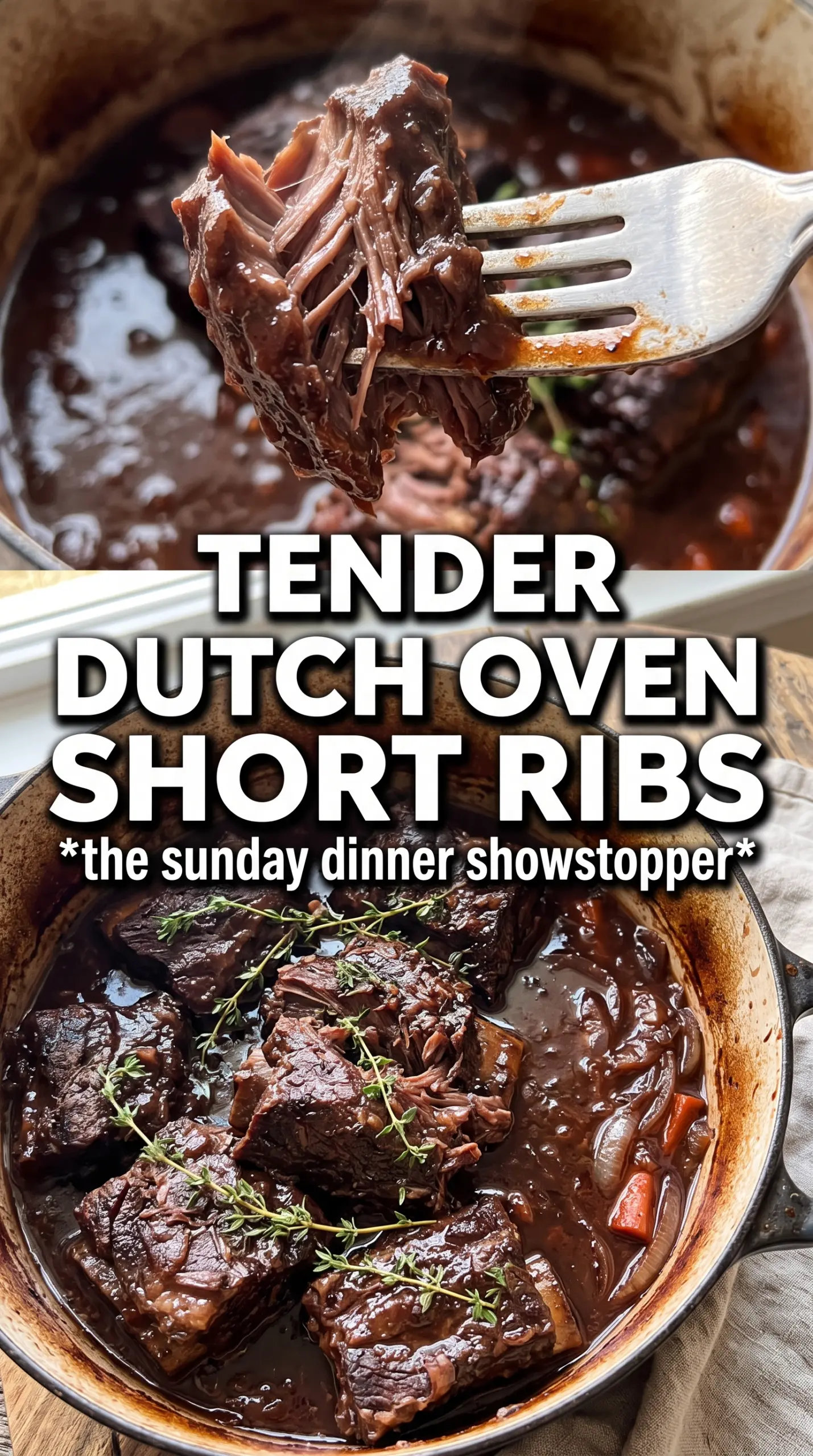
- Bone-in beef short ribs — These are the whole point of the dish. The bones help the braising liquid taste deeper, and the marbling breaks down into that silky, unctuous texture you can’t fake with leaner cuts.
- Dry red wine — Cabernet brings structure and Merlot leans softer and rounder. Use a wine you’d actually drink; harsh wine stays harsh after reducing, while a decent dry red turns plush and savory.
- Beef broth — This stretches the braising liquid without making it watery. If your broth is salty, hold back on the seasoning until the end so the sauce doesn’t turn aggressive as it reduces.
- Diced tomatoes and tomato paste — The tomatoes add acidity and the paste adds concentration. That combination keeps the sauce from tasting like plain beef stock and gives the finished braise a darker, more complex edge.
- Onion, carrots, celery, and garlic — This is the flavor base that softens into the sauce while the ribs cook. Dice the onion evenly and keep the carrots and celery in similar-sized pieces so they soften at the same rate.
- Thyme, rosemary, and bay leaves — These herbs bring the classic braised, almost stew-like aroma that makes the kitchen smell like you’ve been cooking all day. Fresh is worth it here because the long cook time gives the herbs room to infuse without tasting dusty.
Building the Braise So the Meat Turns Tender, Not Dry
Season and Sear the Ribs Hard
Heat the olive oil in your Dutch oven until it shimmers, then lay the ribs in without crowding the pan. They should audibly sizzle the second they hit the pot. Leave them alone long enough for a deep brown crust to form before turning them, because the color you build here becomes the flavor of the sauce later. If the pot starts smoking heavily, lower the heat a touch; you want browning, not burnt drippings.
Cook the Vegetables Until They Start to Sweeten
Once the ribs are out, add the onion, carrots, and celery to the same pot and scrape up the browned bits as they soften. Five minutes is enough to take the raw edge off and start drawing out their sweetness. Stir in the garlic and tomato paste for the last couple of minutes so the paste darkens slightly and loses its tinny taste. If you rush this stage, the finished sauce can taste raw in the background.
Deglaze and Build the Braising Liquid
Pour in the red wine and scrape every bit of fond from the bottom of the pot. Let the wine bubble for a minute or two before adding the broth, tomatoes, bay leaves, thyme, and rosemary. That short simmer takes the sharp edge off the alcohol and starts the reduction process early. Return the ribs and keep the liquid about halfway up the meat; too much liquid and you start steaming instead of braising.
Braise Low and Finish the Sauce Separately
Cover the pot and move it to the oven until the meat is almost falling off the bone. You’ll know it’s ready when a fork slides in without resistance and the ribs look relaxed instead of tight. Pull the meat out, strain the liquid if you want a smoother sauce, then reduce it on the stove until it looks glossy and lightly coats a spoon. If it still tastes thin, keep reducing; the flavor concentrates fast at the end.
Three Ways to Make These Short Ribs Work for Different Kitchens
For a tighter sauce
Strain the braising liquid before reducing it. That gives you a smoother, more restaurant-style finish that clings better to mashed potatoes. If you like the vegetables in the sauce, skip the strain and reduce everything together for a more rustic result.
Gluten-free as written
This recipe is naturally gluten-free as long as your broth is certified gluten-free. The sauce gets its body from reduction, not flour, so you don’t lose anything by leaving thickeners out.
For a deeper mushroom note
Add a handful of sliced cremini mushrooms with the carrots and celery. They’ll soak up the wine and add a woodsy note that plays well with the beef, though the sauce will taste a little earthier and less classic.
Storage and Reheating
- Refrigerator: Store the ribs and sauce for up to 4 days. The sauce will thicken as it chills, and the flavor usually gets even better on day two.
- Freezer: Freeze in an airtight container for up to 3 months. Freeze the ribs with enough sauce to keep them moist, then thaw overnight in the fridge before reheating.
- Reheating: Warm gently on the stovetop over low heat or covered in a 300°F oven until hot. Don’t boil it hard or the meat can dry out and the sauce can turn oily.
Answers to the Questions Worth Asking
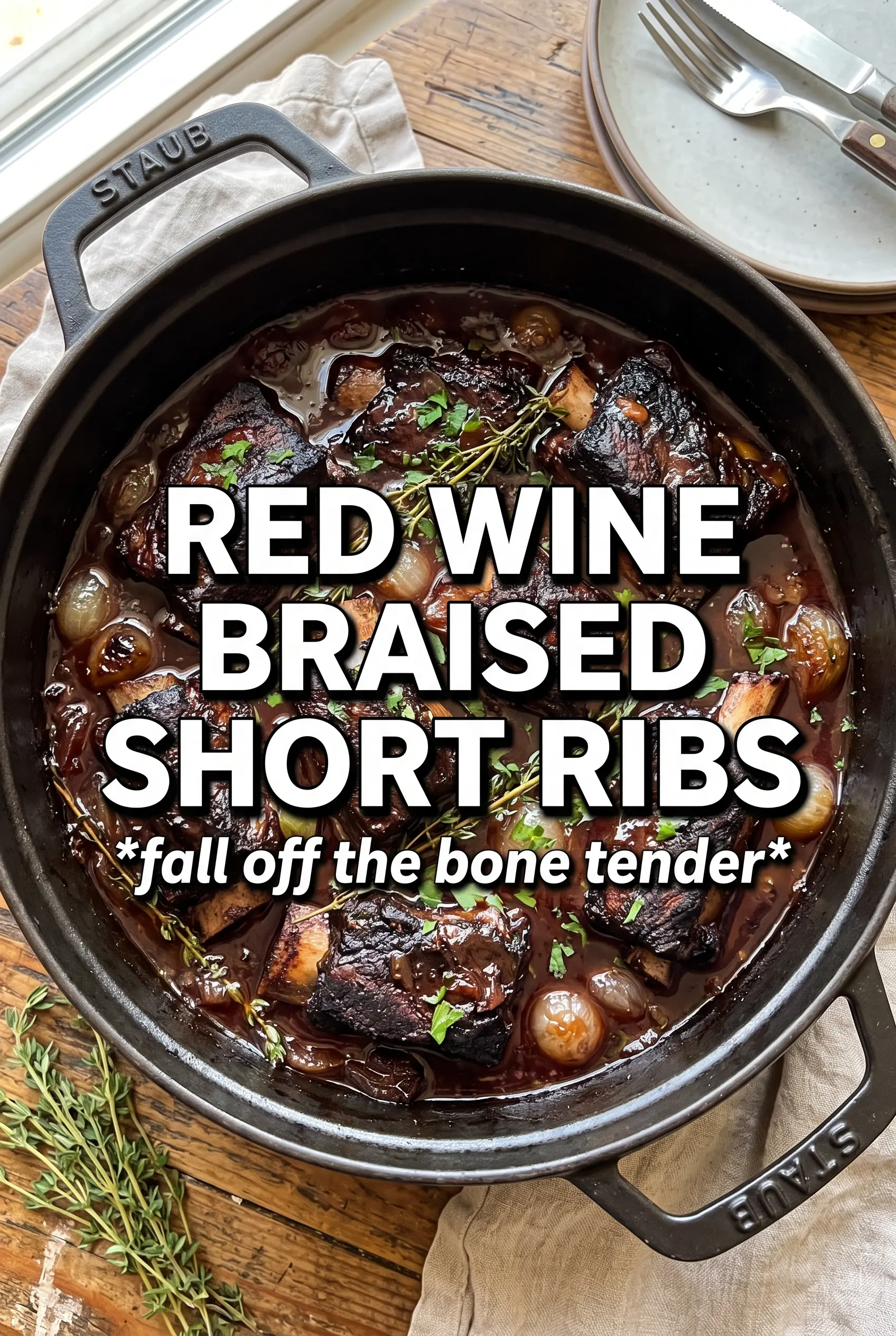
Red Wine Braised Short Ribs In Dutch Oven
Ingredients
Equipment
Method
- Preheat the oven to 325°F. Season the short ribs generously with salt and pepper.
- Heat olive oil in a Dutch oven over high heat. Sear the ribs until deeply browned on all sides, then remove them from the pot.
- Sauté the onion, carrots, and celery for 5 minutes in the Dutch oven. Add the smashed garlic and tomato paste and cook for 2 minutes.
- Deglaze with the red wine, scraping the bottom of the pot to release browned bits. Add the beef broth, diced tomatoes, bay leaves, thyme, and rosemary.
- Return the ribs to the Dutch oven and ensure the liquid comes halfway up the ribs. Cover and braise in the oven for 3 to 3-1/2 hours at 325°F until fall-off-the-bone tender.
- Remove the ribs from the pot and strain the braising liquid. Reduce the strained liquid until glossy.
- Serve the ribs over mashed potatoes with the reduced braising sauce.