Golden-browned meatballs tucked into deeply caramelized onions and finished under a blanket of bubbling Gruyere turn this skillet into the kind of dinner that gets quiet at the table. The sauce tastes like French onion soup in a more substantial, weeknight-friendly form, with enough richness to coat the meatballs without turning heavy. Every bite has that mix of savory beef, sweet onions, and melted cheese that makes this one feel bigger than the effort it takes.
The part that makes this recipe work is patience with the onions. They need time over medium-low heat to go from sharp and pale to soft, amber, and jammy; rushing that step gives you browned onions, not true French onion flavor. Browning the meatballs first builds flavor in the pan, and the wine lifts all those browned bits so the broth tastes layered instead of flat. Gruyere is the right cheese here because it melts smoothly and brings that nutty edge that belongs in French onion anything.
Below, I’ve included the little things that matter most: how to keep the onion base from drying out, what to do if you need a swap for the wine, and how to reheat the skillet without breaking the sauce.
The onions turned jammy and sweet, and the meatballs stayed tender even after the broil. I used the full 3 cups of broth and the sauce was perfect with crusty bread.
Save this French Onion Meatball Skillet for nights when you want caramelized onions, melty Gruyere, and one pan doing all the work.
The Part That Makes French Onion Meatballs Taste Like More Than Meatballs
The difference between a good skillet and one that tastes flat comes down to the onions. If they’re only softened, you’ll get sweetness, but not that deep, savory backbone that makes French onion soup taste like French onion soup. Let them cook slowly until they’re soft, glossy, and browned at the edges, with a little stickiness in the pan; that’s where the flavor lives.
Don’t rush the deglaze either. The wine loosens the browned bits from the skillet, and those bits carry a lot of the depth in the finished sauce. If the pan looks dry before the onions are fully browned, add a splash of broth and keep going. The goal is onions that almost melt into the sauce, not a pile of onion slices sitting in broth.
What Each Ingredient Is Actually Doing In This Skillet

- Ground beef — Gives the meatballs enough fat to stay juicy and carry the savory sauce. An 80/20 blend works best; leaner beef can taste dry once it goes under the broiler.
- Breadcrumbs and egg — These hold the meatballs together and keep them tender. The breadcrumbs absorb moisture so the meatballs don’t tighten up in the skillet.
- Worcestershire — Brings a deep, savory note to both the meatballs and the onion base. There isn’t a perfect substitute, but a small splash of soy sauce can cover the same salty-umami lane in a pinch.
- Onions — Yellow onions are the best choice here because they caramelize steadily and bring sweetness without turning mushy too fast. Slice them thin and evenly so they cook at the same pace.
- Dry white wine — This lifts the browned fond and gives the sauce brightness. Use something you’d actually drink; if you need to skip it, add a little extra broth with a teaspoon of lemon juice to keep the sauce from tasting heavy.
- Gruyere — This is the cheese that makes the skillet feel like French onion soup. It melts smoothly and browns well under the broiler; Swiss cheese works if needed, but it won’t taste as nutty.
- Fresh thyme — Adds the herbal note that ties the beef, onions, and cheese together. Dried thyme works in a pinch, but use less because the flavor is more concentrated.
Building the Onion Sauce Without Losing the Beef
Mixing and Browning the Meatballs
Mix the meatball ingredients just until combined, then roll them into even portions so they brown at the same rate. If you overwork the mixture, the meatballs turn tight and springy instead of tender. Brown them in butter in an oven-safe skillet until the outside has a deep crust, then move them out of the pan; they don’t need to cook through yet, just pick up color and flavor.
Cooking the Onions Until They Turn Jammy
Add the sliced onions to the same skillet and cook them over medium-low heat, stirring often enough to keep the edges from scorching but not so often that they never brown. They’ll look like a lot at first, then collapse into a smaller, softer mass. If the pan starts to dry out or the onions stick hard before they’re deeply golden, add a small splash of broth and keep going; that sticky layer is part of the flavor, but burnt bits are not.
Finishing the Sauce and Broiling the Cheese
Stir in the garlic, thyme, wine, broth, and Worcestershire, then simmer long enough for the sauce to taste rounded and cohesive. Nestle the meatballs back into the skillet so they finish cooking in the onion broth, which keeps them juicy and seasons the center. Once the sauce has settled, scatter the Gruyere over the top and broil just until it melts and spots with gold. Watch it closely, because the jump from bubbly to burnt is fast.
How to Adapt This Skillet When You Need a Different Finish
Dairy-Free Version
Swap the butter for olive oil and skip the Gruyere at the end. You’ll lose the browned, stretchy cheese top, but the onions and broth still carry the dish, and a little extra thyme helps keep the flavor feeling complete.
Gluten-Free Meatballs
Use gluten-free breadcrumbs in the meatballs and check that your Worcestershire sauce is gluten-free. The texture stays nearly the same, though very coarse crumbs can make the meatballs a little looser.
No Wine, Still Good
Replace the wine with an equal amount of broth plus a small squeeze of lemon juice or a teaspoon of vinegar. That gives the sauce the brightness it needs to balance the sweet onions without leaving it flat.
Storage and Reheating
- Refrigerator: Store leftovers in an airtight container for up to 4 days. The sauce thickens as it sits, and the onions soften even more.
- Freezer: Freeze the meatballs and onion sauce together for up to 2 months. The cheese topping is best added fresh after reheating, not before freezing.
- Reheating: Warm gently on the stove over low heat with a splash of broth to loosen the sauce. High heat can make the meatballs tough and can cause the cheese to separate if you reheat it too fast.
Answers to the Questions Worth Asking
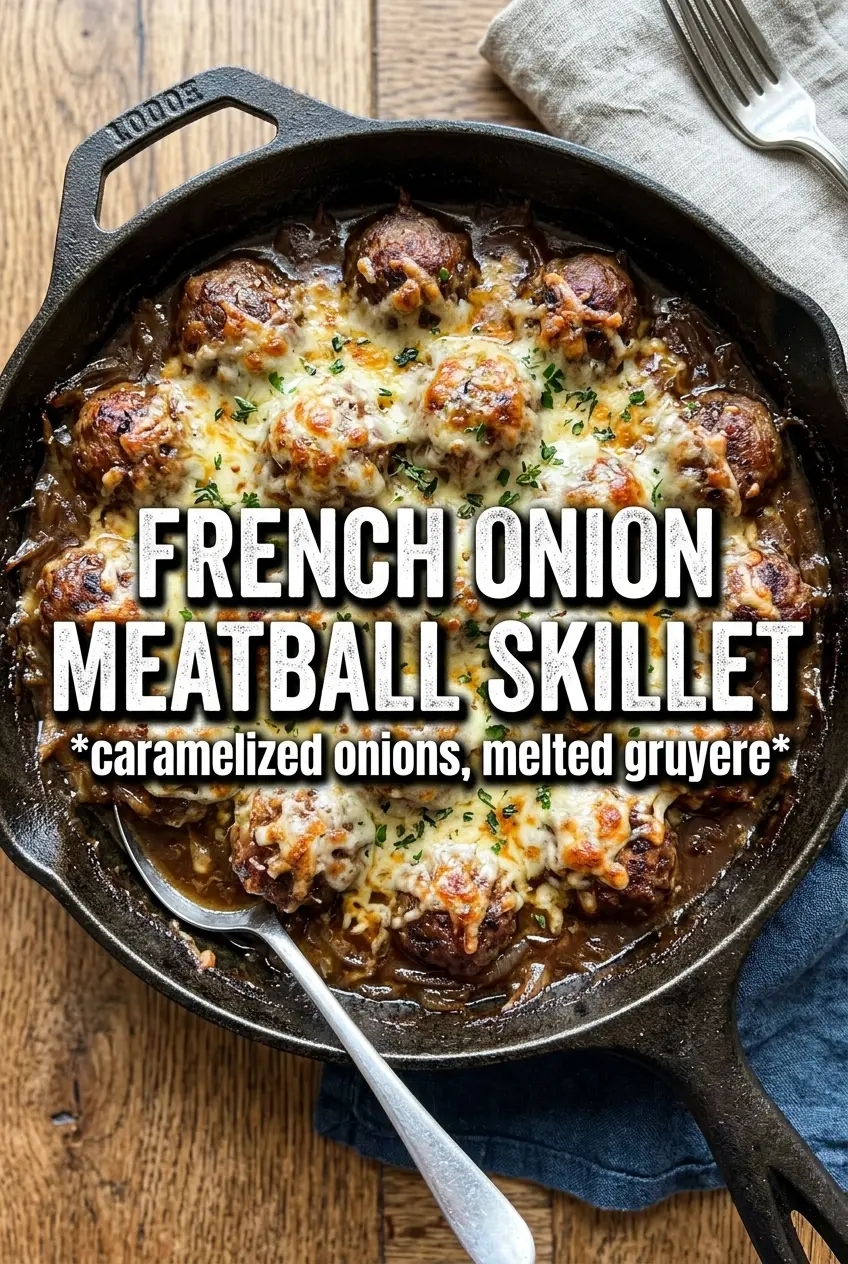
French Onion Meatball Skillet
Ingredients
Equipment
Method
- In a bowl, combine ground beef, breadcrumbs, egg, Worcestershire, garlic powder, salt, and pepper until evenly mixed. Roll into meatballs of roughly equal size so they brown uniformly.
- Melt 4 tablespoons butter in an oven-safe skillet over medium heat, then add the meatballs in a single layer. Cook until golden-brown on all sides, about 6-8 minutes total, then transfer to a plate.
- Lower heat to medium-low and add thinly sliced onions to the same skillet. Cook, stirring occasionally, for 30-35 minutes until deeply caramelized, then add minced garlic and fresh thyme.
- Pour in the dry white wine and scrape up the browned bits from the bottom of the skillet. Simmer for 1-2 minutes, then stir in beef broth and Worcestershire.
- Return the meatballs to the skillet and nestle them into the caramelized onion sauce. Simmer for 10 minutes, letting some of the sauce come up around the meatballs for a braised look.
- Scatter the shredded Gruyere evenly over the entire surface of the skillet. Broil for 3-5 minutes until golden and bubbly, then rest 2 minutes before serving.