Juicy chicken breasts and a velvety garlic cream sauce are one of those skillet dinners that feel a lot fancier than the effort they take. The chicken gets a deep golden sear first, then the sauce builds in the same pan so every browned bit left behind turns into part of dinner instead of sticking to the skillet. What lands on the plate is rich, glossy, and strong on garlic without tasting harsh.
The trick here is layering the garlic instead of dumping it all in at once. A little cooks in butter until fragrant and lightly golden, then the cream, Parmesan, and seasoning turn that base into a sauce that clings to the chicken instead of running all over the plate. White wine adds brightness, but broth works when that’s what you have on hand. The sauce should simmer just long enough to thicken and coat a spoon; if it boils hard, the cream can turn greasy and the Parmesan can go grainy.
Below, I’m walking through the exact spots where this dish can go sideways and how to keep it silky from skillet to plate. There’s also a simple way to adapt it if you want the same creamy garlic flavor without the wine.
The sauce thickened exactly like you said and didn’t break when I added the Parmesan. I used broth instead of wine and still got that rich garlic flavor my husband kept going back for.
Save this creamy garlic chicken skillet for the nights when you want seared chicken breasts and a glossy Parmesan sauce without a lot of cleanup.
The Sear That Keeps the Chicken Juicy Before the Sauce Even Starts
Chicken breasts dry out when they’re rushed through the pan or cooked too far before the sauce ever shows up. The first sear is doing two jobs at once: building a deep brown crust and buying you time so the chicken finishes gently in the sauce later. If your skillet is crowded or the heat is too low, the chicken steams and you lose both the color and the flavor.
Go for medium-high heat and leave the chicken alone long enough to develop a real crust before turning it. You want the surface golden and the pan bottom spotted with browned bits, not blackened. Pull the chicken once it reaches 165°F, then let the sauce do the rest of the work. That keeps the final texture moist instead of stringy.
What Each Ingredient Is Actually Doing in This Dish
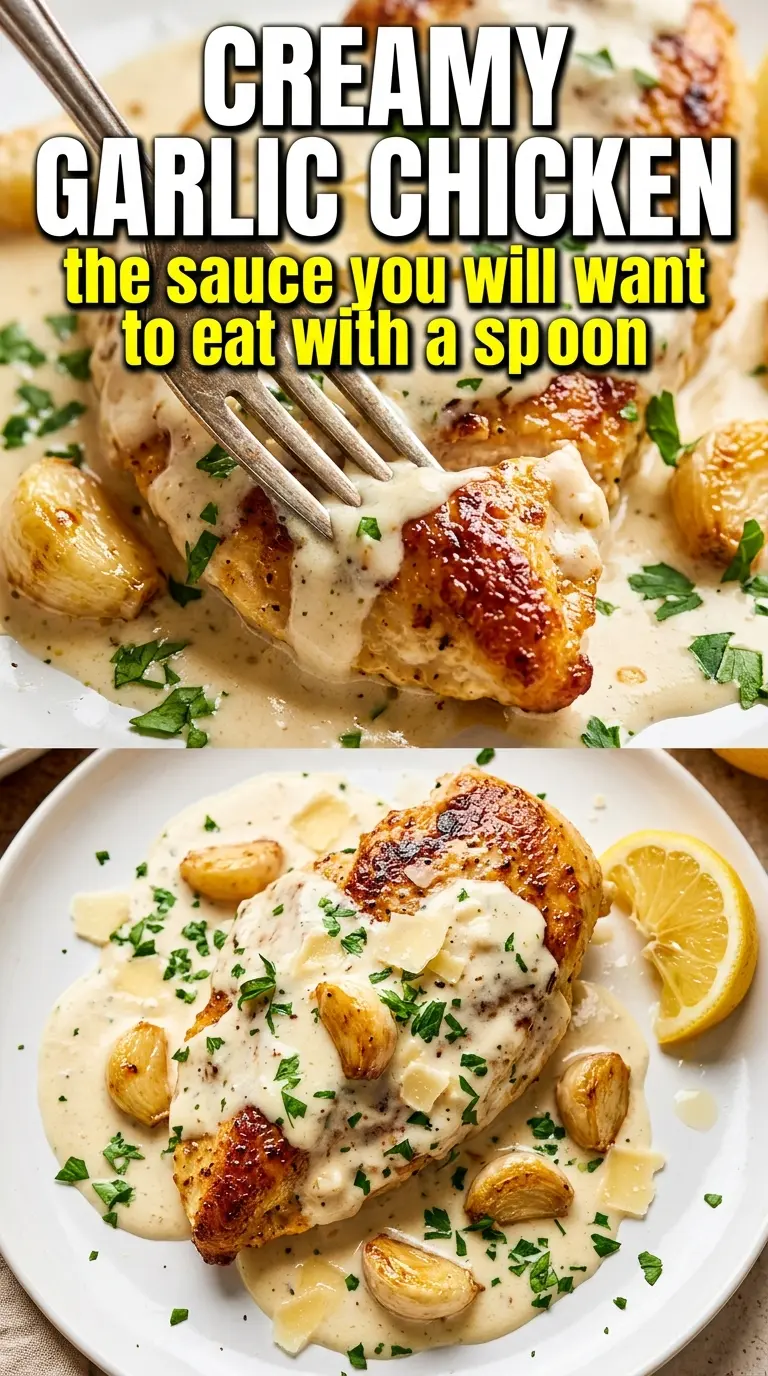
- Chicken breasts — These are the base of the dish, so even thickness matters. If one end is much thicker, pound it lightly so the whole breast cooks at the same rate and you don’t end up with dry edges before the center is done.
- Garlic — This is the main flavor, and fresh minced garlic is worth using here. Jarred garlic can work in a pinch, but it tends to taste flatter and cook more unevenly, which matters in a sauce that’s built around it.
- Heavy cream — This gives the sauce its body and keeps it stable when it simmers. Half-and-half can work, but the sauce will be thinner and more likely to split if you boil it.
- Parmesan — Use finely grated Parmesan if you can, because it melts into the sauce more smoothly. Pre-shredded cheese often has anti-caking agents that can make the sauce slightly grainy.
- White wine or chicken broth — The wine adds sharpness that cuts through the cream, while broth keeps the dish savory and mellow. If you skip the wine, add the broth and let it cook down a minute longer so the sauce still tastes concentrated.
- Cayenne and smoked paprika — These don’t make the sauce spicy-hot; they keep it from tasting flat. The heat stays gentle, but the color and warmth help the garlic cream sauce taste more rounded.
Building the Garlic Cream Sauce Without Breaking It
Season and Sear the Chicken First
Pat the chicken dry before it hits the skillet. Moisture on the surface is the fastest way to slow browning. Season both sides well, then sear in olive oil until the chicken releases easily from the pan and the edges look deeply golden. If it sticks, give it another minute; forcing it early will tear the crust.
Cook the Garlic in Butter, Not Too Fast
Once the chicken is out, the butter and garlic go into the same pan. The garlic should sizzle gently and smell sweet, not sharp or burnt. Stir it the whole time so the bits at the edge don’t darken first. If the garlic goes brown and bitter, start over — that flavor will carry through the entire sauce.
Deglaze, Then Add the Cream
Pour in the wine or broth and scrape the pan clean with a wooden spoon. Those browned bits are the backbone of the sauce. Let the liquid bubble for a minute or two so the raw edge cooks off, then lower the heat before adding the cream. High heat at this point is the main reason cream sauces split.
Finish With Cheese and Let It Thicken
Stir in the Parmesan, Italian seasoning, and cayenne, then let the sauce simmer until it coats the back of a spoon and leaves a trail when you drag a finger through it. If it still looks thin, keep simmering instead of turning up the heat. When the sauce is glossy and thick, slide the chicken back in and spoon the sauce over the top until everything is coated.
How to Adapt It When You Need a Different Finish
Use Broth Instead of Wine
Chicken broth keeps the sauce savory and family-friendly, but you lose the bright edge that wine brings. To keep the flavor balanced, let the broth reduce for an extra minute before adding the cream.
Make It Dairy-Free
Use full-fat coconut cream and a dairy-free Parmesan-style alternative. The sauce will be a little sweeter and less sharp, so lean on the garlic and Italian seasoning to keep it savory.
Turn It Into a Low-Carb Dinner
The recipe already fits low-carb eating as written, so the main move is in what you serve with it. Spoon the sauce over cauliflower mash, sautéed greens, or roasted broccoli so nothing about the flavor gets lost.
For Thicker Sauce, Simmer Longer Not Hotter
If you want a sauce that clings even more tightly to the chicken, let it reduce over low heat for a few extra minutes. Turning the burner up won’t thicken it cleanly; it just makes the cream more likely to separate.
Storage and Reheating
- Refrigerator: Store leftovers in an airtight container for up to 3 days. The sauce will thicken as it chills.
- Freezer: I don’t recommend freezing this one. Cream sauces often turn grainy after thawing, and the chicken can dry out.
- Reheating: Warm it slowly in a covered skillet over low heat with a splash of broth or cream. Don’t blast it in the microwave, or the sauce can separate before the chicken is heated through.
Questions I Get Asked About This Recipe
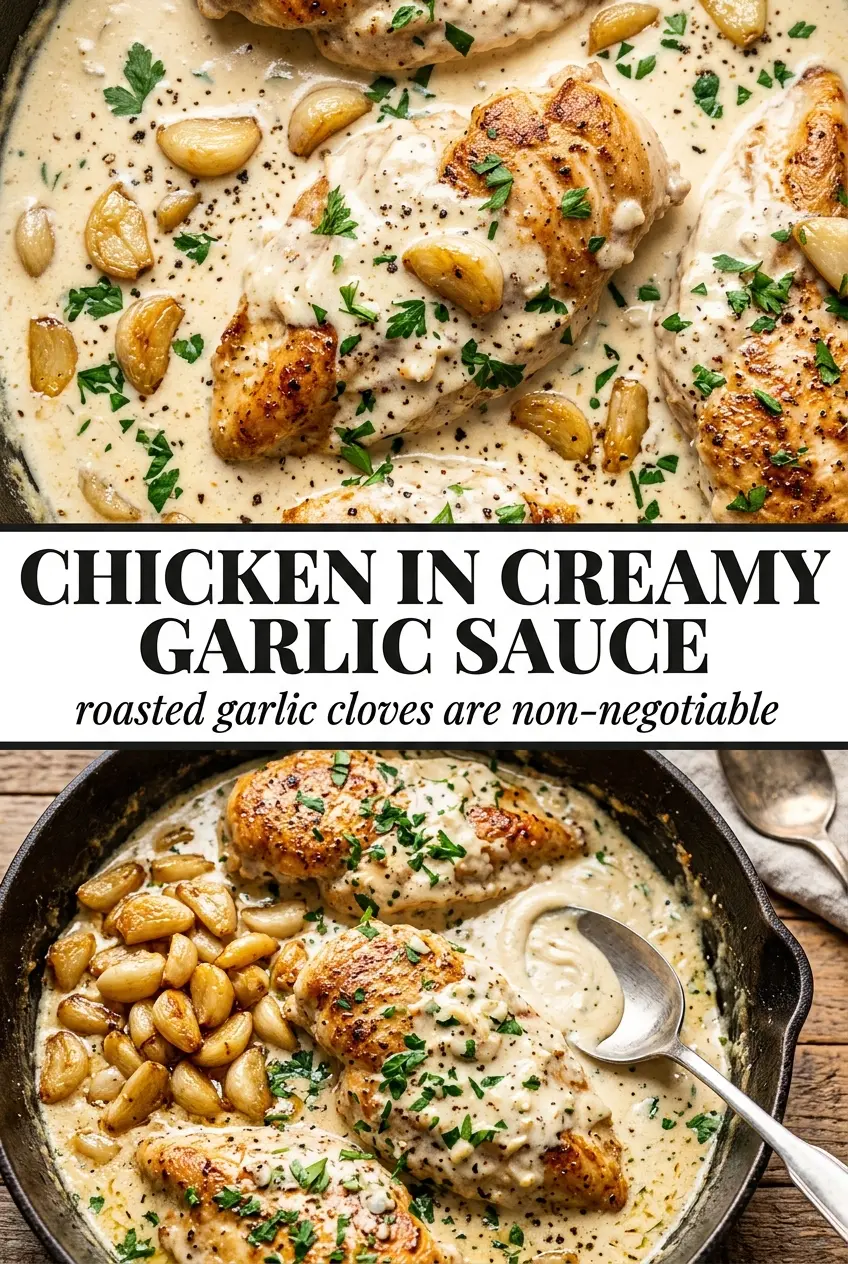
Chicken Breasts in Creamy Garlic Sauce
Ingredients
Equipment
Method
- Season the chicken breasts with salt, pepper, and smoked paprika to taste. Heat the olive oil in a large skillet over medium-high heat and sear until golden, 5-6 minutes per side, until the internal temperature reaches 165°F, then remove the chicken.
- Melt the butter in the same pan over medium heat, then add the minced garlic and cook for 2 minutes, stirring constantly, until fragrant and starting to turn golden. Scrape up any browned bits from the bottom of the pan.
- Pour in the dry white wine and cook for 2 minutes to deglaze. Stir in the heavy cream and bring the mixture to a simmer.
- Add the Parmesan, Italian seasoning, and cayenne pepper, then simmer for 4-5 minutes until the sauce is thick and glossy, stirring as needed to prevent scorching.
- Return the chicken breasts to the pan and spoon the garlic cream sauce over each breast. Simmer very briefly just to rewarm, then remove from the heat.
- Garnish with fresh thyme and parsley, then serve hot with extra sauce pooled around the edges of the plate.