Golden seared chicken breasts tucked into a silky tomato cream sauce earn a permanent place in the dinner rotation because they hit the sweet spot between comfort and brightness. The sauce clings to the chicken instead of running off the plate, with enough tomato acidity to keep the cream from feeling heavy. Basil on top wakes everything up at the end, and a little Parmesan gives the sauce the kind of savory depth that makes people keep reaching for one more spoonful.
What makes this version work is the order of operations. The chicken gets a proper sear first, which leaves browned bits in the pan for the sauce to pick up. The tomatoes simmer before the cream goes in, so the sauce can concentrate instead of tasting flat. Then the Parmesan, butter, and a short final simmer turn it into a glossy sauce that feels rich without turning gluey.
Below, I’ll walk through the part that matters most: how to keep the sauce smooth, how to tell when the chicken is done without drying it out, and how to adapt the dish if you want to serve it over pasta, gnocchi, or with something low-carb.
The sauce turned out perfectly pink and thick, and the chicken stayed juicy even after simmering at the end. I served it over gnocchi and my husband asked if I could put it on the menu again next week.
Save this creamy tomato chicken for the nights when you want a silky skillet sauce that tastes like it simmered much longer than 25 minutes.
The Sear and Simmer Balance That Keeps the Sauce from Turning Flat
The biggest mistake with creamy tomato chicken is rushing the sauce before the pan has done its work. If the chicken doesn’t get a good golden sear, you lose the browned bits that give the sauce its backbone. If the tomatoes go in and never get a chance to simmer, the finished dish tastes sharp and thin instead of rounded and rich.
This recipe fixes both problems by building flavor in layers. The chicken comes out first, then the garlic briefly perfumes the pan, then the wine or broth loosens up the browned fond before the tomatoes reduce. That short tomato simmer matters. It removes the raw edge so the cream can soften the sauce instead of having to carry it.
- Chicken breasts — Pound them lightly if one end is much thicker than the other. Even thickness matters more here than size, because thin edges overcook before the center is done.
- Dry white wine or chicken broth — Wine gives the sauce a brighter, slightly more layered finish. Broth works well if you want to skip alcohol; just let it bubble for a few extra seconds so the sharp edge cooks off.
- Crushed tomatoes — Use crushed, not diced. Crushed tomatoes melt into the cream and give you that smooth rose-colored sauce instead of a chunky skillet mix.
- Parmesan — Grate it finely so it disappears into the sauce. Pre-shredded cheese can stay gritty and sometimes refuses to melt cleanly.
What Each Ingredient Is Actually Doing in This Chicken

- Chicken breasts (the protein) — Let them sit at room temperature 15 minutes before cooking. This helps them cook evenly without drying.
- Oil or butter (the cooking medium) — This prevents the chicken from drying out and carries herb and spice flavors throughout.
- Garlic (the aromatic foundation) — Fresh minced garlic mellows and becomes sweet when cooked. Don’t brown it or it turns bitter.
- Cream or sauce (the moisture keeper) — This prevents the chicken from drying out during cooking. Balance richness with acid.
- Lemon, wine, or acid (the brightness) — This prevents heavy cream sauces from tasting flat. Add at the end to preserve freshness.
- Fresh herbs (basil, thyme, parsley) — Add some during cooking and some after so you get both cooked and fresh flavors.
- Cheese or toppings (optional richness) — These add creaminess and depth. Don’t overdo it or the dish becomes heavy.
- Proper oven temperature (375-400°F) or pan heat — This cooks chicken through without drying the edges. Use a thermometer for 165°F.
Building the Pink Sauce in the Same Pan You Sear the Chicken In
Seasoning and Searing the Chicken
Season the chicken generously with salt, pepper, garlic powder, and Italian seasoning before it hits the pan. You want a steady sizzle when the chicken goes into the olive oil; if the pan is too cool, it will soak up oil and steam instead of browning. Let it cook long enough to release naturally, then turn it and cook the second side until the outside is deep golden and the center reaches 165°F. Pull it out once it’s done. Carryover heat finishes the job while the sauce comes together.
Pulling Flavor from the Pan
Don’t wipe out the skillet. The browned residue on the bottom is the flavor base for the sauce. Add the garlic and stir just until it smells fragrant, about 30 seconds, because garlic burns fast in a hot pan and turns bitter before you notice. Pour in the wine or broth and scrape the pan well so every browned bit dissolves into the liquid.
Turning Tomatoes and Cream into One Sauce
Let the crushed tomatoes simmer first so they lose their raw, tinny edge and thicken a little. Then stir in the cream, Parmesan, and red pepper flakes over medium-low heat. If the heat is too high when the cheese goes in, the sauce can turn grainy. Keep it at a gentle simmer until it looks smooth, rosy, and slightly thickened — it should coat a spoon instead of sliding off like broth.
Finishing with Butter and Basil
The butter goes in at the end for shine and a rounder finish. Swirl it in off the heat or with the burner turned low so the sauce stays glossy instead of separating. Return the chicken to the pan and spoon the sauce over the top. Basil should go on right before serving so it stays bright and doesn’t collapse into the sauce.
Three Practical Ways to Change Creamy Tomato Chicken Without Breaking It
Make It Dairy-Free with Coconut Cream
Use full-fat coconut cream in place of the heavy cream and skip the Parmesan or use a dairy-free hard cheese. The sauce won’t taste coconut-forward if the tomatoes and garlic are balanced well, but it will be a little sweeter and softer in texture. If you want the sharpness you’d normally get from Parmesan, add an extra pinch of salt and a squeeze of lemon at the end.
Use Chicken Thighs for a Richer Finish
Boneless skinless thighs work well if you want a juicier result and a little more forgiveness on the stove. They need a few extra minutes to cook through, but they’re less likely to dry out if the simmer runs long. The sauce tastes slightly richer against thighs because the meat itself brings more fat and flavor to the pan.
Make It Gluten-Free Without Changing the Sauce
This recipe is naturally gluten-free as written if your broth is certified gluten-free. Serve it over rice, mashed potatoes, polenta, or gluten-free pasta. The sauce itself does the work, so there’s no flour slurry or roux to replace.
Add Spinach or Mushrooms for a Fuller Skillet Dinner
Sauté sliced mushrooms after the chicken comes out, or stir in a few handfuls of spinach at the very end. Mushrooms deepen the savory side of the sauce, while spinach gives you a little freshness and turns this into a one-pan meal with more body. Add them after the sauce is mostly finished so they don’t water it down.
Storage and Reheating
- Refrigerator: Store leftovers in an airtight container for up to 3 days. The sauce thickens as it chills, so it will look a little denser the next day.
- Freezer: It freezes reasonably well for up to 2 months, but the cream sauce may separate slightly when thawed. Freeze in a shallow container and rewarm gently to help it come back together.
- Reheating: Warm it slowly on the stovetop over low heat with a splash of broth or water. High heat is what breaks the cream sauce and dries out the chicken.
Answers to the Questions Worth Asking
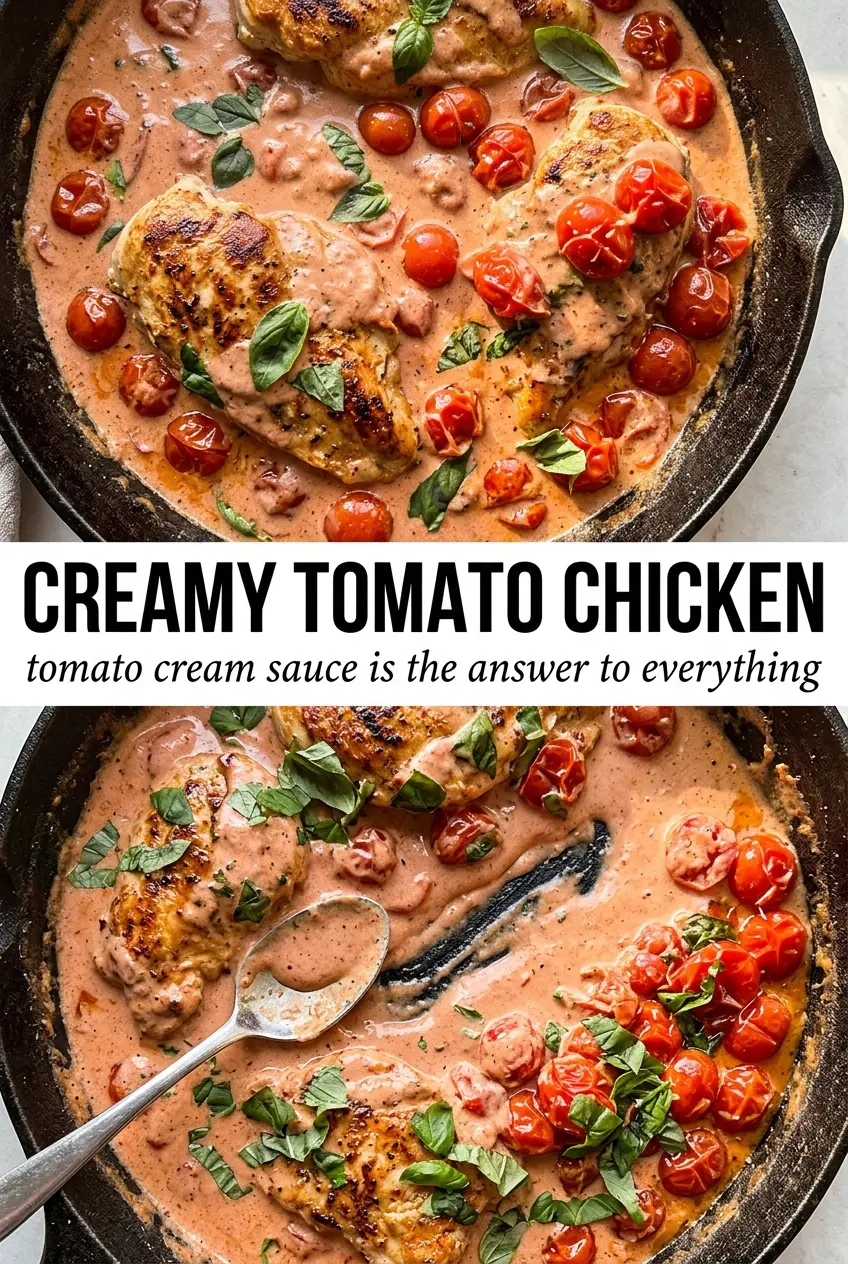
Creamy Tomato Chicken
Ingredients
Equipment
Method
- Season the chicken breasts with salt, pepper, garlic powder, and Italian seasoning. Heat olive oil in a wide skillet over medium-high heat until shimmering, then add chicken and sear 5-6 minutes per side until golden with internal temperature reaching 165°F; remove to a plate.
- Reduce heat to medium, then cook the minced garlic in the same pan for about 30 seconds until fragrant. Deglaze with the white wine (or chicken broth), scraping up browned bits, then stir in crushed tomatoes and Italian seasoning and simmer 5 minutes.
- Stir in the heavy cream, Parmesan, and red pepper flakes, then simmer 4-5 minutes until the sauce is thick and rose-colored. Turn off the heat and swirl in the butter until the sauce looks glossy.
- Return the chicken breasts to the skillet and spoon tomato cream sauce over each breast. Garnish with fresh basil and serve over pasta or gnocchi.