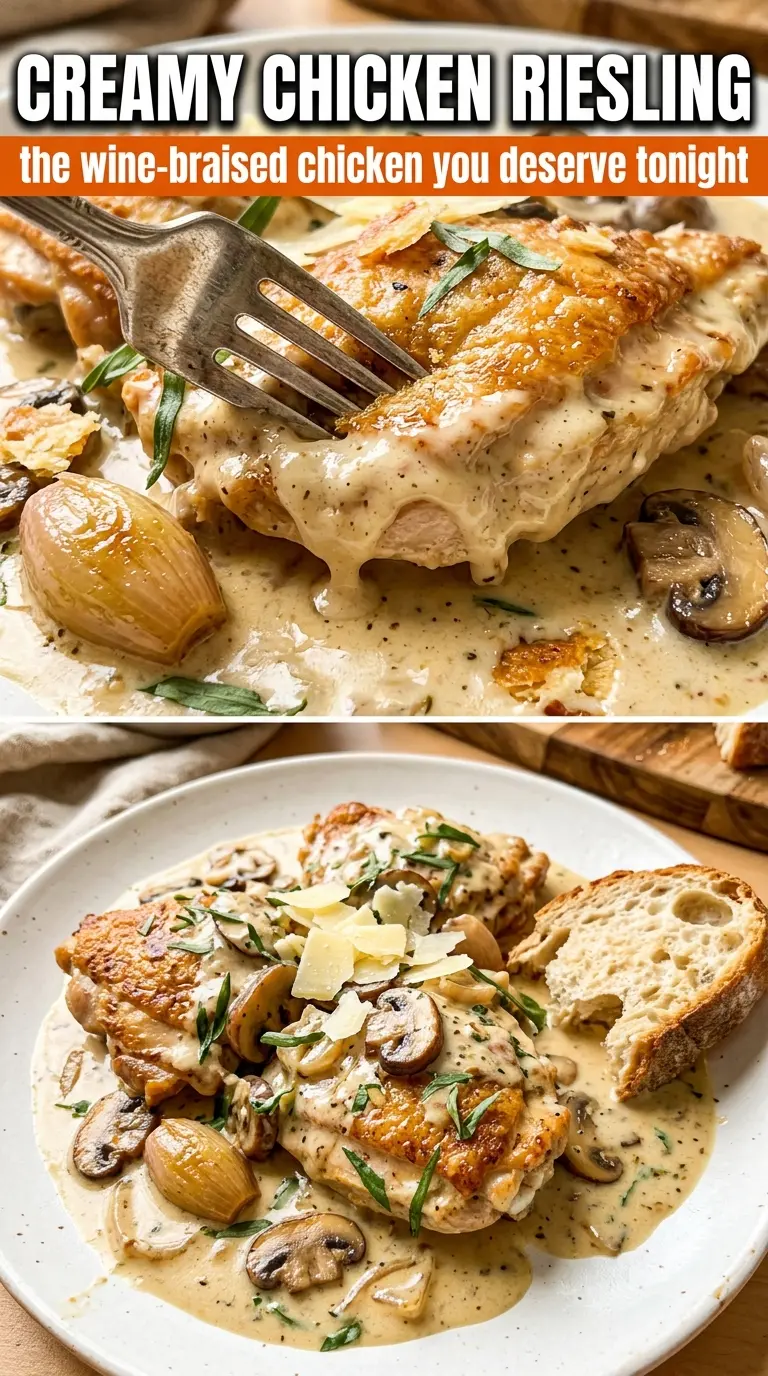
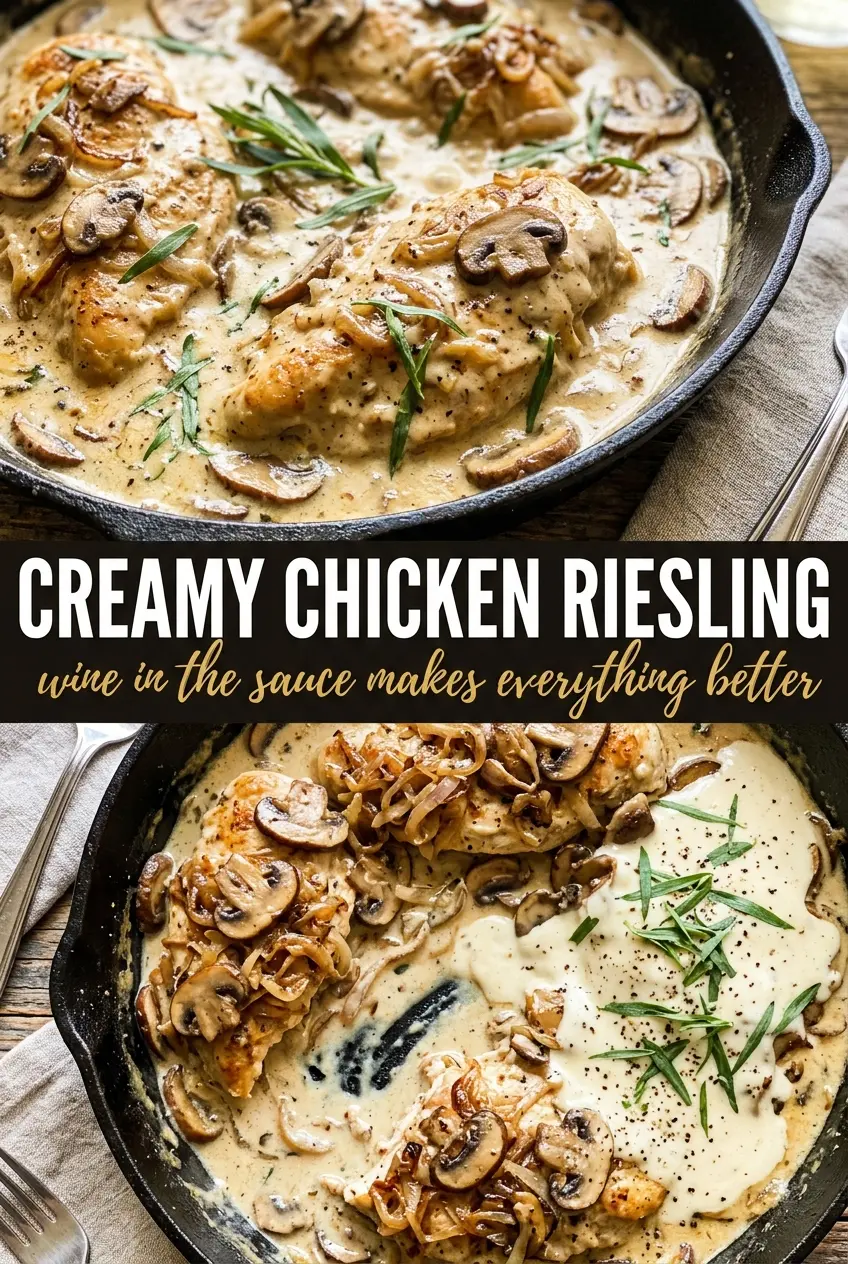
Golden chicken thighs tucked into a pale, wine-scented cream sauce are the kind of dinner that looks restaurant-worthy without asking much from you. The skin stays crisp enough to bring contrast, the sauce turns velvety instead of heavy, and the mushrooms and shallots give the whole pan a deep, savory backbone. It’s the sort of skillet meal that feels calm and polished at the table, even though it comes together in about half an hour.
What makes this version work is the order of operations. The chicken gets a hard sear first, which builds flavor and keeps the skin from turning soft too soon. The Riesling goes in after the mushrooms and garlic have had time to brown, so the wine reduces into something fragrant and bright before the cream joins it. Dijon and tarragon keep the sauce from tasting flat, and a final pat of butter gives it that glossy finish you want when you spoon it over the chicken.
Below you’ll find the small details that matter here, including how to keep the sauce smooth, which substitutions hold up, and what to do if you want to make the dish ahead without losing that fresh, silky texture.
The sauce reduced into this silky, fragrant pan gravy and the chicken skin stayed crisp even after simmering. I served it with mashed potatoes and my husband asked if we could make it again next week.
Love the pale golden sauce and tender chicken in this Riesling skillet? Save it to Pinterest for the night you want an elegant dinner with mushrooms, tarragon, and almost no cleanup.
The Trick to Keeping the Riesling Sauce Silky Instead of Broken
The sauce here depends on gentle heat after the wine goes in. Riesling reduces quickly, but once the cream and broth are added, the pan needs to stay at a steady simmer, not a hard boil. If the liquid boils too aggressively, the cream can separate and the sauce can turn grainy before the chicken finishes cooking.
The other thing that matters is the sear. Those browned bits left in the skillet after the chicken comes out are the backbone of the sauce, and they only work if the pan stays hot enough for the mushrooms and shallots to pick them up. If the skillet looks dry or pale at that stage, the finished dish will taste flat no matter how much cream you add.
- Chicken thighs — Bone-in, skin-on thighs stay juicy during the simmer and give you the best chance at crisp skin after searing. Boneless thighs cook faster, but they lose some of the rich texture that makes this dish feel special.
- Riesling — Use a dry or off-dry Riesling with good acidity. A sweet wine can make the sauce cloying, while a very acidic white can taste sharp after reduction.
- Cremini mushrooms — Their earthy flavor holds up in cream better than delicate white mushrooms. If you only have button mushrooms, they’ll work, but let them brown a little longer so they don’t taste watery.
- Dijon mustard — This doesn’t make the sauce taste mustardy. It sharpens the cream and helps the wine reduction taste finished instead of dull.
- Tarragon — Fresh tarragon is worth hunting down if you can get it. The anise-like note is what makes the dish read as Riesling chicken instead of generic cream chicken.
What Each Ingredient Is Actually Doing in This Chicken
- Chicken breasts (the protein) — Let them sit at room temperature 15 minutes before cooking. This helps them cook evenly without drying.
- Oil or butter (the cooking medium) — This prevents the chicken from drying out and carries herb and spice flavors throughout.
- Garlic (the aromatic foundation) — Fresh minced garlic mellows and becomes sweet when cooked. Don’t brown it or it turns bitter.
- Cream or sauce (the moisture keeper) — This prevents the chicken from drying out during cooking. Balance richness with acid.
- Lemon, wine, or acid (the brightness) — This prevents heavy cream sauces from tasting flat. Add at the end to preserve freshness.
- Fresh herbs (basil, thyme, parsley) — Add some during cooking and some after so you get both cooked and fresh flavors.
- Cheese or toppings (optional richness) — These add creaminess and depth. Don’t overdo it or the dish becomes heavy.
- Proper oven temperature (375-400°F) or pan heat — This cooks chicken through without drying the edges. Use a thermometer for 165°F.
Building the Skillet in the Right Order
Seasoning and Searing the Chicken
Pat the chicken thighs dry, then season them well with salt, pepper, and garlic powder before they ever hit the pan. Lay them skin-side down in hot olive oil and leave them alone until the skin turns deeply golden and releases on its own; if you move them too early, the skin tears and you lose the crust. Flip them for a shorter second sear, then pull them out while the center is still undercooked. They finish in the sauce later.
Cooking the Mushrooms and Shallots
After the chicken comes out, the pan should still have enough fat and browned bits to keep going. Add the shallots and mushrooms and cook until the mushrooms give up their liquid and start taking on color, not just softness. That browning matters because mushrooms that stay pale can make the sauce taste thin. Add the garlic at the end of this stage so it doesn’t scorch while the pan is still working hard.
Reducing the Wine Before the Cream Goes In
Pour in the Riesling and let it bubble for a few minutes until it smells less sharp and more rounded. This is where the wine loses the raw alcohol edge and starts acting like part of the sauce instead of something added on top. Once it has reduced a bit, stir in the cream, broth, tarragon, and Dijon. If you add the cream before the wine cooks down, the finished sauce can taste boozy instead of balanced.
Finishing the Chicken in the Sauce
Return the chicken skin-side up so the top stays above the liquid as much as possible. Cover the skillet and simmer gently until the chicken reaches 165°F and the meat feels tender when pressed at the joint. When the chicken is done, pull it out and swirl in the butter off the heat. That last step gives the sauce a sheen and helps it cling to the chicken instead of running off the plate.
What to Change When You Need a Different Version
Dairy-Free Creamy Chicken Riesling
Swap the heavy cream for full-fat coconut cream or an unsweetened dairy-free cooking cream. Coconut cream gives the sauce body, but it brings a faint coconut note, so keep the tarragon and Dijon in place to pull the flavor back toward savory.
Boneless Chicken Thighs for a Faster Skillet
Boneless thighs cut the simmer time down a few minutes and are easier to serve, but they won’t give you the same dramatic skin or the same depth from the bone. Keep a close eye on them once they return to the sauce because they can go from tender to dry faster than bone-in pieces.
No Riesling on Hand
A dry Sauvignon Blanc or Pinot Gris works in place of Riesling if that’s what you have. The dish will lose a little of Riesling’s gentle fruitiness, so keep the sauce balanced with the Dijon and don’t skip the reduction step.
Low-Carb Serving Idea
The recipe is already naturally low in starch, so the easiest adjustment is what you serve with it. Spoon the chicken and sauce over cauliflower mash, sautéed cabbage, or roasted green beans to keep the meal hearty without adding much extra carbohydrate.
Storage and Reheating
- Refrigerator: Store leftovers in an airtight container for up to 3 days. The sauce will thicken as it chills.
- Freezer: It can be frozen, but the cream sauce may separate a little on thawing. Freeze in a tightly sealed container for up to 2 months and expect a less silky finish.
- Reheating: Warm gently on the stove over low heat with a splash of broth or cream. Don’t boil it, or the sauce can split and the chicken will dry out before the center heats through.
Questions I Get Asked About This Recipe
Creamy Chicken Riesling
Ingredients
Equipment
Method
- Season the chicken thighs all over with salt, pepper, and garlic powder. Heat olive oil in a large skillet over medium-high heat until shimmering.
- Place chicken skin-side down in the skillet and cook 7-8 minutes until deeply golden. Keep heat steady so the skin crisps without burning.
- Flip the chicken and sear for 4 minutes until the second side is browned. Transfer chicken to a plate while you cook the aromatics.
- Add minced shallots and sliced mushrooms to the skillet and cook 5-6 minutes, stirring, until golden. Scrape up browned bits to flavor the sauce.
- Add minced garlic and cook 1 minute. Stir constantly so the garlic doesn’t brown too much.
- Pour in Riesling wine and let it bubble for 3 minutes so the alcohol cooks off. The pan should smell fragrant and slightly reduced.
- Add heavy cream, chicken broth, fresh tarragon, and Dijon mustard. Stir until smooth and evenly combined.
- Return chicken to the skillet skin-side up, cover, and simmer 15-18 minutes until the internal temperature reaches 165°F. Keep the lid on to maintain steady moisture.
- Remove chicken from the skillet and swirl in butter until the sauce turns glossy. Taste and adjust seasoning if needed.
- Return chicken to the skillet and garnish with fresh tarragon. Serve immediately with the pale golden sauce pooled around the thighs.